How to Hem Pants and Jeans: Measuring, Folding and Stitching (2026)
Shortening pants is the most common alteration of all. With careful measuring, a good press and the right stitch, it is a straightforward job on a home sewing machine, even on jeans.
In This Article
Hemming in Brief
- Measure: with the shoes you'll wear
- Dress pants: blind hem by hand or machine
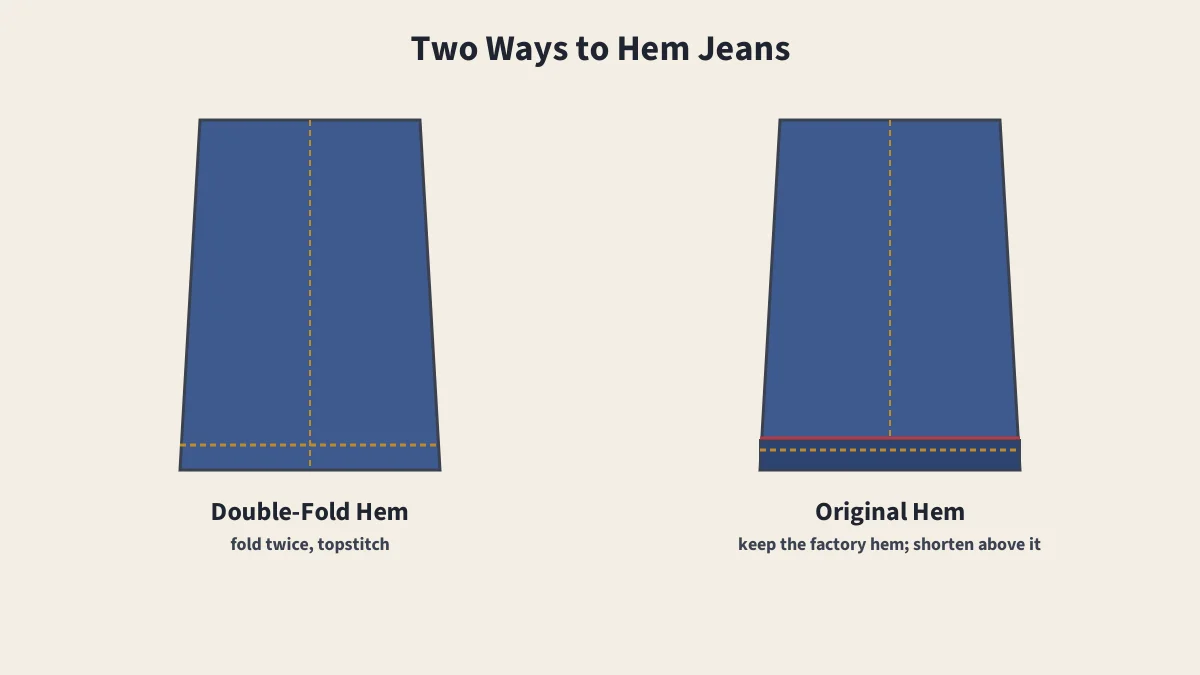
- Jeans: double-fold topstitched, or original hem
- Depth: often about 5–7.6 cm (2–3 in) for trousers
- Tools: denim needle, strong thread, iron
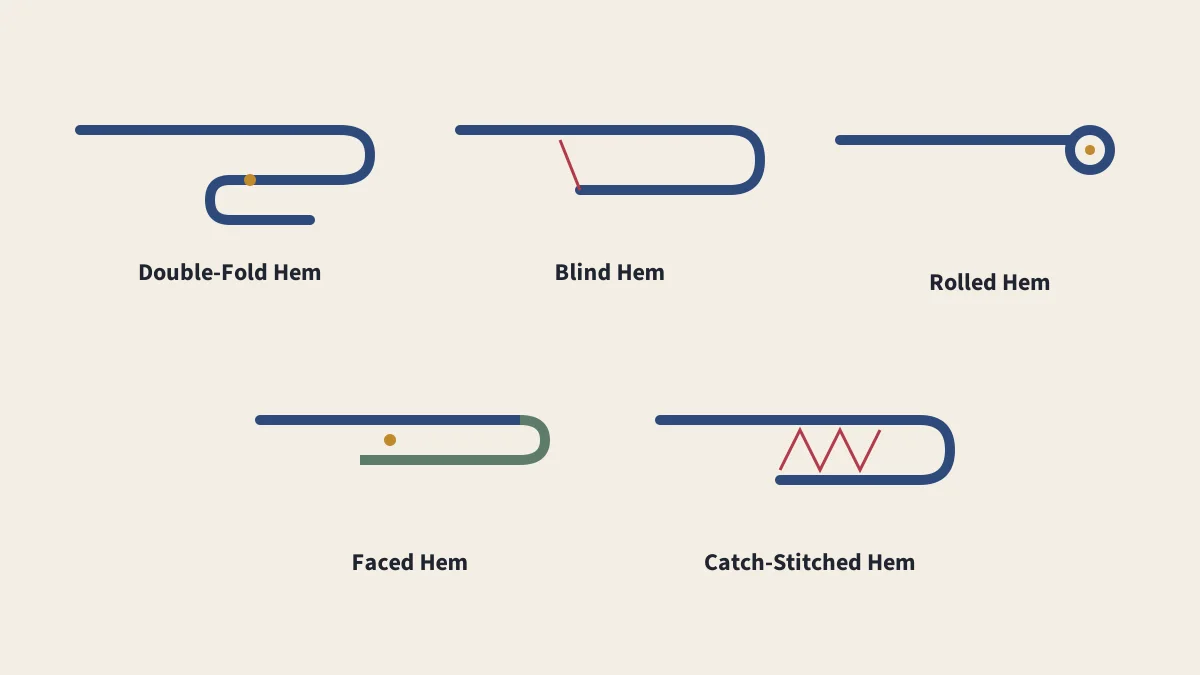
A hem finishes the cut edge at the bottom of a garment. For general hem types, see types of hems. This guide covers shortening trousers and jeans, the most common home alteration.
Measuring the Length
- Wash and dry the pants first if they might shrink.
- Put them on with the shoes you will wear and stand straight.
- Fold the hem under to the desired length, pinning at the front and back of each leg.
- Measure the new length along the inseam and mark both legs the same, unless your legs differ.
Hemming Dress Trousers
- Unpick the existing hem and press out the old fold.
- Mark the new hemline, then add a hem allowance; a typical trouser hem is about 5–7.6 cm (2–3 in) deep, including the turn.
- Cut off the excess, finish the raw edge with an overlock or zigzag, and press the hem up.
- Sew a blind hem by hand, or with a machine blind-hem stitch and foot, catching only a thread or two of the outer fabric.
- Press from the inside.
Hemming Jeans: Double-Fold
- Mark the new length and add about 2.5–3 cm for a double fold.
- Cut off the excess.
- Fold the raw edge up once and press, then fold again and press.
- Topstitch close to the inner fold with topstitching thread and a long stitch.
Hemming Jeans: Keep the Original Hem
- Measure how much shorter the jeans need to be, and halve it.
- Fold the leg up on the outside by that amount, forming a tuck, so the old hem sits at the new length.
- Stitch around the leg right next to the edge of the original hem, using a zipper foot.
- Trim the excess inside, leaving a seam allowance, and finish the edge.
- Press the tuck down and topstitch just above the hem if you like.
This keeps the faded, worn-in factory hem; see history of denim.
Sewing Through Thick Seams
- Use a jeans needle, typically 90/14 to 110/18; see sewing machine needles.
- Flatten the side seams with a hammer before sewing.
- Walk the needle over the thickest point by turning the handwheel.
- Place a folded scrap of denim behind the presser foot to keep it level as it climbs a seam.
Sources
Frequently Asked Questions
How do I measure pants for hemming?
Try them on with the shoes you will wear, fold the hem under to the desired length and pin it at the front and back. For most trousers, the hem sits about at the top of the shoe at the front.
How do I hem jeans and keep the original hem?
Fold the leg up to make a tuck that shortens it by the required amount, stitch right next to the old hem's edge, then trim the excess inside and press the tuck down. The factory-faded hem stays on the outside.
What needle do I need to hem jeans?
A jeans (denim) needle, usually size 90/14 to 110/18, with a slightly longer stitch and topstitching or heavy-duty thread. Go slowly over the thick side seams.
What is a blind hem?
A hem sewn with stitches that are almost invisible from the outside, by hand or with a blind-hem foot. It is the usual finish for dress trousers.
Keep Reading
Types of Hems
Double-fold, blind, rolled, faced, bound and knit hems compared.
History of Denim
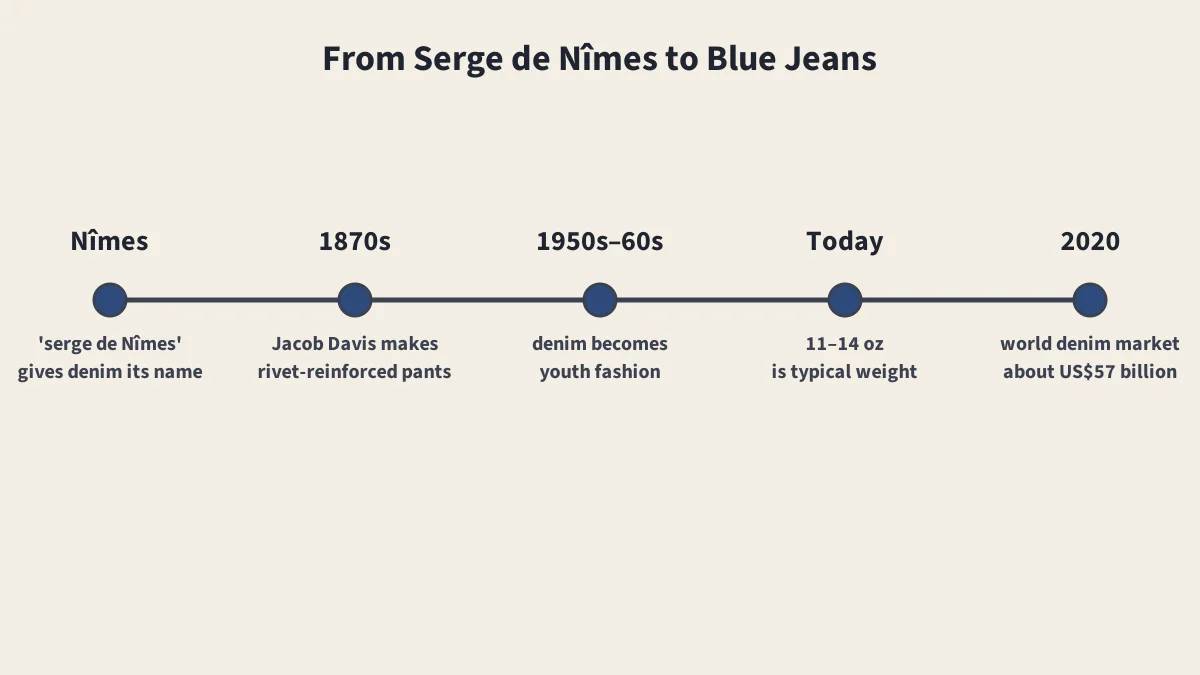
Nîmes, Genoa, the 1873 rivet patent and denim's rise.
Sewing Machine Needle Sizes and Types
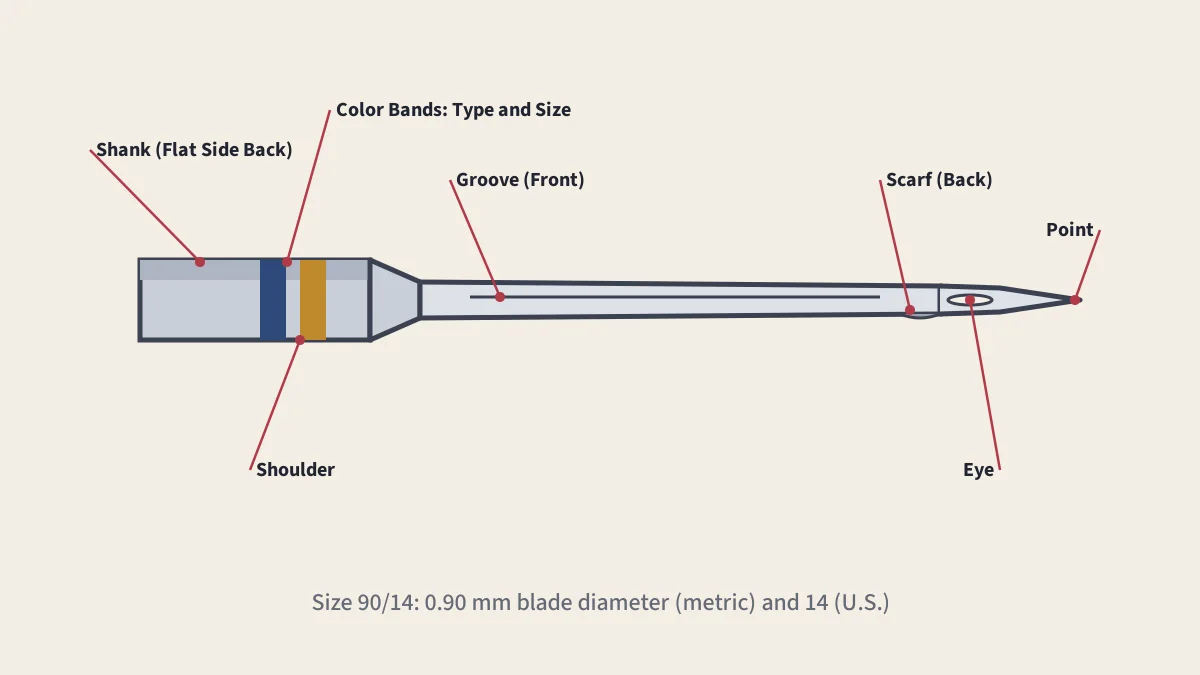
Needle sizes, types, color codes and when to change them.
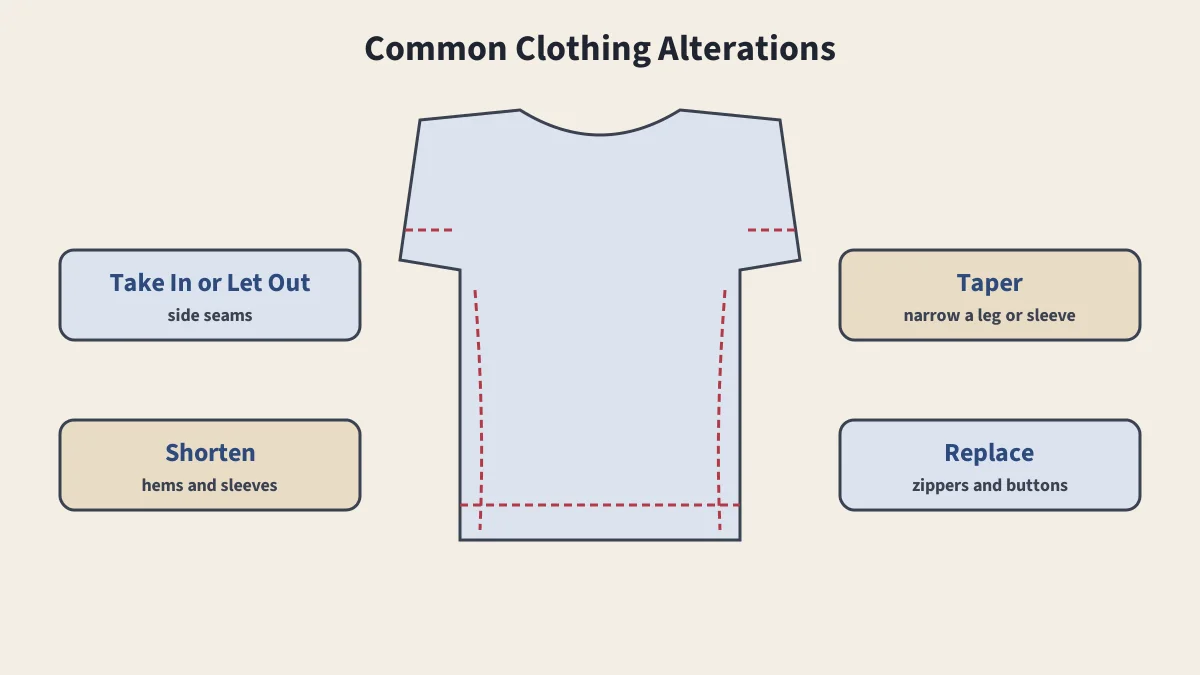
Clothing Alterations Basics
Easy and hard alterations, and when to see a tailor.