Hem Lengths Explained: From Mini to Floor-Length (2026)
Hemlines have risen and fallen dramatically over the last century, from the floor to the knee in about fifteen years. Here are the named lengths and how they came about.
In This Article
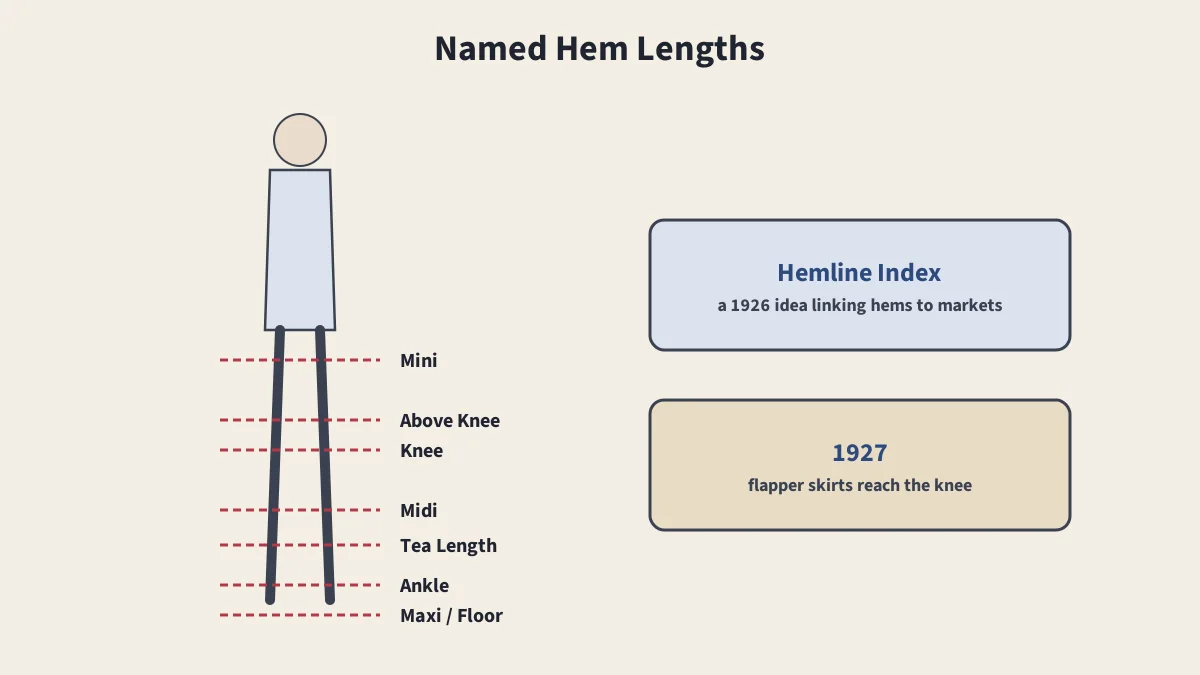
Hem Lengths in Brief
- Mini: around mid-thigh
- Knee: at or just above the knee
- Midi: mid-calf
- Tea length: between calf and ankle
- Maxi / floor: ankle to floor
Hem length is one of the quickest ways to describe a dress or skirt. The names are widely used in patterns and shops, though exact lengths vary with the wearer's height and the designer.
Named Lengths
| Length | Where It Falls |
|---|---|
| Micro | Shorter than a mini |
| Mini | Well above the knee, around mid-thigh |
| Above knee | A few centimeters above the knee |
| Knee | At the knee |
| Midi | Between knee and ankle, usually mid-calf |
| Tea length | Below mid-calf, above the ankle |
| Ankle | At the ankle |
| Maxi / full length | Ankle to floor |
| Floor length | Just touching the floor |
A Century of Hemlines
- Before the First World War, fashionable women's dresses ranged from floor length to just above the ankle.
- Hemlines rose from the floor to near the knee in little more than fifteen years, from the late 1900s to the mid-1920s. They reached mid-calf in 1920, dropped back to the ankle by 1923, and by 1927 "flapper length" skirts reached the knee.
- Hemlines fell again in the 1930s.
- Dior's 1947 New Look brought full skirts below mid-calf; see dress silhouettes.
- Hems sat just above the knee in 1961 and rose to the upper thigh by 1966, as the miniskirt took over; see types of skirts.
- After 1969, designers pushed midi and maxi lengths.
From the First World War until about 1970, women faced strong social pressure to wear the length currently in fashion. Since the 1970s, many lengths have been worn at the same time.
Choosing and Sewing a Hem Length
- Patterns state the finished length; compare it with a garment you own and adjust at the lengthen/shorten lines.
- Mark the hem while wearing the shoes you'll wear, with help or a dress form.
- Let bias-cut and circle skirts hang before hemming.
- Choose the hem finish to suit the fabric and length; see types of hems.
For the construction of 1920s dresses, see 1920s dress construction.
Sources
Frequently Asked Questions
What is midi length?
A midi hem falls between the knee and the ankle, usually around mid-calf.
What is tea length?
A hem that falls below the mid-calf but above the ankle, often used for formal and vintage-style dresses.
What is the hemline index?
An idea introduced in 1926 by economist George Taylor of the Wharton School, loosely holding that hemlines rise and fall with the stock market. It is a popular theory rather than a reliable predictor.
When did skirts get shorter?
Hemlines rose from floor length to near the knee in little more than fifteen years, from the late 1900s to the mid-1920s. The shortest skirts came in the late 1960s.
Keep Reading
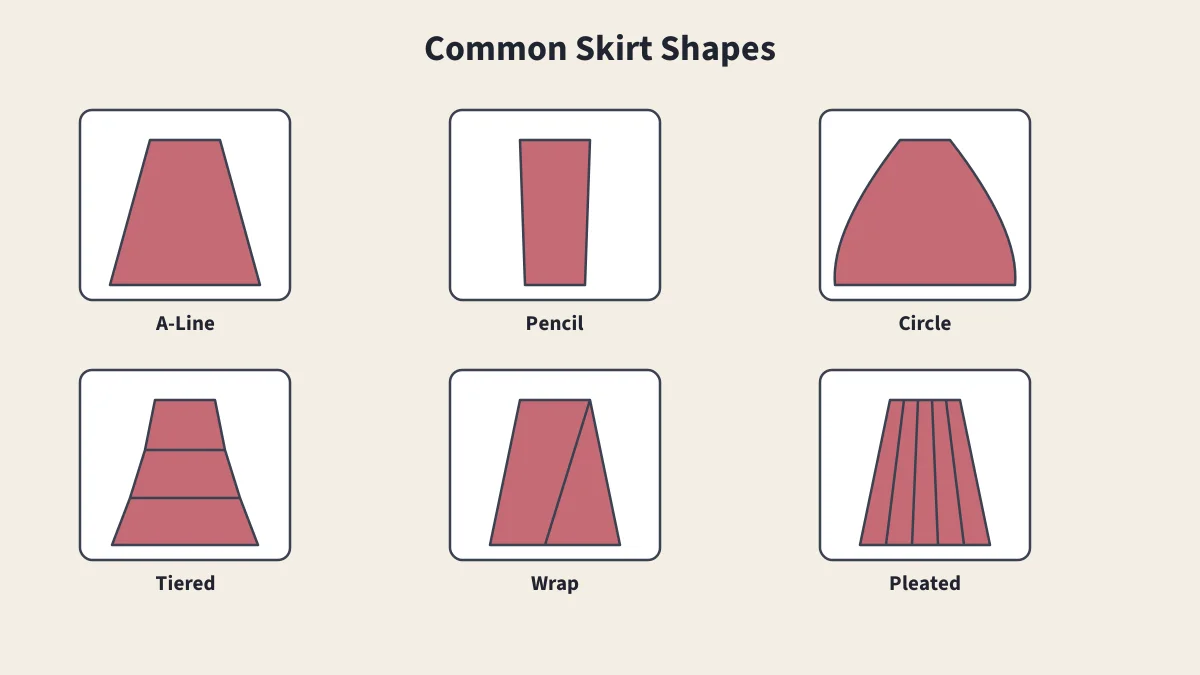
Types of Skirts
A-line, pencil, circle, gored, tiered, wrap and more.
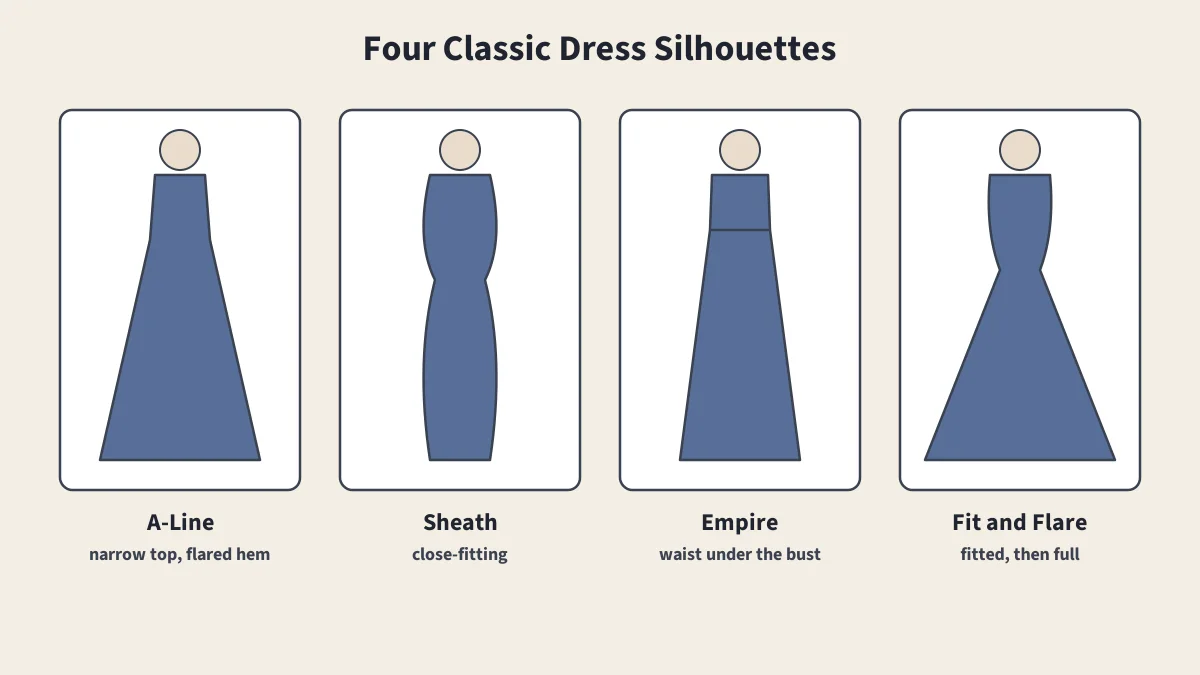
Dress Silhouettes
A-line, sheath, shift, empire and New Look shapes.
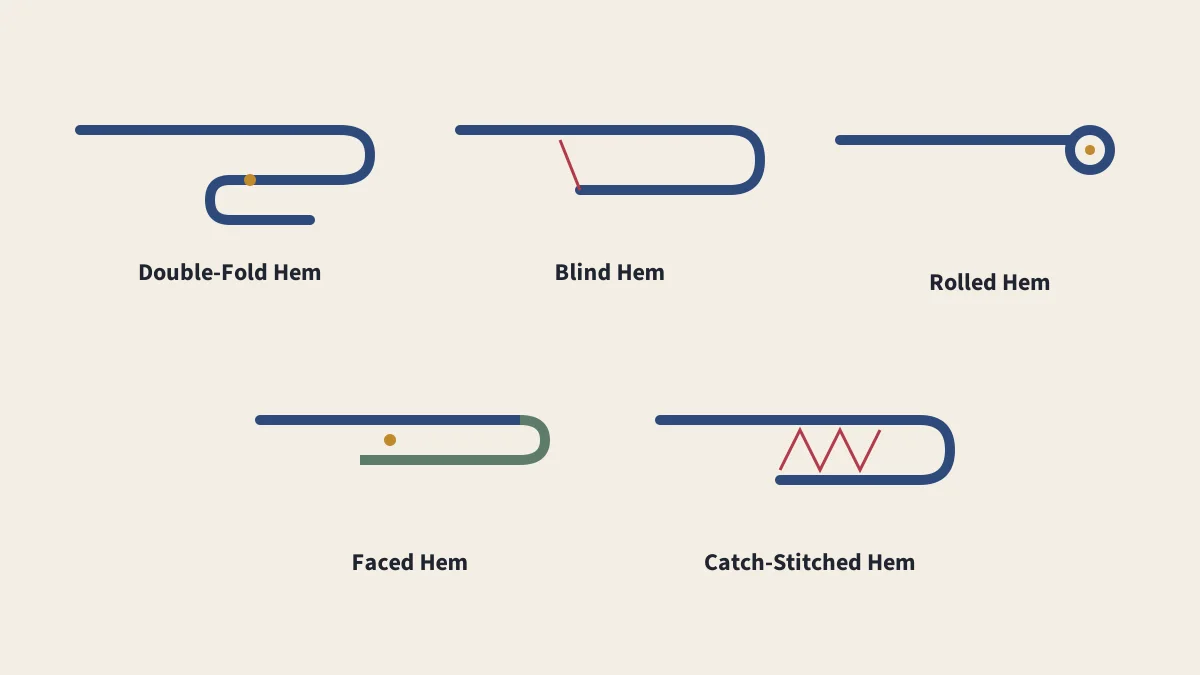
Types of Hems
Double-fold, blind, rolled, faced, bound and knit hems compared.
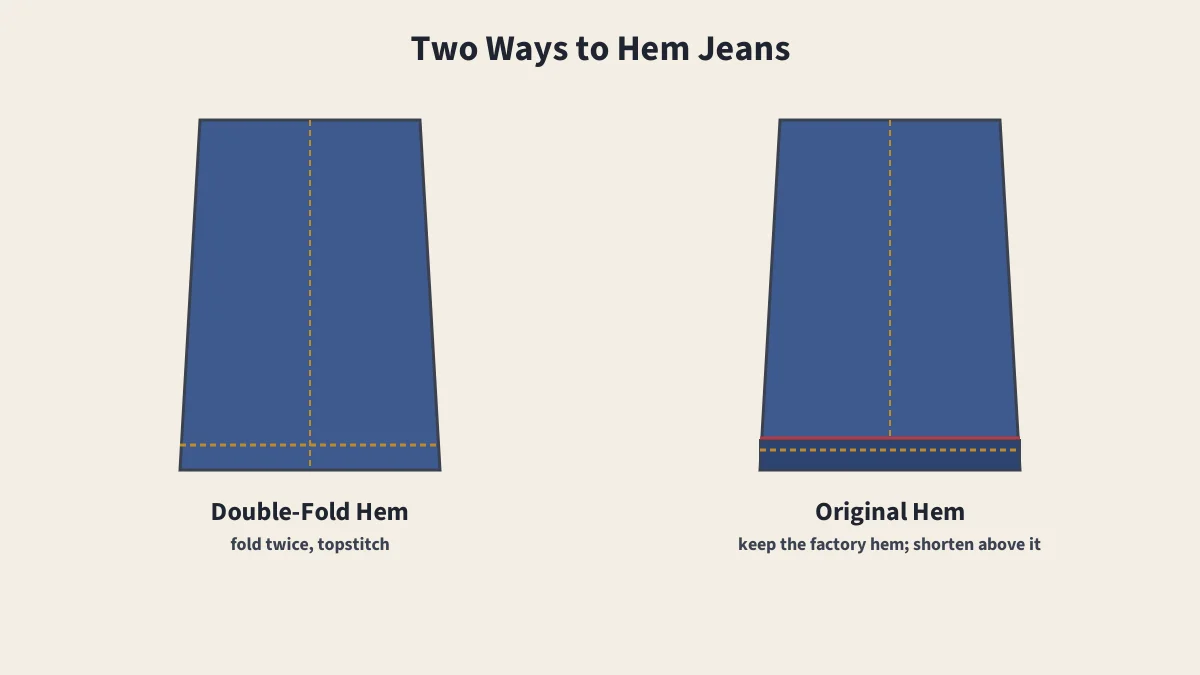
Hemming Pants and Jeans
Measuring, blind hems and keeping the original jeans hem.