Coverstitch Machines: The Secret Behind T-Shirt Hems (2026)
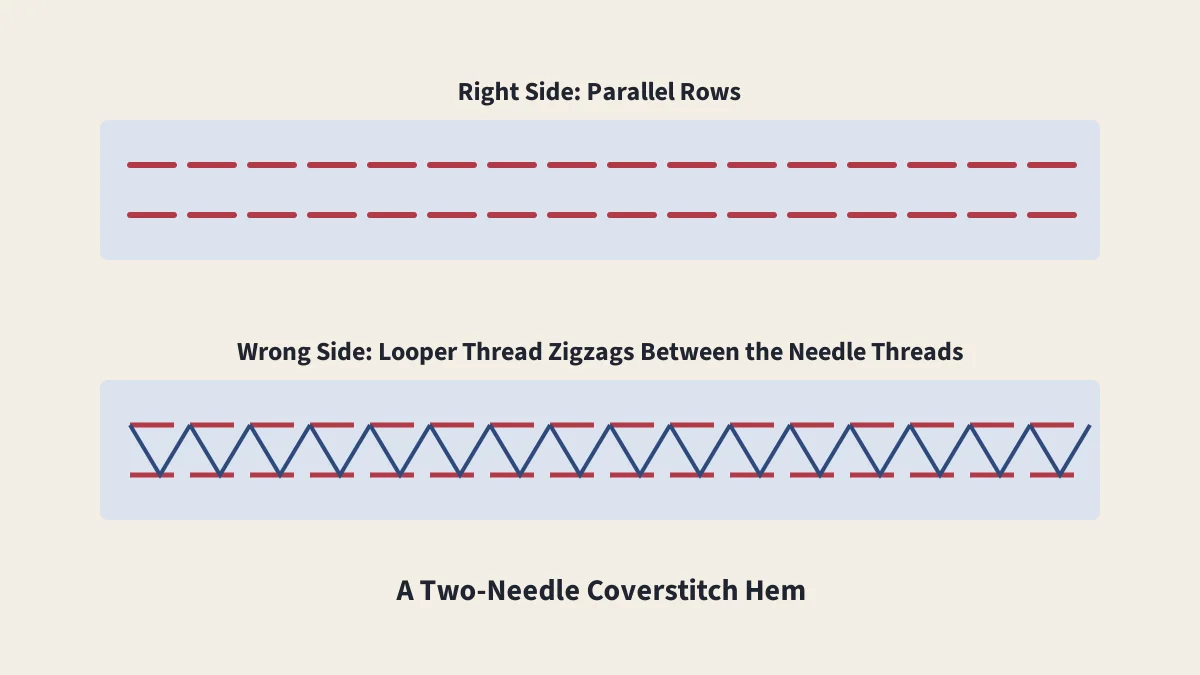
Flip over the hem of a T-shirt and you will find two neat rows of stitching on the outside and a web of looped thread inside. That stretchy, professional hem is a coverstitch, and it takes its own kind of machine.
In This Article
Coverstitch in Brief
- What it makes: 2–3 parallel rows on top, looped thread underneath
- How: two or three needles and one looper, no bobbin
- No knife: it can sew away from the edge
- Best for: hems, necklines and bindings on knits
- Alternatives: a combination serger or a twin needle
Look at the hem of almost any T-shirt, hoodie or pair of leggings. On the outside, two or three crisp rows of stitching; on the inside, a band of looped thread that stretches with the fabric. That is a coverstitch. It is one of the main stitches in the garment industry and the last piece of the puzzle for many home sewists who sew knits.
How a Coverstitch Is Formed
A coverstitch machine has two or three needles side by side and a single looper underneath. The needles pass through the fabric, and the looper carries its thread back and forth between the needle loops on the underside, catching each one. The result is straight stitching on the right side and a zigzag web on the wrong side, which covers and secures a folded raw edge. In industrial stitch classifications, cover stitches belong to the 600 class, separate from lockstitches (300) and overlock stitches (500).
Because the looper thread is not locked tightly, the whole stitch stretches. That is why coverstitched hems survive being pulled over heads and stretched across knees, where a straight lockstitch hem would pop.
Types of Coverstitch
| Stitch | Needles | Uses |
|---|---|---|
| Narrow two-needle coverstitch | 2, close together | Lightweight knits, necklines, children's clothing |
| Wide two-needle coverstitch | 2, farther apart | The classic T-shirt hem on medium-weight knits |
| Triple (three-needle) coverstitch | 3 | Activewear, wide hems, a strong decorative finish |
| Chain stitch | 1 needle + looper | Stretchy topstitching and basting |
Coverstitch vs. Serger vs. Twin Needle
| Feature | Coverstitch Machine | Serger | Twin Needle on a Sewing Machine |
|---|---|---|---|
| Main job | Hems, bindings, topstitching knits | Seams and edge finishing | Occasional hems and decoration |
| Knife | No | Yes | No |
| Sews away from the edge | Yes | No | Yes |
| Underside | Looper thread web | Looper threads wrapping the edge | Bobbin thread zigzag |
| Stretch | Very good | Very good | Moderate |
| Cost | Separate machine | Separate machine | Inexpensive accessory |
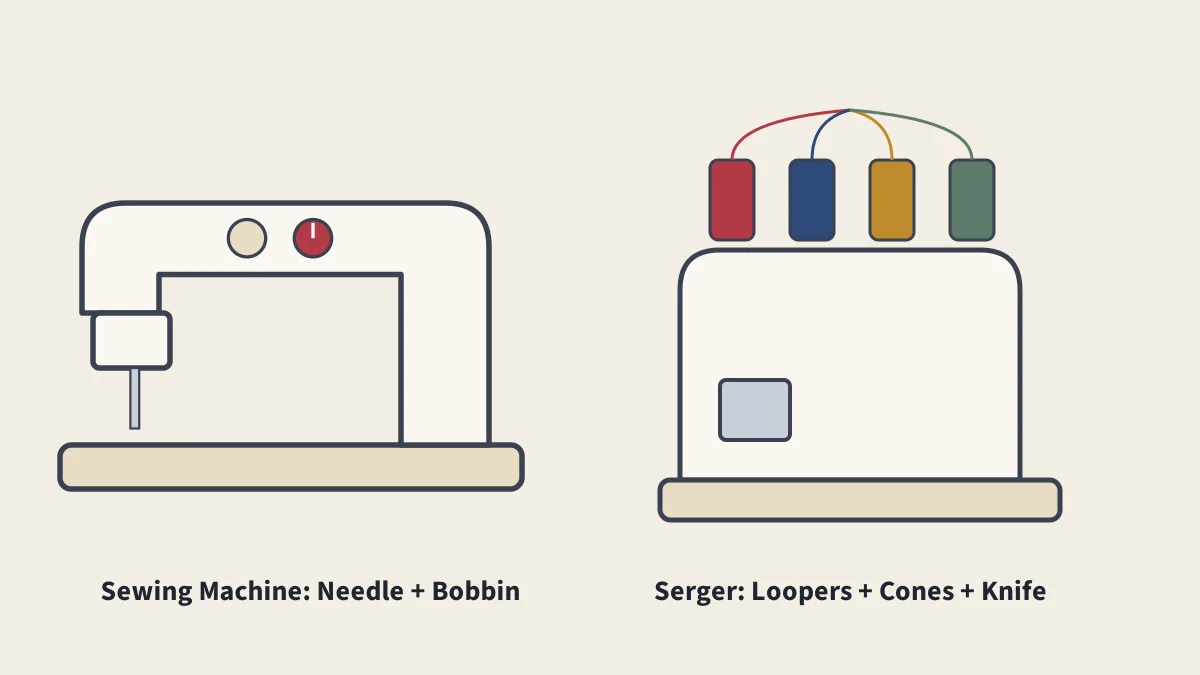
A serger cannot sew a coverstitch unless it is a combination model that converts by changing needles and disengaging the knife and upper looper. Our guide to serger vs. sewing machine explains what each machine does.
What You Can Do With a Coverstitch Machine
- Hem knits on T-shirts, dresses, leggings and sweatshirts.
- Attach neckbands and bindings with a professional finish.
- Topstitch seams on activewear and swimwear so they lie flat.
- Apply elastic and trims.
- Decorate with the looper side facing up, using contrasting or textured thread.
Tips for Better Coverstitching
- Use ballpoint or stretch needles suited to knits; see sewing machine needles.
- Use woolly nylon in the looper for extra stretch and softness, if you like.
- Stabilize lightweight knits with a strip of fusible tape along the hem to stop tunneling, a ridge between the needle rows.
- Finish properly. Pull the needle threads to the back and knot them, because coverstitch can unravel from the end if not secured.
- Test first on a scrap of the same fabric, folded as it will be on the garment.
Do You Need One?
If you sew knits only occasionally, a twin needle on your sewing machine is a good substitute. If you make many T-shirts, activewear or children's clothes, a coverstitch machine gives store-quality hems quickly and consistently. Some sewists choose a combination serger to save space, while others prefer separate machines so they do not have to switch settings.
Sources
- Overlock, Wikipedia
- Coverstitch, Wikipedia
Frequently Asked Questions
What is a coverstitch?
A coverstitch is a stretchy stitch with two or three parallel rows of straight stitches on the right side and a looper thread that zigzags between them on the wrong side. It is used mainly for hems and bindings on knit fabrics.
Can a serger do a coverstitch?
Only a combination (convertible) serger can. A standard serger makes overlock stitches at the edge and cannot sew a coverstitch away from the edge. Many sewists prefer a dedicated coverstitch machine to avoid switching settings.
Can I use a twin needle instead of a coverstitch machine?
Yes, for occasional hems. A twin needle on a sewing machine gives two parallel rows on top and a zigzag of bobbin thread underneath. It looks similar but is less stretchy and can tunnel on lightweight knits.
Does a coverstitch machine cut fabric?
No. Unlike a serger, a coverstitch machine has no knife. You trim and fold the hem before sewing, and the stitch can be sewn anywhere on the fabric, not just at the edge.
Keep Reading
Serger vs. Sewing Machine
How a serger and a sewing machine differ, and whether you need both.
How a Serger Works
Loopers, knives, differential feed and every thread combination.
Machine Stitch Types
The utility stitches that do most of the work, and when to use each.
Types of Sewing Machines
Every type of sewing machine explained, from mechanical to industrial.