Types of Pleats: How Each Fold Works (2026)
A pleat is a fold of fabric pressed or stitched in place. Unlike gathers, pleats control fullness in neat, regular folds, from crisp knife pleats on a kilt to the fine silk pleats of a Fortuny gown.
In This Article
Pleats in Brief
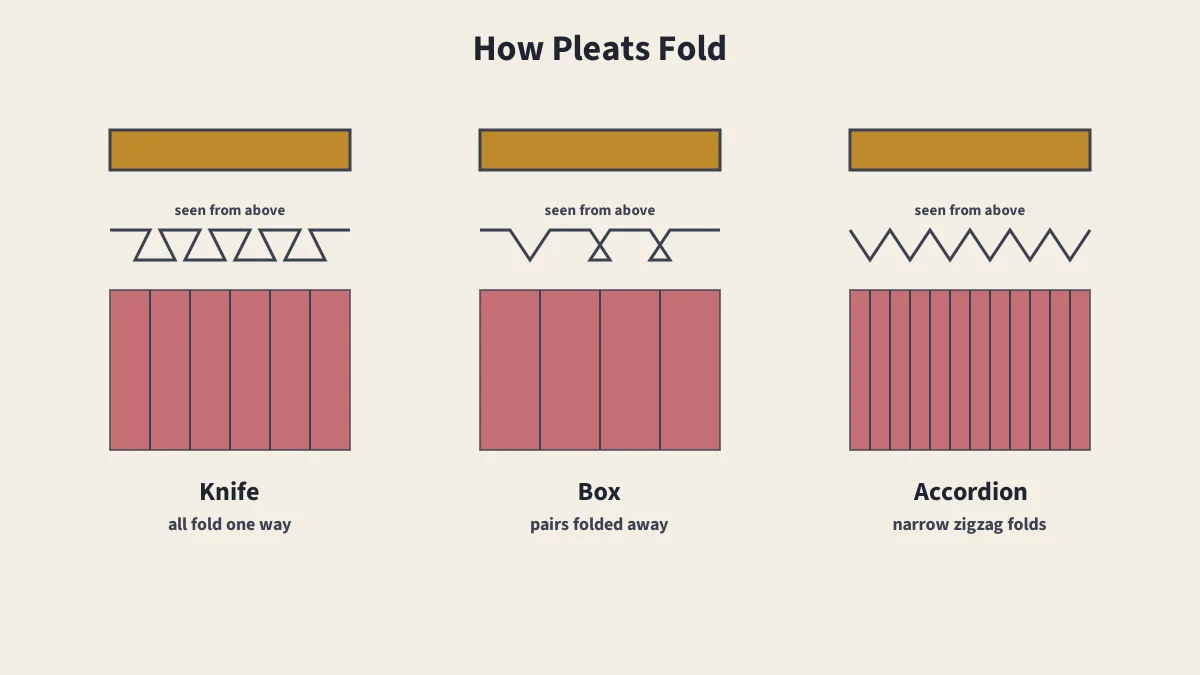
- Knife: all folded one way
- Box: pairs folded away from each other
- Inverted box: the fold on the inside
- Accordion: narrow zigzag folds
- Fabric: knife pleats need about 3:1
A pleat is a fold of fabric doubled back on itself and pressed, stitched or set in place. Pleats reduce the width of fabric at a seam, such as a waistband or yoke, while letting it open out below for movement. Compared with gathers, they give neater, more controlled fullness; see gathering.
Common Pleats
| Pleat | How It Folds | Typical Use |
|---|---|---|
| Knife | All folds turned the same way, making a smooth line | Kilts, pleated skirts |
| Box | Two knife pleats back to back, folded away from each other | Skirts, shirt backs, school uniforms |
| Inverted box | A box pleat turned so the folds meet on the outside | Skirt fronts, coat backs |
| Accordion | Tight, narrow pleats in a zigzag that expand with movement | Skirts, sleeves, hand fans |
| Kick | A short pleat up from the hem | The back of straight skirts and coats |
Knife pleats use about three times the finished width of fabric; stacked double box pleats can use about five times.
Historical and Specialty Pleats
| Pleat | Description |
|---|---|
| Cartridge | Gathers a lot of fabric into a small waistband or armhole without bulk; popular in the 15th and 16th centuries and revived in the 1840s |
| Organ | Rows of softly rounded pleats resembling organ pipes, seen on 15th-century gowns |
| Watteau | One or two box pleats at the back neck of 18th-century sack-back gowns, named by costume historians after Antoine Watteau's paintings |
| Fortuny (Delphos) | Very fine, crisp pleats set in silk by Mariano Fortuny in the early 20th century |
| Kingussie | A rare kilt pleating with a central box pleat at the back and knife pleats fanning out |
Sewing Pleats
- Transfer the fold and placement lines accurately; see marking tools.
- Fold each pleat by bringing a fold line to its placement line, and pin.
- Baste across the top to hold the pleats before attaching the waistband or yoke.
- Press firmly with steam and a press cloth; edgestitching along the folds helps them stay sharp. See pressing as you sew.
- Hem before pleating where possible, so the hem lies flat inside each fold.
Wool and blends with polyester hold pleats well; polyester can be heat-set permanently. See types of wool fabric.
To see Watteau pleats on the gowns they decorated, see 17th- and 18th-century dress.
Sources
- Pleat, Wikipedia
Frequently Asked Questions
What is the difference between a knife pleat and a box pleat?
Knife pleats are all folded in the same direction. A box pleat is two knife pleats folded away from each other, back to back, forming a flat panel on the outside.
How much fabric do pleats need?
Knife pleats typically use about three times the finished width (a 3:1 ratio). Double box pleats can use about five times.
What is a kick pleat?
A short pleat running up from the hem, usually at the back of a narrow skirt or coat, that lets the wearer walk while the garment hangs straight.
What are Fortuny pleats?
Very fine, crisp pleats set in silk by Mariano Fortuny in the early 20th century, most famously in his Delphos gowns. His exact pleating process is still not fully understood.
Keep Reading
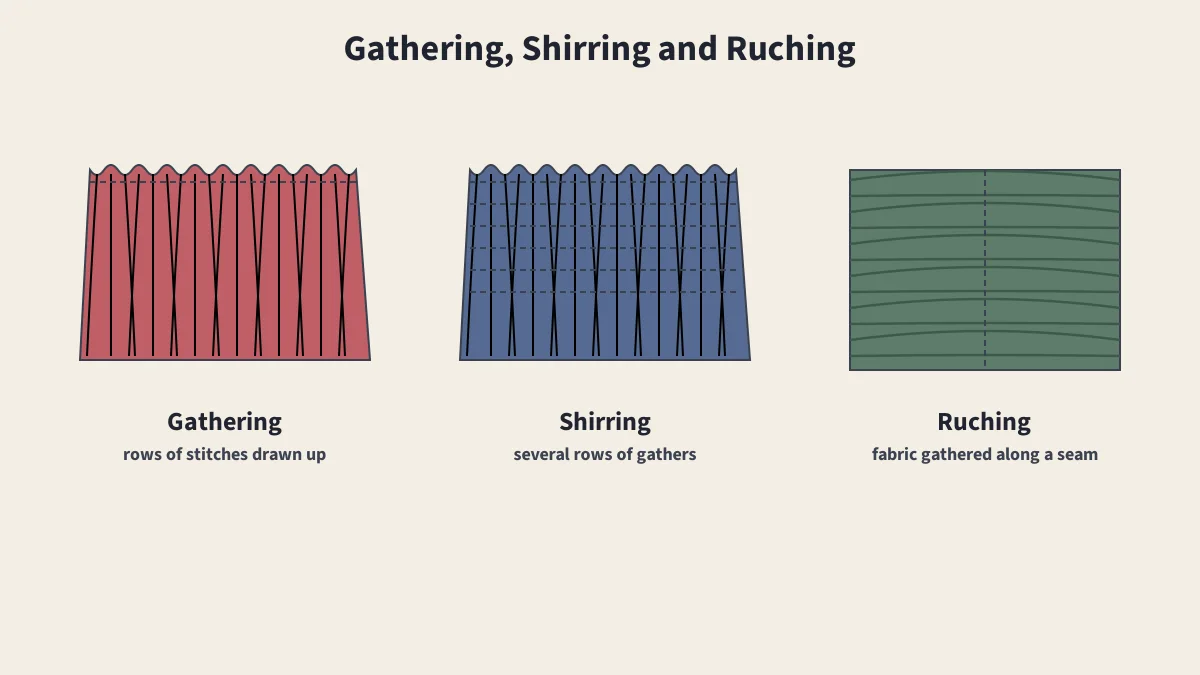
Gathering, Ruching and Shirring
Gathers, shirring, ruching and smocking explained.
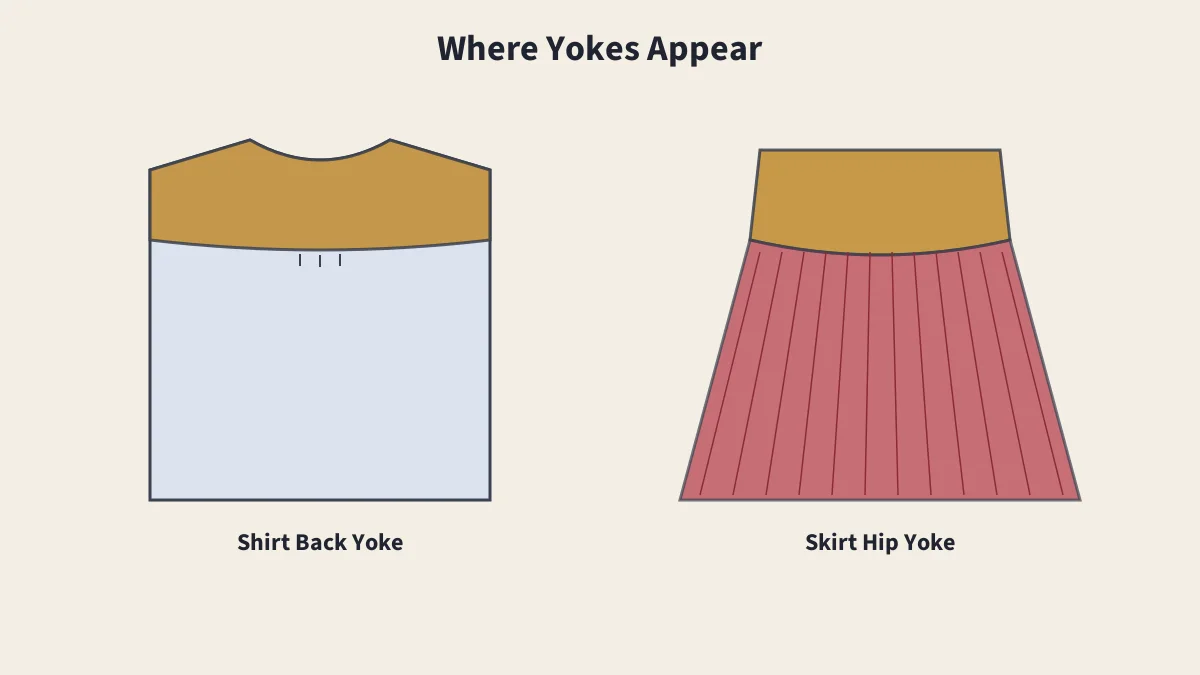
Yokes
Shirt, bodice, skirt and jeans yokes explained.
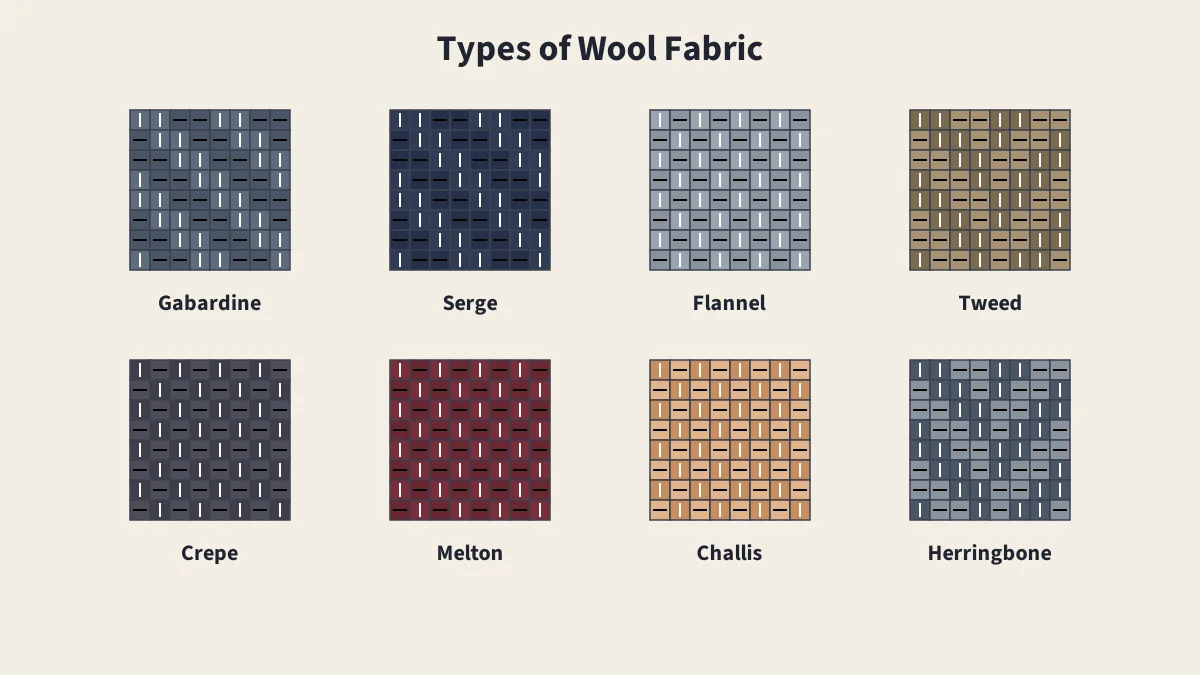
Types of Wool Fabric
Worsted vs. woolen, plus gabardine, tweed, flannel and more.
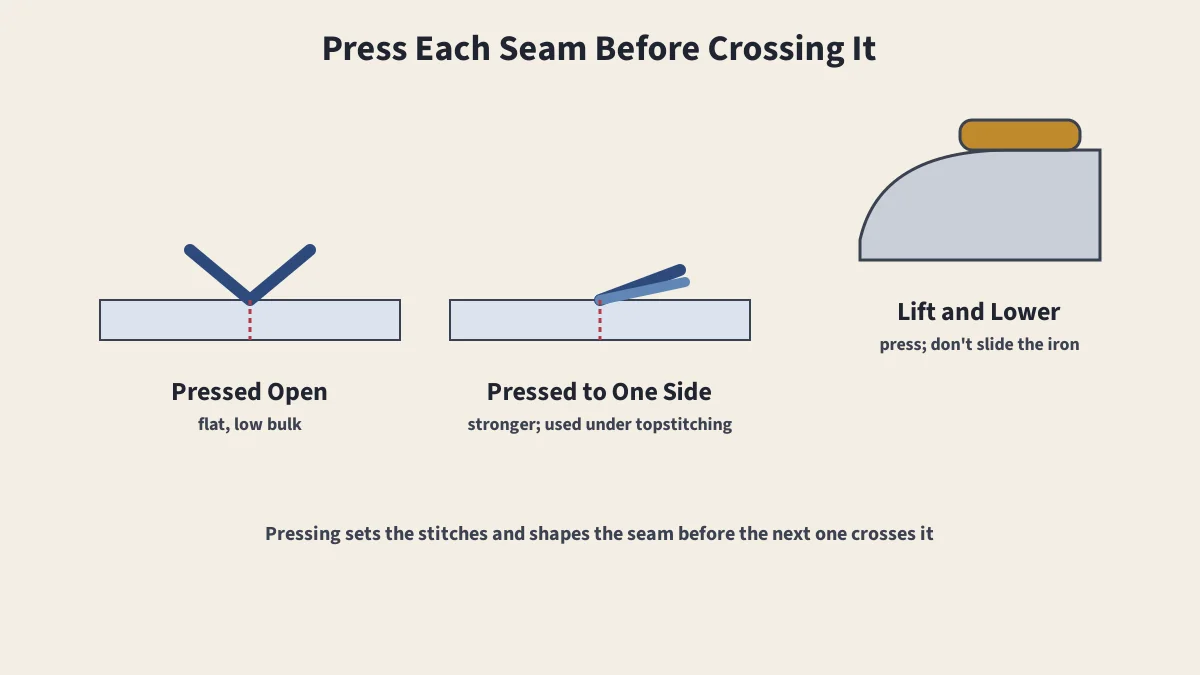
Pressing as You Sew
Pressing vs. ironing, seams, curves and darts.