Linen: The Ancient, Cool Fabric Spun From Flax (2026)
Linen may be humanity's oldest textile fiber. Made from the stems of the flax plant, it wrapped Egyptian mummies, gave its name to lingerie, and still feels cool on the hottest days.
In This Article
Linen in Brief
- Source: bast fibers from flax stems
- Age: wild flax fibers over 30,000 years old
- Strength: up to three times stronger than cotton
- Feel: cool, absorbent, quick-drying
- Weak point: wrinkles easily
Linen is a textile made from the fibers in the stems of the flax plant. Unlike cotton, which grows as fluff around seeds, flax fibers are "bast" fibers bundled inside the stalk and held together by a natural glue called pectin. Freeing them is a slow process, and that labor is part of why linen has long been valued.
One of the Oldest Fibers
Dyed flax fibers found in a cave in the Caucasus, in present-day Georgia, suggest that people were weaving fabric from wild flax more than 30,000 years ago. In ancient Egypt, linen was used for mummy wrappings and burial shrouds, where it symbolized light and purity and displayed the wealth of the dead.
From Flax to Linen
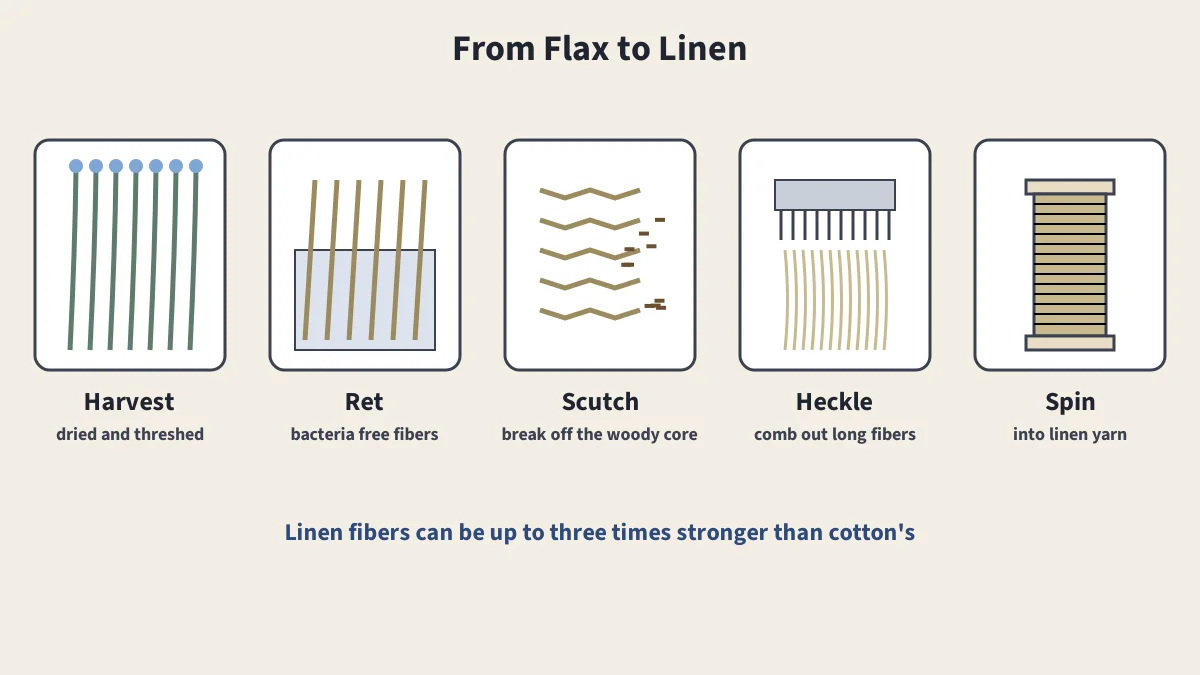
- Harvest: the flax is harvested, dried and threshed to remove the seeds.
- Retting: bacteria break down the pectin that binds the fibers to the stalk.
- Scutching: the woody part of the stalk is broken and scraped away.
- Heckling: the fibers are combed, keeping the long, soft fibers for fine linen.
- Spinning and weaving: the fibers are spun into yarn and woven into cloth; see how fabric is made.
Properties
| Property | What It Means |
|---|---|
| Strong | Fibers can be up to three times stronger than cotton |
| Absorbent and quick-drying | Dries faster than cotton; ideal for towels and summer clothes |
| Cool to the touch | Comfortable in hot weather |
| Wrinkles easily | Creases readily and keeps them |
| Softens with use | Becomes softer with washing |
Linen Today
Europe was long at the heart of the linen trade. In 2018, China was the largest exporter of woven linen fabrics by value, followed by Italy, Belgium and the United Kingdom. Linen is used for summer clothing, table linens, bed linens, tea towels and upholstery. The words "bed linen" and "table linen" survive even when the items are made of cotton.
Sewing With Linen
- Pre-wash linen to soften it and preshrink it.
- Press with high heat and steam; linen tolerates heat well.
- Finish seams carefully; linen frays readily. French and flat-felled seams work well; see types of seams.
- Cut on grain; loosely woven linens can shift as you cut.
- Embrace the wrinkles, or choose a linen blend for a crisper look.
For another strong bast fiber, see hemp.
Sources
Frequently Asked Questions
What is linen made from?
Linen is made from the bast fibers in the stems of the flax plant. The fibers are separated from the stalk by retting, scutching and heckling, then spun into yarn and woven.
Why does linen wrinkle so much?
Linen fibers have very little elasticity, so when the fabric is creased, the fibers do not spring back. Many people accept the soft creases as part of linen's character.
Is linen stronger than cotton?
Yes. Linen fibers can be up to three times stronger than cotton fibers, and linen is also absorbent, dries faster than cotton and feels cool to the touch.
How old is linen?
Very old. Dyed flax fibers found in a cave in Georgia, in the Caucasus, suggest that people were making fabrics from wild flax more than 30,000 years ago.
Keep Reading
Cotton
Where cotton comes from, its history and how it behaves.
Natural vs. Synthetic Fibers
Plant, animal, semi-synthetic and synthetic fibers compared.
How Fabric Is Made
The four stages: fiber, yarn, fabric construction and finishing.
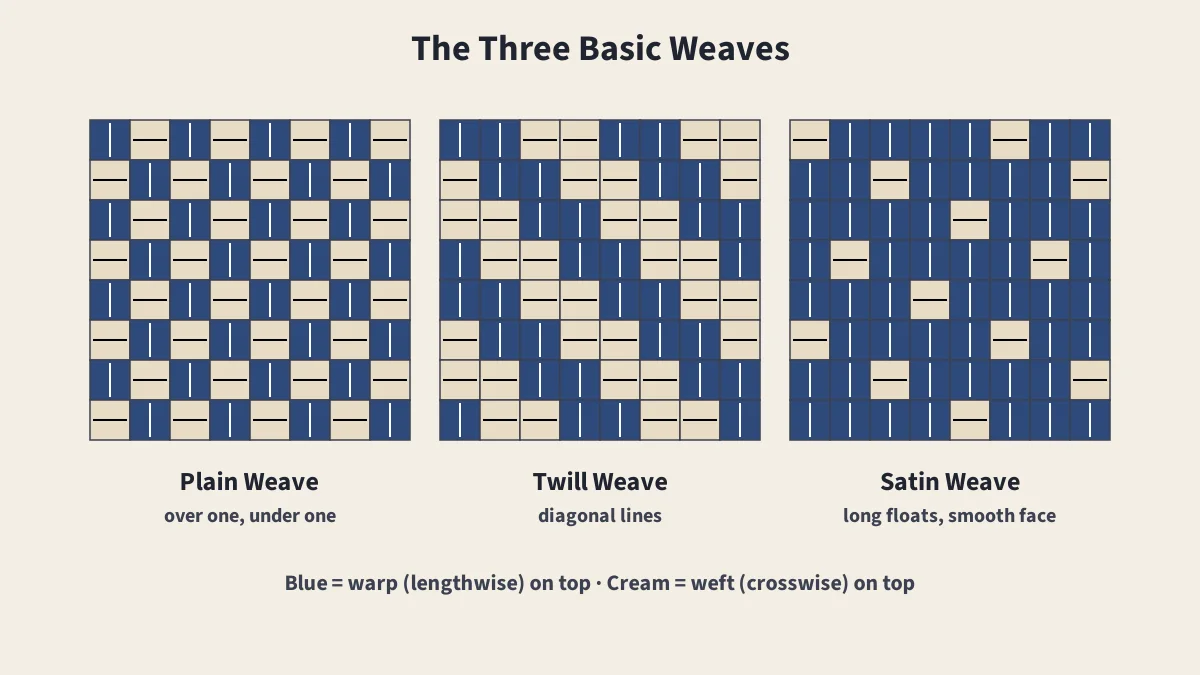
Fabric Weaves
Plain, twill and satin weaves, plus dobby and jacquard.