Facings vs. Linings: How to Finish Necklines and Armholes (2026)
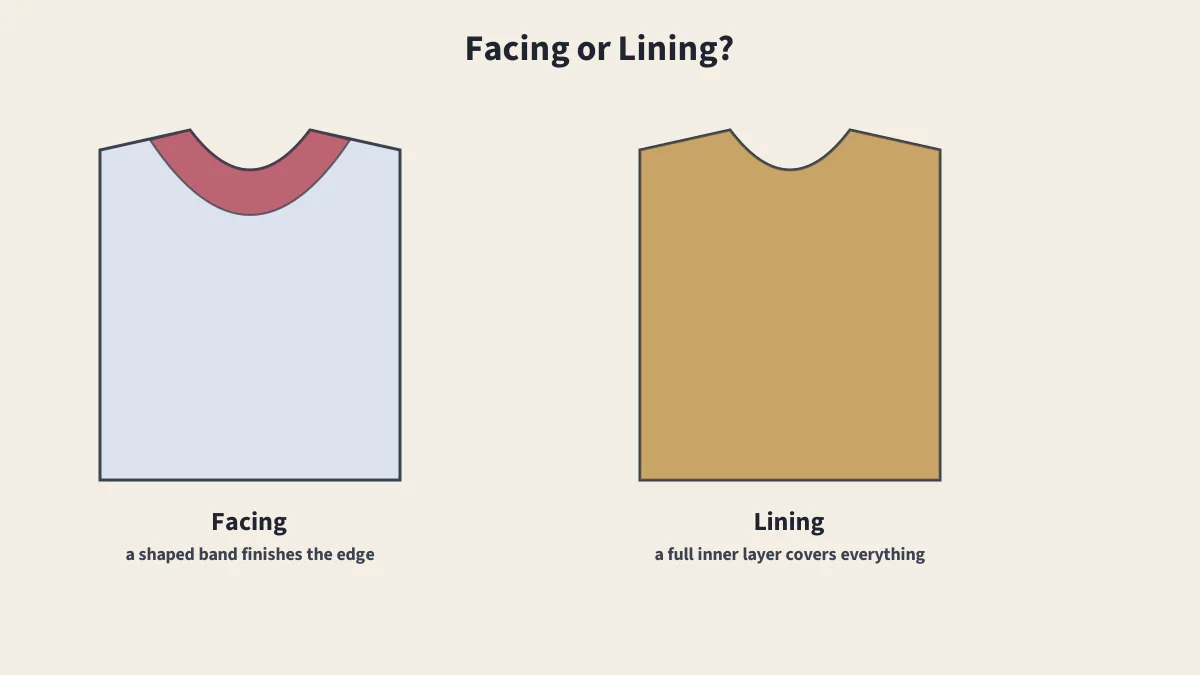
A facing finishes just the edge of a garment with a band of fabric; a lining covers the whole inside. Many garments use both. Here is how they differ and how to sew each kind of facing.
In This Article
Facings in Brief
- Shaped facing: cut to match the edge
- Extended facing: cut in one with the garment
- Bias facing: a narrow bias strip
- All-in-one: neckline and armholes together
- Key steps: interface, grade, understitch
A facing is a piece of fabric, separate or cut as part of the garment, that finishes an edge such as a neckline, armhole, hem or opening. It is a more substantial finish than a simple hem: it supports the edge, stops it stretching and hides the seam inside. Facings are also used on quilts and home décor, such as curtain hems.
Facing or Lining?
| Facing | Lining | |
|---|---|---|
| Covers | Only the edge, a few centimeters deep | The whole inside |
| Seams inside | Visible; need finishing | Hidden |
| Fabric | Usually the garment fabric, interfaced | Lighter, smoother fabric |
| Best for | Unlined garments, shirts, casual dresses | Jackets, coats, sheer or itchy fabrics |
Lined jackets usually have both: front and neck facings in the outer fabric, with the lining sewn to their inner edges. See lining a garment.
Types of Facing
- Shaped facing: cut to the shape of the edge, often from the garment pattern pieces. It may be cut from lighter or contrasting fabric.
- Extended facing: an extension of the garment piece, folded back along the edge, as on many blouse and shirt fronts. It is usually stabilized with interfacing.
- Bias facing: a narrow strip cut on the bias, shaped to the edge and turned fully inside; see applying bias binding.
- All-in-one facing: finishes the neckline and armholes of a sleeveless garment in one piece.
- Decorative facing: applied from the inside and turned to the outside as a contrasting band.
Sewing a Shaped Neckline Facing
- Staystitch the garment neckline so it doesn't stretch.
- Interface the facing pieces; see interfacing.
- Join the facing pieces at the shoulders and finish the outer edge with an overlock, zigzag or narrow hem.
- Stitch the facing to the neckline, right sides together.
- Grade and clip the seam allowances; see curves and corners.
- Understitch the facing to the allowances close to the seam.
- Turn and press, then tack the facing to the shoulder seam allowances.
For neckline shapes and the collars attached to them, see types of necklines and types of collars.
Sources
- Facing (sewing), Wikipedia
- Lining (sewing), Wikipedia
Frequently Asked Questions
What is a facing in sewing?
A piece of fabric, either separate or cut as part of the garment, that is sewn to an edge and turned inside to finish it. It strengthens the edge, stops it stretching and hides the seam.
Do facings need interfacing?
Usually. Interfacing the facing helps it hold its shape and keeps necklines and openings from stretching. Lightweight fabrics may need only a light interfacing.
How do I stop a facing from rolling out?
Understitch it: after trimming and grading the seam, stitch through the facing and seam allowances close to the seamline. Tacking the facing to seam allowances at the shoulders also helps.
Can I replace a facing with a lining?
Often, yes. A lining cut to the full bodice shape can finish the neckline and armholes while covering the whole inside, which is common in sleeveless dresses.
Keep Reading
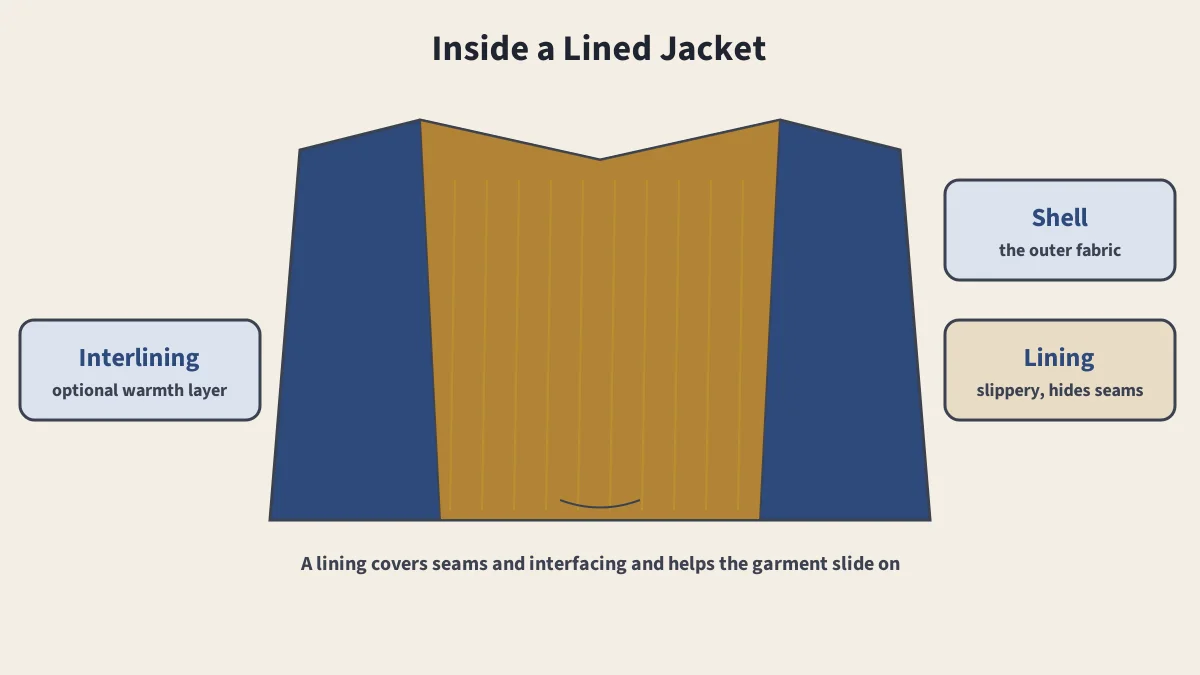
Lining a Garment
Lining fabrics, interlining and lining a skirt or jacket.
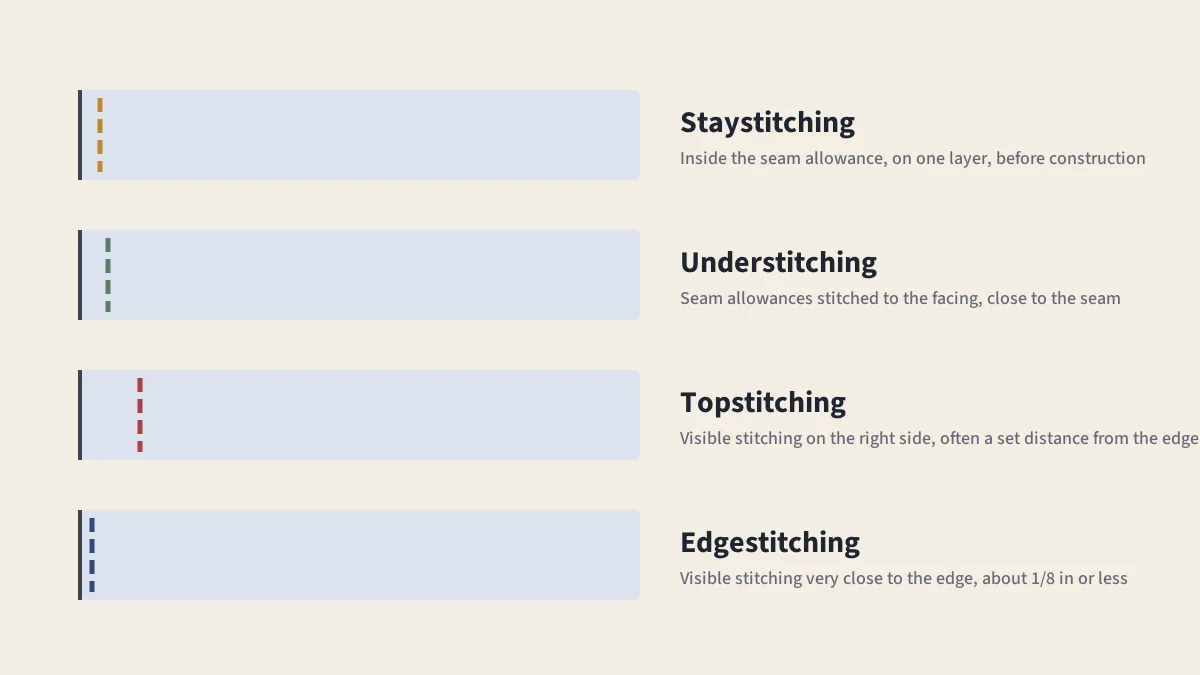
Staystitching, Understitching and Topstitching
Four stitching techniques that sound alike but do different jobs.
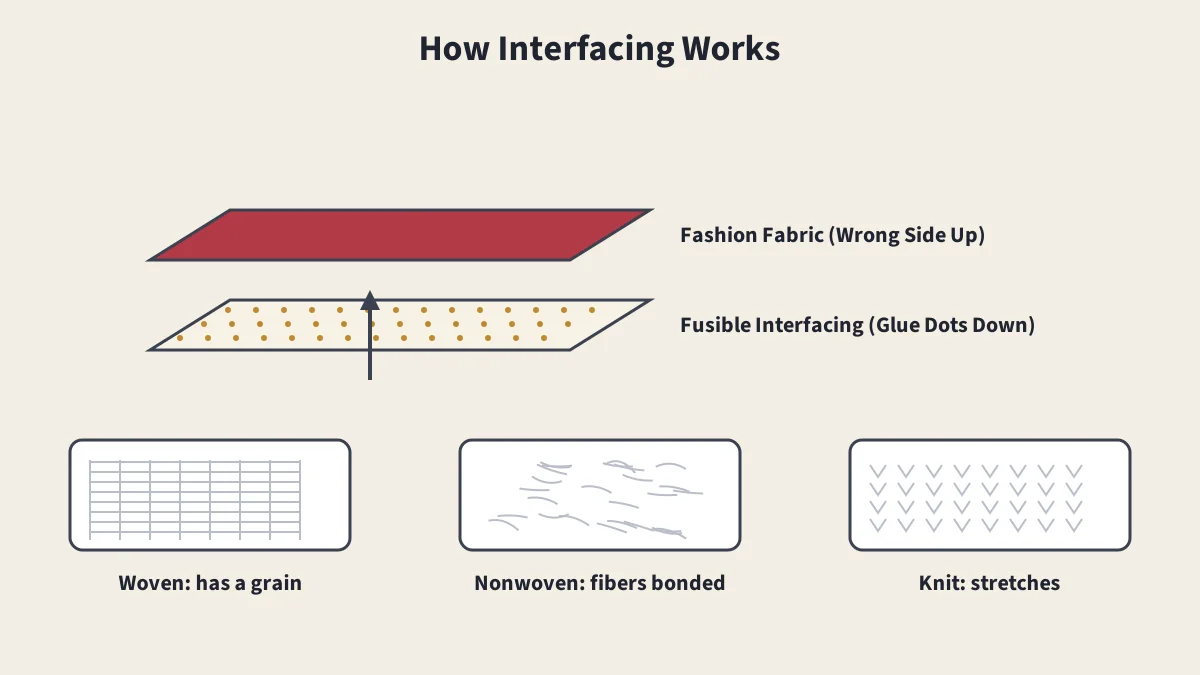
Interfacing Types
Fusible vs. sew-in, woven vs. nonwoven vs. knit, and how to apply it.
Applying Bias Binding
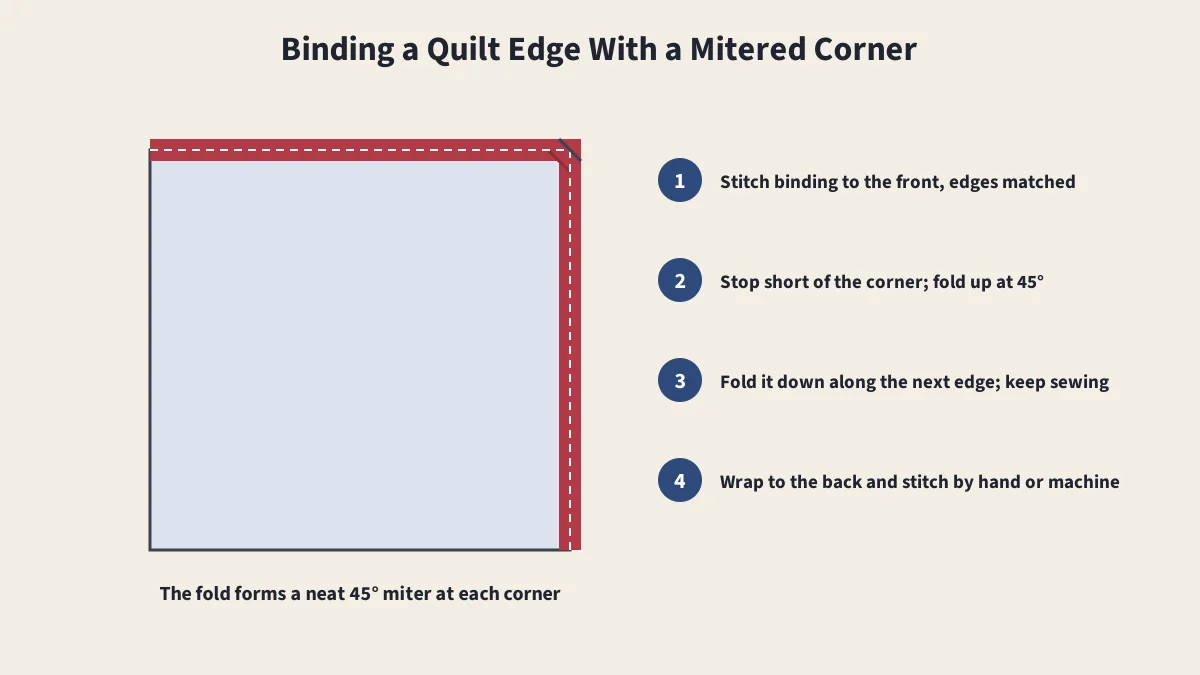
Binding garment curves and quilts, with mitered corners.