What Is a Toile? Making a Test Garment (Muslin) Before You Sew (2026)
A toile is a trial version of a garment, sewn in cheap fabric to test the pattern. Designers often make several to perfect a design, and home sewists use them to check fit before cutting good fabric.
In This Article
Toiles in Brief
- What: a trial garment
- Names: toile (UK), muslin (US)
- Fabric: calico or similar cheap cloth
- Purpose: test fit and design
- Word origin: French toile, cloth
A toile is a trial version of a garment made by a fashion designer or dressmaker, usually from calico, to test a pattern before the final garment is cut and sewn. Designers often make several toiles to perfect a design. Americans usually call it a muslin. The word comes from the French toile, meaning cloth, from the Latin tela, a web.
Why Make a Toile?
- Check the fit before cutting expensive fabric.
- Test a new pattern company's sizing.
- Try out design changes, such as a different neckline or length.
- Practice an unfamiliar technique.
- Perfect a sloper.
Choosing Toile Fabric
| Final Fabric | Toile Fabric |
|---|---|
| Medium-weight woven | Calico or muslin |
| Drapey woven | Inexpensive rayon or poly crepe |
| Heavy wool or coating | Heavier calico or old blanket fabric |
| Knit | Inexpensive knit with the same stretch |
Calico, an inexpensive undyed plain-weave cotton, is coarser than muslin but finer than canvas or denim. Choose fabric with a similar weight and drape to the final fabric, or the toile won't tell you much.
How to Make and Fit a Toile
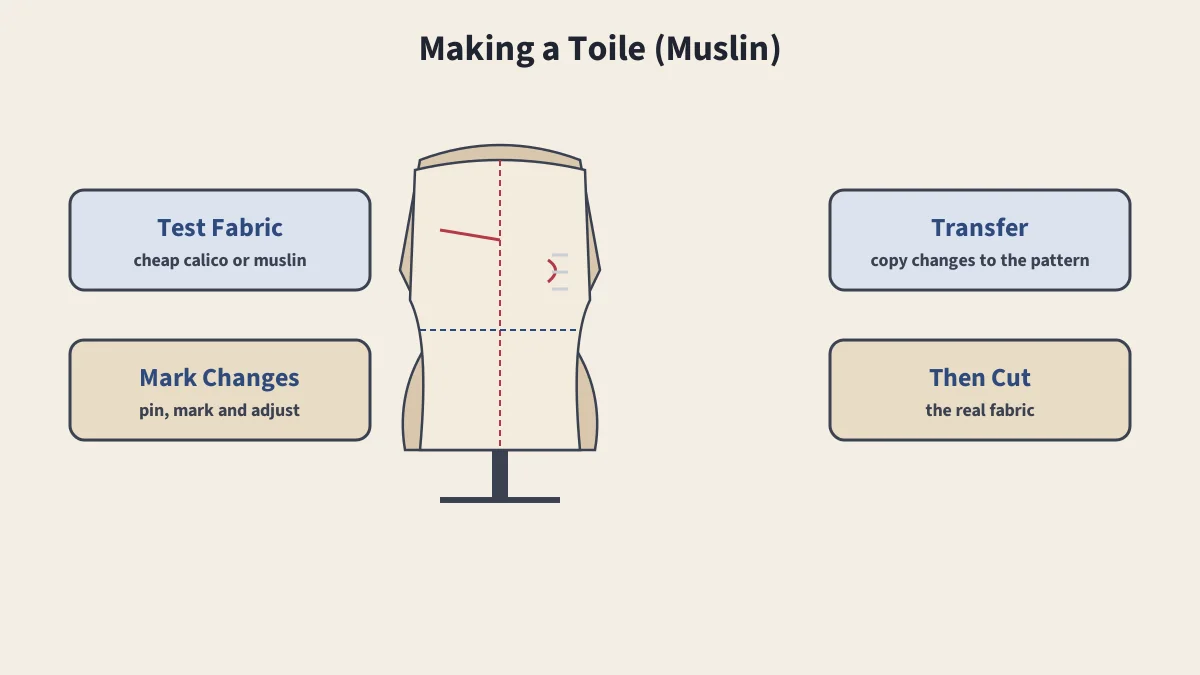
- Cut the main pieces only; facings, linings and pockets can usually be skipped.
- Mark center front, center back, waist, bust and hip lines with a pen.
- Sew with a long stitch so it is easy to unpick; leave seam allowances wide.
- Try it on with the right undergarments and shoes.
- Pin and mark changes: pinch out excess, slash and spread where it is tight, and mark new seamlines.
- Transfer the changes to the paper pattern; see common fit adjustments.
- Repeat if the changes were large.
Sources
- Toile, Wikipedia
- Sewing pattern, Wikipedia
Frequently Asked Questions
What is the difference between a toile and a muslin?
They are the same thing. Toile is the usual term in Britain and Australia; muslin is common in the United States, after the inexpensive cotton fabric often used.
What fabric should I use for a toile?
A cheap fabric with similar weight and drape to the final fabric. Calico or muslin suits woven garments; use an inexpensive knit with similar stretch for knit patterns.
Do I need to make a toile?
For loose garments, often not. For fitted garments, expensive fabric, or a new pattern company, a toile can save fabric and time.
What is a wearable muslin?
A test garment made in a fabric good enough to wear, so the toile becomes a usable piece of clothing if the fit is right.
Keep Reading
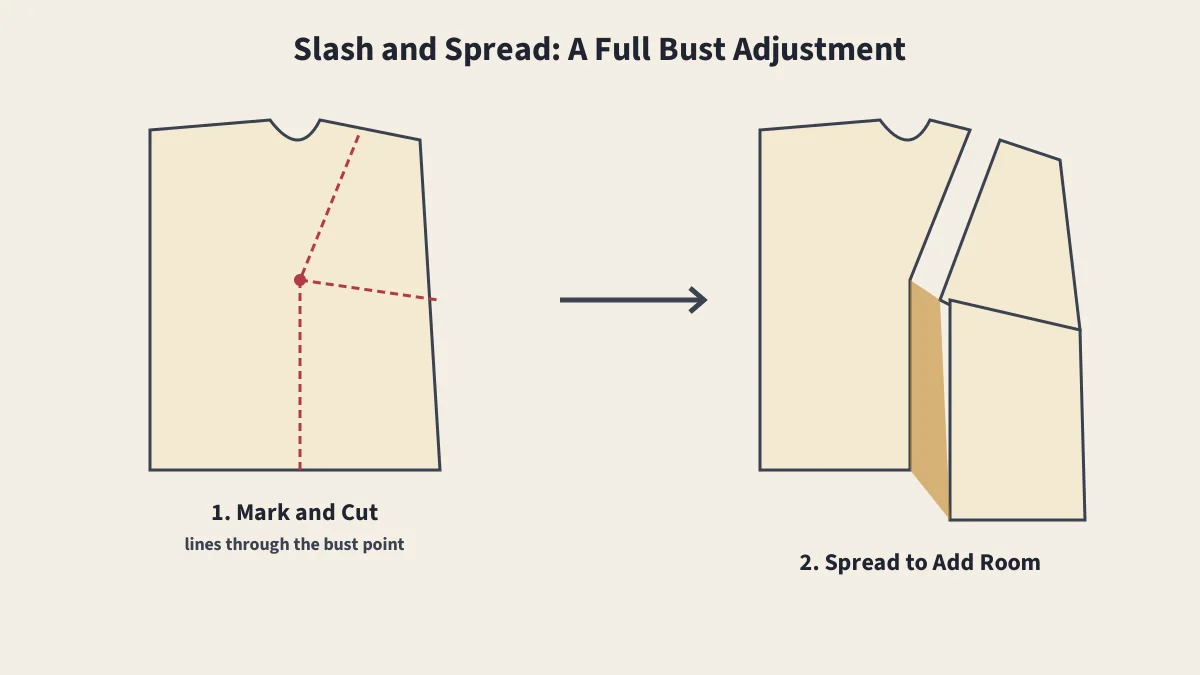
Common Fit Adjustments
Bust, back, shoulder, length and hip adjustments.
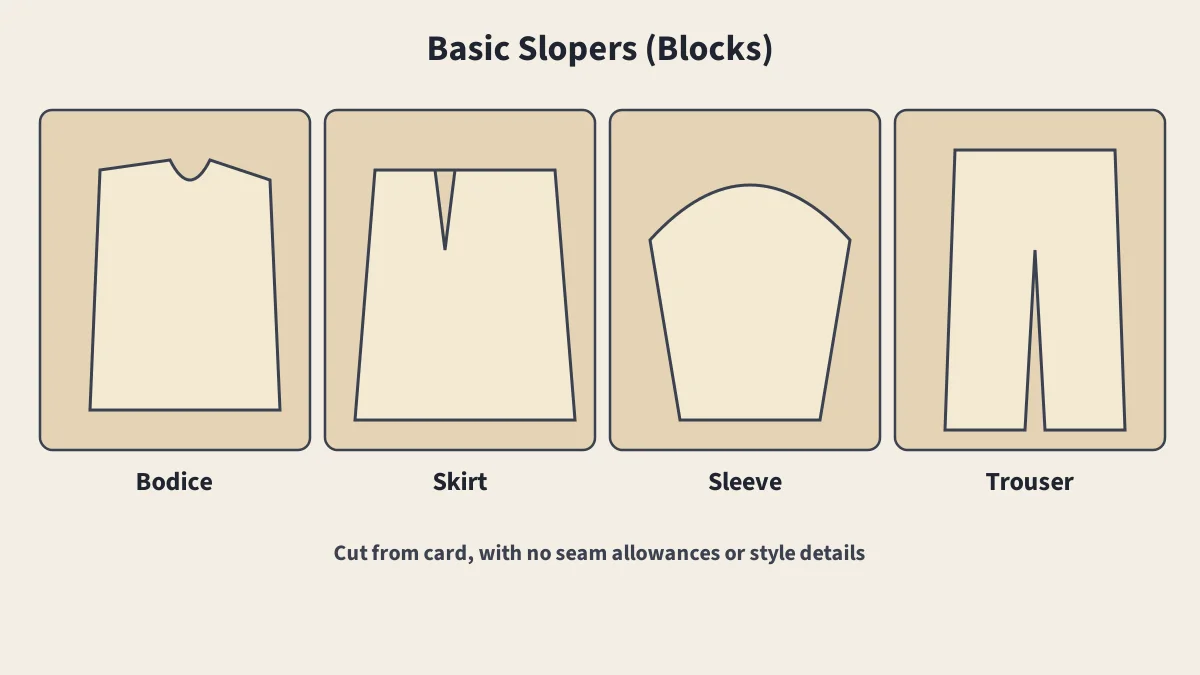
Slopers and Blocks
Bodice, skirt, sleeve and trouser blocks explained.
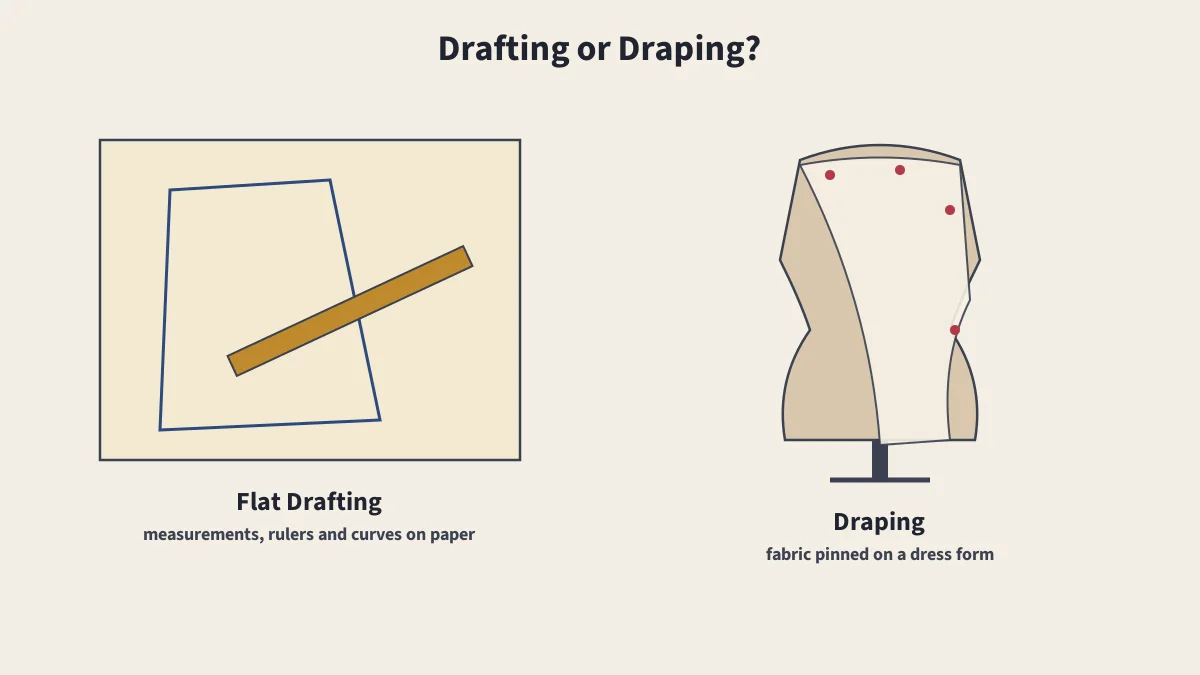
Pattern Drafting vs. Draping
Flat drafting and draping compared.
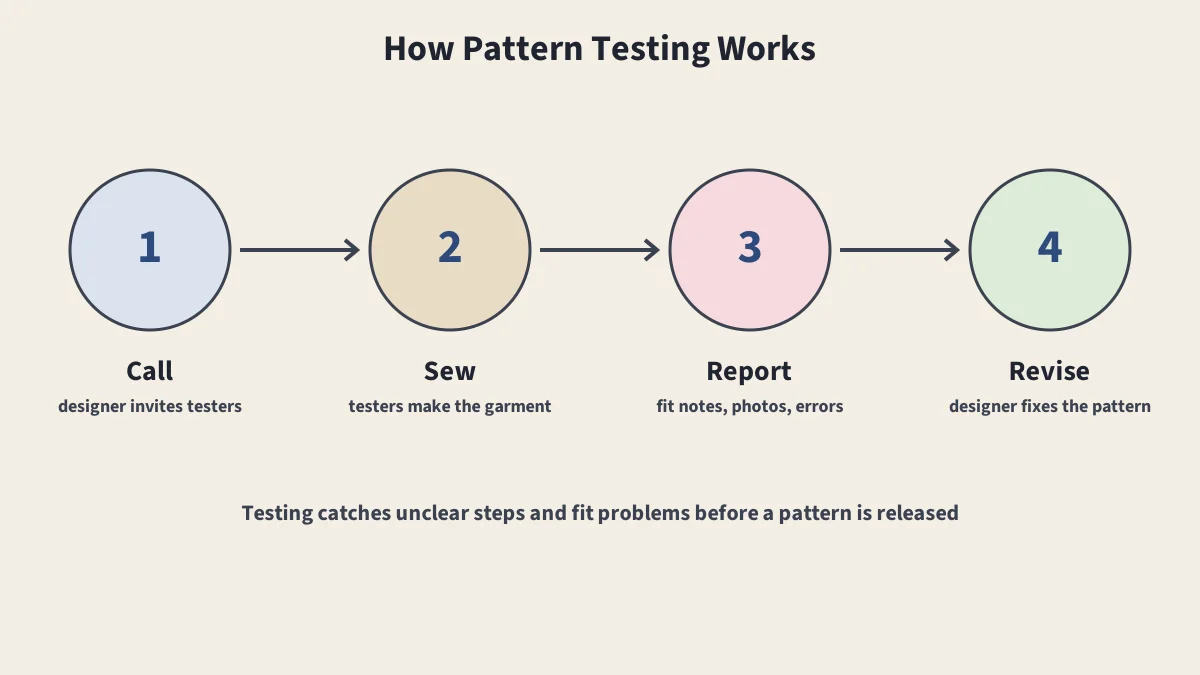
Pattern Testing
How test calls work and how to become a tester.