The History of Denim: From Nîmes to Blue Jeans (2026)
Denim began as a sturdy French twill, became work wear for miners and laborers, then turned into a symbol of youth and rebellion. Here is how one fabric conquered the world's wardrobes.
In This Article
Denim in Brief
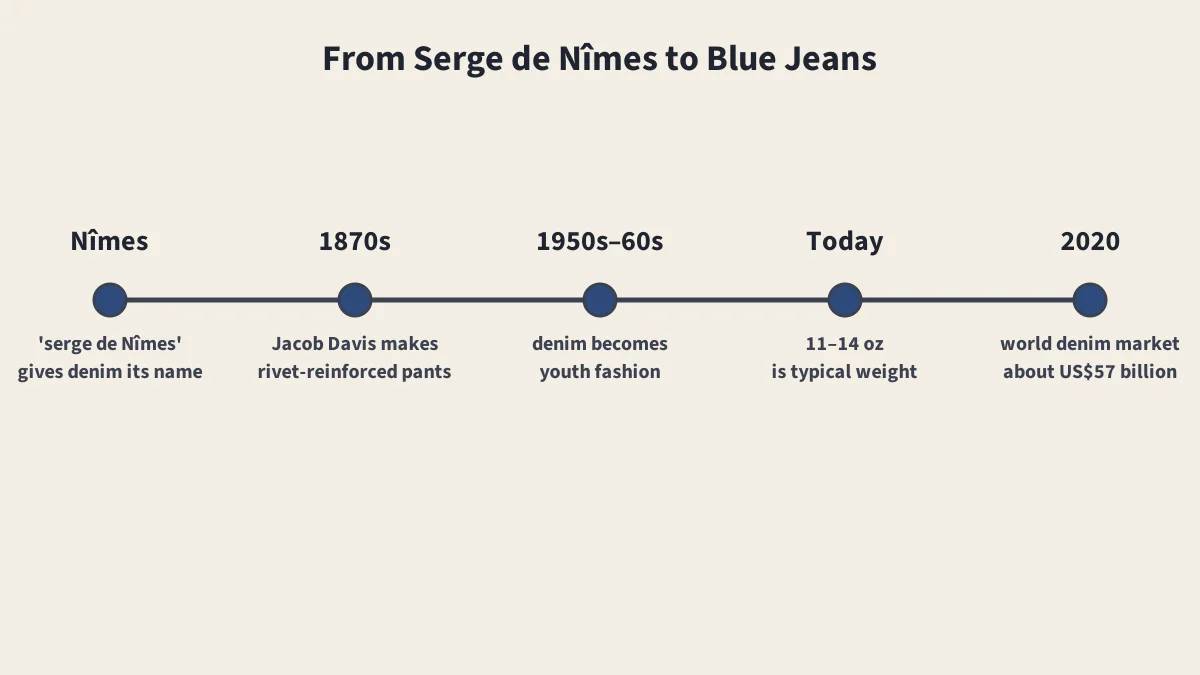
- Name: from serge de Nîmes
- Weave: twill, with indigo warp and white weft
- Rivet patent: May 20, 1873, Davis and Strauss
- Typical weight: 11 to 14 oz (310 to 400 g)
- Market: about US$57.3 billion in 2020
Few fabrics are as recognizable as denim. It is a sturdy cotton twill, usually with indigo-dyed warp threads and white weft threads, which is why jeans are blue outside and pale inside. Its history runs from French and Italian textile towns to the American West and then to every corner of the world.
Two Place Names
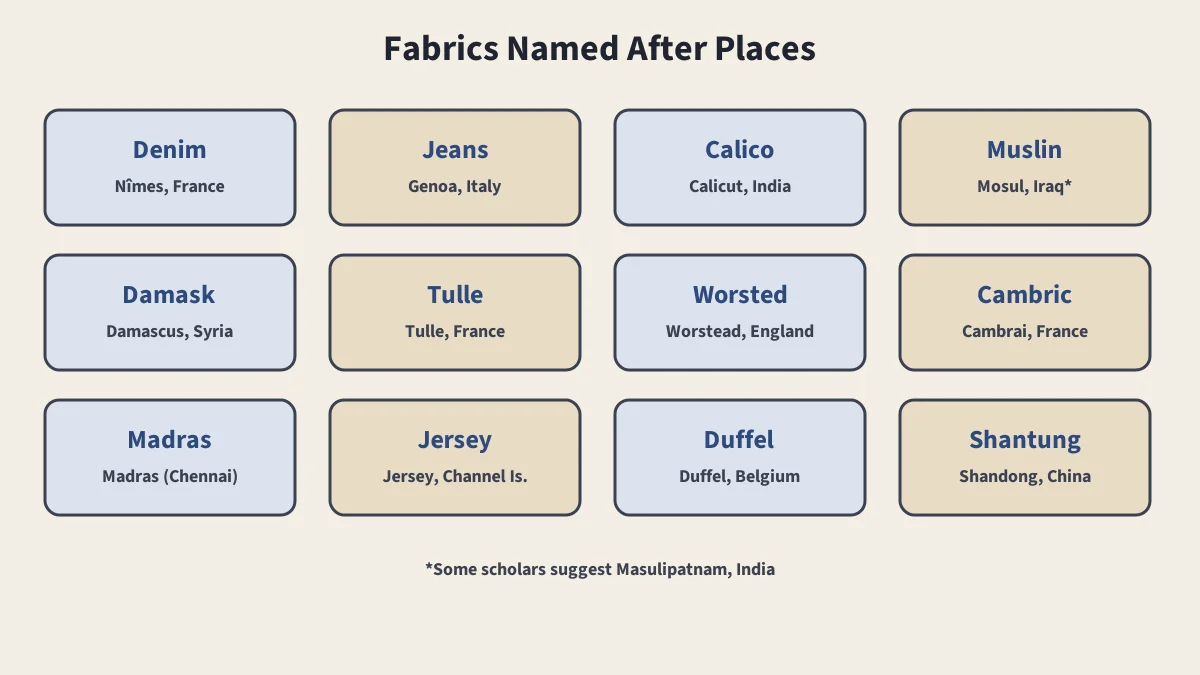
Denim originated as a contraction of the French phrase serge de Nîmes, a twilled cloth associated with the city of Nîmes. The word "jeans" comes from Gênes, the French name for Genoa, Italy, which produced a fustian cloth of medium quality and reasonable cost. See fabrics named after places.
Rivets and Work Wear
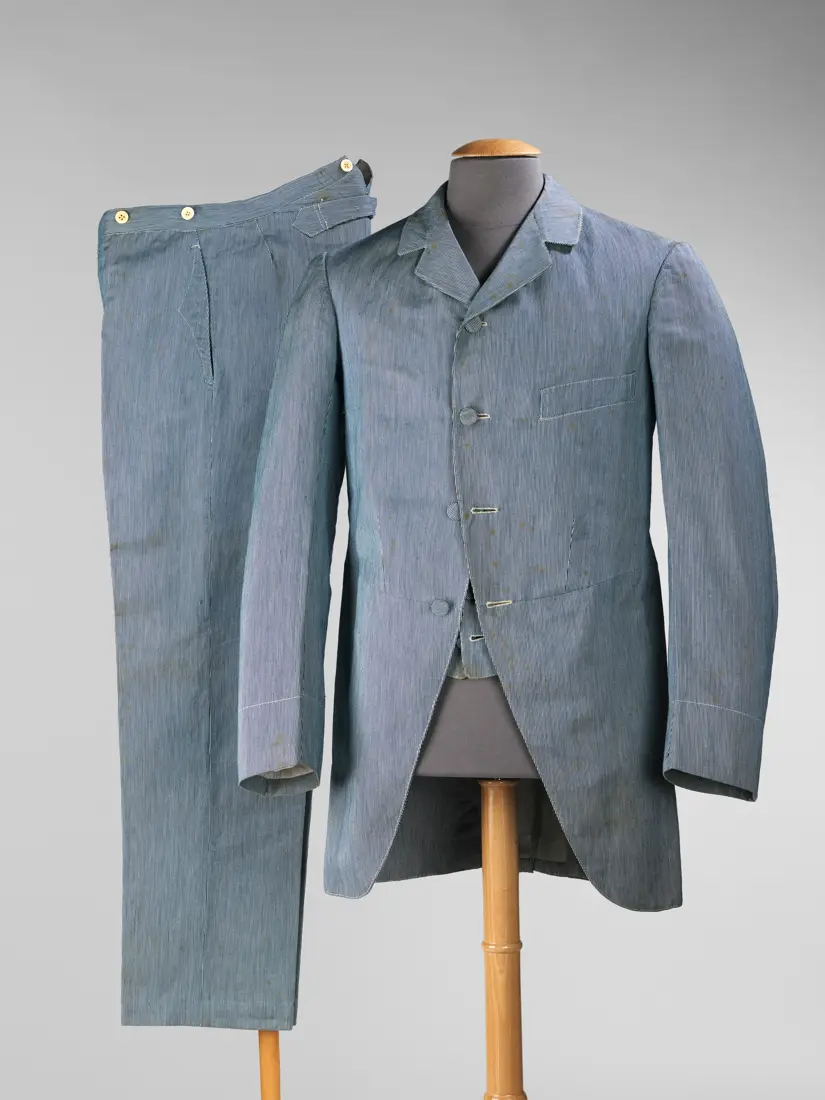
In the American West, tailor Jacob W. Davis began reinforcing work trousers with copper rivets at stress points such as pocket corners, so they would stand up to hard labor, including mining. Davis and Levi Strauss, who supplied his fabric, received US patent No. 139,121 for an "Improvement in Fastening Pocket-Openings" on May 20, 1873. When demand outgrew Davis's workshop, production moved to Levi Strauss & Co.
From Work Wear to Rebellion
In the 1950s and 1960s, denim made a dramatic shift from work clothing to youth fashion. Marlon Brando in The Wild One (1953) and James Dean in Rebel Without a Cause (1955) helped make riveted blue jeans a teenage symbol of rebellion. From there, denim became everyday wear for almost everyone. For how mass-produced clothing spread, see the history of ready-to-wear clothing.
How Denim Is Made
- Dyeing: denim was originally dyed with plant indigo; most denim today uses synthetic indigo.
- Weaving: usually a twill with dyed warp and undyed weft.
- Finishing: the woven fabric is usually sanforized, a mechanical preshrinking process; see fabric shrinkage.
- Weight: from about 9 to 32 oz per yard, with 11 to 14 oz (310 to 400 g) typical; see fabric weight.
Selvedge Denim
Denim woven on traditional shuttle looms is usually recognizable by its selvedge, the self-finished edge, often shown at the turned-up hem of the jeans. Selvedge denim is often considered a premium product; see grain, bias and selvage.
Denim Today
In 2020, the worldwide denim market was worth about US$57.3 billion. More than half of denim is produced in Asia, mainly in China, India, Turkey, Pakistan and Bangladesh.
Sewing With Denim
- Use a denim or jeans needle and topstitching thread; see sewing machine needles.
- Pre-wash unless the denim is sanforized and you want the raw look.
- Use flat-felled seams for strength; see types of seams.
- Hammer thick seams flat before stitching over them.
For the parts of a pair of jeans, see yokes and types of pockets.
For today's cuts, see jeans styles and fits.
Sources
Frequently Asked Questions
Where does the word denim come from?
Denim originated as a contraction of the French phrase serge de Nîmes, a twilled cloth associated with the city of Nîmes.
Who invented blue jeans?
Tailor Jacob W. Davis made the first rivet-reinforced denim pants. He and Levi Strauss, who supplied his fabric, received US patent No. 139,121 for the rivets on May 20, 1873.
Why are jeans blue?
Denim was originally dyed with indigo extracted from plants; most denim today uses synthetic indigo. Typically only the warp threads are dyed, so jeans are blue outside and pale inside.
What is selvedge denim?
Denim woven on a shuttle loom, recognizable by its self-finished edge, or selvedge. It is often considered a premium product.
Keep Reading
Types of Cotton Fabric
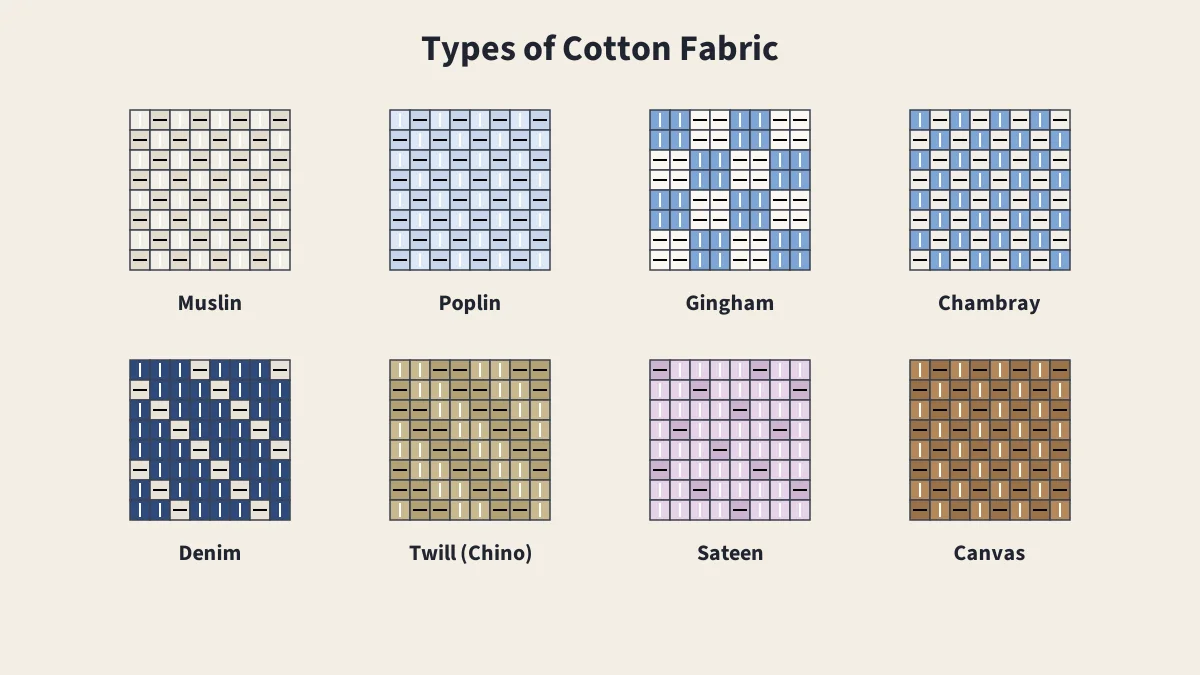
Muslin, poplin, gingham, chambray, denim, corduroy and more.
Fabric Weaves
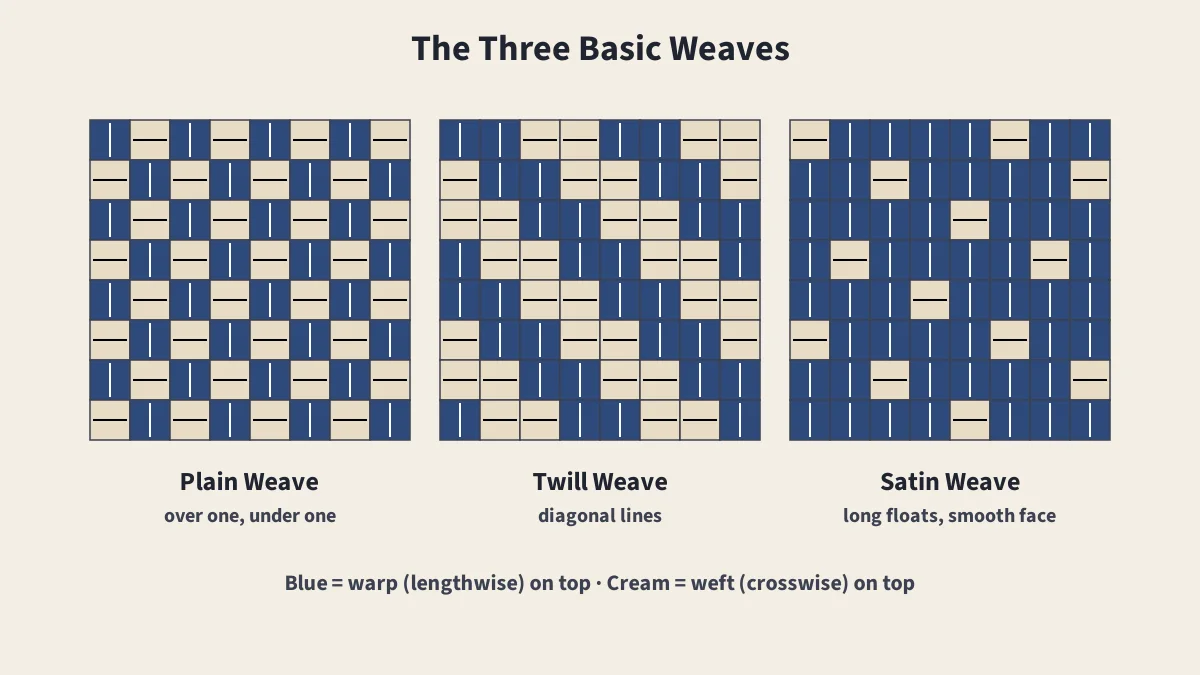
Plain, twill and satin weaves, plus dobby and jacquard.
Fabrics Named After Places
Denim, calico, damask, tulle, madras and other place names.
History of Ready-to-Wear Clothing
How slop shops, war uniforms and sewing machines created off-the-rack clothes.