Spandex, Elastane and Lycra: One Fiber, Three Names (2026)
A few percent of spandex turns rigid denim into stretch jeans and makes leggings possible. Invented at DuPont in 1958, it goes by different names around the world, and it is now in most of the clothes we buy.
In This Article
Spandex in Brief
- Names: spandex, elastane, Lycra
- Invented: 1958, by Joseph Shivers at DuPont
- Made of: a polyether-polyurethane copolymer
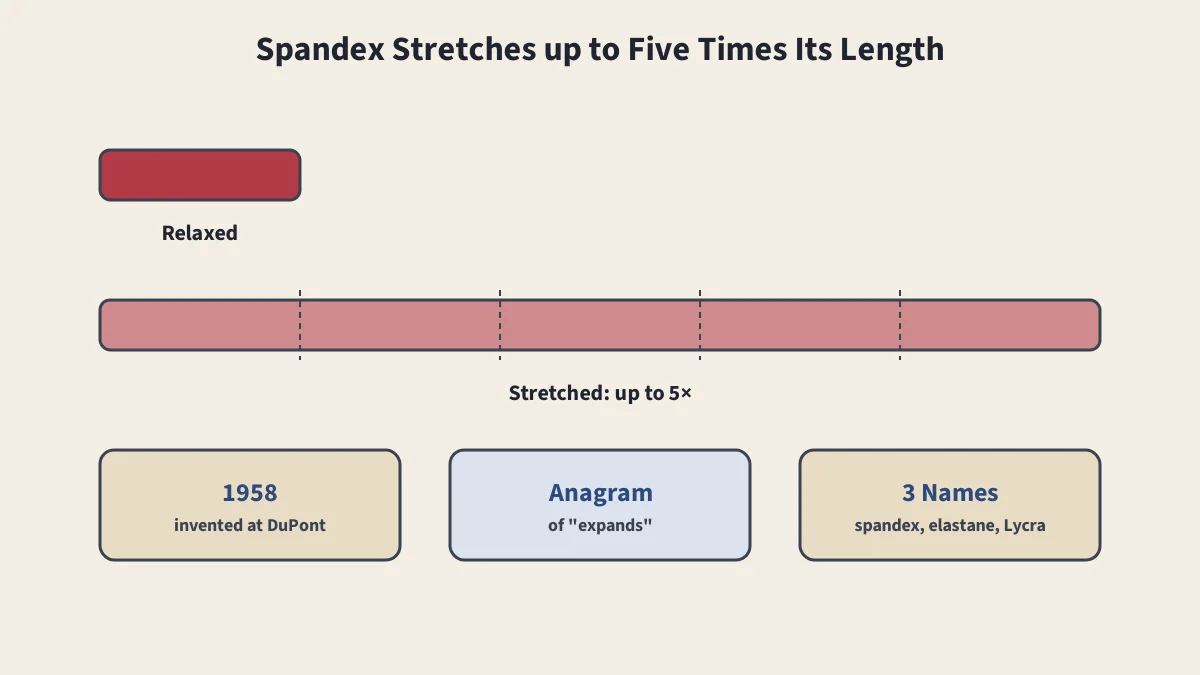
- Stretch: up to five times its length
- Prevalence: in an estimated 80% of US clothing (2010)
Spandex is a synthetic fiber known for exceptional elasticity. It is almost always blended with other fibers in small amounts, adding stretch and recovery to fabrics that otherwise would have little. It made modern activewear, swimwear and stretch jeans possible.
One Fiber, Three Names
The fiber goes by different names in different places. Spandex is preferred in North America, elastane in continental Europe, and Lycra, originally a brand name, is commonly used in the UK, Ireland and Australia. "Spandex" itself is an anagram of "expands."
Invention
Chemist Joseph Shivers invented the fiber at DuPont in 1958. Today, an estimated 80% of clothing sold in the US contained spandex as of 2010.
How Much Spandex?
Spandex usually makes up a small share of a fabric blended with cotton or polyester, so the fabric keeps most of the look and feel of its main fiber. Stretch denim and stretch wovens typically contain just a few percent; swimwear, leggings and compression garments contain much more.
| Garment | Why Spandex Is Used |
|---|---|
| Leggings and activewear | Close fit with freedom of movement |
| Swimwear | Stretch and recovery when wet |
| Stretch jeans and chinos | Comfort while keeping a woven look |
| Compression and shapewear | Firm support |
| Underwear and hosiery | Fit and recovery |
Drawbacks
Spandex blends are hard to recycle: even 5% spandex can make a fabric unsuitable for most mechanical recycling machines, and spandex cannot be melt-processed because it degrades when melted. Spandex can also weaken over time with heat, so many care labels advise against high dryer heat.
Sewing With Spandex Blends
- Use a stretch needle, designed to avoid skipped stitches on elastic knits; see sewing machine needles.
- Use a stretch stitch, narrow zigzag or serger so seams can stretch; see serger vs. sewing machine.
- Check stretch percentage against the pattern's requirements; see types of knit fabric.
- Avoid high heat when pressing.
- Use the right elastic for swimwear and activewear; see types of elastic.
Sources
- Spandex, Wikipedia
Frequently Asked Questions
Are spandex, elastane and Lycra the same thing?
Yes, they name the same type of fiber. Spandex is the usual name in North America, elastane is used in continental Europe, and Lycra, a brand name, is common in the UK, Ireland and Australia.
How much can spandex stretch?
Spandex can stretch up to five times its length and return to its original shape.
Why is spandex blended with other fibers?
A small amount of spandex adds stretch and recovery while the fabric keeps most of the look and feel of its main fiber, such as cotton or polyester.
Who invented spandex?
Chemist Joseph Shivers invented it at DuPont in 1958. The word spandex is an anagram of 'expands.'
Keep Reading
Types of Knit Fabric
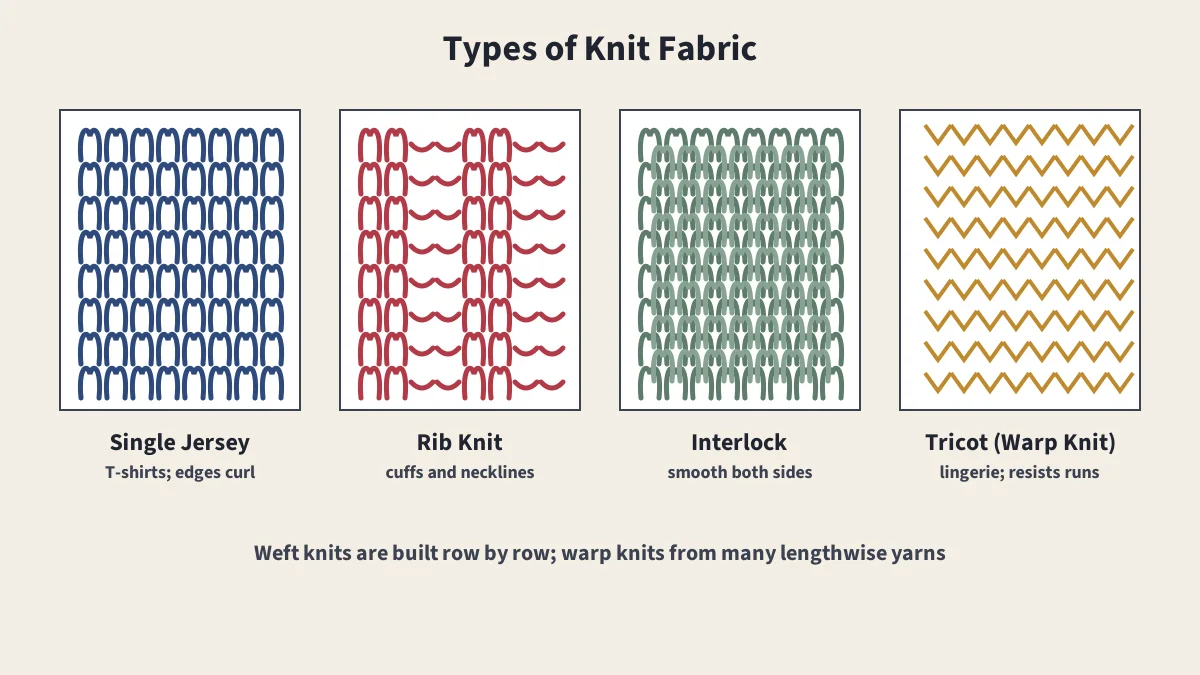
Jersey, rib, interlock, ponte, fleece and tricot explained.
Types of Elastic
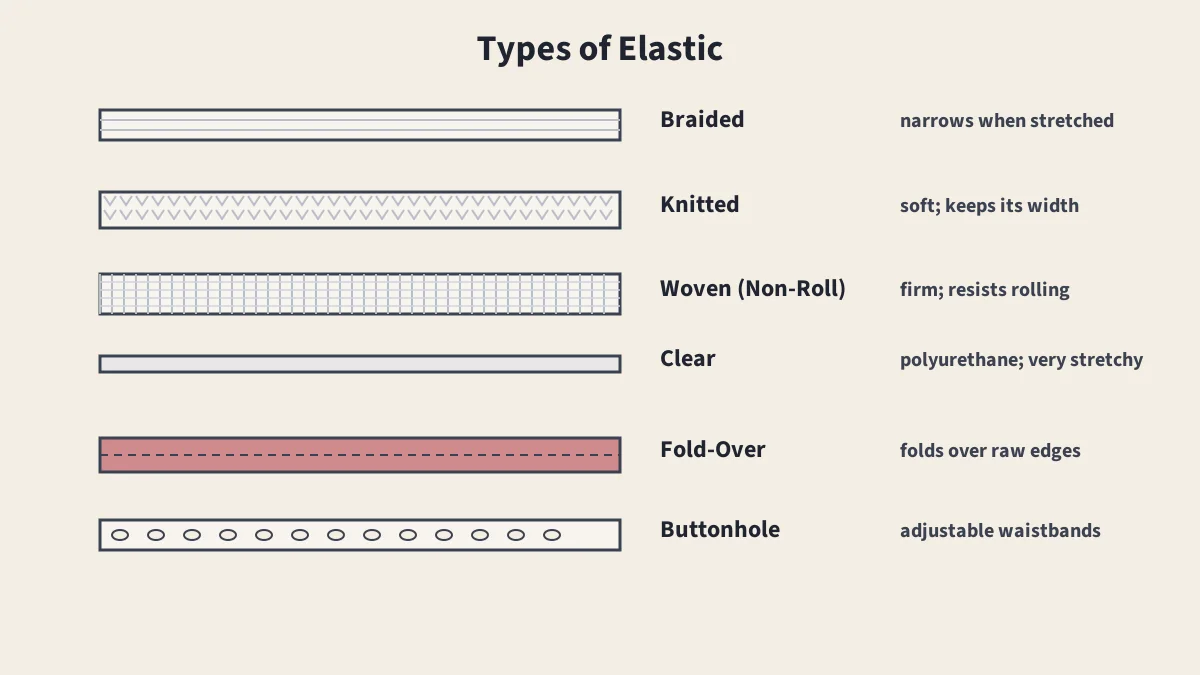
Braided, knit, woven, clear and fold-over elastic compared.
Nylon
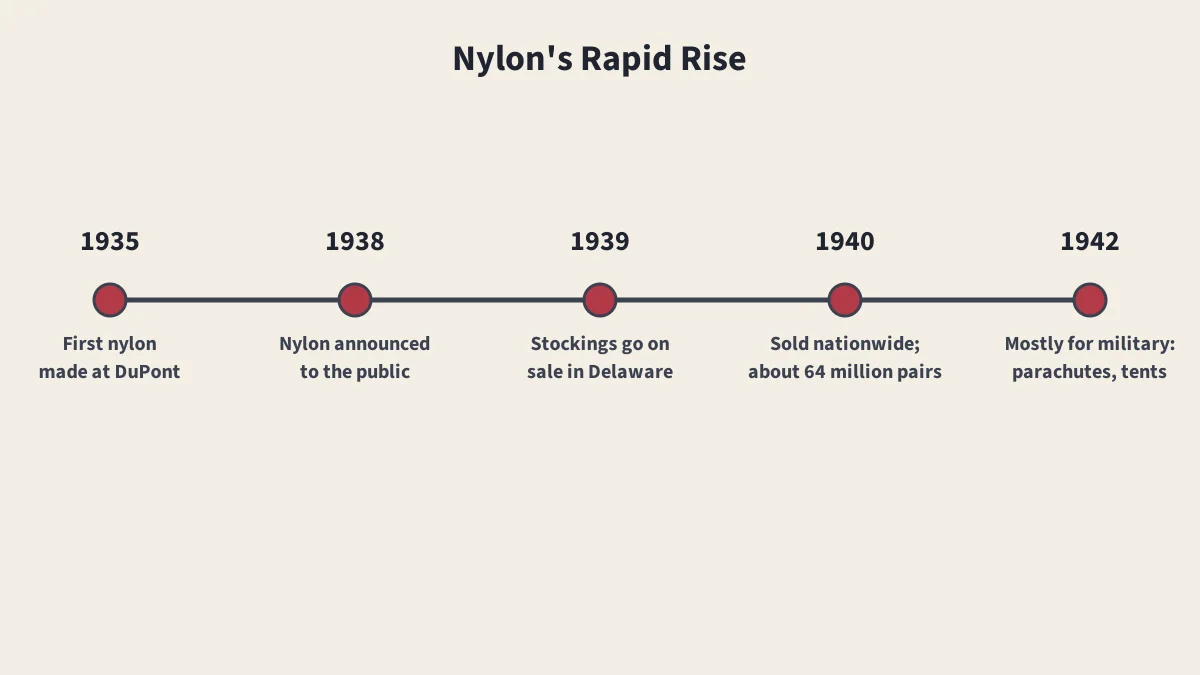
The first synthetic fiber, from stockings to parachutes.
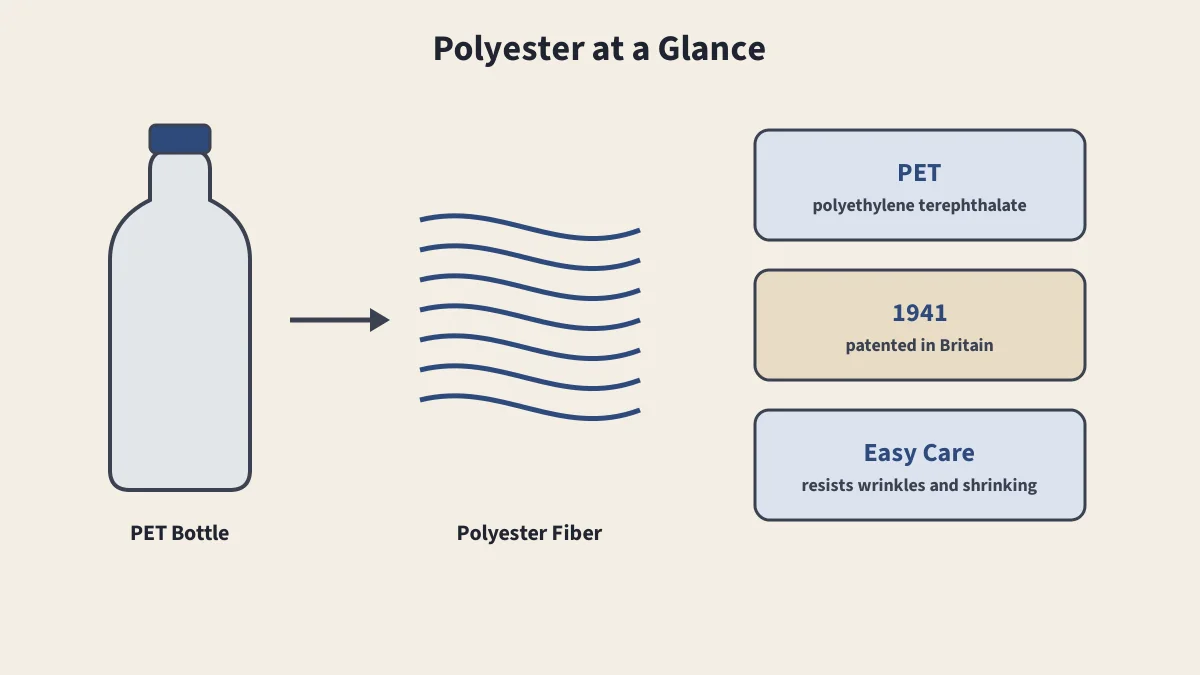
Polyester
What polyester is, its history, its pros and cons and how to sew it.