Fabric Weaves: Plain, Twill, Satin and Patterned Weaves (2026)
Denim, poplin and satin can all be made of cotton. What makes them different is the weave, the pattern in which the threads pass over and under each other. Three basic weaves account for most woven fabric.
In This Article
Weaves in Brief
- Plain: over one, under one; strong and simple
- Twill: stepped pattern; diagonal lines
- Satin: long floats; smooth and shiny
- Dobby: small geometric patterns
- Jacquard: large, complex patterns
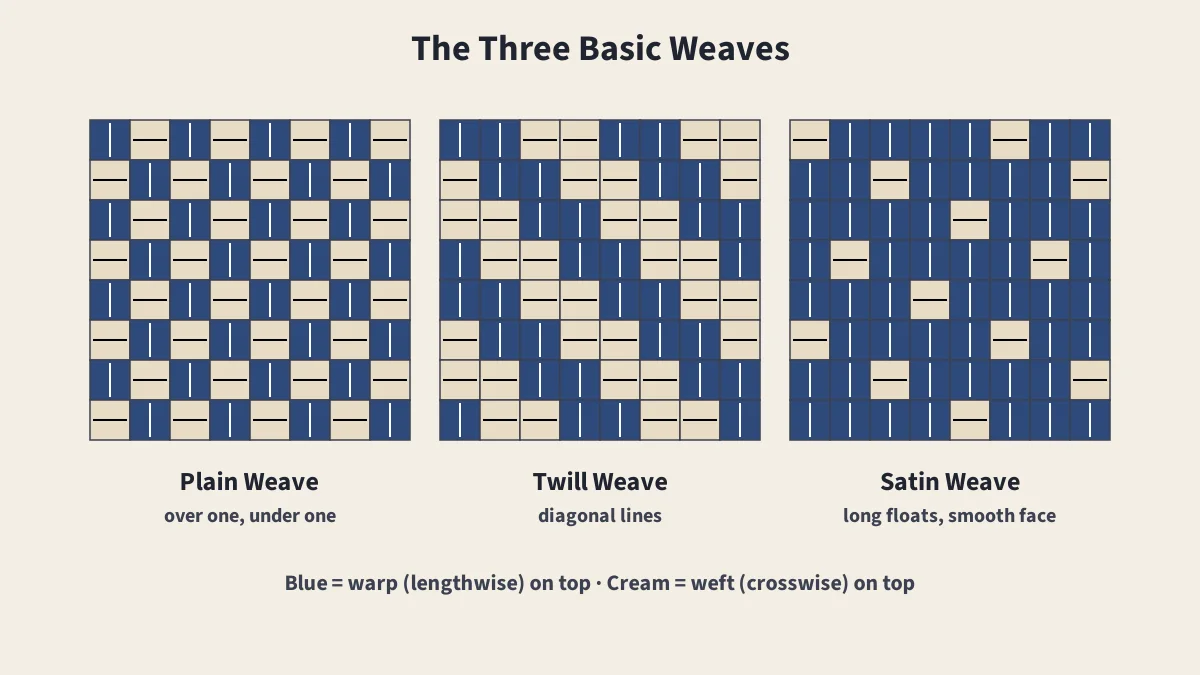
In every woven fabric, lengthwise warp threads and crosswise weft threads cross at right angles. The weave is the rule for which thread goes on top at each crossing. Most woven fabrics use plain weave, satin weave or twill weave, and those three account for the look, feel and strength of much of the cloth we sew.
Plain Weave
The simplest weave: each weft thread passes over one warp thread and under the next, and the following row does the opposite, making a checkerboard of crossings. Plain weave has the most crossings of any weave, so it is firm, durable and relatively wrinkly, with no right or wrong side from the weave alone.
Examples: muslin, calico, poplin, voile, chiffon, taffeta, linen, quilting cotton.
Variations: basket weave (two or more threads treated as one, as in oxford cloth) and rib weave (thicker threads in one direction, as in poplin's fine ribs).
Twill Weave
In twill, the weft passes over two or more warp threads, then under one or more, and each row steps one thread to the side. The steps line up into diagonal ridges called wales. Twills drape well, hide soil and resist wear, and they often have a distinct face and back.
Examples: denim, gabardine, chino, drill, serge, and herringbone, where the diagonal reverses to make a zigzag.
Satin Weave
Satin weave lets threads "float" over four or more threads before passing under one, with the crossings spread out so they do not form a line. The long floats make a smooth, lustrous face and a dull back. Satin drapes beautifully but the floats can snag.
Examples: satin (usually silk or synthetic filaments), sateen (usually cotton), charmeuse and duchess satin.
Comparing the Three
| Weave | Look | Strength | Drape | Wrinkling |
|---|---|---|---|---|
| Plain | Flat, matte | High | Crisp | Wrinkles readily |
| Twill | Diagonal lines | High | Soft to medium | Resists wrinkles better |
| Satin | Smooth, shiny | Lower; floats snag | Fluid | Resists wrinkles |
Patterned Weaves: Dobby and Jacquard
For woven-in patterns, looms need more control over which warp threads lift. A dobby mechanism raises groups of threads according to pegs on a revolving drum, producing small geometric patterns, such as piqué, bird's-eye and textured shirting. A jacquard loom controls warp threads individually: Joseph Marie Jacquard patented such a loom in France in 1804, using punched cards to decide which threads appear on the surface. Brocade, damask and tapestry fabrics are jacquard weaves.
Spotting the Weave
- Look closely, with a magnifier if needed.
- A tiny checkerboard means plain weave.
- Diagonal lines mean twill.
- A smooth, shiny face with a dull back means satin.
- A woven-in pattern means dobby or jacquard.
For the difference between damask, brocade and jacquard, see brocade vs. damask vs. jacquard.
Sources
- Weaving, Wikipedia
- Twill, Wikipedia
- Satin, Wikipedia
- Denim, Wikipedia
- Jacquard machine, Wikipedia
Frequently Asked Questions
What are the three basic weaves?
Plain weave, twill weave and satin weave. Most woven products are made with one of these three, or with variations of them.
What is the difference between twill and plain weave?
In plain weave, each weft thread goes over one warp thread and under the next, making a simple checkerboard. In twill, the weft passes over and under groups of warp threads in a stepped pattern, creating diagonal lines, as on denim.
What is the difference between satin and sateen?
Both use the satin weave, with long floats that make a smooth, shiny face. Satin traditionally uses filament fibers such as silk or polyester; sateen is the term usually used for cotton fabric in a satin weave.
What is a jacquard weave?
A jacquard fabric has a complex woven pattern created by controlling each warp thread individually. Joseph Marie Jacquard patented his punched-card-controlled loom in France in 1804.
Keep Reading
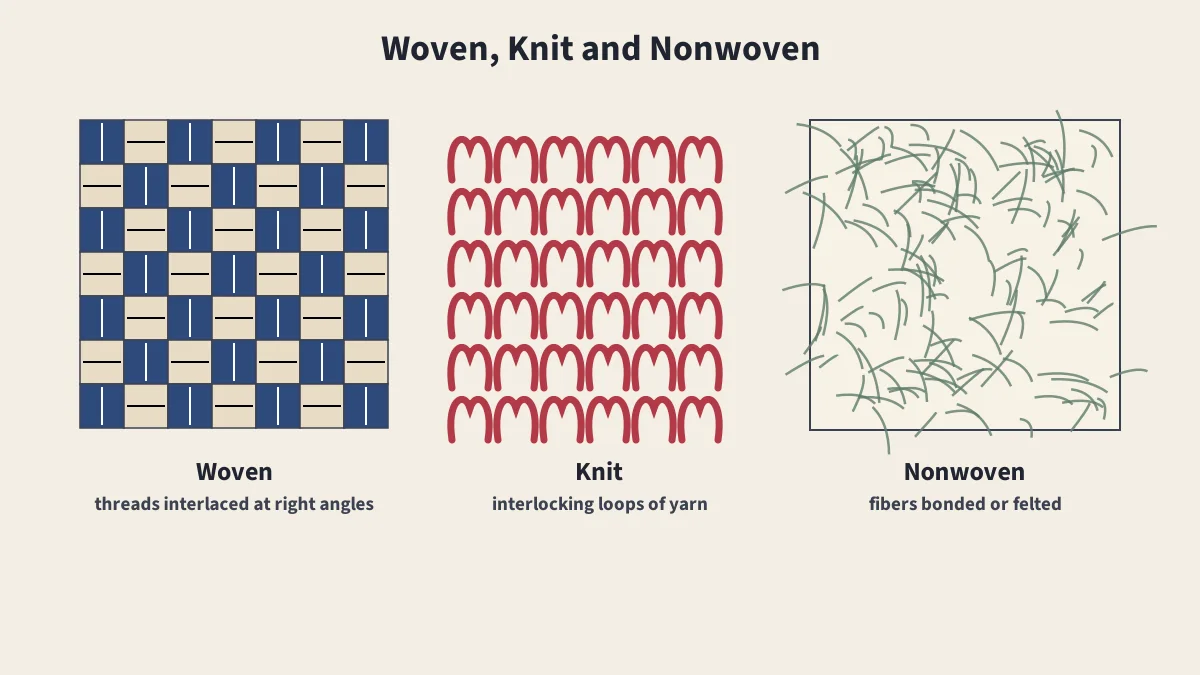
Woven vs. Knit vs. Nonwoven
How the three constructions differ, and how to tell them apart.
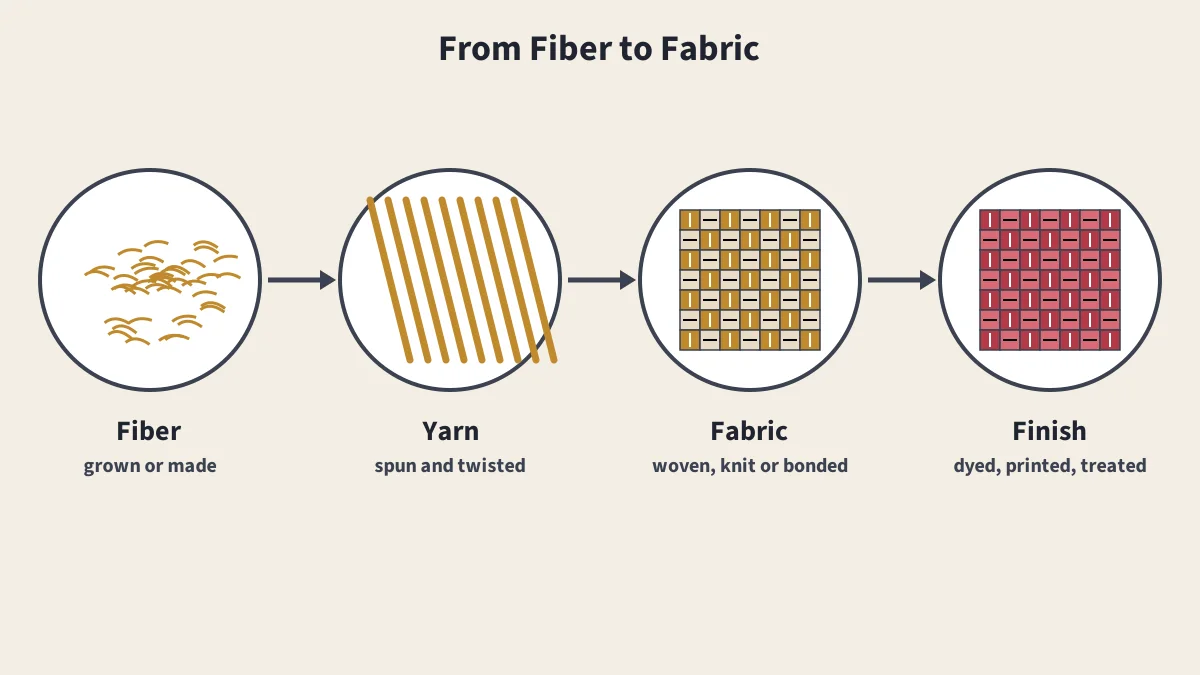
How Fabric Is Made
The four stages: fiber, yarn, fabric construction and finishing.
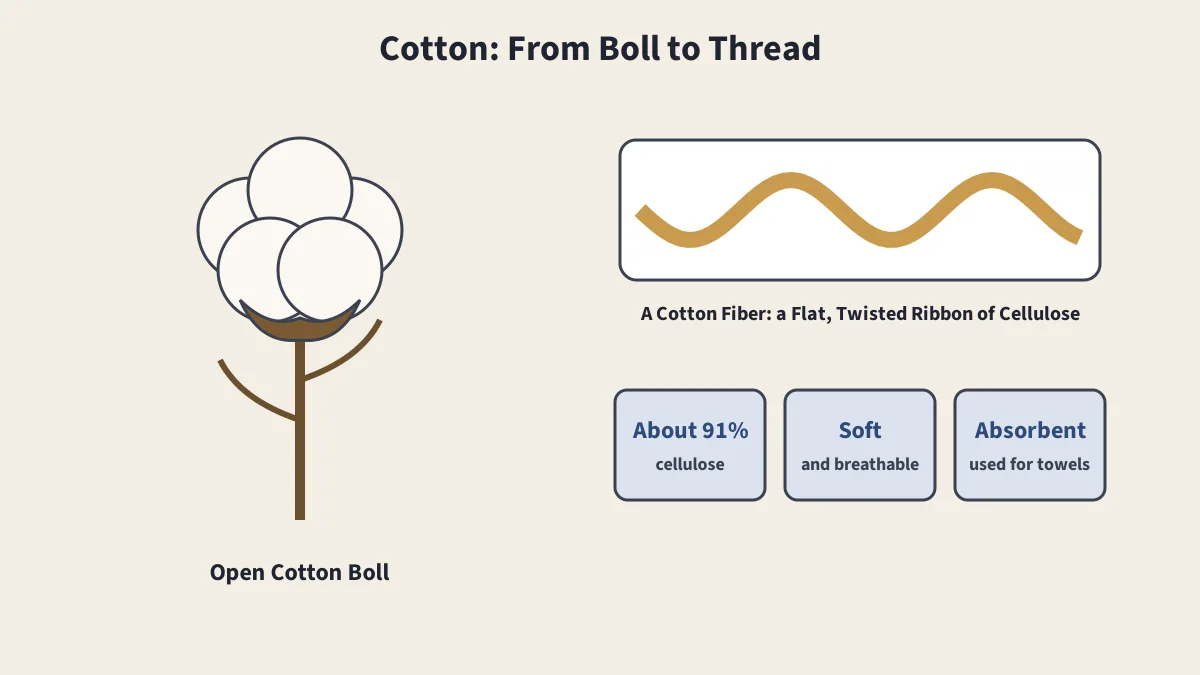
Cotton
Where cotton comes from, its history and how it behaves.
Silk
How silkworms make silk, its history and how it behaves.