Types of Sleeves: An Illustrated Guide to Sleeve Styles (2026)
Sleeves are defined by how they join the garment and by their shape. Some, like the pagoda and the virago, belong to particular decades; others, like the set-in sleeve, are on almost everything.
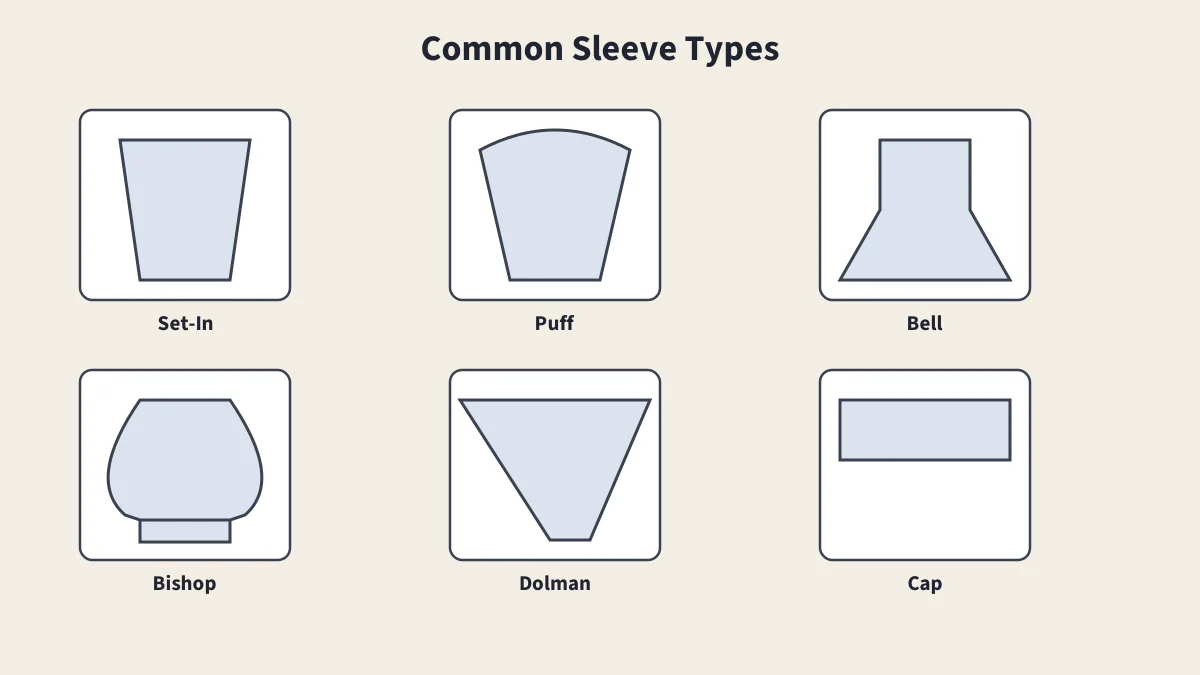
In This Article
Sleeves in Brief
- Set-in: sewn into an armhole
- Raglan: extends to the neckline
- Kimono and dolman: cut with the bodice
- Full shapes: puff, bishop, bell, leg-of-mutton
- Short shapes: cap, butterfly, flutter
A sleeve can be described in two ways: by how it is attached to the garment and by its shape and length. The attachment affects fit and movement; the shape sets the style.
By Construction
| Sleeve | How It Is Made |
|---|---|
| Set-in | Sewn into the armhole (armscye); sometimes called a drop sleeve. See set-in sleeves. |
| Raglan | Extends in one piece to the collar, with a diagonal seam from underarm to collarbone, for easier movement |
| Kimono | Cut in one piece with the bodice in a wide, sloping shape; Japanese kimono sleeves are in fact sewn on separately |
| Dolman | Very wide at the top and narrow at the wrist |
| Batwing (magyar) | Long, with a deep armhole that narrows toward the wrist |
| Two-piece | Inner and outer pieces forming a slight bend at the elbow, used in tailoring |
By Shape
| Sleeve | Shape |
|---|---|
| Puff | Gathered at the top and bottom; common on wedding and children's clothes |
| Bishop | Long, fuller at the bottom, gathered into a cuff |
| Bell | Fitted to the elbow, then flared |
| Lantern | Full and gathered, ballooning out between wrist and elbow |
| Leg-of-mutton (gigot) | Extremely wide over the upper arm, narrow from elbow to wrist |
| Juliet | Long and tight with a puff at the top, inspired by the Italian Renaissance |
| Poet | Fitted to the elbow, then flaring dramatically, often with ruffled cuffs |
| Angel | Long, wide and loose, hanging from the shoulder |
| Petal (tulip) | One curved, overlapping seam resembling tulip petals |
| Cold-shoulder | Open at the top of the shoulder, attached underneath |
By Length
- Cap: covers only the shoulder, stopping at about armpit level.
- Butterfly: widens from the shoulder, usually only 4–5 inches long; found on the Filipiniana and some dresses.
- Short: elbow length or shorter.
- Three-quarter: ends between elbow and wrist; common in the US in the 1950s and again this century.
- Long: shoulder to wrist.
Historical Sleeves
| Sleeve | Period | Description |
|---|---|---|
| Hanging | 14th–17th centuries | Opens at the side, front or elbow so the arm can pass through |
| Paned | 16th–17th centuries | Panels that let the lining or shirt show through |
| Virago | 1620s–1630s | Full paned sleeve gathered into two puffs above the elbow |
| Juliet | Empire period to the 1820s, late 1960s | Tight with a puffed top |
| Pagoda | 1860s | Wide bell shape over a false undersleeve |
The rounded sleeve cap itself appeared in the 14th century, allowing closer-fitting sleeves. For how sleeves were worn in each era, see our sewing history guides.
Sources
- Sleeve, Wikipedia
- Raglan sleeve, Wikipedia
Frequently Asked Questions
What are the main types of sleeves?
By construction, the main types are set-in sleeves sewn into an armhole, raglan sleeves that extend to the neckline, and kimono or dolman sleeves cut in one with the bodice. By shape, popular styles include puff, bishop, bell, cap and flutter sleeves.
Why is it called a raglan sleeve?
It is named after FitzRoy Somerset, 1st Baron Raglan, a British general who lost an arm at the Battle of Waterloo and later commanded in the Crimea. His coat reportedly had sleeves that ran in one piece to the neck.
What is the difference between a bishop and a bell sleeve?
A bishop sleeve is fuller at the bottom and gathered into a cuff. A bell sleeve is fitted from the shoulder to the elbow and then flares out, with no cuff.
What is a leg-of-mutton sleeve?
Also called a gigot sleeve, it is extremely wide over the upper arm and narrow from the elbow to the wrist.
Keep Reading
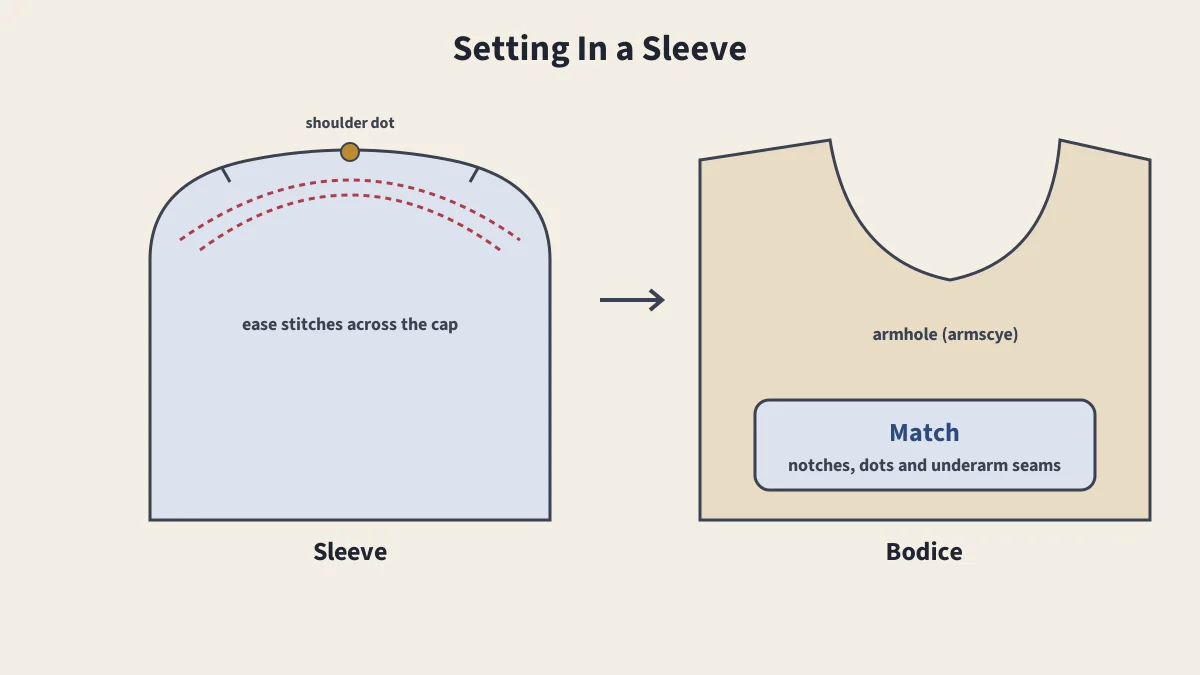
Set-In Sleeves
Easing the sleeve cap and sewing it in flat or in the round.
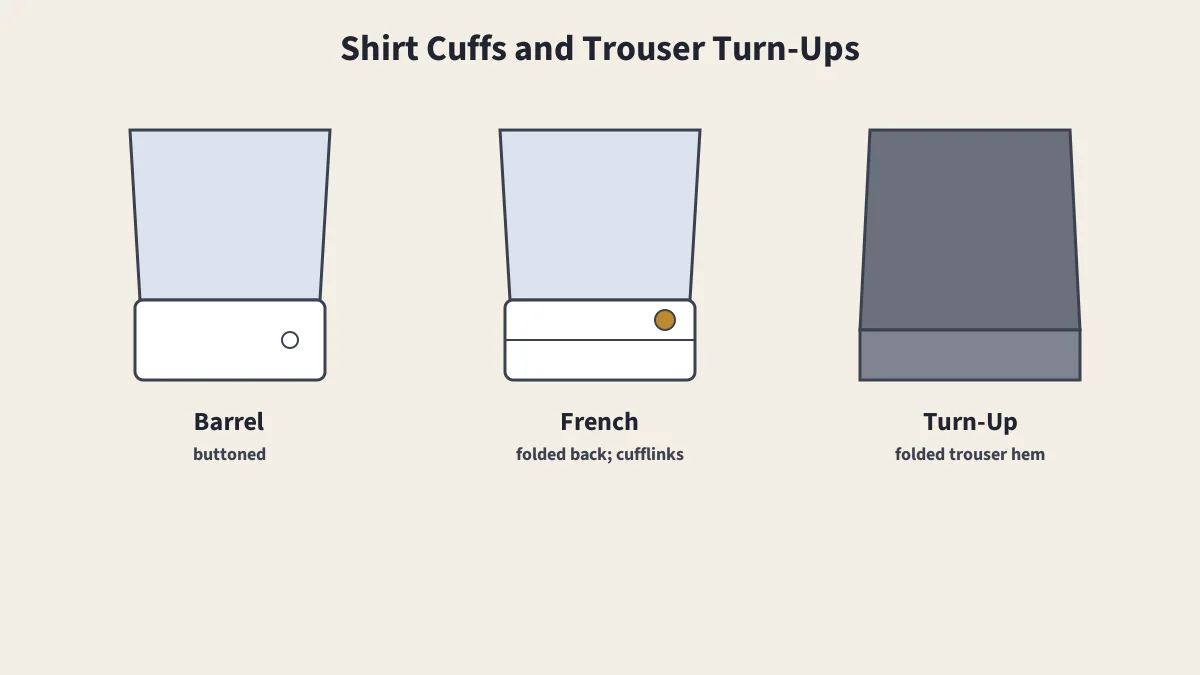
Types of Cuffs
Barrel, French and convertible cuffs, and turn-ups.
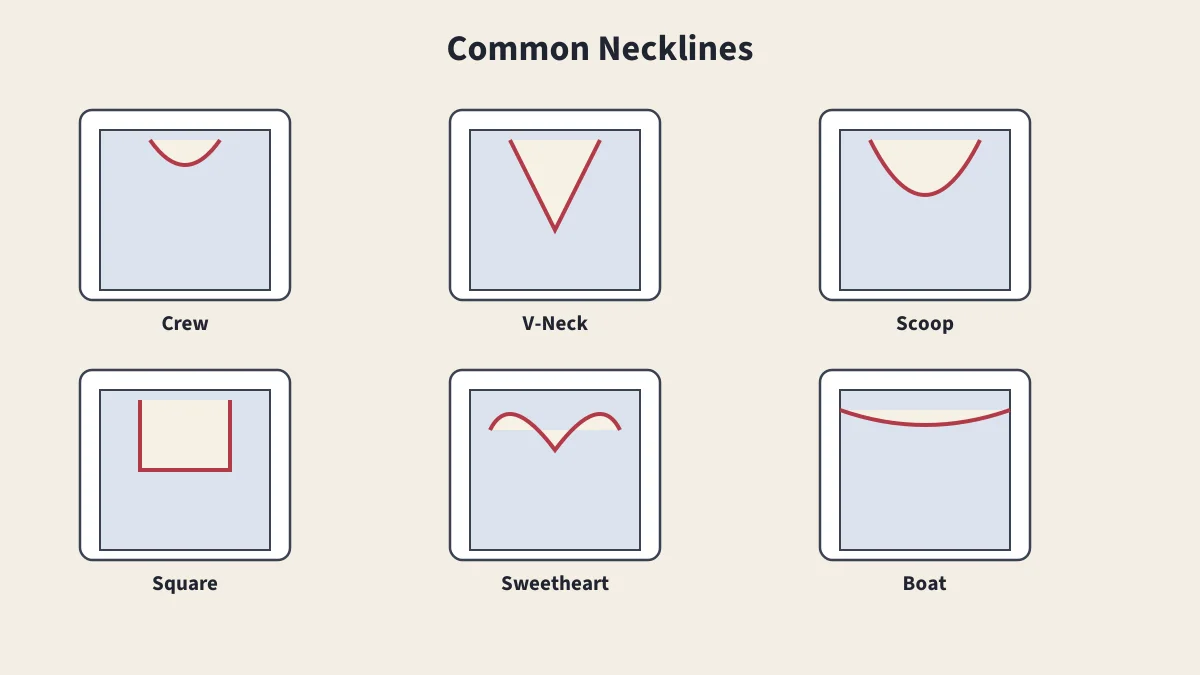
Types of Necklines
Crew, V-neck, scoop, sweetheart, boat and more.
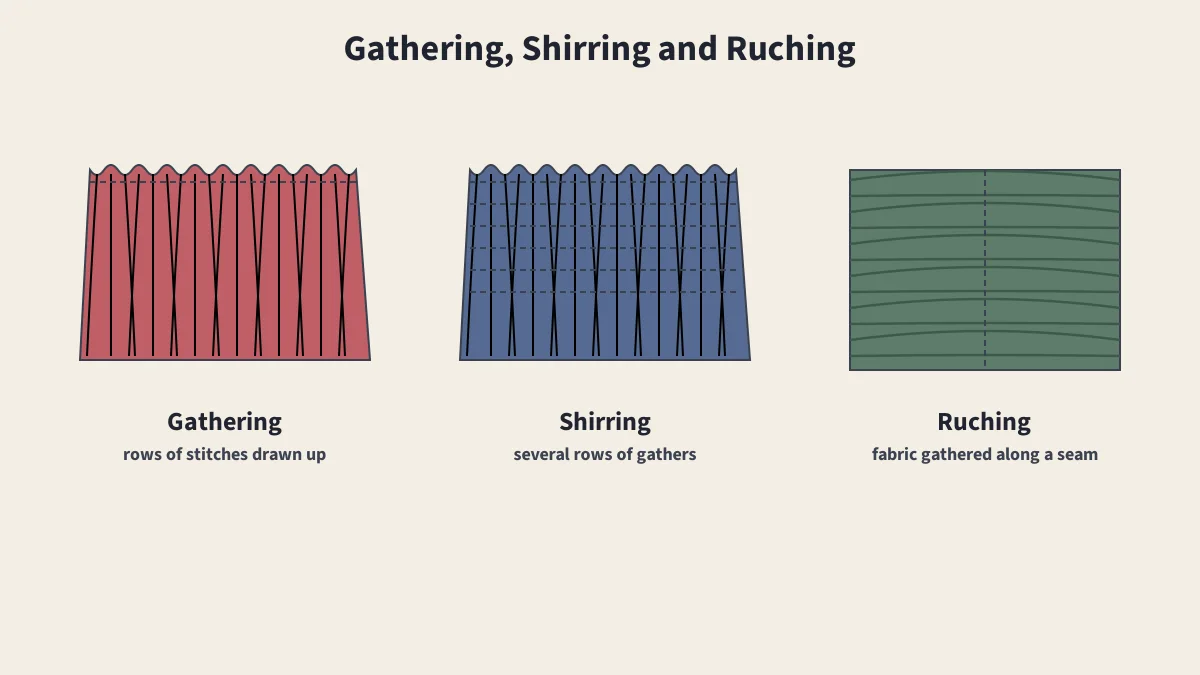
Gathering, Ruching and Shirring
Gathers, shirring, ruching and smocking explained.