The Bayeux Tapestry: The World's Most Famous Embroidery (2026)
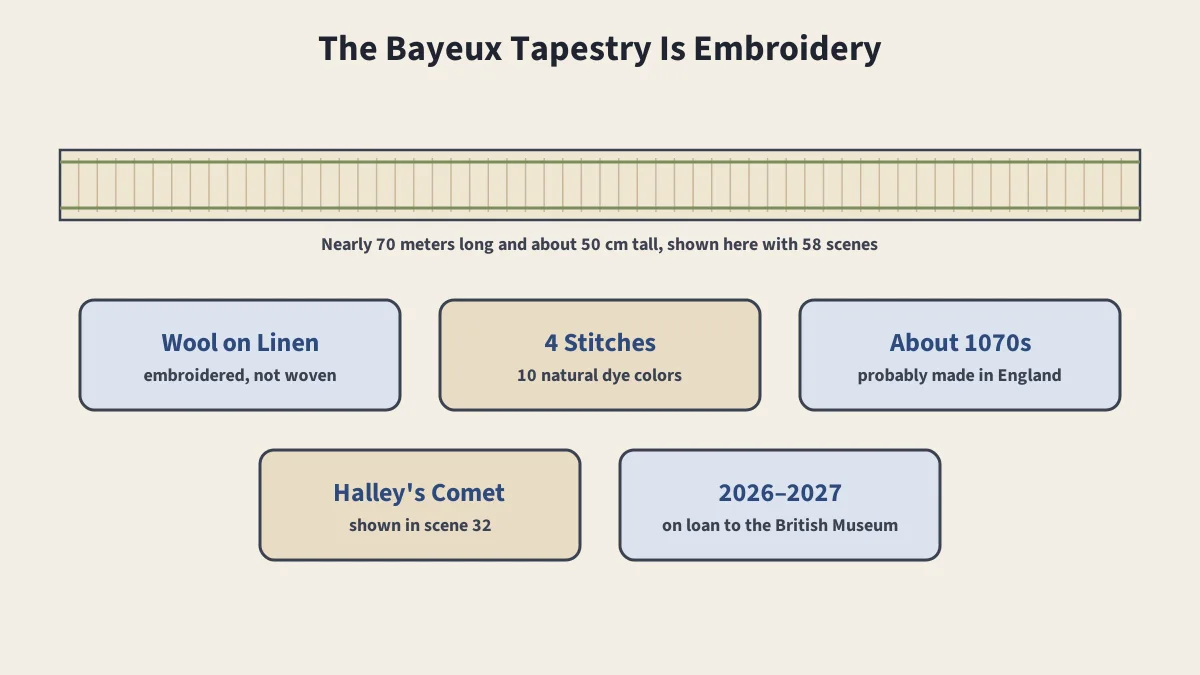
Despite its name, the Bayeux Tapestry is not a tapestry at all. It is an embroidery nearly 70 meters long, stitched in wool on linen to tell the story of the Norman Conquest of England.
In This Article
The Bayeux Tapestry in Brief
- Really: an embroidery, wool on linen
- Size: nearly 70 m long, about 50 cm tall
- Scenes: 58 by the museum's count
- Made: probably England, around the 1070s
- Now: on loan to the British Museum, 2026–2027
The Bayeux Tapestry tells the story of the events leading up to the Norman Conquest of England in 1066. It is called a tapestry, but in a true tapestry the design is woven into the cloth. Here, the design is embroidered in wool thread onto a woven linen ground, which makes it one of the most famous embroideries in the world, and often described as the earliest surviving crewelwork.
Materials and Technique
| Feature | Detail |
|---|---|
| Ground | Linen; see linen |
| Thread | Wool |
| Stitches | Four |
| Colors | Ten, from natural dyes |
| Length | Nearly 70 meters |
| Height | About 50 centimeters |
| Scenes | 58 by the museum's count; some divide it into 70 |
Who Made It, and When?
- It was probably made in England in the decades after 1066, and may have been finished around 1077.
- Most scholars attribute the commission to Bishop Odo of Bayeux, William the Conqueror's half-brother.
- Most contemporary scholars think it was made in England, probably at Canterbury; Saumur and Barking Abbey have also been proposed.
- French legend credits Queen Matilda, William's wife.
- The first written reference to it dates from 1476.
The Missing End
The final scenes have been lost. The last caption, Et fuga verterunt Angli ("and the English turned in flight"), is considered a later addition, made before 1814. A final panel showing William's coronation may be missing.
Where to See It
The tapestry's home, the Bayeux Tapestry Museum in Normandy, is closed for renovation until 2027. Meanwhile, the tapestry is on loan to the British Museum in London, where it arrived on 10 July 2026; the exhibition runs from 10 September 2026 to 11 July 2027. Reading Museum in England holds a full-size embroidered replica made in 1886.
Sources
- Bayeux Tapestry, Wikipedia
- Embroidery, Wikipedia
Frequently Asked Questions
Why is the Bayeux Tapestry not really a tapestry?
A tapestry has its design woven into the cloth. The Bayeux Tapestry's design is embroidered: stitched in wool thread onto a woven linen ground.
How big is the Bayeux Tapestry?
Nearly 70 meters long and about 50 centimeters tall.
Who made the Bayeux Tapestry?
Its makers are unknown. Most scholars attribute the commission to Bishop Odo of Bayeux, William the Conqueror's half-brother, and believe it was made in England, probably at Canterbury. French legend credits Queen Matilda.
Where is the Bayeux Tapestry now?
While the Bayeux Tapestry Museum is renovated, it is on loan to the British Museum in London, where it arrived on 10 July 2026. The exhibition runs from 10 September 2026 to 11 July 2027.
Keep Reading
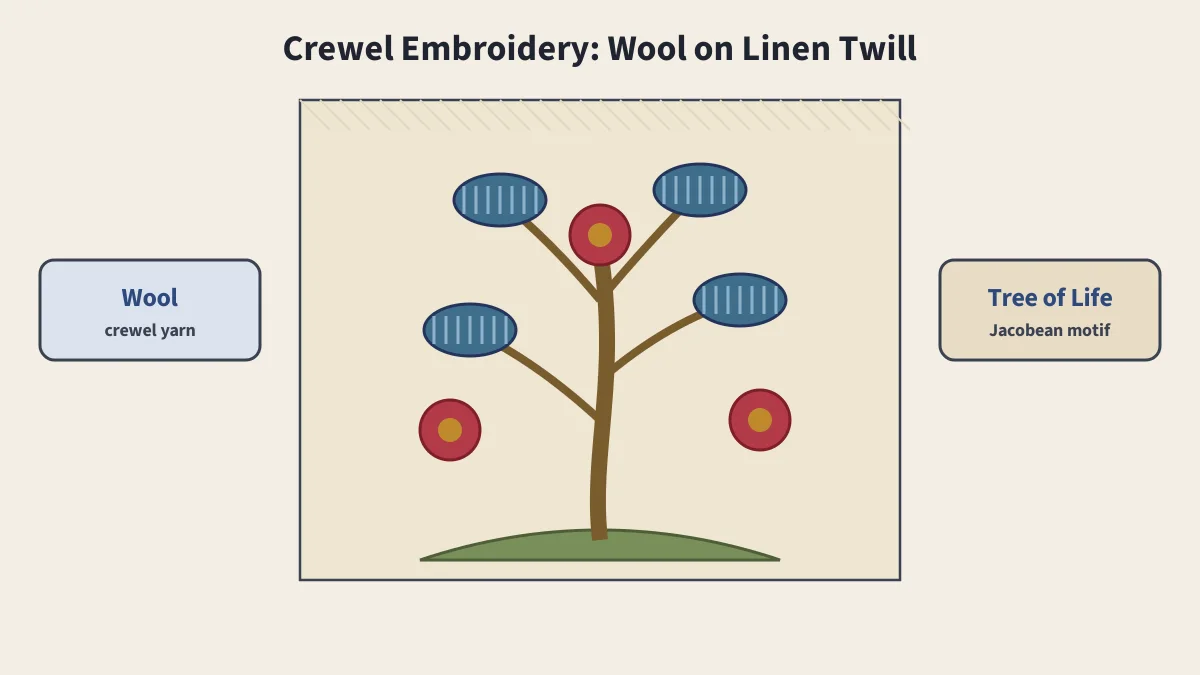
Crewel Embroidery
Wool embroidery, Jacobean designs and history.
Embroidery
Stitches, styles and the history of embroidery.
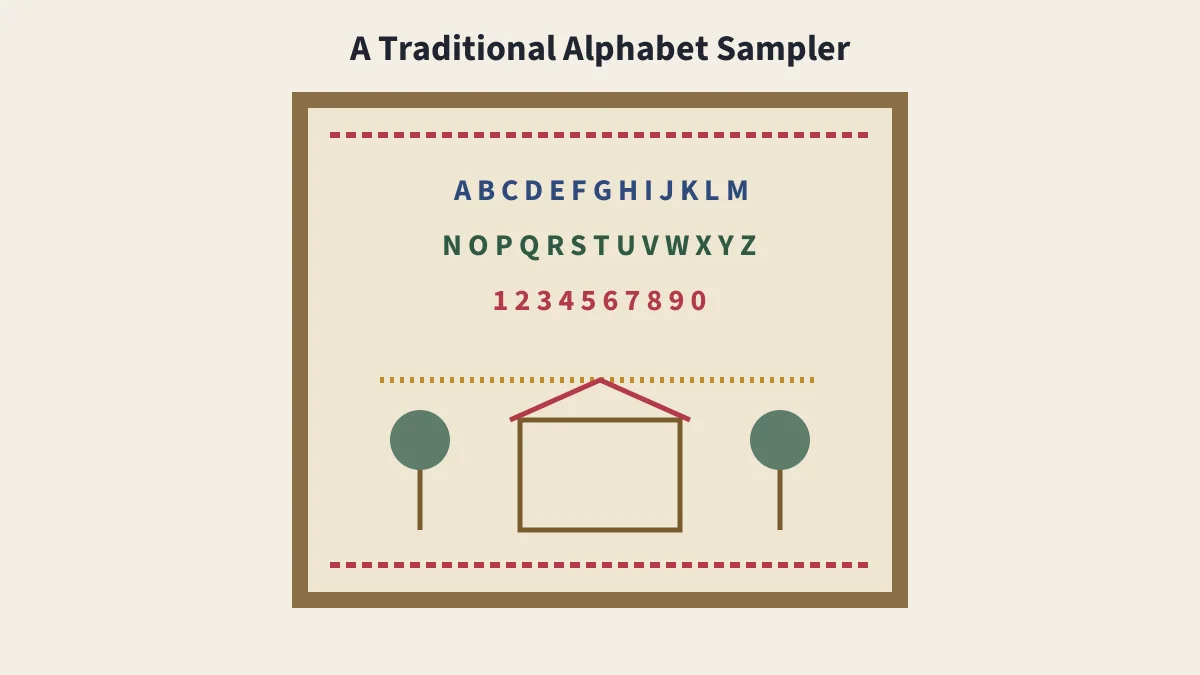
History of Embroidery Samplers
From pattern records to schoolgirl samplers.
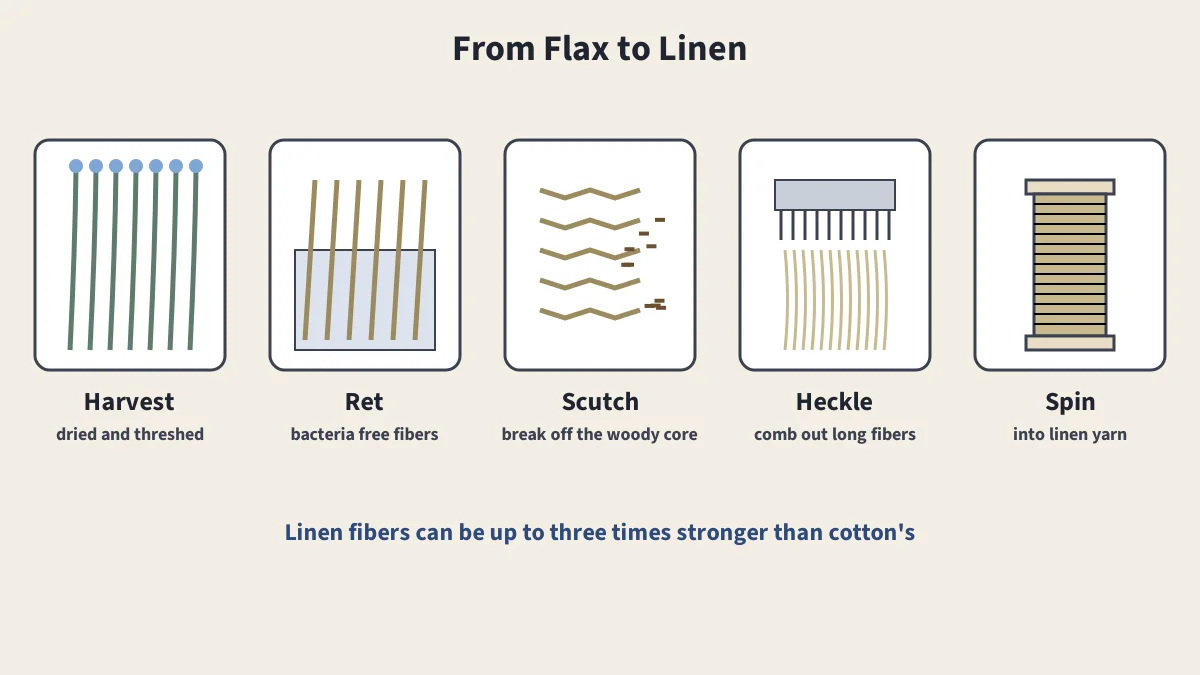
Linen
How flax becomes linen, its long history and how it behaves.