How Embroidery Machines Work, From Hoop to Stitch File (2026)
An embroidery machine is a sewing machine that moves the fabric for you, following a digital map of every stitch. Here is how it works, where it came from, and why there are so many file formats.
In This Article
Embroidery Machines in Brief
- The hoop holds fabric taut and moves under the needle
- The design file lists every stitch and color change
- Stabilizer stops fabric from puckering
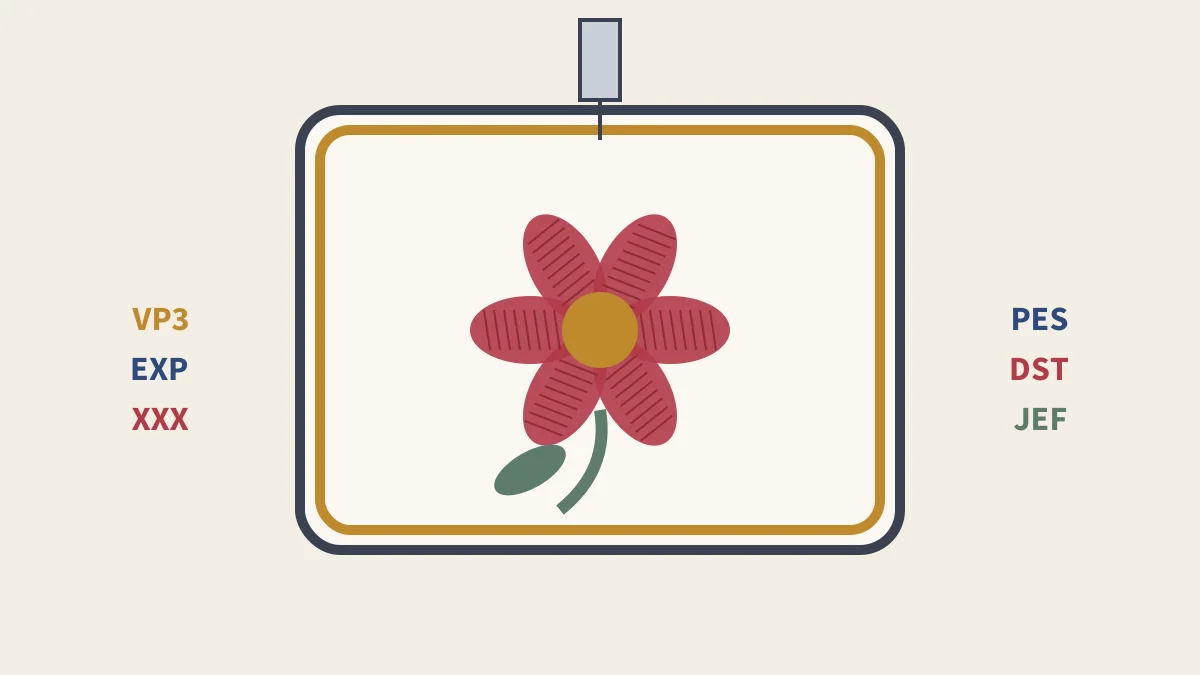
- File formats vary by brand: PES, JEF, VP3, EXP, XXX, DST
- Single-needle home machines vs. multi-needle commercial machines
Hand embroidery is one of the oldest decorative arts. Machine embroidery automates it: a needle forms the stitches while a motorized frame moves the fabric beneath it, following a map of the design. Monograms, logos on caps, badges and decorated quilts are all made this way.
From Hand Embroidery Machine to Schiffli
Machine embroidery began before the lockstitch sewing machine. The hand embroidery machine was invented by Josué Heilmann of Mulhouse in 1828. It used double-ended needles that passed completely through the fabric, each with its own continuous thread, and its invention launched the great expansion of the St. Gallen embroidery industry in eastern Switzerland.
In 1863 Isaak Gröbli invented the schiffli embroidery machine, a multi-needle industrial machine. Unlike its predecessor, the schiffli used a lockstitch, the same technique as the sewing machine. Its boat-shaped shuttle gave it its name; schiffli means "little boat" in Swiss German. Early schiffli machines used a manually operated pantograph to trace a pattern and position each stitch; later, card readers programmed the machines, a long way from the digital files of today.
How a Modern Embroidery Machine Works
- Load a design. The design is a digital stitch file, transferred by USB, Wi-Fi or a built-in library.
- Hoop the fabric. Fabric and stabilizer are clamped tightly in a hoop, which clips onto the machine's embroidery arm.
- Stitch. The arm moves the hoop in tiny steps in two directions, while the needle and bobbin form lockstitches. The feed dogs are not used.
- Change colors. On a single-needle machine, the machine stops and you rethread with the next color. A multi-needle machine switches colors automatically.
- Finish. Trim jump threads, remove the fabric from the hoop and tear or cut away the excess stabilizer.
Stabilizers: The Hidden Layer
Thousands of stitches packed into a small area pull hard on fabric. Stabilizer, hooped with the fabric, keeps it flat and stops puckering.
| Stabilizer | How It Is Removed | Best For |
|---|---|---|
| Tear-away | Torn away after stitching | Stable woven fabrics |
| Cut-away | Trimmed, with some left behind permanently | Knits and stretchy fabrics |
| Wash-away (water-soluble) | Dissolves in water | Freestanding lace, sheer fabrics, toppings on towels |
| Heat-away | Removed with heat | Fabrics that cannot get wet |
Embroidery File Formats
Every embroidery design is saved as a stitch file. Unfortunately, each major brand developed its own format, so you must use one your machine can read.
| Format | Typical Brands | Notes |
|---|---|---|
| PES | Brother, Baby Lock | The most common home format |
| JEF | Janome, Elna | Newer large-hoop models may use JEF+ |
| VP3 (also HUS, VIP) | Husqvarna Viking, Pfaff | HUS and VIP are older Viking formats |
| EXP (also ART) | Bernina, Melco | Depends on the model and software |
| XXX | Singer | Used by many Singer embroidery models |
| DST | Tajima; most commercial and multi-needle machines | Widely accepted, but stores no color information |
Software can convert between formats, though details such as color information may be lost. Always check your manual for the exact format and version your machine supports.
Digitizing: Turning Art Into Stitches
A stitch file is not a picture. Digitizers use special software to decide which stitch type fills each area (running stitch for outlines, satin stitch for borders and lettering, fill stitch for large areas), which direction the stitches run, how dense they are, and the order in which colors are sewn. Good digitizing is the difference between a crisp design and one that puckers or gaps. Many home embroiderers buy ready-made designs, while others learn digitizing as a craft in itself.
Home vs. Commercial Embroidery Machines
| Feature | Home (Single-Needle) | Commercial (Multi-Needle) |
|---|---|---|
| Needles | One | Several, often 6 to 15 or more |
| Color changes | Manual rethreading | Automatic |
| Hoop sizes | Small to large | Many, including cap and tubular frames |
| Sewing | Often combined with a sewing machine | Embroidery only |
| Best for | Hobby projects, gifts, quilts | Logos, uniforms, caps, small businesses |
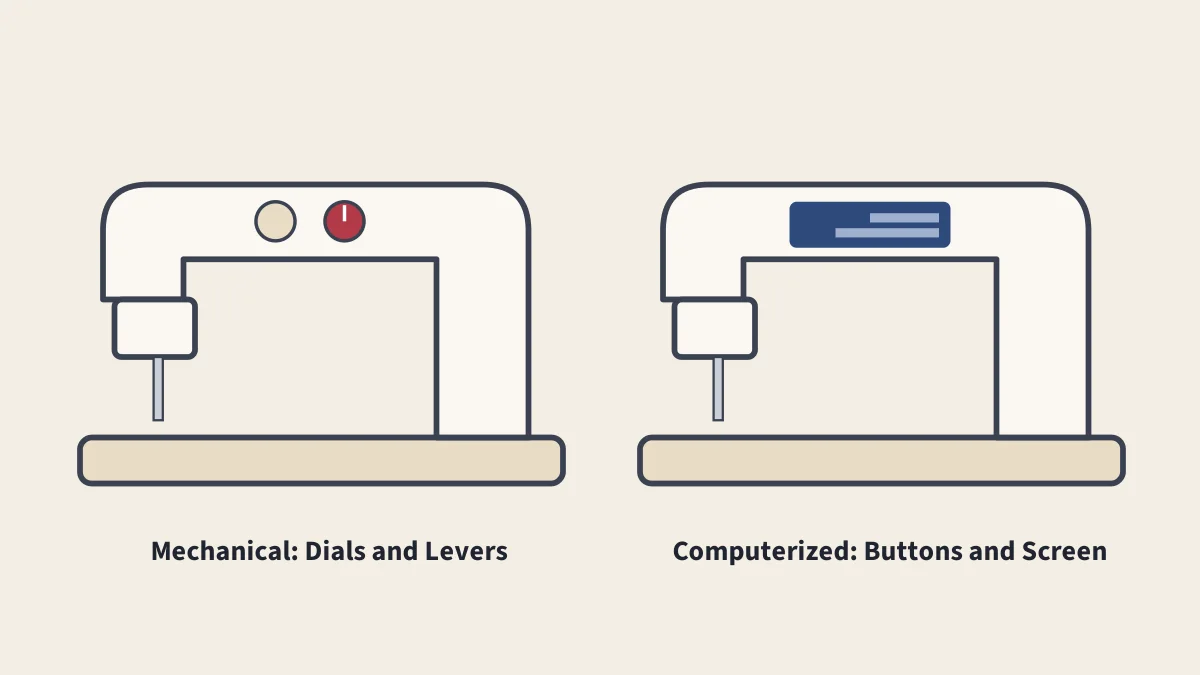
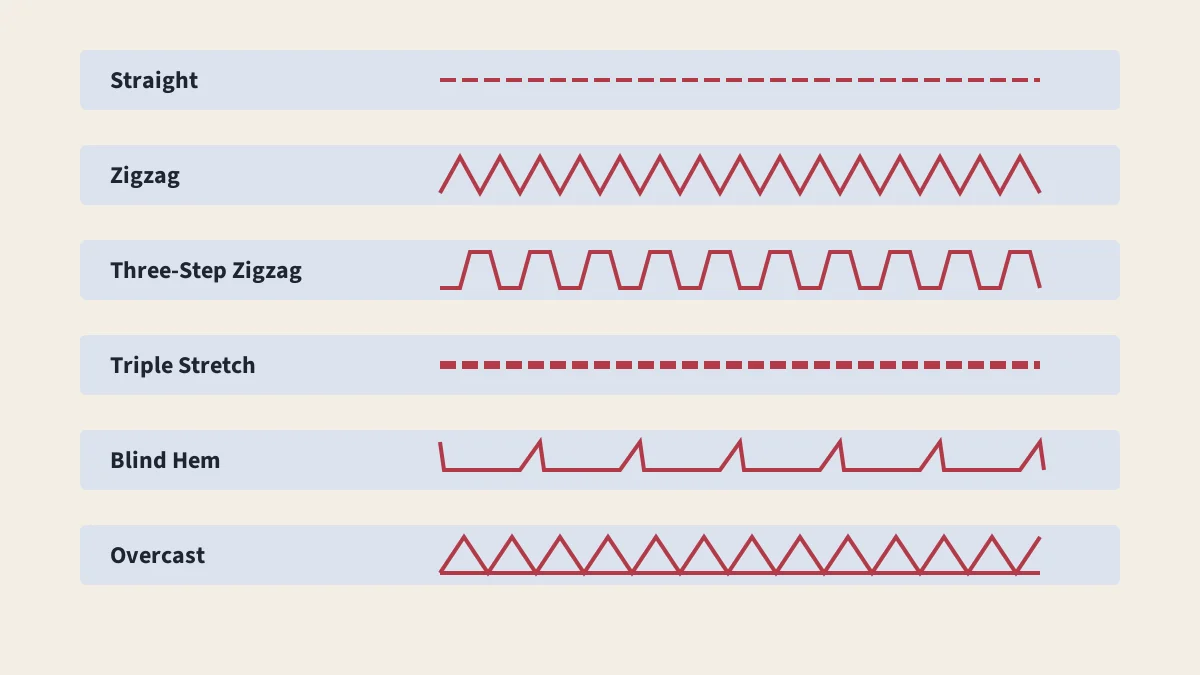
Combination sewing and embroidery machines are computerized; see mechanical vs. computerized sewing machines. For the stitches used in designs, see machine stitch types.
For hand embroidery styles and stitches, see our embroidery guide.
Sources
- Schiffli embroidery machine, Wikipedia
- St. Gallen embroidery, Wikipedia
- Machine embroidery, Wikipedia
Frequently Asked Questions
How does an embroidery machine work?
The fabric is held tight in a hoop attached to a motorized arm. The machine reads a digital design file that lists every stitch, and moves the hoop under the needle in precise steps while the needle forms lockstitches, changing color where the design calls for it.
What embroidery file format does my machine use?
It depends on the brand. Brother and Baby Lock machines generally use PES, Janome uses JEF, Husqvarna Viking and Pfaff use VP3, Bernina uses EXP or ART depending on the model, and Singer uses XXX. Commercial and multi-needle machines commonly use DST.
What is digitizing in embroidery?
Digitizing is the process of turning artwork into a stitch file: deciding stitch types, directions, density and the order in which colors are sewn. It is done with specialized software and is a skill in its own right.
Who invented the embroidery machine?
Josué Heilmann of Mulhouse invented a hand embroidery machine in 1828. Isaak Gröbli invented the schiffli embroidery machine, which used a lockstitch like the sewing machine, in 1863.
Keep Reading
Mechanical vs. Computerized Machines
Dials vs. touchscreens: features, durability and repairs compared.
Types of Sewing Machines
Every type of sewing machine explained, from mechanical to industrial.
Machine Stitch Types
The utility stitches that do most of the work, and when to use each.
History of the Sewing Needle
From Denisovan bird bone to Redditch steel, the tool behind every stitch.