What Is Pattern Testing? How to Become a Sewing Pattern Tester (2026)
Before many independent patterns are released, a group of sewists makes them up and reports back. Pattern testing catches errors, checks fit across sizes and shows the design on different bodies.
In This Article
Pattern Testing in Brief
- What: sewing a pattern before release
- Why: catch errors and fit problems
- Who: sewists of different sizes and skill levels
- Report: fit notes, photos, unclear steps
- Before applying: check the deadline and terms
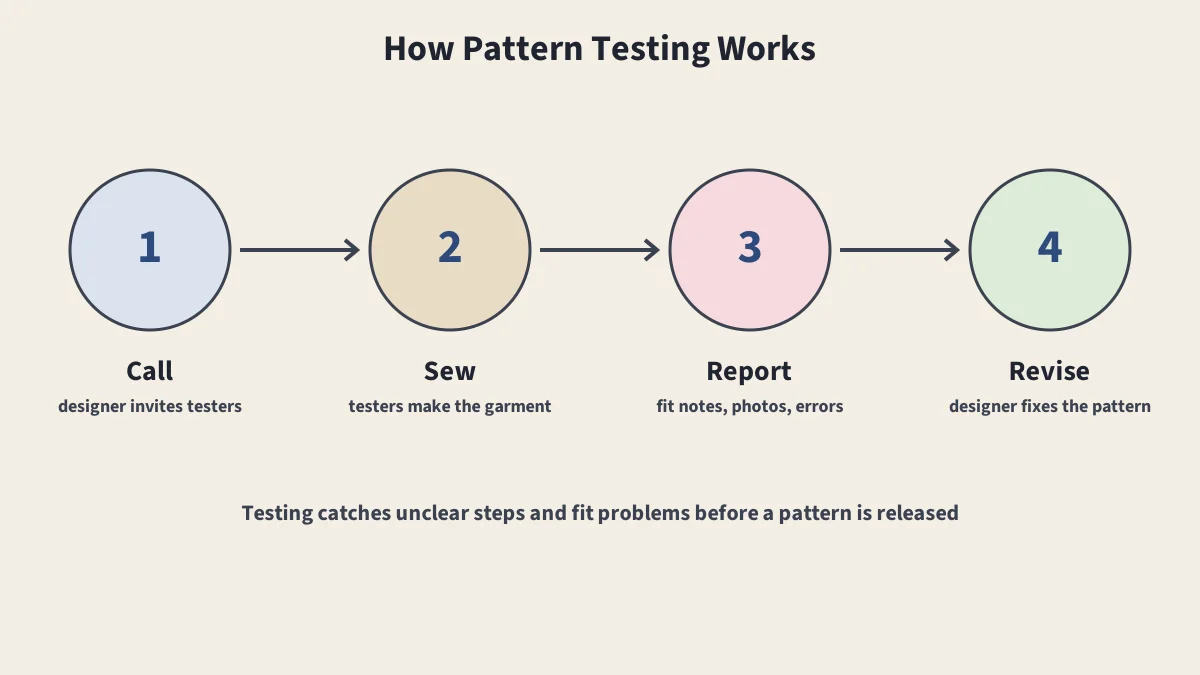
Pattern testing is the stage before release when a pattern designer asks a group of sewists to make the garment and report back. It is most common among independent pattern companies, especially those selling PDF patterns. Testers check that the instructions make sense, that the pieces fit together and that the garment fits across the size range.
How a Pattern Test Works
- Test call: the designer announces a test and asks for applicants, often looking for a spread of sizes, body shapes and skill levels.
- Selection: testers are chosen and receive the draft pattern, instructions and a deadline.
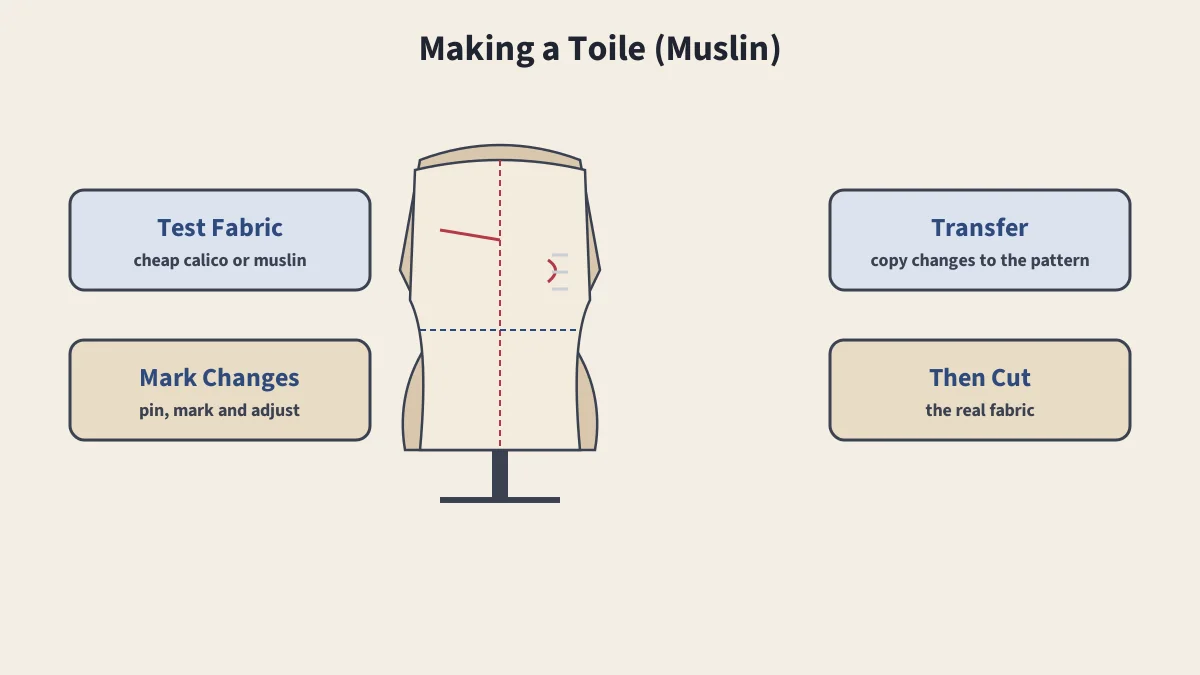
- Sewing: testers make the garment, usually with a toile first for fitted styles.
- Feedback: testers report errors, confusing steps, fit issues and the adjustments they made, often with photos.
- Revision: the designer corrects the pattern, and sometimes runs a second round.
- Release: tester photos may be shared to show the design on different bodies.
What Testers Look For
| Area | Questions to Answer |
|---|---|
| Printing | Does the test square measure correctly? Do the pages line up? |
| Pieces | Do notches and seams match? Are pieces labeled clearly? |
| Instructions | Is each step clear? Are any steps missing or in the wrong order? |
| Fabric | Was the yardage enough? Did the suggested fabrics work? |
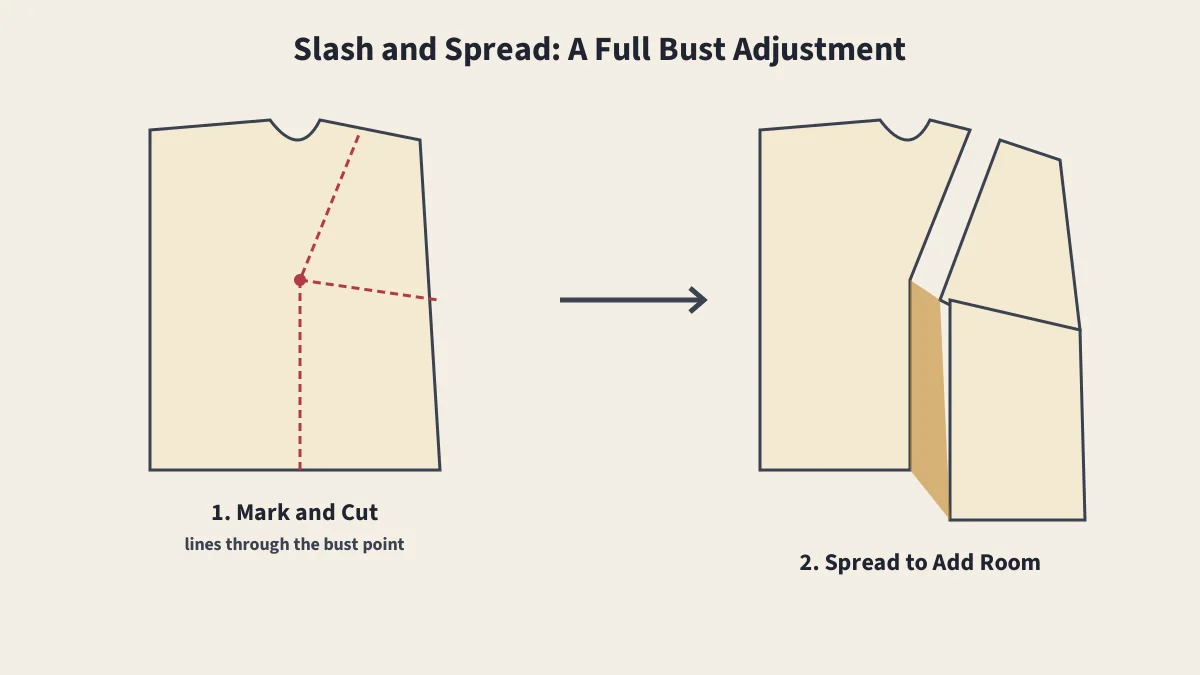
| Fit | Which size did you make, what are your measurements, and what did you adjust? |
| Finished garment | Does it match the line drawing and description? |
How to Become a Tester
- Follow designers whose style you like and sign up for their newsletters, where test calls are often posted.
- Build a record of your work: clear photos of finished garments help applications, and a simple sewing portfolio is a good way to show them.
- Be honest about your measurements, skill level and time.
- Read the terms: deadlines, required photos, whether you must buy fabric, and whether testing is paid.
- Meet the deadline and give specific, constructive feedback.
Testers and Technical Editors
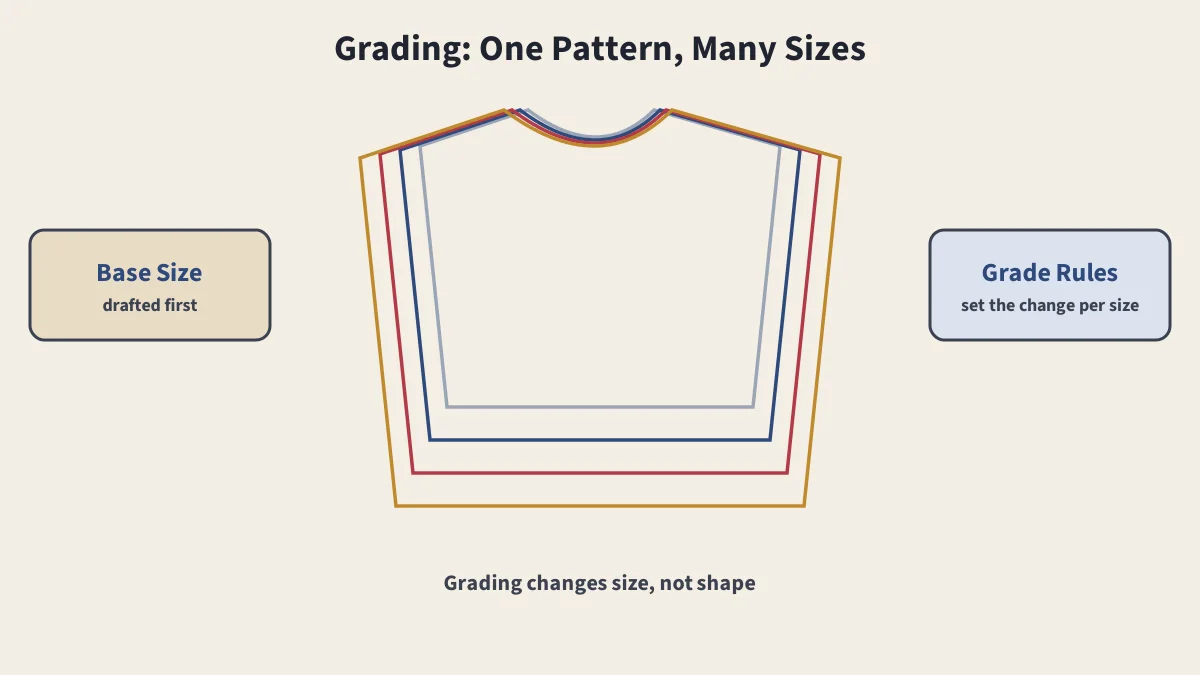
Many designers also use a technical editor, who checks the written instructions, measurements and grading for consistency, often before the test begins. Testing then shows how the corrected pattern works in real sewists' hands.
To present your work when applying to test, see how to build a sewing portfolio.
Sources
- Sewing pattern, Wikipedia
- Toile, Wikipedia
Frequently Asked Questions
What is a sewing pattern tester?
A sewist who makes up a pattern before it is released and reports on the instructions, the fit and any errors, so the designer can correct them.
Do pattern testers get paid?
It varies. Testers usually receive the final pattern free, and some designers pay testers, especially for technical editing or professional samples. Check the terms before you apply.
How do I become a pattern tester?
Watch for test calls from designers you like, usually on their newsletters or social media. Applications often ask for your measurements, sewing experience and photos of past work.
What is the difference between a pattern tester and a technical editor?
A tester sews the garment and reports on the experience and fit. A technical editor checks the written instructions, measurements and grading for accuracy, usually before testing.
Keep Reading
Pattern Grading
Grade rules, methods and the history of graded patterns.
What Is a Toile?
Test garments, fabrics and fitting.
Common Fit Adjustments
Bust, back, shoulder, length and hip adjustments.
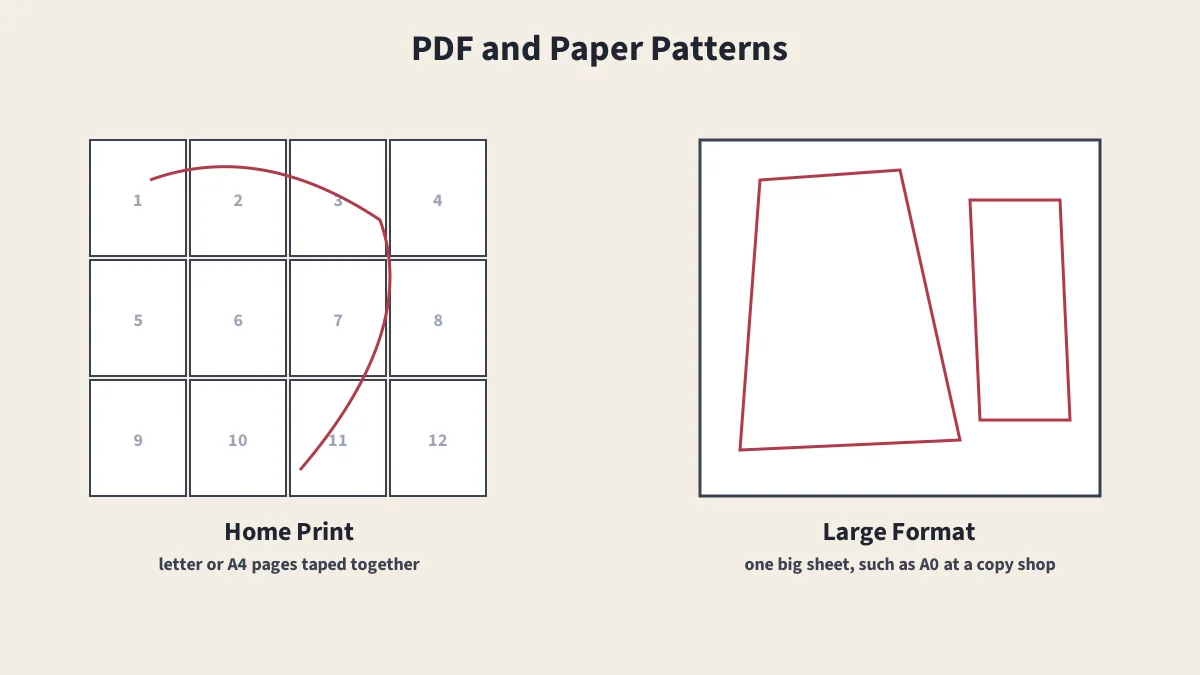
PDF vs. Paper Patterns
Home printing, copy-shop files and tissue patterns compared.