Pattern Drafting vs. Draping: Two Ways to Make a Pattern (2026)
Patterns are made either on paper, from measurements, or on a dress form, by shaping fabric directly. Most designers use both, choosing the method that suits the garment.
In This Article
Drafting vs. Draping in Brief
- Drafting: on paper, from measurements
- Draping: fabric on a dress form
- Menswear: mostly drafted
- Gowns and bias cuts: often draped
- Both: refined with a toile
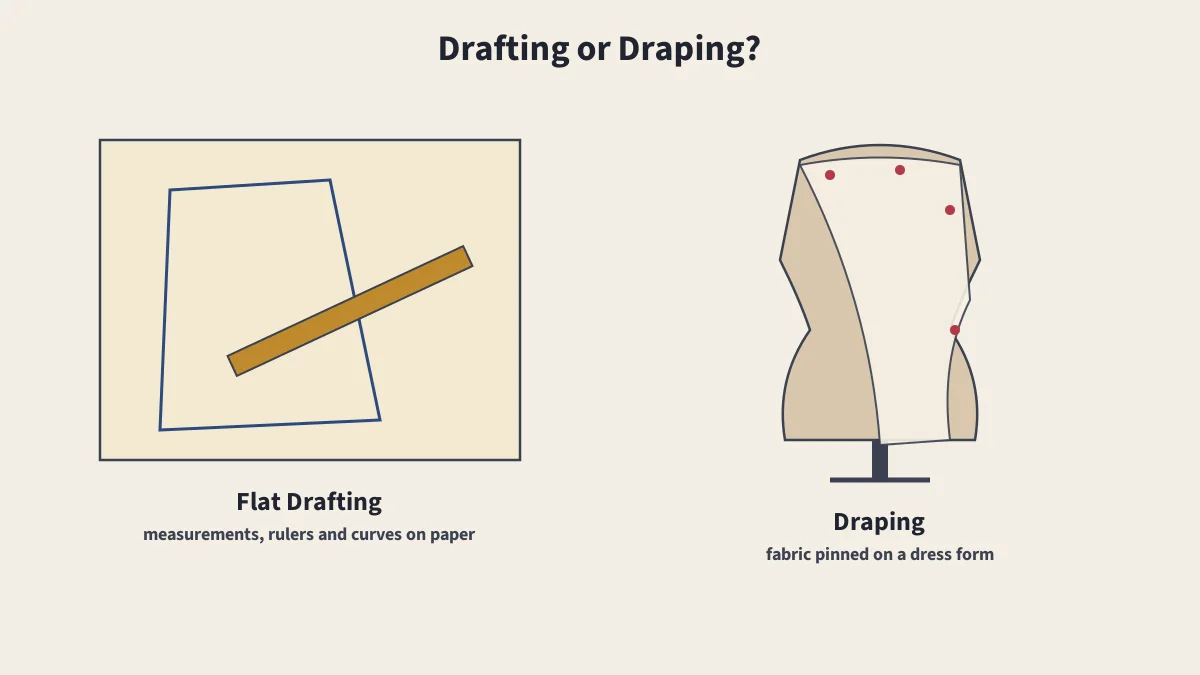
There are two main ways to create a sewing pattern. Flat pattern drafting is done on a flat surface from measurements, using rulers, curves and straight edges. Draping involves pinning fabric to a dress form, then transferring the outline to paper or using the fabric itself as the pattern.
Comparing the Methods
| Flat Drafting | Draping | |
|---|---|---|
| Starting point | Measurements or a sloper | Fabric and a dress form |
| Tools | Paper, rulers, curves, pencil | Dress form, muslin, pins, tape |
| Strengths | Precise, repeatable, efficient | Shows drape and volume immediately |
| Best for | Tailoring, menswear, structured garments | Evening gowns, bias cuts, collars, sculpted shapes |
| Output | Paper pattern | Fabric pieces traced to paper |
Menswear rarely uses draping; flat drafting is its most common method.
Flat Pattern Drafting
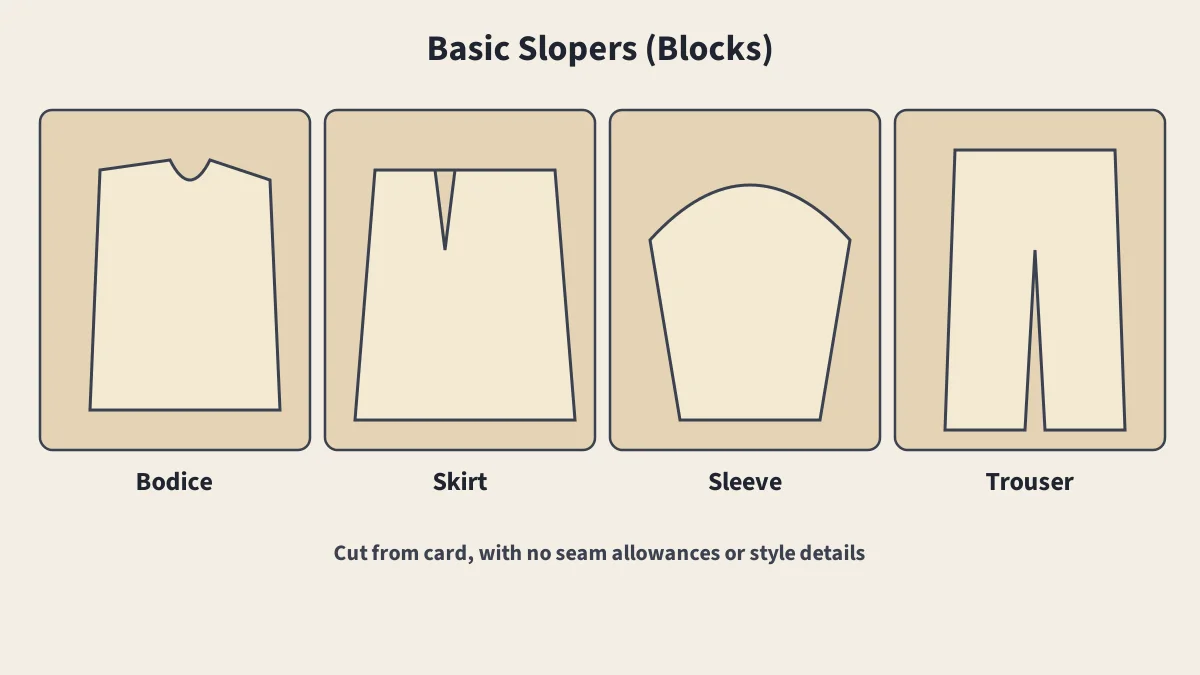
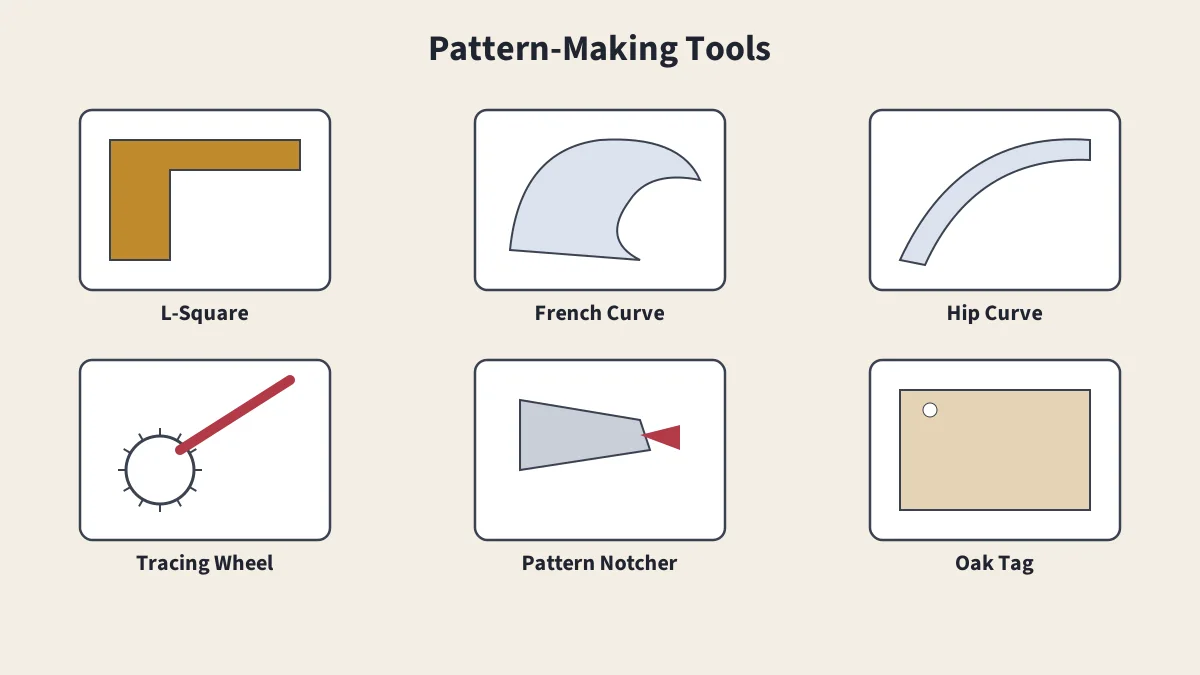
Drafting usually starts from a sloper, a basic fitted pattern, or from measurements plotted onto paper. Designs are developed by moving darts, adding fullness, changing necklines and adding seam allowances. Tools include the hip curve, L-square and French curves; see pattern-making tools.
Draping
- Prepare muslin pieces with the grain marked, and a dress form with style lines taped on.
- Pin the fabric to the form, smoothing and shaping it along the grain.
- Mark seams, darts and edges directly on the fabric.
- Remove the fabric, true the lines on a flat surface and add seam allowances.
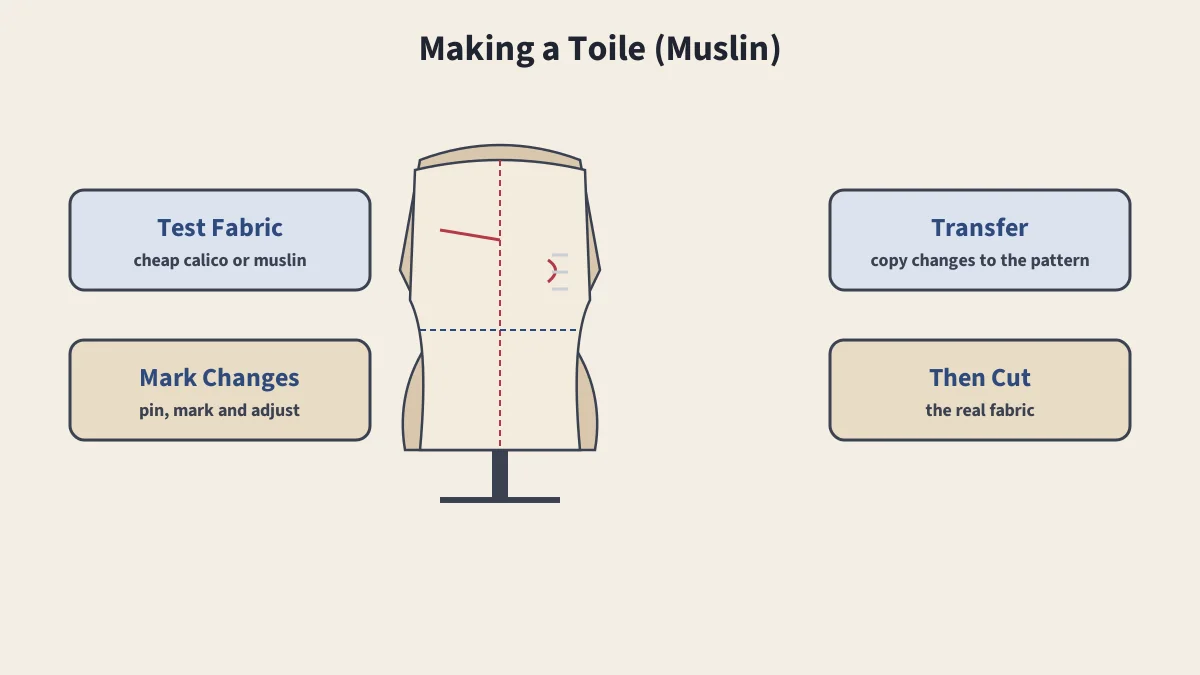
- Transfer to paper and test with a toile.
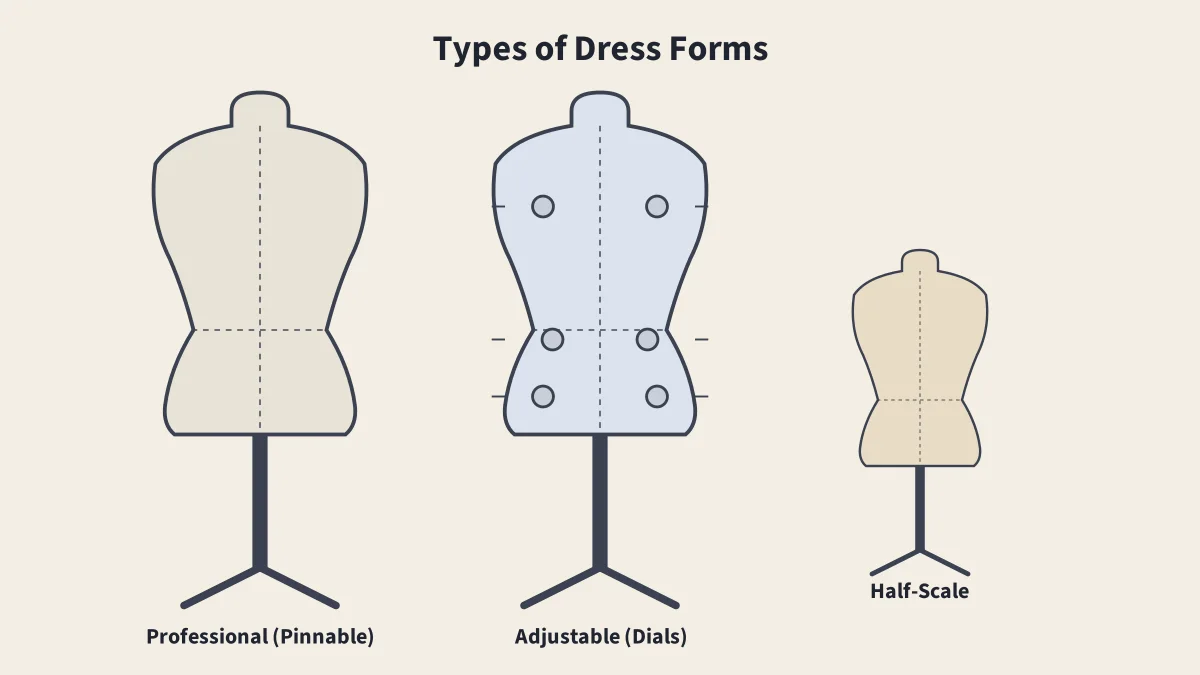
Muslin is the most common draping fabric because it behaves predictably and holds its shape; a softer fabric is used for flowing garments. Designers often drape only half the garment, on the right side of the form for right-handed designers. See dress forms.
Using Both
Many designers drape a design to find its shape, then refine it as a flat pattern, or draft a pattern and check its drape on a form. Either way, the result is tested in a mock-up before the final fabric is cut.
Sources
- Sewing pattern, Wikipedia
- Dress form, Wikipedia
Frequently Asked Questions
What is flat pattern drafting?
Making a pattern on a flat surface from body measurements, using rulers, curves and straight edges. It is the most common method in menswear.
What is draping in fashion design?
Pinning fabric to a dress form to shape a design, then transferring the outline to paper, or using the fabric itself as the pattern.
Which is better, drafting or draping?
Neither: each suits different garments. Draping is useful for sculpted evening gowns, bias-cut designs and collars that are hard to achieve flat; drafting is precise and efficient for tailored and structured garments.
What fabric is used for draping?
Usually muslin or calico, which behaves predictably and holds pins well. Softer fabrics are used to drape flowing designs.
Keep Reading
Slopers and Blocks
Bodice, skirt, sleeve and trouser blocks explained.
Pattern-Making Tools
Rulers, curves, notchers, tracing wheels and paper.
Dress Forms
Professional, adjustable, half-scale and custom-padded forms compared.
What Is a Toile?
Test garments, fabrics and fitting.