Dress and Fashion Silhouettes: The Shapes Behind Every Style (2026)
A silhouette is the overall outline of a garment on the body. Fashion history is largely a story of silhouettes, from the high-waisted Empire dress to Dior's New Look and the 1960s shift.
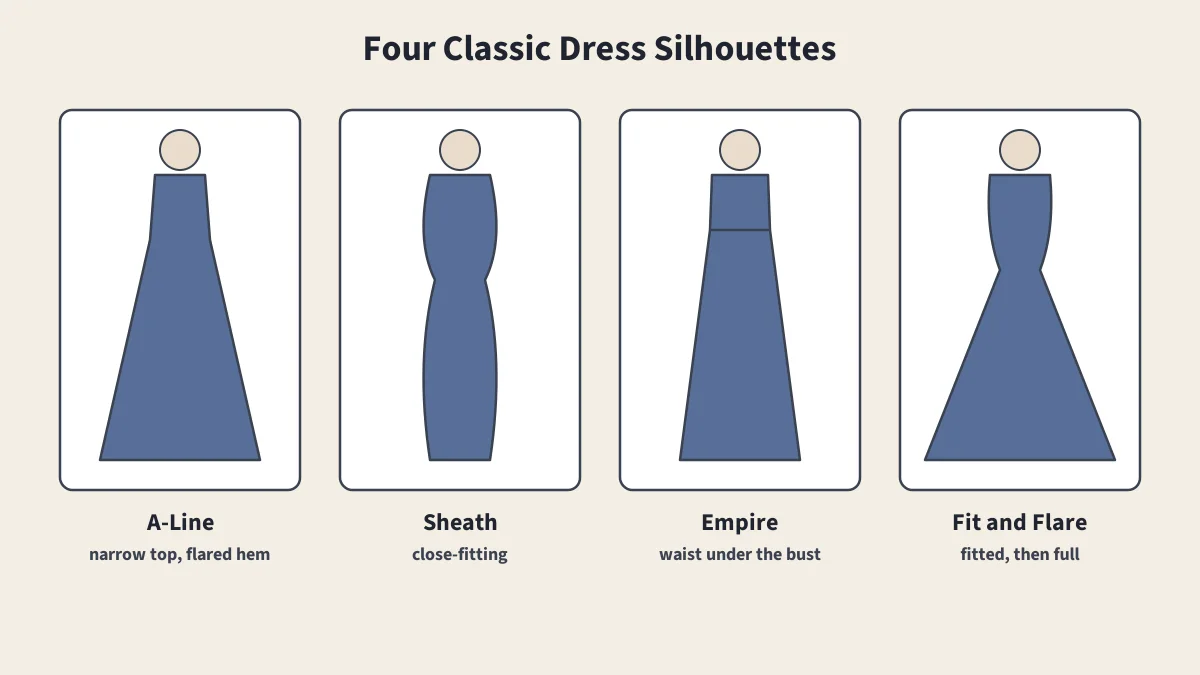
In This Article
Silhouettes in Brief
- A-line: narrow at the top, flared at the hem
- Sheath: close-fitting throughout
- Shift: loose and straight
- Empire: waist just under the bust
- New Look: Dior, 1947
A silhouette is the outline a garment makes on the body. Two dresses in different fabrics and colors can share the same silhouette, and a change in silhouette is often what marks a new era in fashion. For skirt shapes, see types of skirts.
Classic Silhouettes
| Silhouette | Shape | Associated With |
|---|---|---|
| A-line | Fitted at the top, widening to the hem like the letter A | Christian Dior named a 1955 line after it |
| Sheath | Form-fitting, shaped with darts or tucks at the waist | Office and evening wear |
| Shift | Loose and straight, falling from the shoulders | 1920s and 1960s |
| Empire | Fitted bodice ending just below the bust, long loose skirt | Late 1700s to early 1820s; 1960s revival |
| Fit and flare | Fitted through the bodice and waist, then full | 1950s styles |
| New Look | Soft shoulders, small waist, full skirt below mid-calf | Dior, 1947 |
| Ball gown | Fitted bodice with a very full skirt | Formal and bridal wear |
| Mermaid | Fitted to the knee, then flaring out | Evening and bridal wear |
The Empire Silhouette
The Empire dress has a fitted bodice ending just below the bust and a long skirt that drapes over the body rather than being held out by petticoats. It grew out of Neoclassical fashion, which revived the loose tunics of Greek and Roman art, and it was fashionable from the late 1700s to the early 1820s. In Britain it is often called Regency style. The name "Empire" refers to the First French Empire (1804–1815) but was applied only in the early 20th century.
Shift and Sheath
A shift dress falls loosely from the shoulders, with bust darts; a sheath is form-fitting, shaped at the waist. The shift became popular in the 1920s, when it suited the flappers' dancing and their rejection of corsets. It went out of fashion during the war and the years of Dior's New Look, then returned in the 1960s, helped by Givenchy's dress for Audrey Hepburn in Breakfast at Tiffany's and Lilly Pulitzer's designs for Jacqueline Kennedy.
Dior's New Look
Christian Dior showed his first collection, with lines named Corolle and Huit, on 12 February 1947. Its small, nipped-in waist, soft shoulders and full skirt falling below mid-calf were a dramatic change from wartime clothing. Carmel Snow, editor of Harper's Bazaar, reportedly exclaimed that it was "such a new look", and the name stuck. Dior went on to introduce lettered lines, including the H-line in 1954 and the A-line and Y-line in 1955.
Creating a Silhouette
- Darts and seams fit the fabric to the body; see darts and tucks.
- Gores and godets add flare; see godets, gores and gussets.
- Fabric choice matters: crisp fabrics hold a shape, drapey ones follow the body; see fabrics.
- Underlayers such as petticoats and linings support full skirts.
For how these shapes were built in their own time, see Regency dress, Victorian dress and 1920s dress.
Sources
- Empire silhouette, Wikipedia
- Shift dress, Wikipedia
- New Look (style of clothing), Wikipedia
- Christian Dior, Wikipedia
Frequently Asked Questions
What is a silhouette in fashion?
The overall outline or shape a garment makes on the body, such as A-line, sheath or empire, regardless of its color or details.
What is the difference between a shift and a sheath dress?
A shift dress is loose and straight, falling from the shoulders. A sheath dress is form-fitting, shaped at the waist with darts or tucks.
What is an empire waist?
A waistline set just below the bust, with a long, loose skirt. It was fashionable from the late 1700s to the early 1820s and is named after the First French Empire.
What was Dior's New Look?
Christian Dior's first collection, shown on 12 February 1947, with a small nipped-in waist, soft shoulders and a full skirt below mid-calf. Harper's Bazaar editor Carmel Snow gave it the name.
Keep Reading
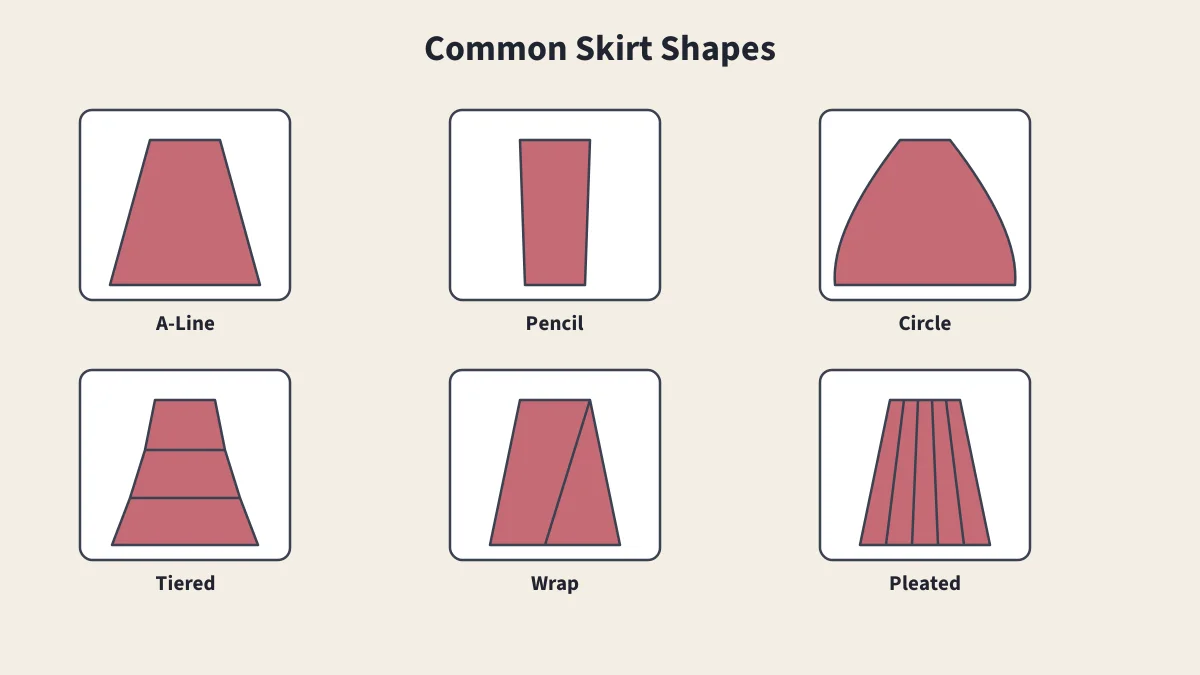
Types of Skirts
A-line, pencil, circle, gored, tiered, wrap and more.
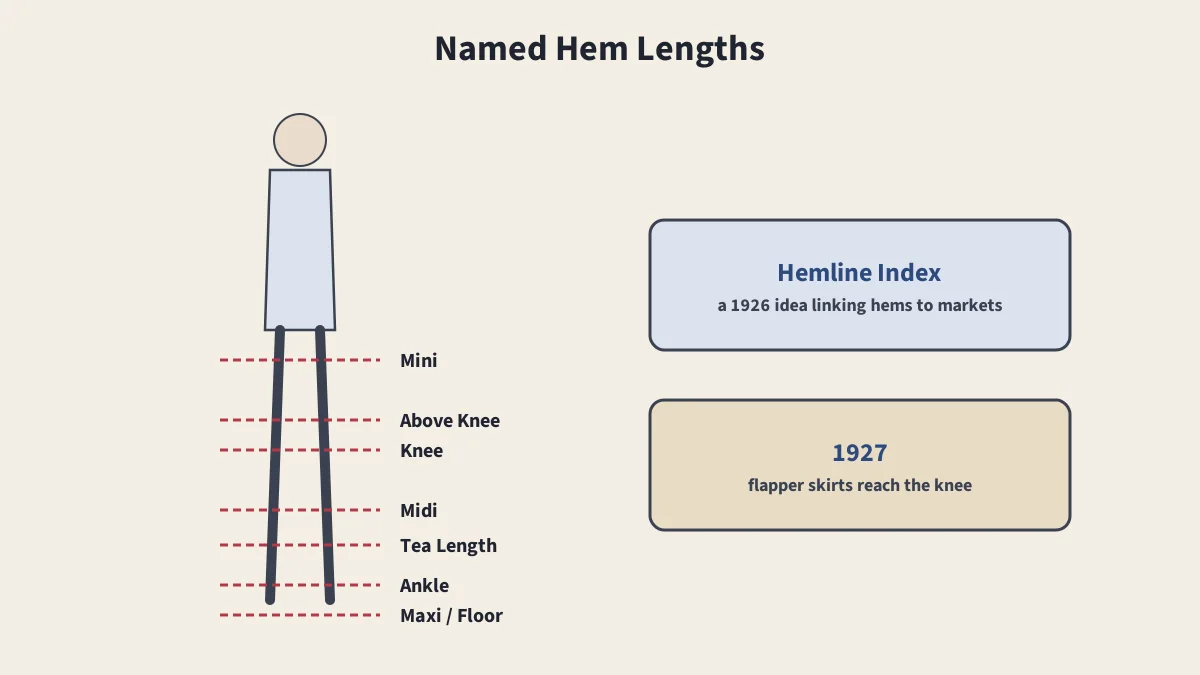
Hem Lengths
Mini, midi, maxi and every length in between.
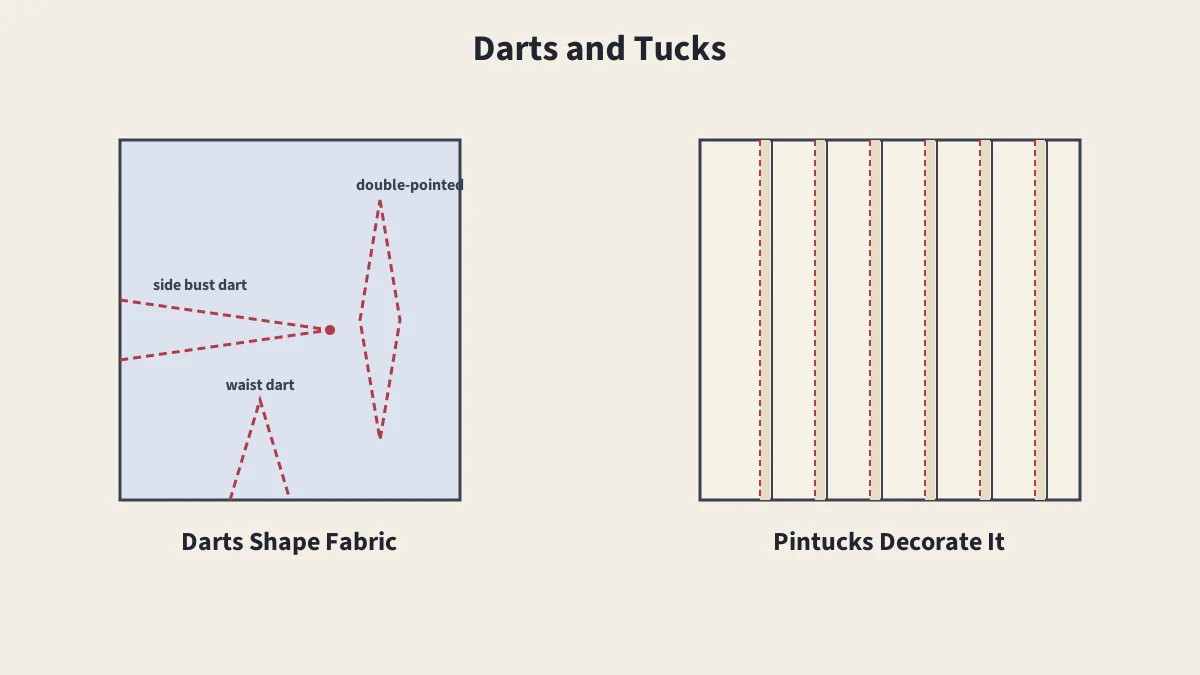
Darts and Tucks
Bust, waist and double-pointed darts, and decorative tucks.
History of Ready-to-Wear Clothing
How slop shops, war uniforms and sewing machines created off-the-rack clothes.