Rayon, Viscose, Modal and Lyocell: The Fibers Made From Wood (2026)
They feel like silk or cotton, but they start as trees. Rayon and its relatives are regenerated cellulose fibers, neither fully natural nor fully synthetic. Here is how they are made and how they differ.
In This Article
The Rayon Family in Brief
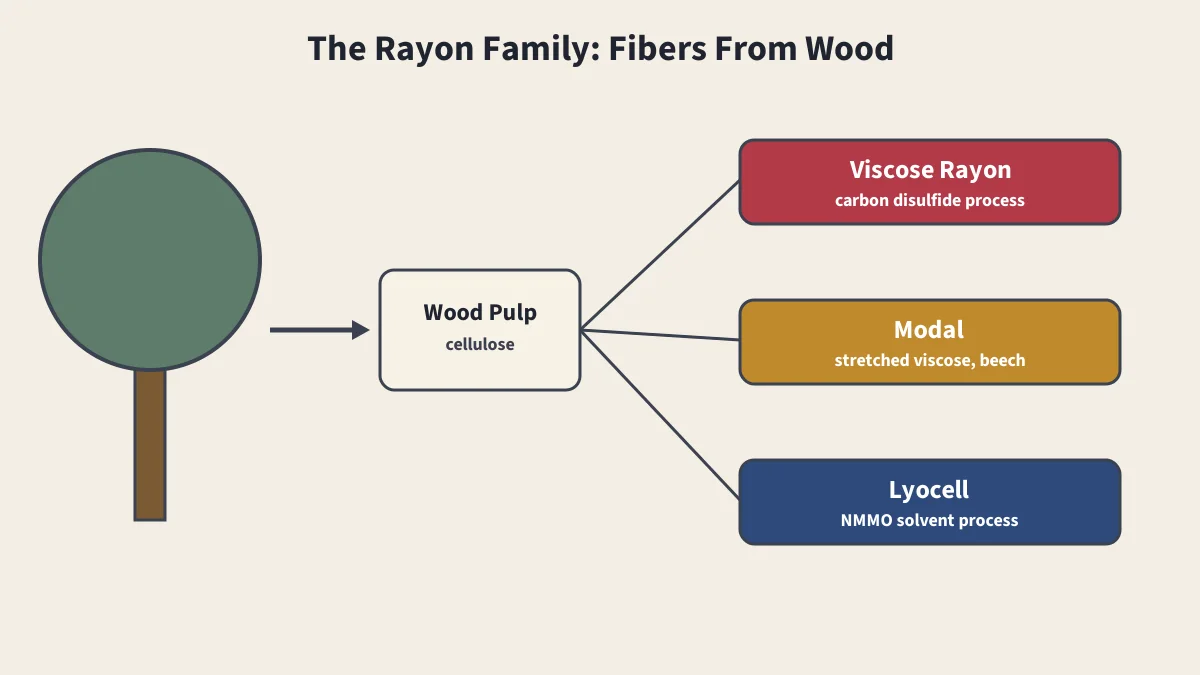
- Source: cellulose, usually from wood pulp
- Type: semi-synthetic (regenerated cellulose)
- Viscose: the most common process
- Modal: stretched viscose from beech; stronger when wet
- Lyocell: solvent process without carbon disulfide
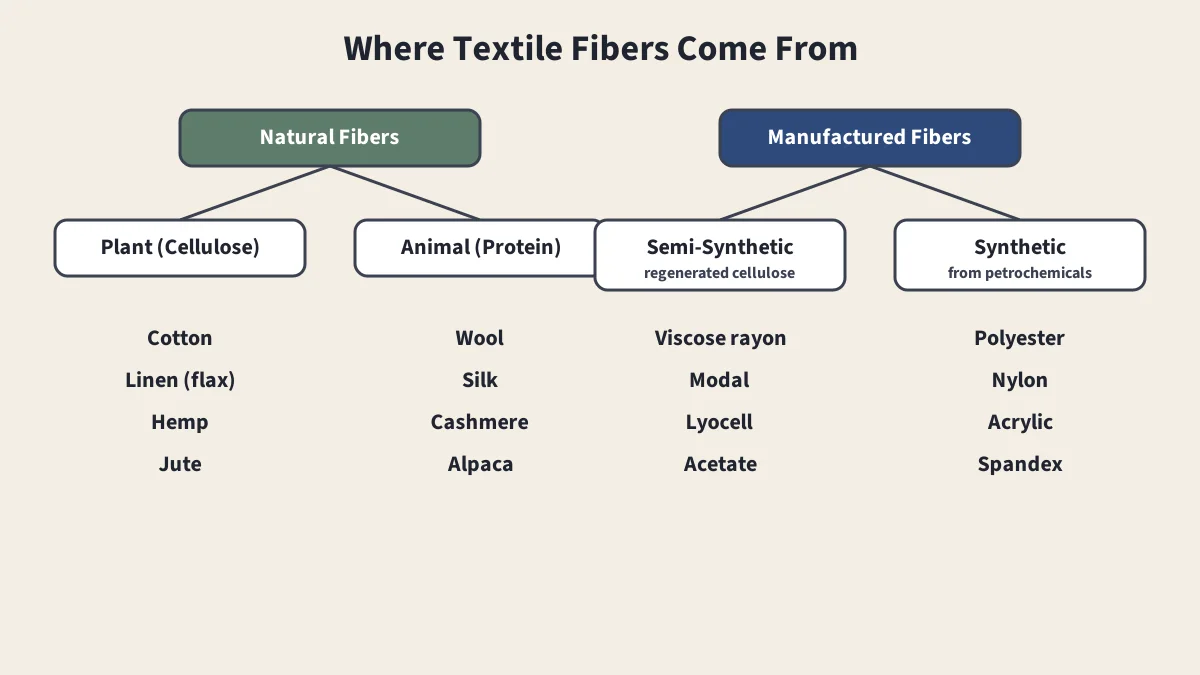
Rayon, also called viscose, is a fiber made from regenerated cellulose, usually from wood pulp. It has the same molecular structure as natural cellulose, and it can be made to imitate silk, wool, cotton or linen. Because it starts with a natural material but is transformed chemically, it is classed as semi-synthetic; see natural vs. synthetic fibers.
How Each Is Made
| Fiber | Process | Notes |
|---|---|---|
| Viscose rayon | Cellulose dissolved with alkali and carbon disulfide, then regenerated as fiber | The most common method |
| Modal | Viscose made from beech-tree cellulose and stretched | Stronger and more stable when wet; a Lenzing trademark |
| Lyocell | Cellulose dissolved in an amine oxide solvent (NMMO) | Avoids carbon disulfide; more expensive; Tencel is a brand |
| Cupro (cuprammonium) | Cellulose dissolved with copper and ammonia | Largely obsolete; still made by one Japanese company |
A History of "Artificial Silk"
| Year | Development |
|---|---|
| 1884 | Louis Bernigaut makes the first rayon, from flammable nitrocellulose |
| 1885 | Hilaire de Chardonnet patents his process and becomes known as the "father of rayon" |
| 1892–1894 | Charles Cross, Edward Bevan and Clayton Beadle patent the viscose process |
| 1905 | Courtaulds makes the first commercial viscose rayon |
| 1920s | The United States becomes the largest rayon producer |
| 1970s–1980s | Lyocell is developed and commercialized |
Properties
- Soft, smooth and cool, with excellent drape.
- Highly absorbent and easy to dye in vivid colors.
- Weak when wet: regular viscose loses strength when wet and has the lowest elastic recovery of any fiber, so it can stretch and shrink; check the care label, which may say to dry-clean.
- Modal and lyocell are stronger when wet and more stable in washing.
- Biodegradable: wood-based fibers such as lyocell biodegrade readily, unlike polyester.
Environmental and Health Concerns
The carbon disulfide used to make viscose is toxic and has seriously harmed rayon workers. As of 2004, about 250 g of carbon disulfide was emitted per kilogram of rayon produced. Production has largely moved to China, Indonesia and India, where data on workers' health is often unavailable. Lyocell's solvent process avoids carbon disulfide, which is one reason it is often marketed as a more sustainable choice.
Sewing With Rayon
- Pre-wash the fabric as the finished garment will be washed; viscose can shrink noticeably.
- Handle gently, especially when wet, and avoid stretching cut edges.
- Use sharp, fine needles and pin within the seam allowance.
- Press at a medium setting with a pressing cloth to avoid shine.
- Stabilize slippery fabrics on tissue or with spray starch when cutting.
Sources
- Rayon, Wikipedia
- Lyocell, Wikipedia
- Modal (textile), Wikipedia
Frequently Asked Questions
Is viscose the same as rayon?
Essentially, yes. Rayon is the general name for fibers made from regenerated cellulose, and viscose is the most common process for making it. In many countries the fabric is simply labeled viscose.
What is the difference between modal and viscose?
Modal is a type of viscose made from beech-tree cellulose and stretched during production. It is stronger and more stable when wet than regular viscose and can be tumble-dried.
What is lyocell?
Lyocell is a regenerated cellulose fiber made by dissolving wood pulp in an amine oxide solvent (NMMO). The process avoids the toxic carbon disulfide used for viscose but is more expensive. Tencel is a brand of lyocell.
Is rayon natural or synthetic?
It is semi-synthetic. Rayon is made from natural cellulose, usually from wood pulp, but the cellulose is chemically dissolved and regenerated into fiber in a factory.
Keep Reading
Natural vs. Synthetic Fibers
Plant, animal, semi-synthetic and synthetic fibers compared.
Cotton
Where cotton comes from, its history and how it behaves.
Silk
How silkworms make silk, its history and how it behaves.
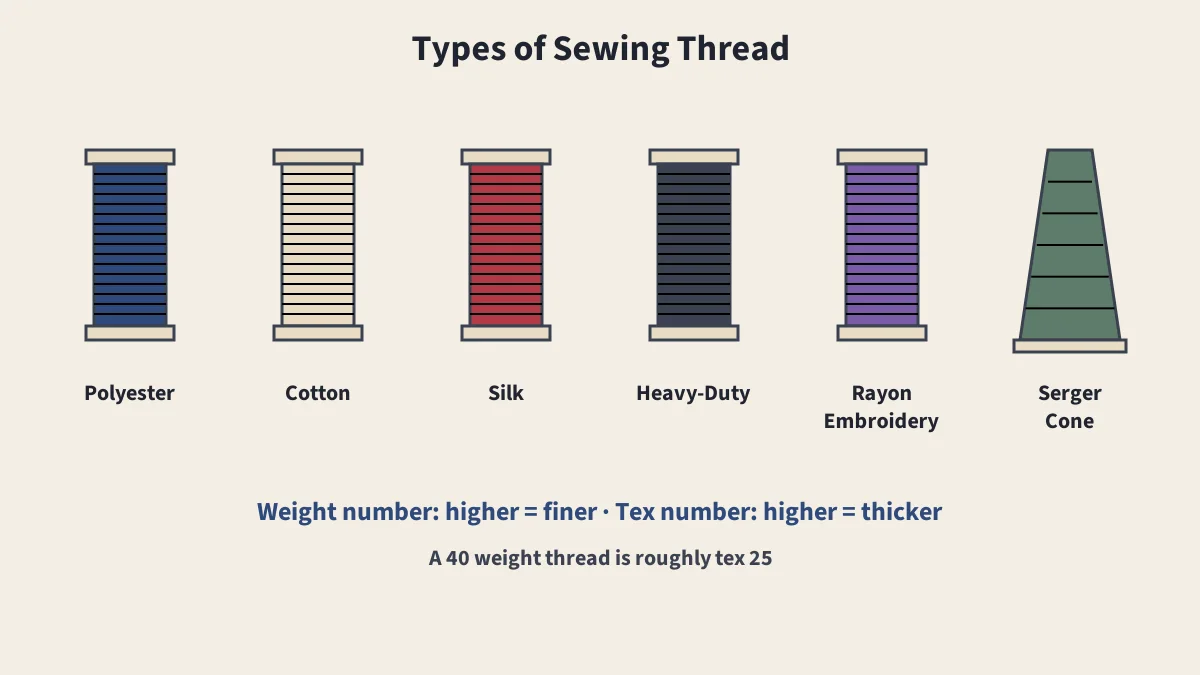
Types of Thread
Thread fibers, uses, and weight, tex and denier explained.