Wearing Ease vs. Design Ease: How Much Room Is in a Pattern? (2026)
Ease is the space between your body and your clothes. Some of it lets you move and breathe; the rest creates the style. Knowing the difference helps you choose the right size.
In This Article
Ease in Brief
- Ease: room beyond body measurements
- Wearing ease: for movement
- Design ease: for style
- Fit categories: close-fitting to very loose
- Negative ease: stretch knits
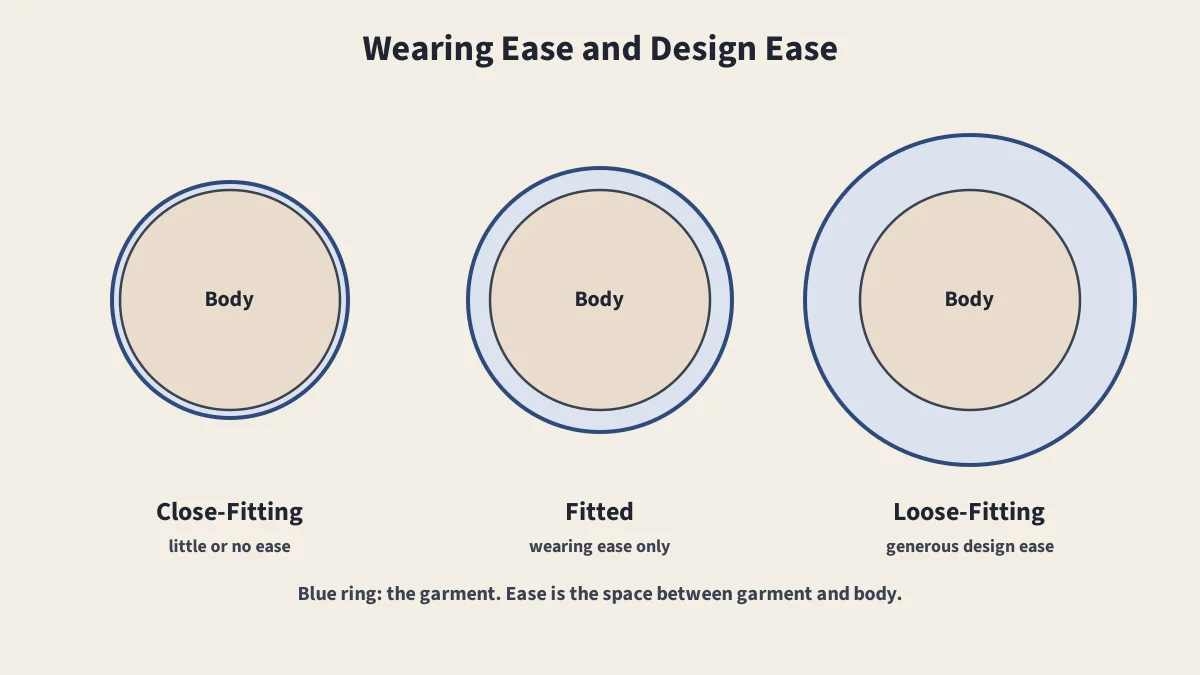
Ease is the amount of room a garment allows beyond the wearer's body measurements. A dress with no ease at all would be impossible to sit down in; one with a great deal of ease looks loose or oversized. Patterns build ease in, which is why the finished garment measurements differ from the body measurements on the size chart.
Wearing Ease
Wearing ease is the extra room that lets the wearer sit, move, reach and breathe. Guidelines differ:
| Bust | Waist | Hip | |
|---|---|---|---|
| One published guideline | 2½ in | 1 in | 3 in |
| A ready-to-wear guideline | 2 in | 1 in | 2 in |
Woven garments need more wearing ease than knits or bias-cut garments, which can stretch to accommodate movement.
Design Ease
Design ease, or fashion ease, is added beyond wearing ease to create a particular look. Its amount places a garment in a fit category:
- Close-fitting: little more than wearing ease, or even less in stretch fabrics.
- Fitted: follows the body with wearing ease.
- Semi-fitted: skims the body.
- Loose-fitting: generous room.
- Very loose-fitting: oversized.
Patterns often describe a design with these terms, so you can judge the intended fit before choosing a size.
Negative Ease in Knits
Stretch knits are often designed with negative ease: the garment measures smaller than the body and stretches to fit closely. Leggings, swimwear and fitted tops usually work this way, so a knit pattern will specify the stretch the fabric needs. See sewing knit fabrics.
Using Ease to Choose a Size
- Find the finished garment measurements, on the envelope or printed on the pattern piece.
- Subtract your body measurement to see the ease.
- Compare with a garment you like the fit of, measured flat and doubled.
- Choose the size that gives the ease you want, not necessarily the one your measurements suggest.
Sources
- Ease (sewing), Wikipedia
Frequently Asked Questions
What is ease in sewing?
The amount of room a garment allows beyond the wearer's body measurements.
What is the difference between wearing ease and design ease?
Wearing ease is the minimum extra room that lets you sit, move and breathe. Design ease is extra room added beyond that to create a particular style, such as a loose or oversized look.
How much wearing ease is typical?
Published guidelines vary. One gives about 2½ inches at the bust, 1 inch at the waist and 3 inches at the hip; another, for ready-to-wear, gives about 2 inches at the bust, 1 at the waist and 2 at the hips.
What is negative ease?
When a garment measures smaller than the body, so it stretches to fit. It is common in knit garments such as leggings, swimwear and fitted T-shirts.
Keep Reading
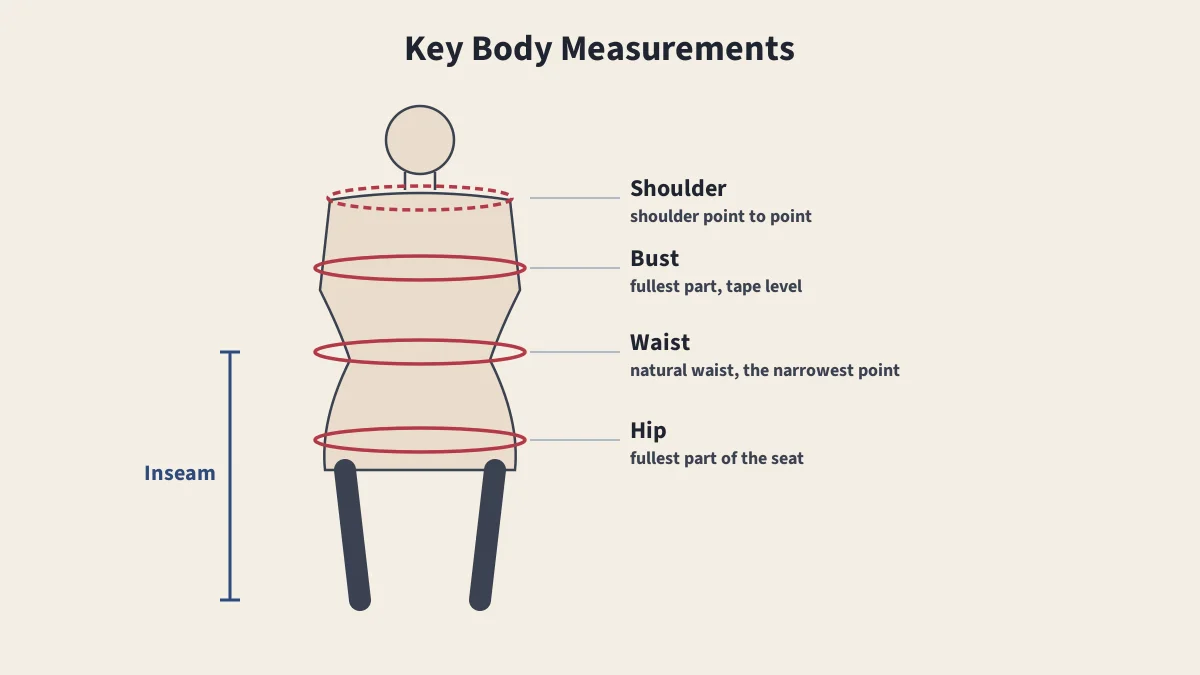
How to Take Body Measurements
Bust, waist, hips and more, measured correctly.
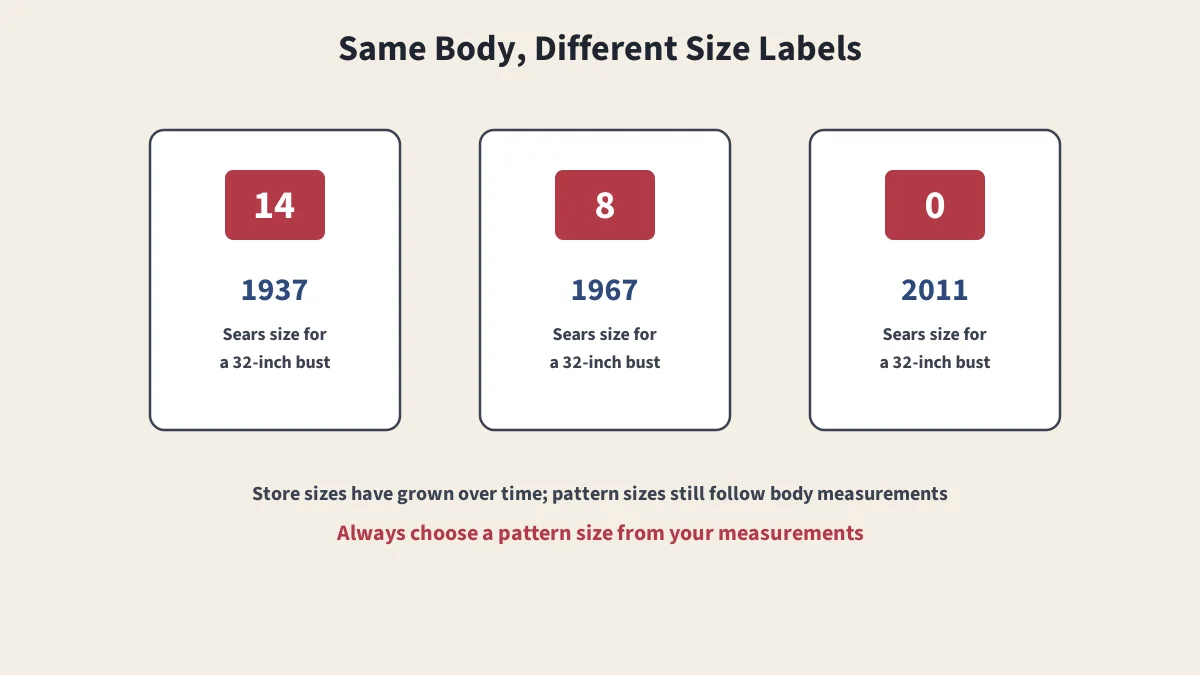
Pattern Sizes vs. Store Sizes
Vanity sizing and how to choose a pattern size.
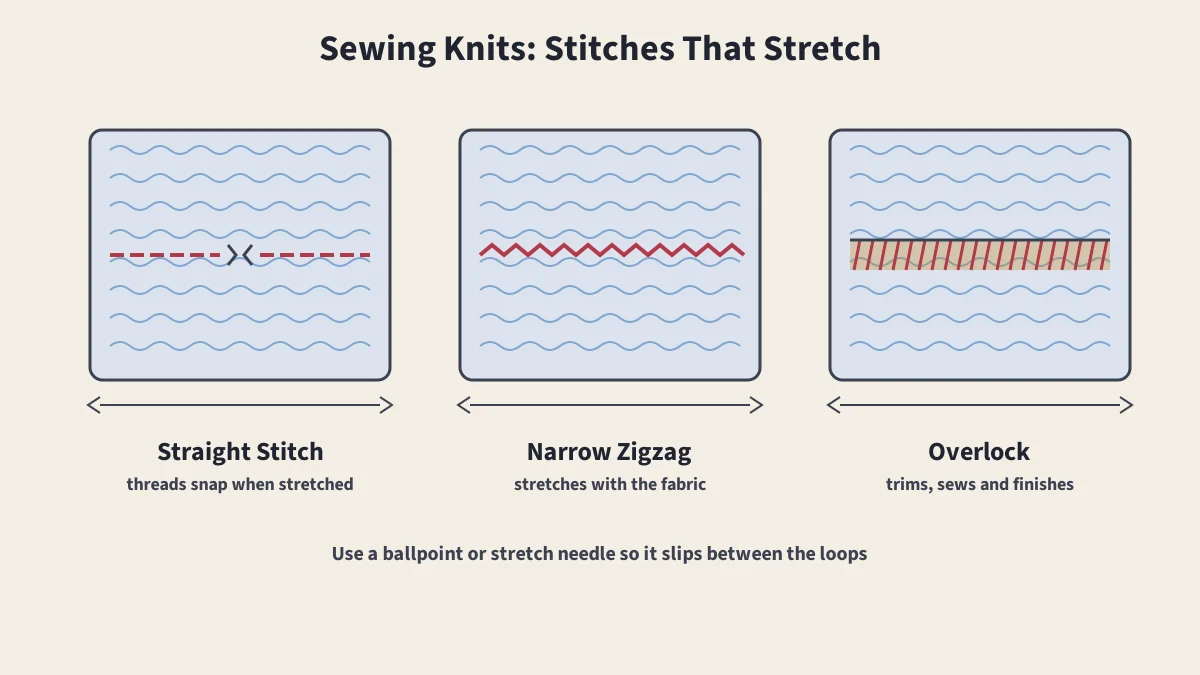
Sewing Knit Fabrics
Needles, stretch stitches and hems for jersey and other knits.
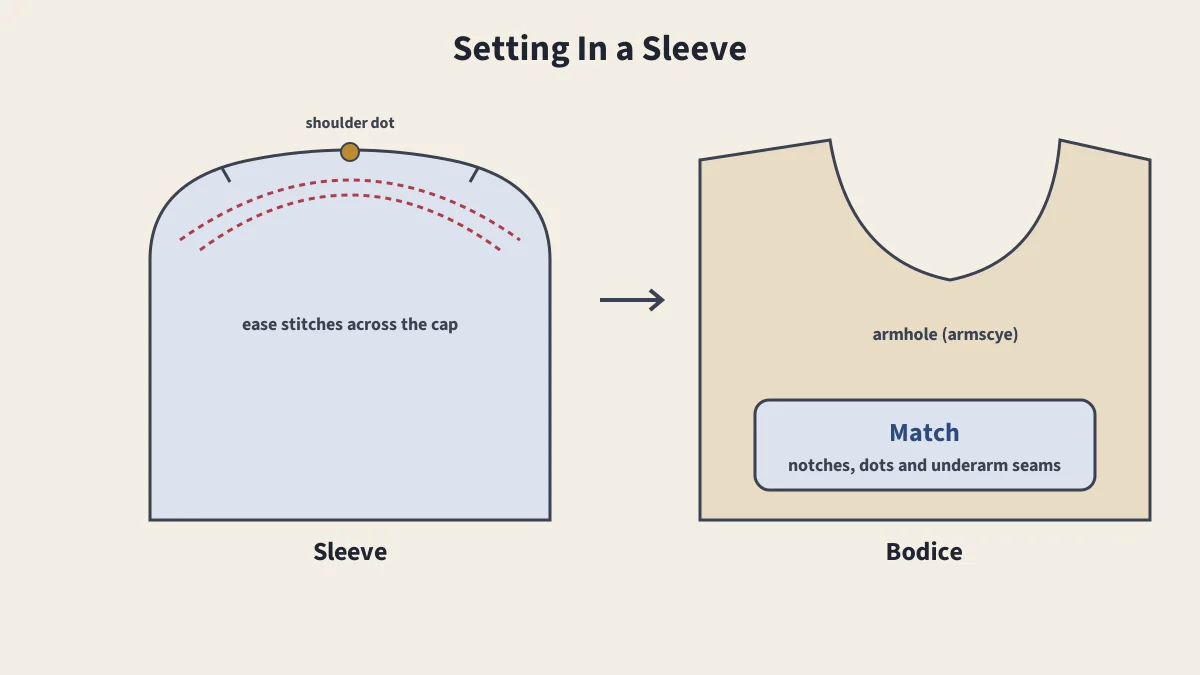
Set-In Sleeves
Easing the sleeve cap and sewing it in flat or in the round.