Pattern Hacking: Turning One Pattern Into Many Designs (2026)
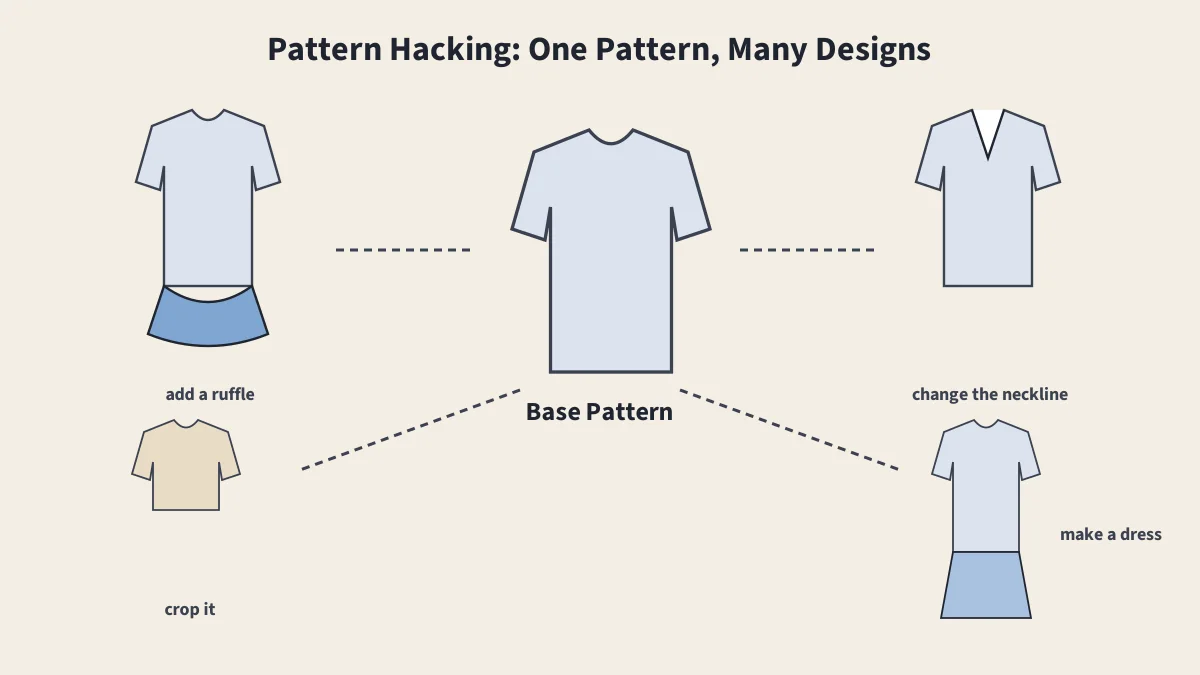
Pattern hacking means changing an existing sewing pattern to make a new design: a top becomes a dress, a sleeve gets a ruffle, a neckline turns into a V. It is the easiest way into pattern design.
In This Article
Pattern Hacking in Brief
- What: modifying a pattern for a new design
- Start with: a pattern that already fits
- Easy hacks: length, sleeves, ruffles, pockets
- Bigger hacks: necklines, darts, panels
- Always: trace first and test
Pattern hacking is the sewing community's name for changing an existing pattern to make a new design. Because you start from a pattern that already fits, hacking is much quicker than drafting from scratch, and a single favorite pattern can become a whole wardrobe. It works on the same principles as developing designs from a sloper.
Popular Hacks
| Hack | How | Difficulty |
|---|---|---|
| Change the length | Lengthen or shorten at the double lines, or extend the hem | Easy |
| Crop a top | Shorten the bodice and add a band or hem | Easy |
| Top to dress | Extend the side seams and flare to the new hem | Easy |
| Add a ruffle or flounce | Shorten the piece and attach a ruffle; see ruffles and flounces | Easy |
| Add pockets | In-seam or patch pockets; see types of pockets | Easy |
| Change the sleeve | Shorten, add a cuff, or slash and spread for a puff; see types of sleeves | Moderate |
| Change the neckline | Redraw on the bodice and facing; see types of necklines | Moderate |
| Add a yoke or panel | Draw a style line and add seam allowances to both pieces | Moderate |
| Move or convert darts | Rotate the dart or turn it into a seam or gathers | Advanced |
How to Hack a Pattern
- Choose a pattern that fits, with any fit adjustments already made.
- Trace the pieces so the original stays intact.
- Remove the seam allowances where you will redraw, or work carefully on the stitching lines.
- Draw the new lines with a ruler and curve; see pattern-making tools.
- Add seam allowances back to every new edge, and new notches to match pieces.
- Adjust facings and linings to match any change to necklines or armholes.
- Test with a toile before cutting good fabric.
Sharing Your Hacks
Hacks make good material for a sewing portfolio: show the original pattern, your sketch, the changed pattern pieces and the finished garment. If you share or sell a hacked design, check the original pattern's terms of use.
Sources
- Sewing pattern, Wikipedia
Frequently Asked Questions
What is pattern hacking?
Modifying an existing sewing pattern to create a different design, such as changing the length, neckline, sleeves or adding details like pockets and ruffles.
What is the difference between pattern hacking and pattern drafting?
Drafting creates a pattern from measurements; hacking starts from a pattern that already fits and changes its style.
What are easy pattern hacks for beginners?
Changing the length, cropping a top, adding a ruffle or flounce, adding pockets, changing a sleeve length and turning a top into a dress are good first hacks.
Do I need special tools to hack patterns?
Mostly tracing paper, a ruler, a curve and tape. Trace the original first so it stays intact.
Keep Reading
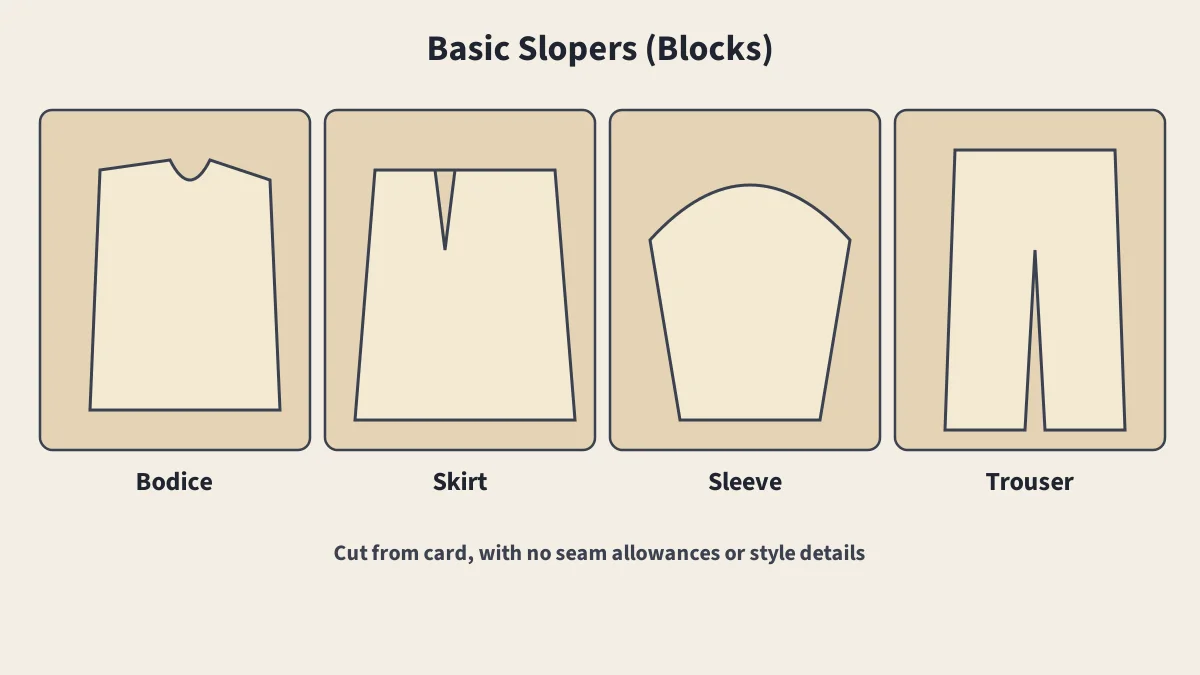
Slopers and Blocks
Bodice, skirt, sleeve and trouser blocks explained.
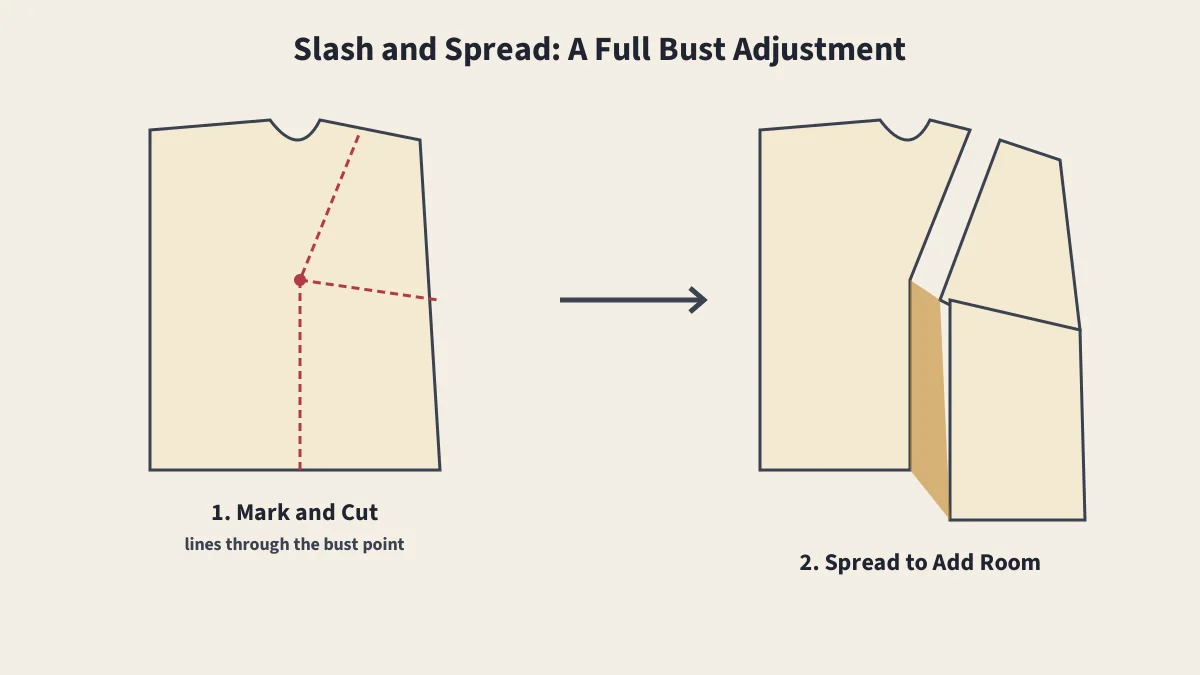
Common Fit Adjustments
Bust, back, shoulder, length and hip adjustments.
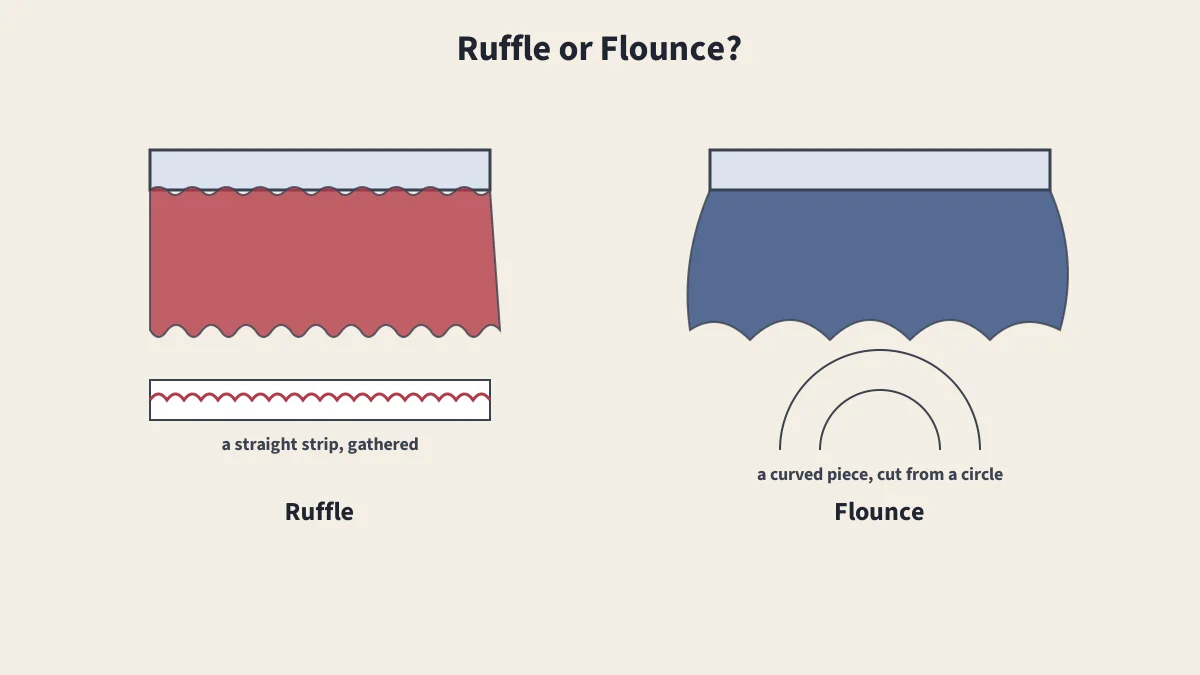
Ruffles and Flounces
Gathered ruffles, circular flounces and how to make them.
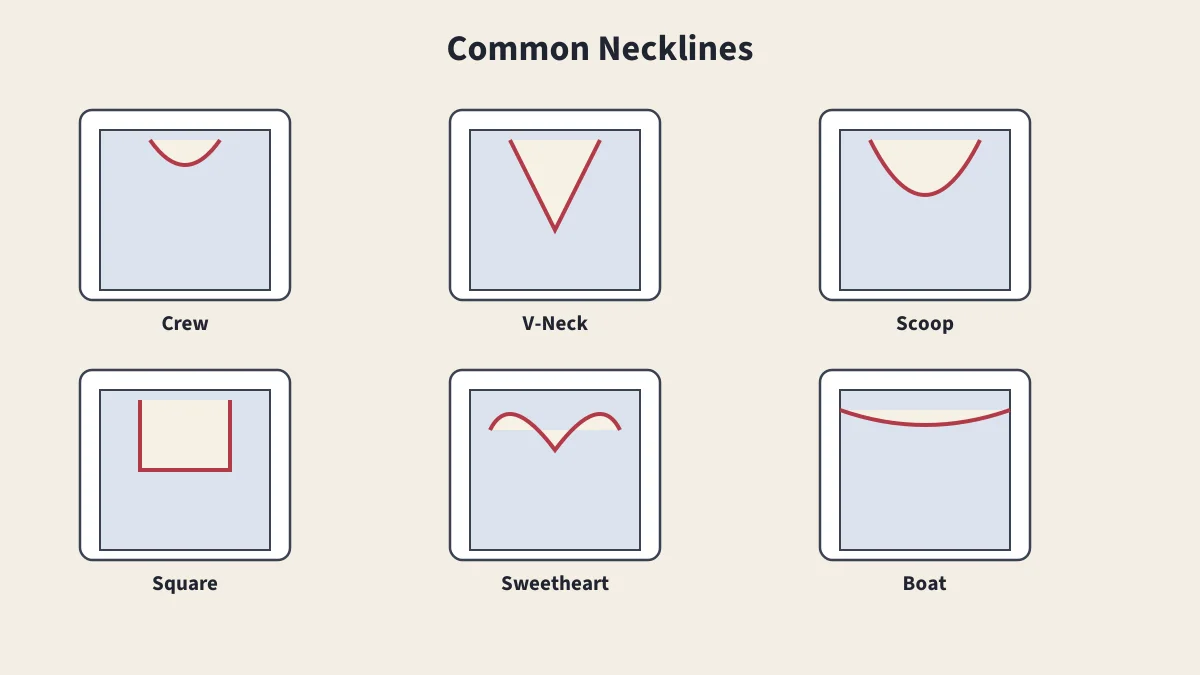
Types of Necklines
Crew, V-neck, scoop, sweetheart, boat and more.