Pattern-Making Tools: Rulers, Curves, Notchers and More (2026)
Drafting a pattern takes surprisingly few tools: paper, a pencil, a few specialized rulers and curves, and something to mark and notch with. Here is what each one does.
In This Article
Pattern Tools in Brief
- Straight lines: ruler and L-square
- Curves: French curve and hip curve
- Marking: tracing wheel, awl, drill
- Notching: pattern notcher
- Paper: pattern paper and oak tag
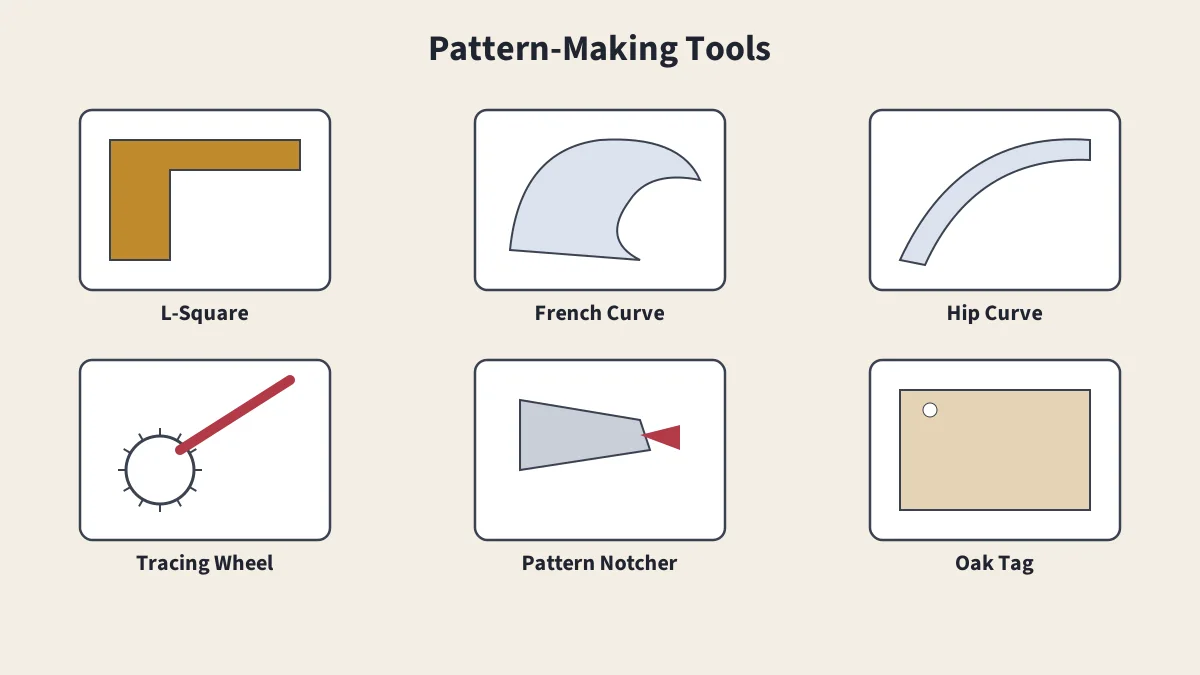
Pattern-making uses a small set of specialized tools for drawing straight lines, right angles and curves, and for marking and notching pattern pieces. Together with a tape measure and a dress form, they cover both flat drafting and draping.
Rulers and Curves
| Tool | Used For |
|---|---|
| Straight ruler | Long lines, grainlines and seam allowances; clear grid rulers help add allowances quickly |
| L-square | Right angles, such as center front to hem, and long straight lines |
| French curve | Necklines, armholes, crotch curves and other tight curves |
| Hip curve | Long, gentle curves: hiplines, side seams, hems and skirt edges |
| Flexible curve | Copying a curve from the body or a garment |
The French curve is credited to German mathematician Ludwig Burmester, and sets of them are sometimes called Burmester curves. In sewing, they are also used to personalize commercial patterns by redrawing necklines, sleeves, bust and waist.
Marking and Cutting Tools
- Tracing wheel: runs over pattern lines to transfer them to paper or, with transfer paper, to fabric.
- Awl and pattern drill: punch small holes to mark dart points and pocket positions.
- Pattern notcher: cuts a small slot in the pattern edge to mark notches.
- Paper scissors: kept separate from fabric shears; see types of scissors.
- Pencils, erasers and colored pens: for drafting and marking changes.
For marking fabric, see marking tools.
Paper
| Paper | Best For |
|---|---|
| Dot-and-cross or grid paper | Drafting and tracing, with a printed grid for alignment |
| Tissue or tracing paper | Tracing commercial patterns |
| Brown or kraft paper | Inexpensive large drafts |
| Oak tag (manila card) | Slopers and industrial patterns that are reused |
Digital Tools
In industry, first patterns are often drafted and graded with CAD software; see pattern grading. Home sewists can use similar programs to draft from measurements and print at home or at a copy shop; see PDF vs. paper patterns.
Sources
- Sewing pattern, Wikipedia
- French curve, Wikipedia
Frequently Asked Questions
What tools do I need to draft sewing patterns?
Pattern paper, a pencil and eraser, a long straight ruler, an L-square, a French curve, a hip curve, a tape measure, paper scissors and tape. A tracing wheel, notcher and awl are useful additions.
What is a French curve used for?
Drawing smooth curves of varying radii, such as necklines, armholes and the crotch curve of trousers. It is credited to the German mathematician Ludwig Burmester.
What is a hip curve?
A long, gently curved ruler used to draw hiplines, side seams, hems and the outer edges of skirts and trousers.
What is oak tag paper?
Sturdy manila card used for industrial patterns and slopers, which are punched with a hole and hung on hooks for storage.
Keep Reading
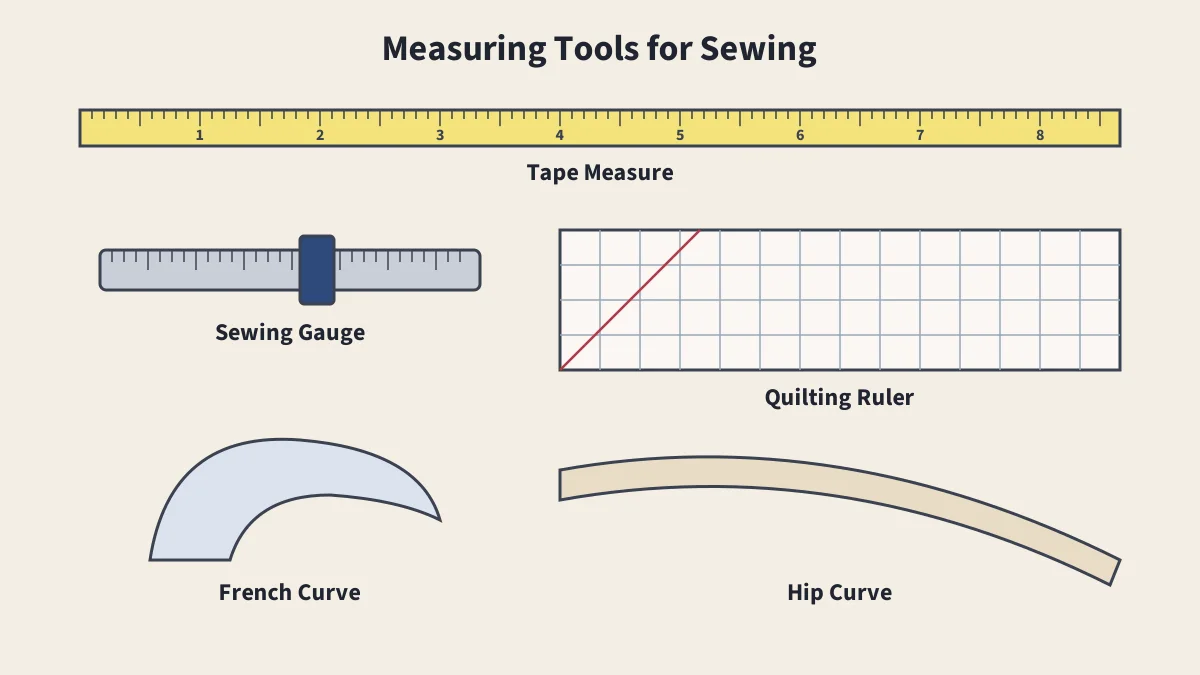
Measuring Tools
Tape measures, gauges, quilting rulers and curves explained.
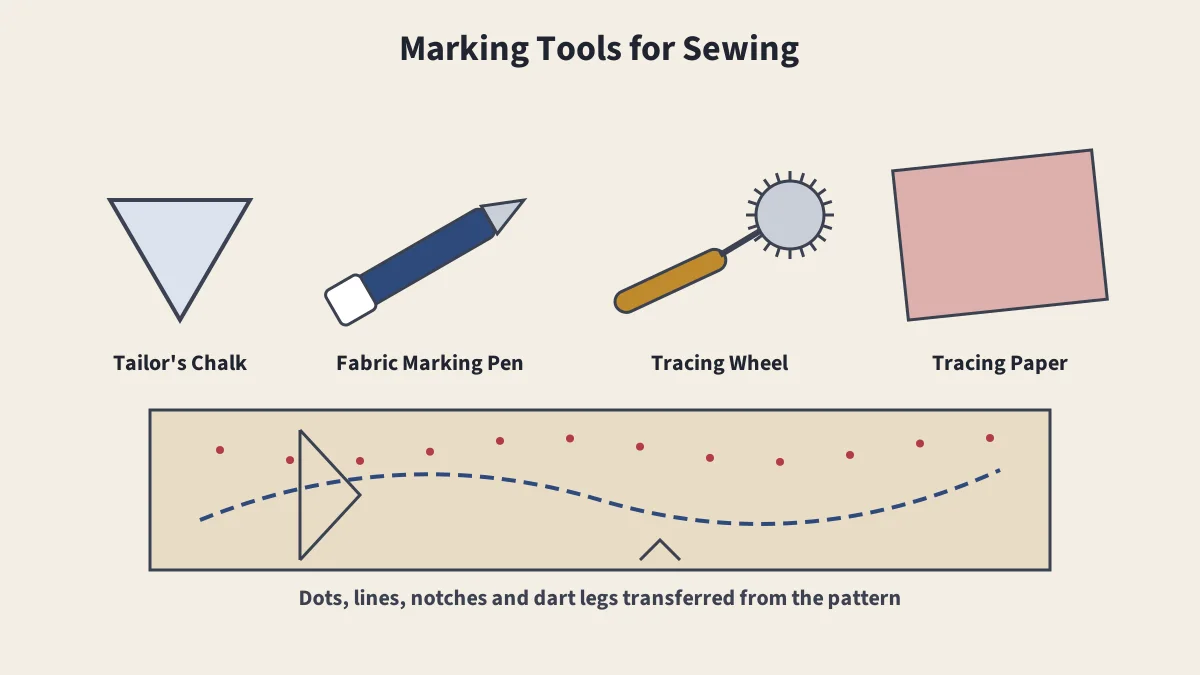
Marking Tools
Chalk, pens, tracing wheels, tailor's tacks and notches compared.
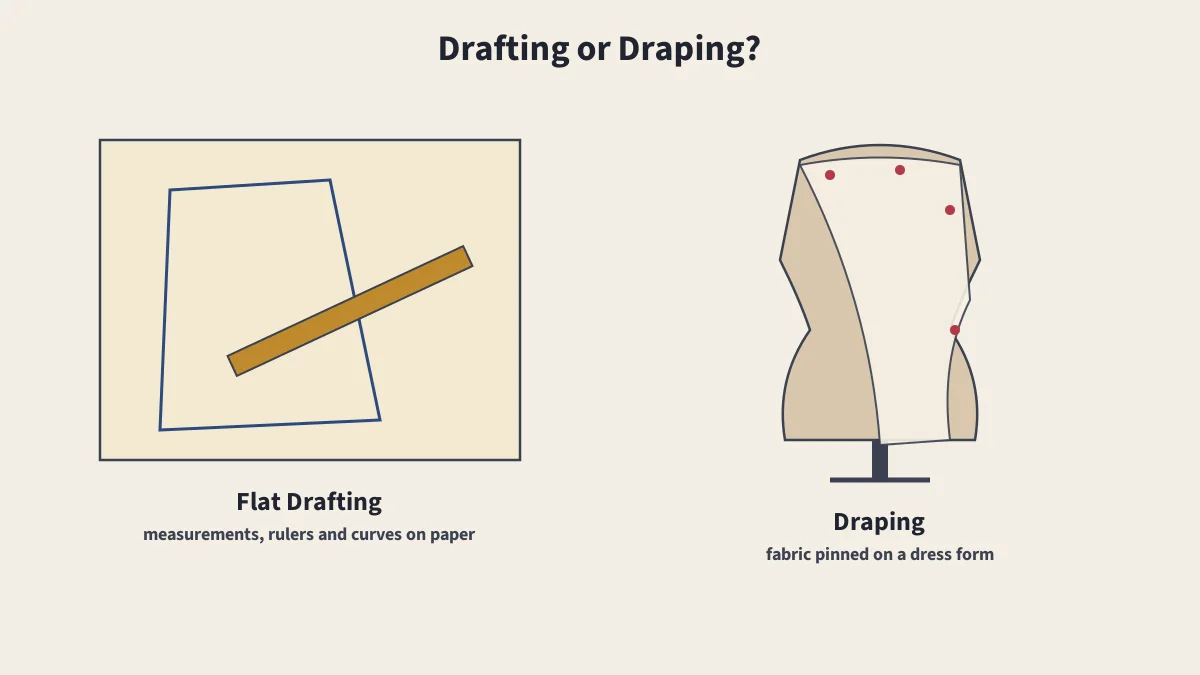
Pattern Drafting vs. Draping
Flat drafting and draping compared.
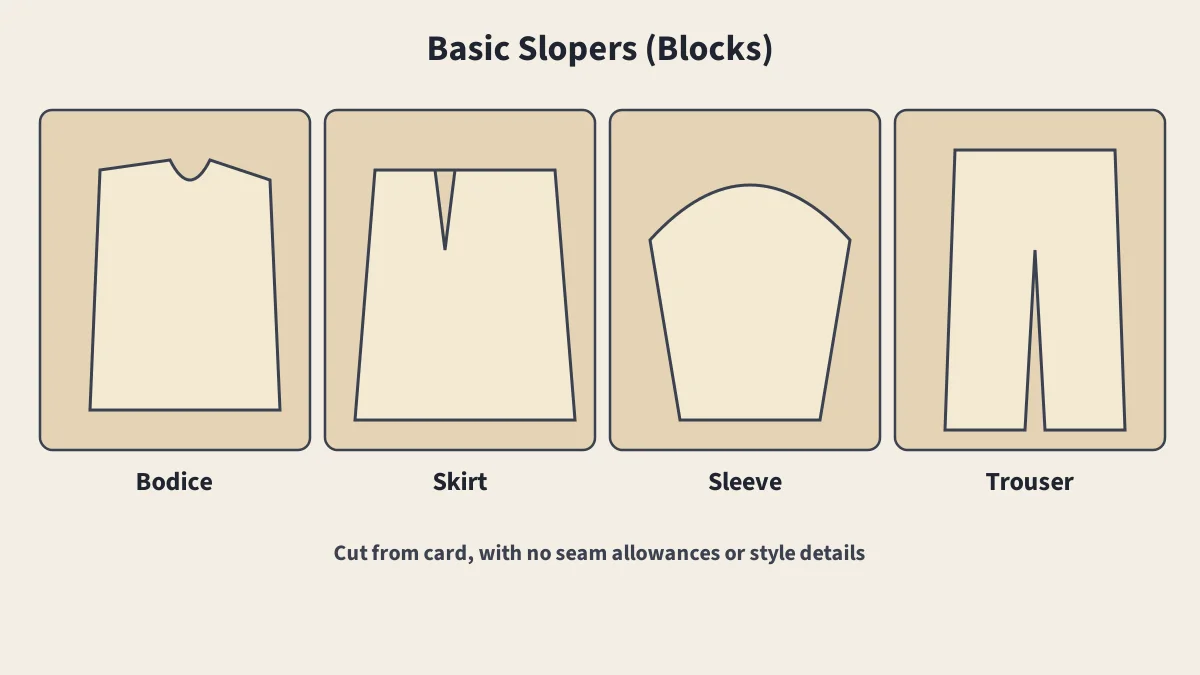
Slopers and Blocks
Bodice, skirt, sleeve and trouser blocks explained.