PDF vs. Paper Sewing Patterns: Printing, Pros and Cons (2026)
Sewing patterns used to come only on printed tissue in an envelope. Today many are sold as downloadable PDF files you can print at home or at a copy shop. Each format has its own advantages.
In This Article
PDF vs. Paper in Brief
- Paper: printed tissue in an envelope
- PDF: instant download, print as needed
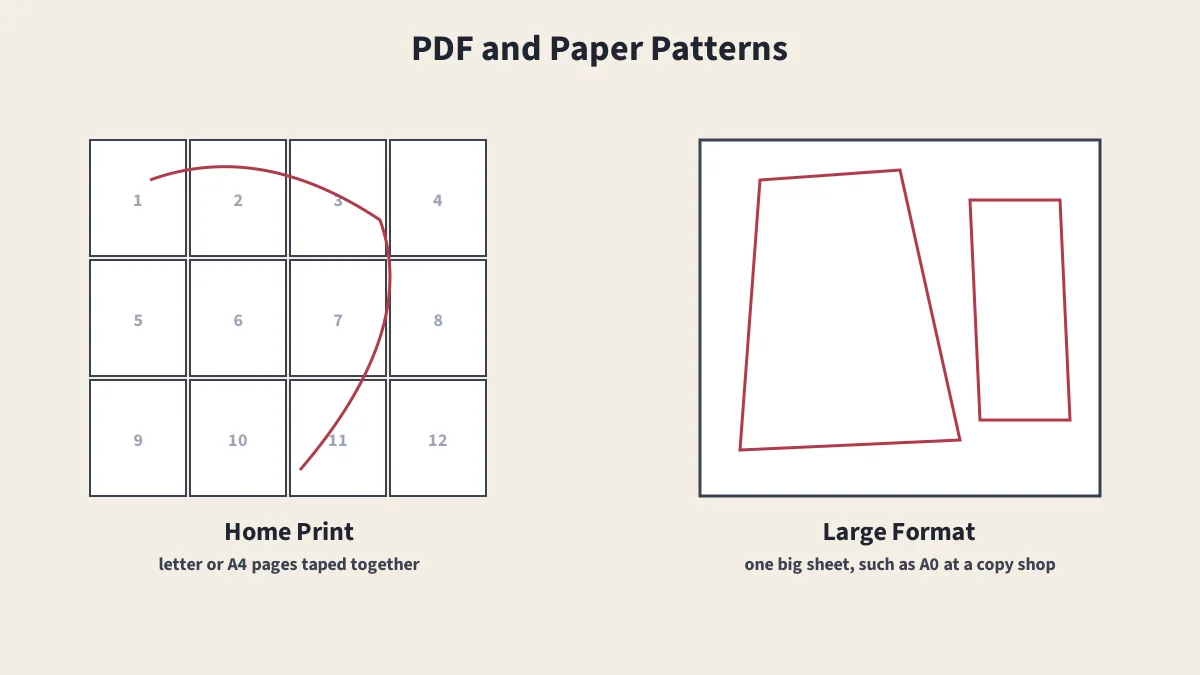
- Home print: letter or A4 pages, taped
- Copy shop: A0 or wide-format file
- Check: the test square at 100%
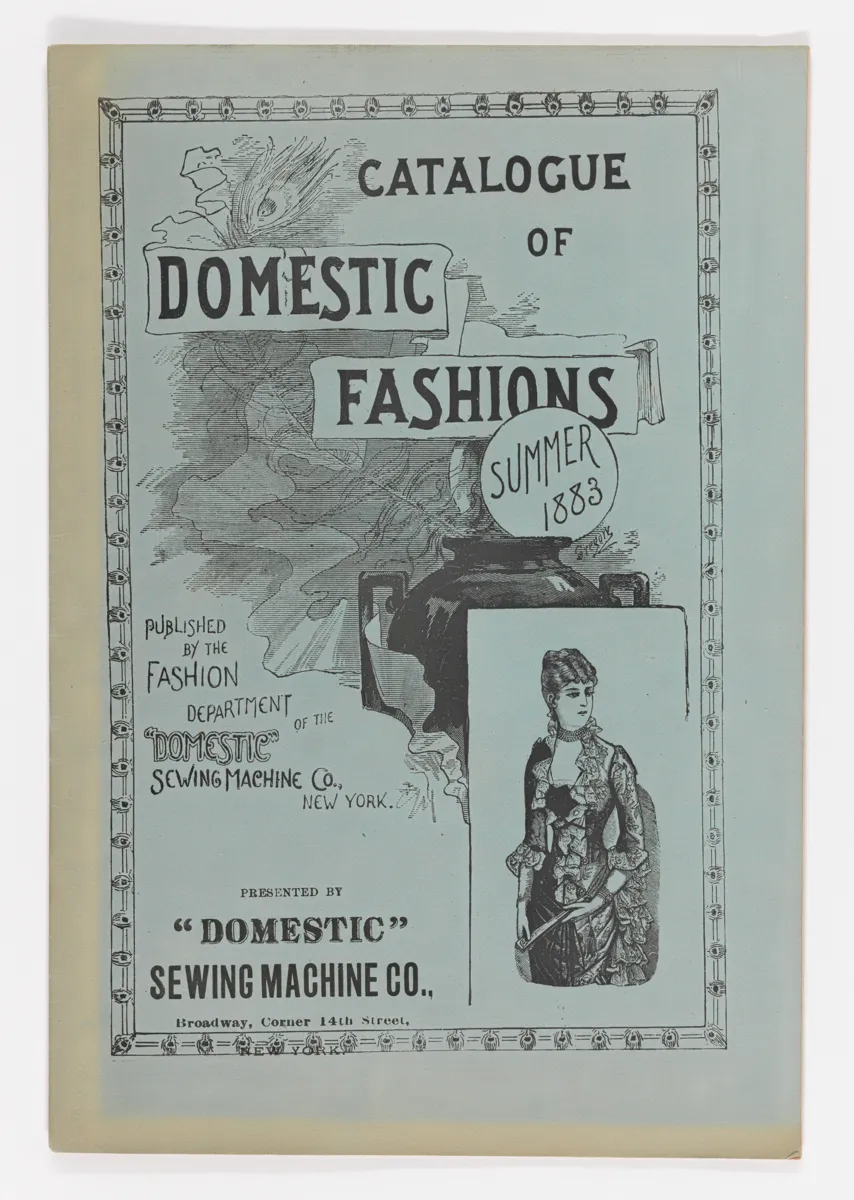
Home sewing patterns have traditionally been printed on tissue paper and sold in envelopes; see the history of sewing patterns. Patterns are now also sold as downloadable files that home sewists can print themselves or take to a copy shop, and many companies offer a large-format version for that purpose.
Comparing the Formats
| Paper (Tissue) | ||
|---|---|---|
| Delivery | Shop or mail | Instant download |
| Setup | Unfold and cut | Print, trim and tape, or use a copy shop |
| Durability | Tissue tears easily | Reprint whenever needed |
| Sizes | Usually a size range per envelope | Often all sizes; layers let you print only yours |
| Storage | Envelope | Digital file plus printed pieces |
| Extra costs | None | Paper, ink or printing |
Printing a PDF Pattern at Home
- Choose the right file: letter (US) or A4.
- Use layers if the file has them, to print only your size.
- Print the test page first at 100% or "actual size", with scaling off.
- Measure the test square; if it is wrong, check the printer settings before printing everything.
- Trim and tape the pages in order, matching the markings at each edge.
Printing at a Copy Shop
Large-format files print the whole pattern on one or two big sheets. ISO A0 paper measures 841 × 1189 mm and is common outside North America; North American copy-shop files are often sized for rolls about 36 inches wide. Ask for black-and-white printing at 100% scale.
Preserving Your Pattern
- Trace your size onto pattern paper or interfacing so the original stays intact.
- Reinforce paper patterns you'll reuse with lightweight fusible interfacing.
- Store pieces flat or rolled, labeled with the pattern name, view and size.
Sources
- Sewing pattern, Wikipedia
- ISO 216, Wikipedia
Frequently Asked Questions
What is a PDF sewing pattern?
A sewing pattern sold as a downloadable file. You print it at home on ordinary paper and tape the pages together, or have a large-format version printed at a copy shop.
What is an A0 pattern file?
A version of the pattern laid out on A0 sheets, which measure 841 × 1189 mm, for printing on a large-format printer at a copy shop. Many designers also offer files sized for 36-inch-wide rolls common in North America.
How do I print a PDF pattern at the right size?
Print at 100% or 'actual size', with scaling turned off, then measure the test square on the first page before printing the rest.
Are PDF patterns cheaper than paper patterns?
Often, since there is no printing or shipping cost to the seller, but you pay for paper, ink or copy-shop printing.
Keep Reading
Sewing Patterns
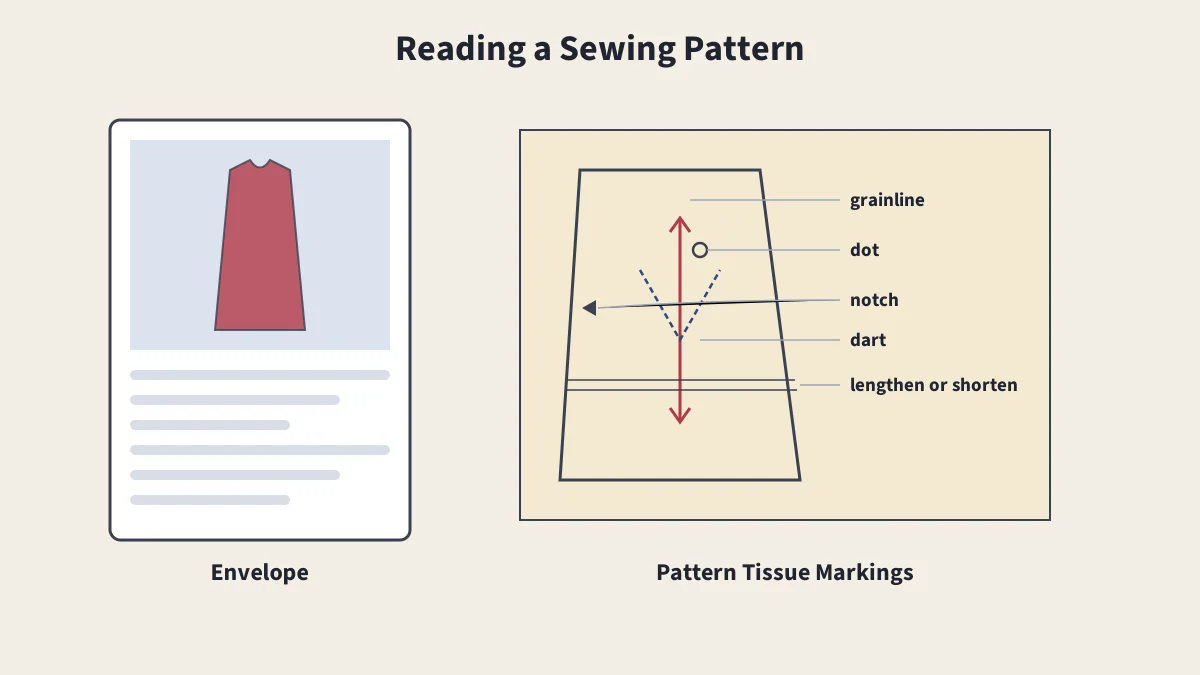
The envelope, size chart, instructions and markings.
Pattern Symbols and Markings
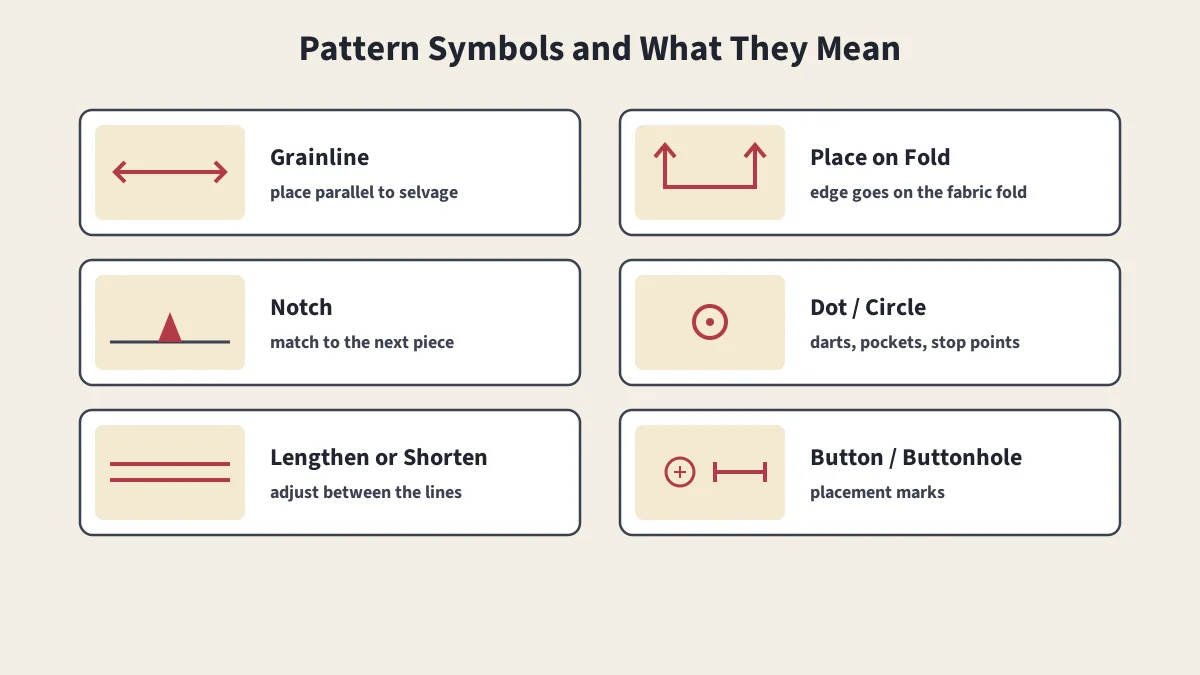
Grainlines, notches, dots, darts and other pattern marks.
Cutting Fabric and Layout
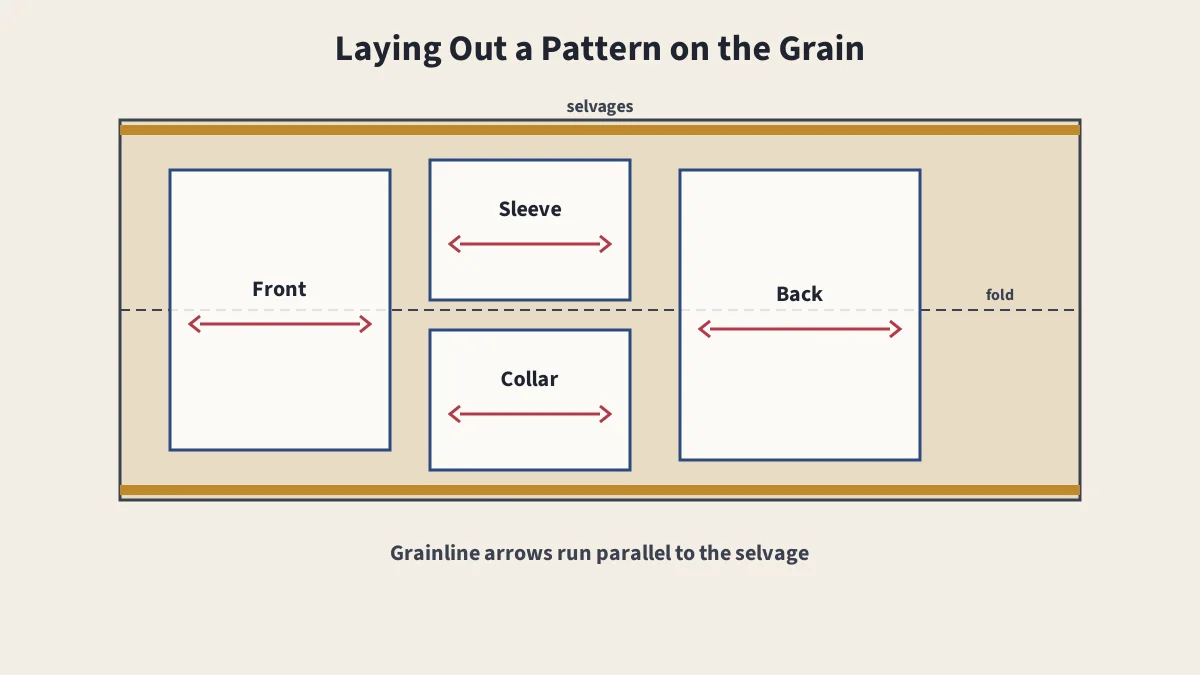
Grainlines, folds, napped fabrics and clean cutting.
History of Sewing Patterns
Butterick, McCall's, Vogue and Simplicity, from 1800s magazines to PDFs.