Slopers and Blocks: The Foundation Patterns Behind Every Design (2026)
A sloper is a plain, close-fitting pattern made to fit one body or one standard size. It has no style details at all, but almost every design can be developed from it.
In This Article
Slopers in Brief
- Also called: block patterns
- Basic blocks: bodice, skirt, sleeve, trouser
- No: seam allowances or style details
- Material: card or paperboard
- Fitted with: toiles
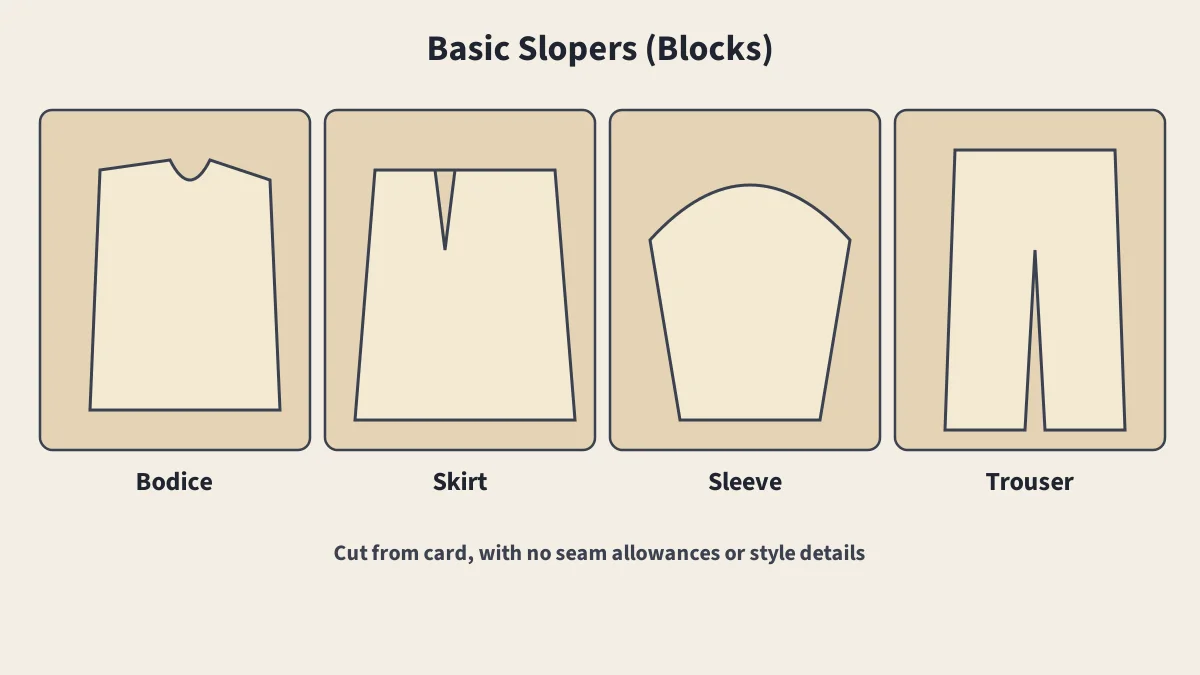
A sloper, or block pattern, is a custom-fitted basic pattern from which patterns for many styles can be developed. It records the shape of one body, or one standard size, with only the basic ease needed to move. The final sloper is usually cut from cardboard or paperboard, with no seam allowances and no style details, so it can be traced again and again.
The Basic Blocks
| Block | Typical Shape | Used For |
|---|---|---|
| Bodice | Jewel neckline, darts at bust and waist | Tops, dresses, jackets |
| Skirt | Narrow, with waist darts | Skirts and dress skirts |
| Sleeve | Straight, set-in, fitted to the bodice armhole | All set-in sleeves |
| Trouser | Straight leg, fitted at waist and hip | Trousers, shorts, jeans |
| Men's upper body | Shirt or jacket base | Shirts and tailored jackets |
Women's slopers are usually a jewel-neck bodice and a narrow skirt; men's slopers are usually an upper-body sloper and a trouser sloper. Specialist blocks exist for knits, coats and other garment types.
How a Sloper Is Made
- Draft or drape the block from measurements or on a dress form; see drafting vs. draping.
- Add seam allowances temporarily and sew a toile.
- Fit the toile, pinning and marking changes.
- Transfer the changes to the pattern and repeat until the fit is right.
- Remove the seam allowances and cut the final sloper from card.
Developing Designs From a Sloper
- Moving darts to new positions, or turning them into seams such as princess lines; see darts and tucks.
- Adding fullness for gathers, pleats and flares.
- Changing necklines and hems; see types of necklines.
- Adding design ease for looser styles; see ease.
- Adding facings, collars, pockets and seam allowances to complete the pattern.
Sources
- Sewing pattern, Wikipedia
Frequently Asked Questions
What is a sloper in sewing?
A custom-fitted, basic pattern from which patterns for many different styles can be developed. It is also called a block pattern.
What is the difference between a sloper and a pattern?
A sloper has no seam allowances or style details; it only records the body's shape with basic ease. A pattern is developed from it, adding style features and seam allowances.
What are the basic slopers?
Women's slopers are usually a jewel-neck bodice and a narrow skirt; men's are an upper-body sloper and a trouser sloper. A sleeve sloper is usually made to fit the bodice.
What are slopers made of?
The final version is usually cut from cardboard or paperboard so it can be traced repeatedly.
Keep Reading
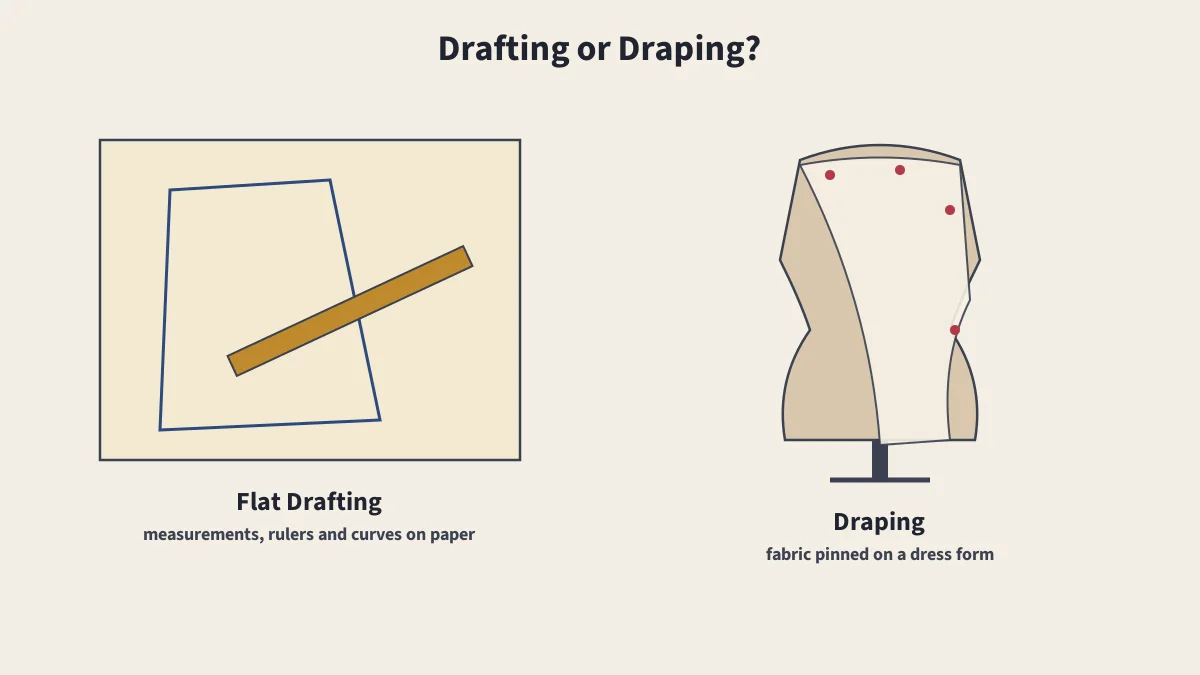
Pattern Drafting vs. Draping
Flat drafting and draping compared.
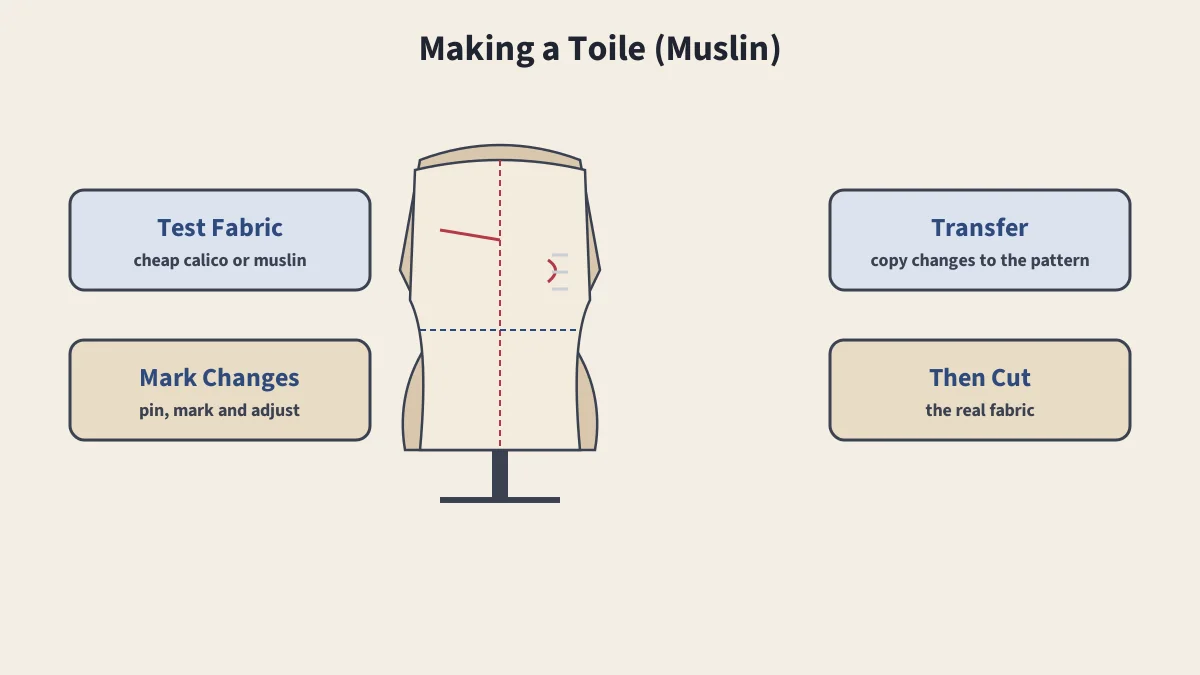
What Is a Toile?
Test garments, fabrics and fitting.
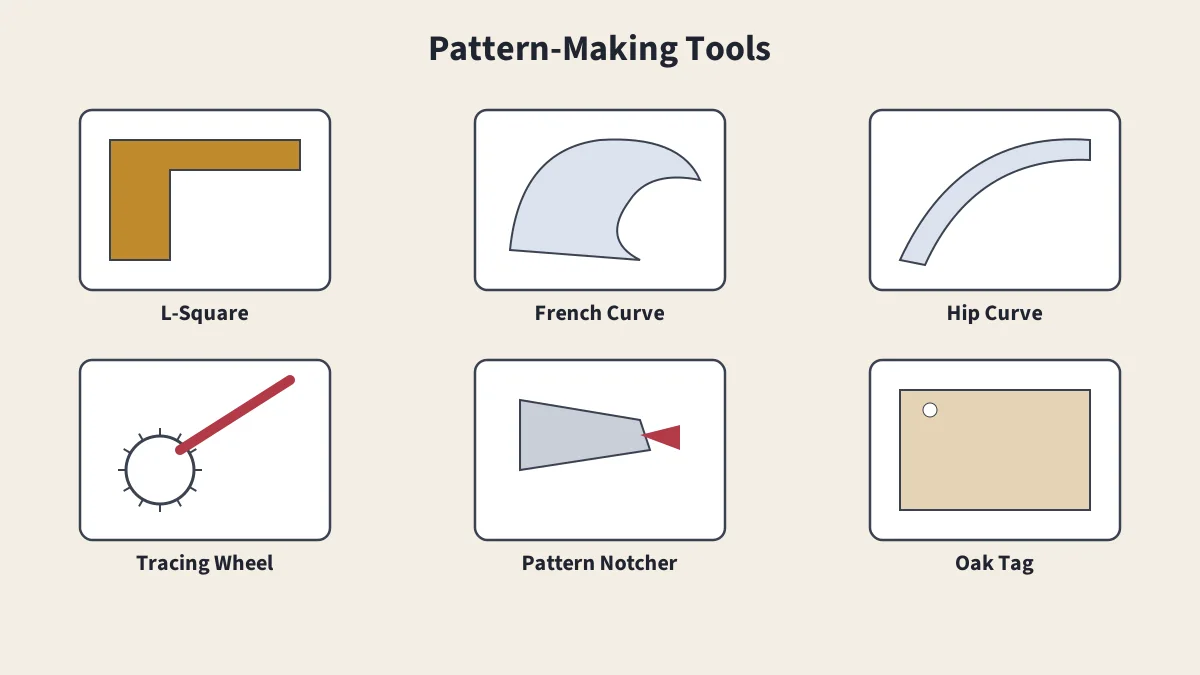
Pattern-Making Tools
Rulers, curves, notchers, tracing wheels and paper.
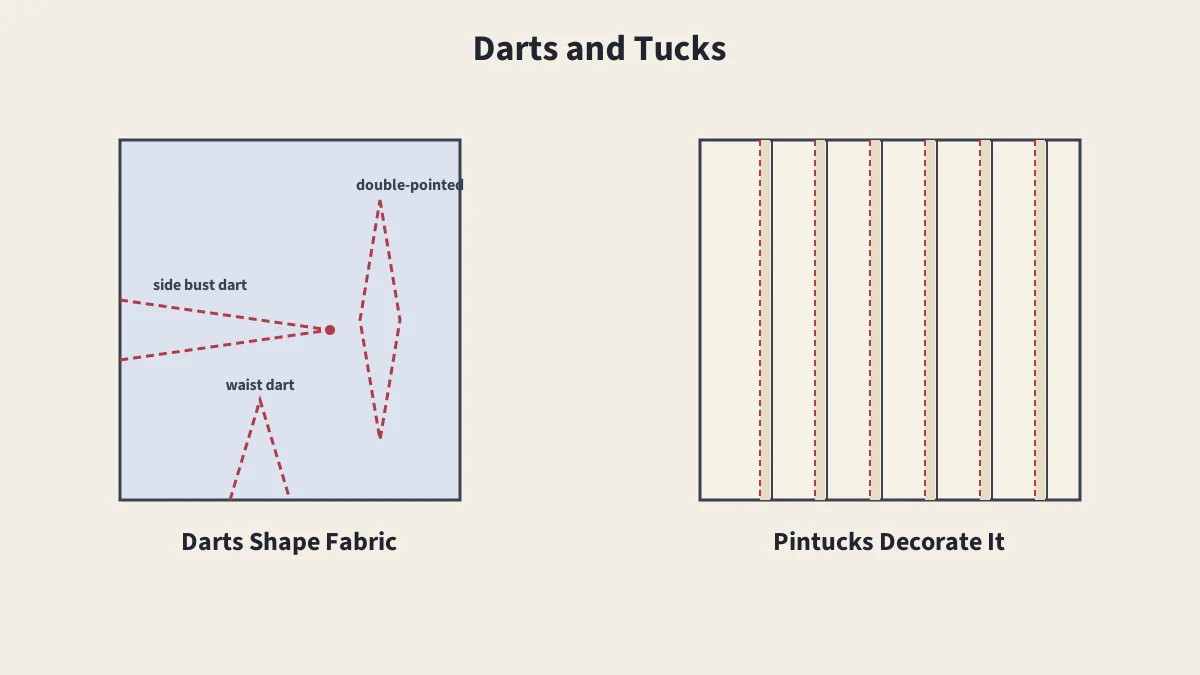
Darts and Tucks
Bust, waist and double-pointed darts, and decorative tucks.