Common Pattern Fit Adjustments: FBA, SBA, Swayback and More (2026)
Commercial patterns are drafted for one standard body, so most people make a few changes to get a good fit. A handful of adjustments solve the most common problems.
In This Article
Fit Adjustments in Brief
- FBA / SBA: full or small bust adjustment
- Swayback: removes pooling at the lower back
- Length: lengthen or shorten at the double lines
- Shoulders: narrow, broad or sloping
- Method: slash and spread, or fold out
Every commercial pattern is drafted for a standard body in each size, and few people match it everywhere. Rather than altering a finished garment, sewists adjust the paper pattern before cutting. Most adjustments use the same two moves: slash and spread to add room, and fold out to remove it. Test the result with a toile.
The Most Common Adjustments
| Problem | Adjustment |
|---|---|
| Pulling across the bust, gaping armholes | Full bust adjustment (FBA) |
| Excess fabric over the bust | Small bust adjustment (SBA) |
| Fabric pooling above the seat at center back | Swayback adjustment |
| Waist in the wrong place | Lengthen or shorten the bodice |
| Shoulder seams hang off or pull | Narrow or broad shoulder adjustment |
| Diagonal wrinkles from the neck to the armhole | Sloping or square shoulder adjustment |
| Tight or loose at waist or hip | Grade between sizes at the side seams |
| Garment too long or short | Lengthen or shorten at the double lines |
| Tight across the upper arm | Full bicep adjustment |
Full Bust Adjustment
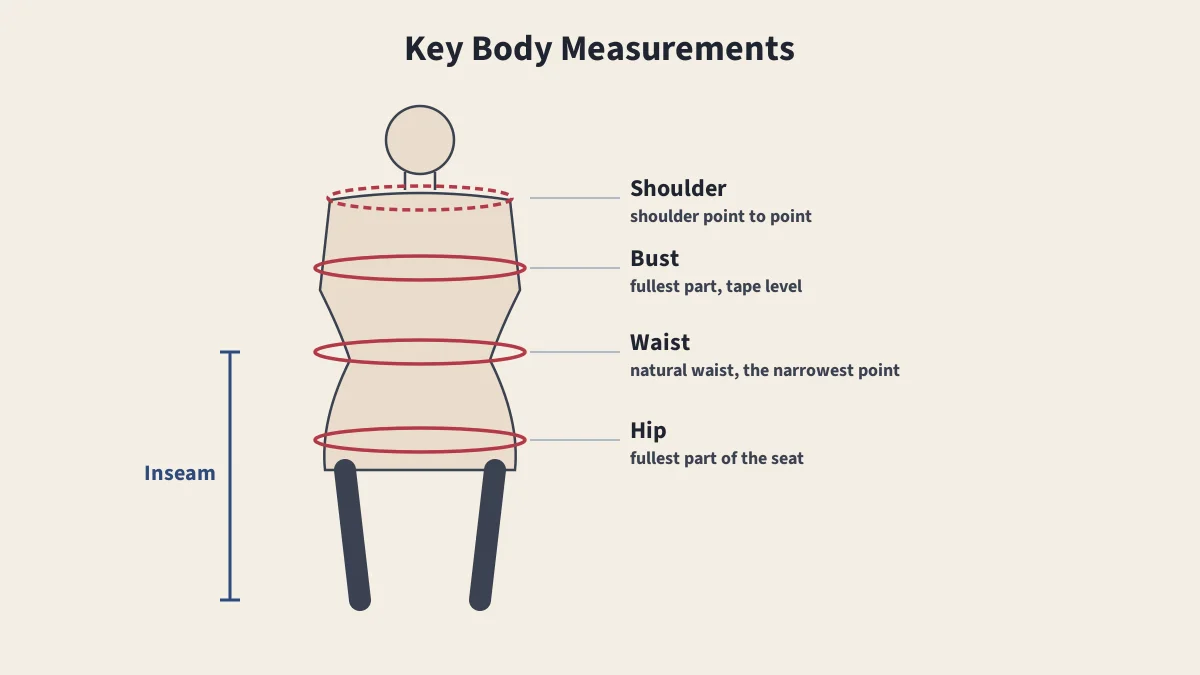
- Choose the size by high bust, so the shoulders and neckline fit; see body measurements.
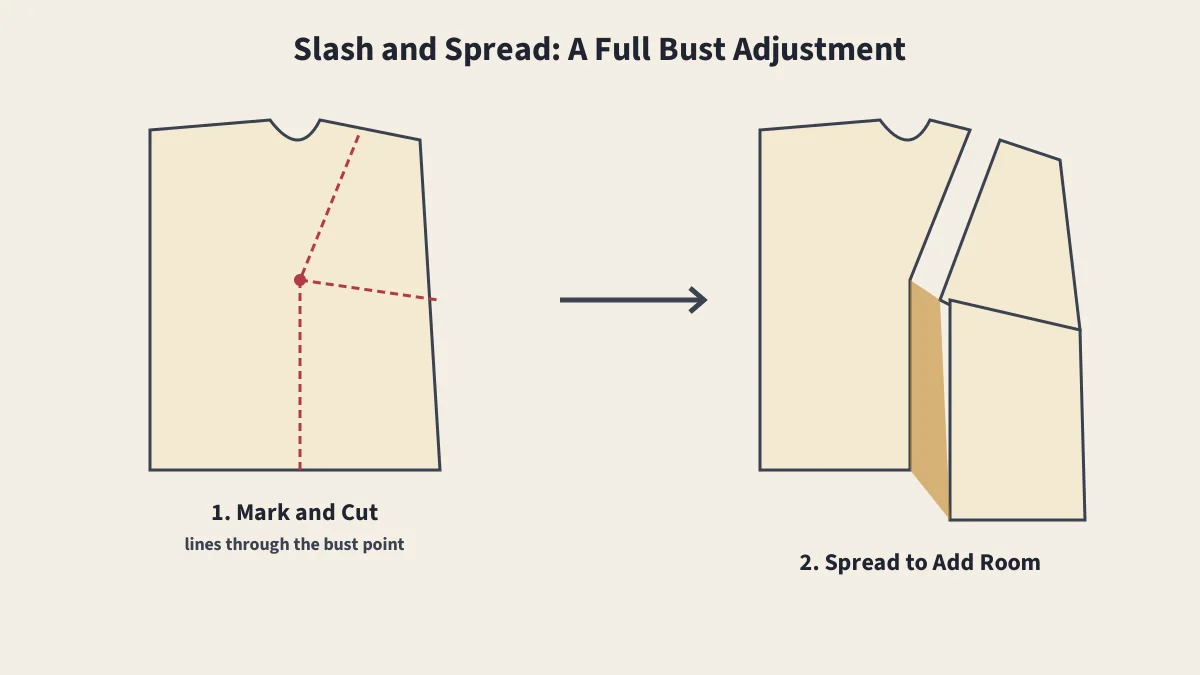
- Mark the bust point on the front bodice.
- Draw a line from the hem up through the bust point to the armhole, and another from the side seam to the bust point.
- Cut along the lines, leaving small hinges, and spread the pieces to add the extra room needed.
- Tape paper behind, redraw the dart and true the seams.
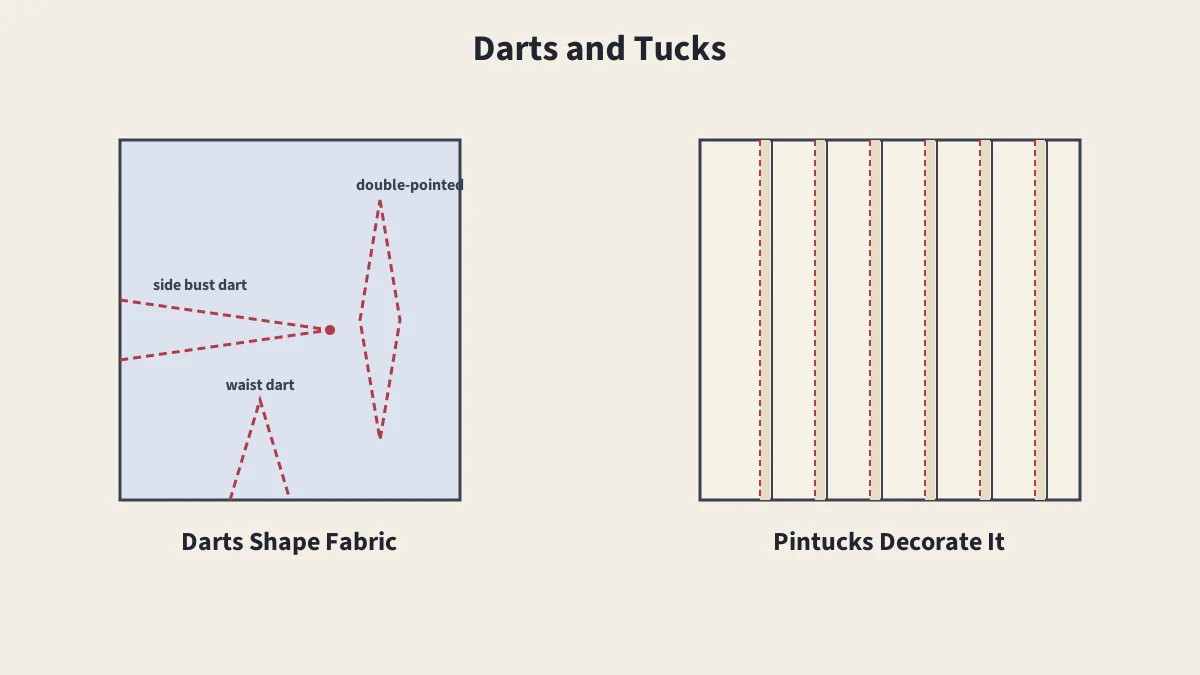
A small bust adjustment does the reverse, overlapping the pieces instead of spreading them. For how darts shape a garment, see darts and tucks.
Swayback Adjustment
For a hollow lower back, fold a horizontal wedge out of the back pattern at the waist, deepest at center back and tapering to nothing at the side seam. Redraw the center back line straight; on a piece cut on the fold, add a center back seam to keep the grain.
Lengthening and Shortening
Use the double lines printed on the pattern. To lengthen, cut between them and spread; to shorten, fold out a tuck. Redraw the side seams smoothly. Adjusting at these lines keeps details such as darts and pockets in proportion; see pattern symbols.
Adjust Pattern or Garment?
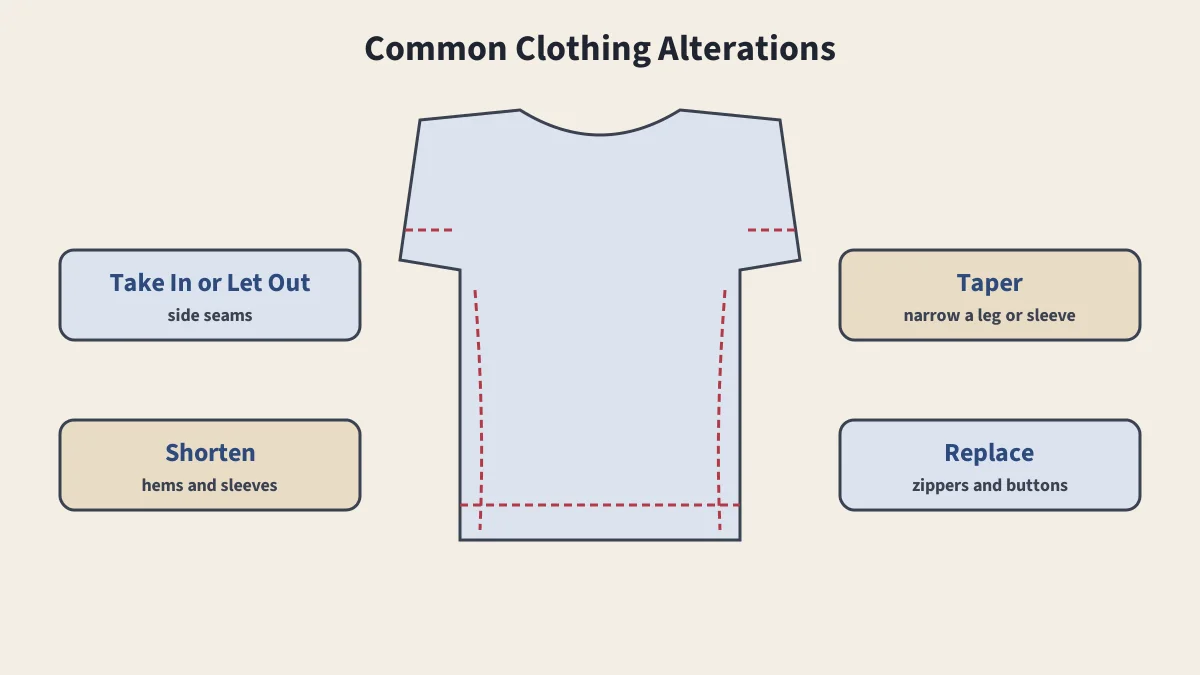
Adjusting the pattern is easier than altering a finished garment, and benefits every garment you make from it afterward. For changes to ready-made clothes, see clothing alterations basics.
Sources
- Sewing pattern, Wikipedia
- French curve, Wikipedia
Frequently Asked Questions
What is an FBA in sewing?
A full bust adjustment, which adds room over the bust without enlarging the shoulders and neckline. The pattern is cut through the bust point and spread apart, usually creating or enlarging a bust dart.
What is a swayback adjustment?
A change for a hollow lower back, where fabric pools above the seat. A wedge is folded out of the center back at the waist, tapering to nothing at the side seam.
Should I adjust the pattern or the toile?
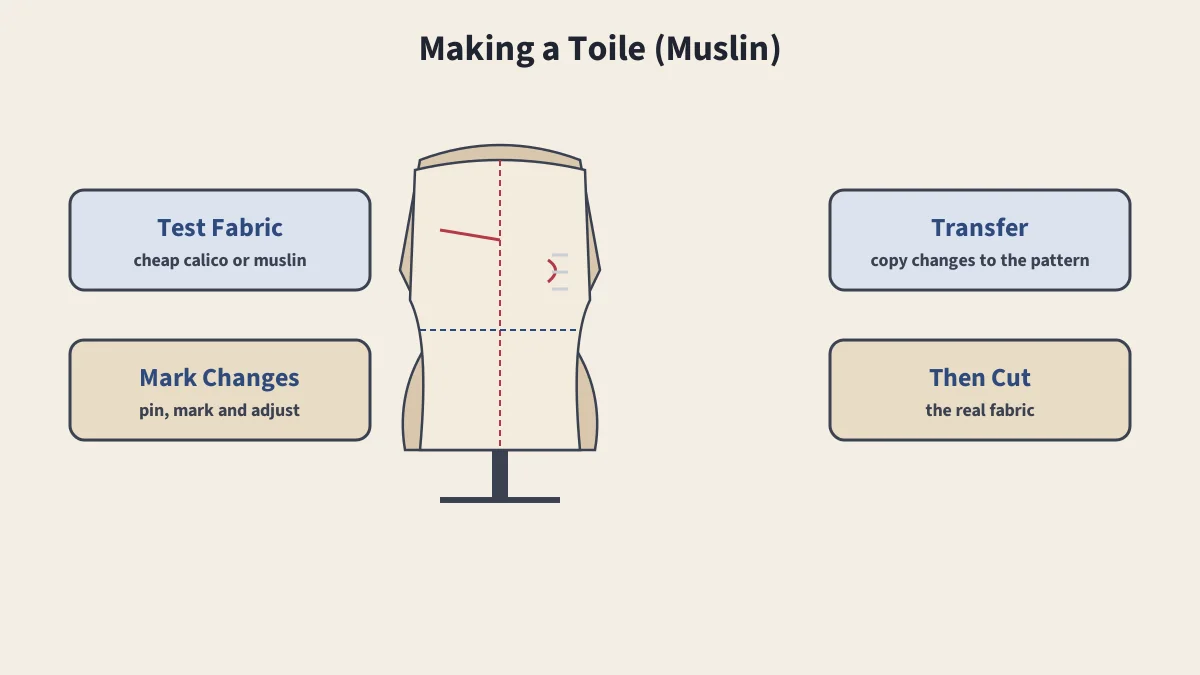
Mark changes on the toile, then transfer them to the paper pattern so every future garment benefits.
What is the difference between a pattern adjustment and an alteration?
An adjustment changes the pattern before cutting; an alteration changes a finished garment. Adjusting the pattern is usually easier and gives a better result.
Keep Reading
What Is a Toile?
Test garments, fabrics and fitting.
How to Take Body Measurements
Bust, waist, hips and more, measured correctly.
Darts and Tucks
Bust, waist and double-pointed darts, and decorative tucks.
Clothing Alterations Basics
Easy and hard alterations, and when to see a tailor.