Sewing Pattern Symbols and Markings: A Visual Guide (2026)
Pattern pieces are covered in arrows, triangles, circles and lines. Each one tells you how to cut, match or sew, and transferring them to the fabric is one of the most important steps in sewing.
In This Article
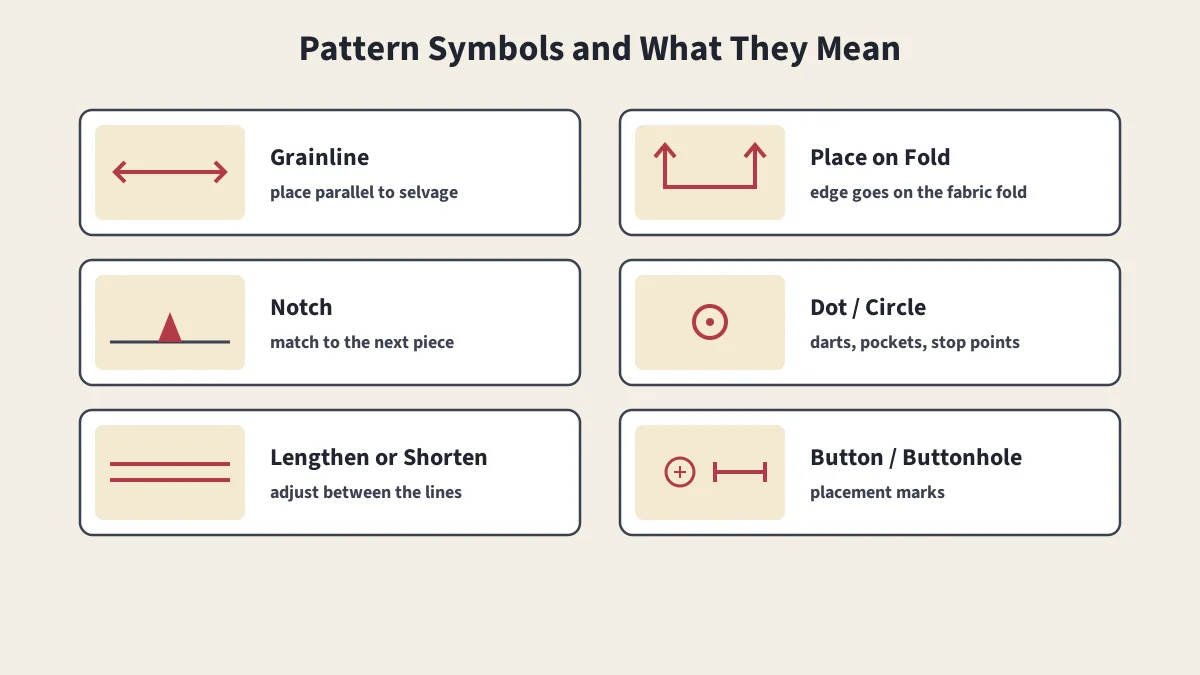
Pattern Symbols in Brief
- Grainline: long arrow, parallel to the selvage
- Fold: bracketed arrow to the fold
- Notches: matching points on the edge
- Circles and dots: darts, pockets, stop points
- Double lines: lengthen or shorten here
Every commercial sewing pattern uses a shared visual language. Some symbols tell you how to place a piece on the fabric, some show where pieces join, and some mark details such as darts and buttonholes. Pattern companies vary slightly, so check the key on your instruction sheet; for an overview of the whole pattern, see how to read a sewing pattern.
Placement Symbols
| Symbol | Meaning |
|---|---|
| Long arrow, heads at both ends | Grainline: place parallel to the selvage; the piece can face either way |
| Long arrow, one head | Grainline for fabric with a direction; point the arrow "up" |
| Bracket with arrows | Place this edge on the fold of the fabric |
| "Cut 2", "Cut 1 on fold" | How many pieces to cut, and from which fabric (fashion fabric, lining or interfacing) |
See grain, bias and selvage and cutting fabric and layout.
Matching Symbols
- Notches: mark seam allowances where included, center lines, waistlines and other fit-related lines. Single, double and triple notches help tell front from back.
- Dots, triangles and squares: match points for joining pieces, including seams with ease, such as a sleeve cap.
- Center front and center back lines: reference lines for buttons, zippers and alignment.
Construction Symbols
| Symbol | Meaning |
|---|---|
| Dashed V or diamond | A dart; see darts and tucks |
| Circle | Dart tip, corner, pocket position, or stop stitching here |
| Double parallel lines | Lengthen or shorten the piece between them |
| Solid or dashed line inside the edge | Stitching line or seamline |
| Fold or hem line | Where to fold a hem or facing |
| Button and buttonhole marks | A cross or circle for buttons; a bracketed line for buttonholes |
| Zipper marks | Where the zipper starts and stops |
| Bust, waist and hip marks | Fitting reference points, often with finished measurements |
| Outlines on a piece | Placement of features such as patch pockets |
Multi-Size Cutting Lines
Most modern patterns nest several sizes on each piece, each drawn with a different line style or color. Follow the line for your size, and blend between lines where your bust, waist and hip fall in different sizes; see pattern sizes vs. store sizes.
Transferring Markings
- Tailor's tacks: loose loops of thread through both layers, best for fine fabrics.
- Chalk or marking pens: quick; test that they wash out.
- Tracing wheel and transfer paper: the wheel runs over the pattern lines and transfers them to the fabric with removable ink.
- Snips and pins: small clips at notches and pins at dots.
See marking tools.
Sources
- Sewing pattern, Wikipedia
Frequently Asked Questions
What does the arrow on a sewing pattern mean?
A long straight arrow is the grainline, which must run parallel to the selvage. Arrowheads at both ends mean either direction is fine; a single arrowhead means the fabric has a direction, such as a nap or one-way print.
What are notches on a sewing pattern?
Small triangles or lines on the cutting edge that line up with matching notches on the piece it joins. They also mark center lines, waistlines and other reference points.
What do circles and dots on a pattern mean?
They mark points such as dart tips, corners, pocket placement, buttons and buttonholes, and where to stop or start stitching.
How do I transfer pattern markings to fabric?
With tailor's tacks, chalk, a water- or air-erasable pen, or a tracing wheel and transfer paper. Mark on the wrong side, and transfer every marking before removing the pattern.
Keep Reading
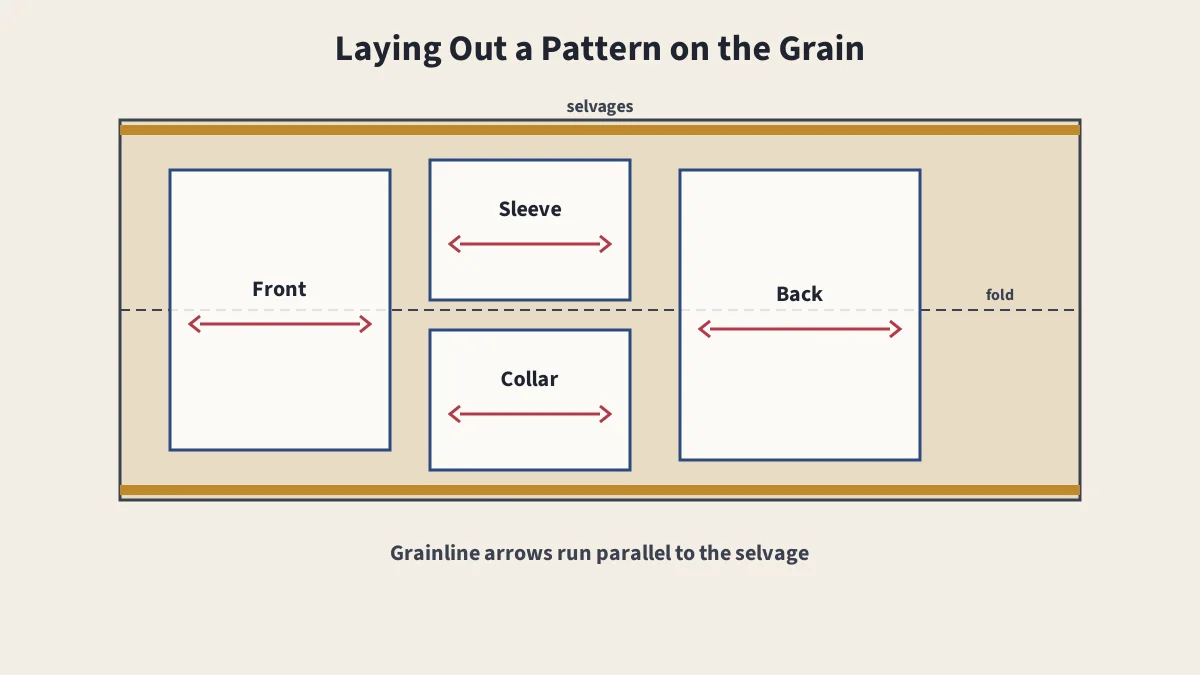
Cutting Fabric and Layout
Grainlines, folds, napped fabrics and clean cutting.
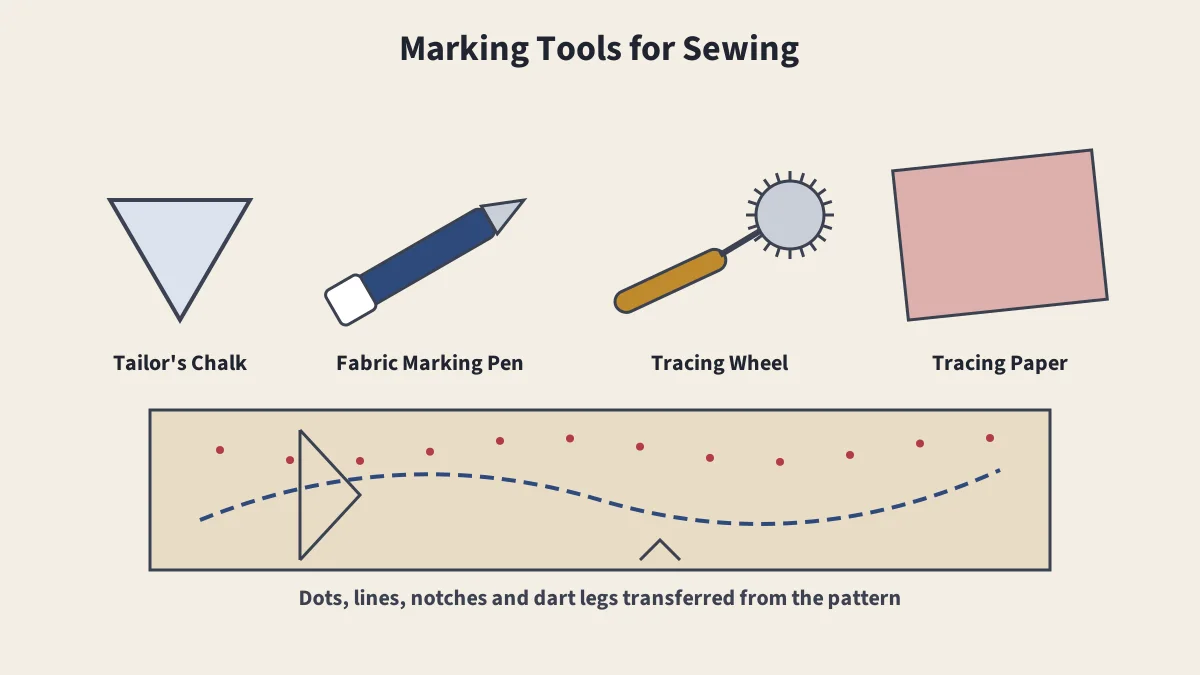
Marking Tools
Chalk, pens, tracing wheels, tailor's tacks and notches compared.
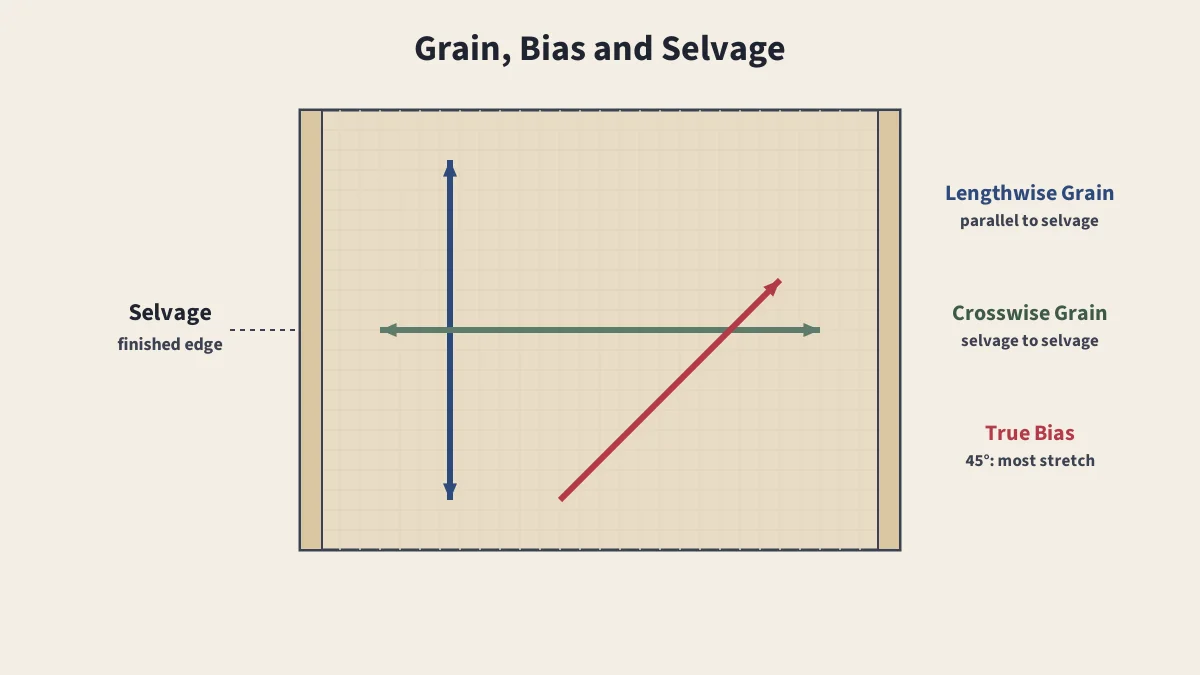
Grain, Bias and Selvage
Lengthwise grain, crosswise grain, true bias and selvage.
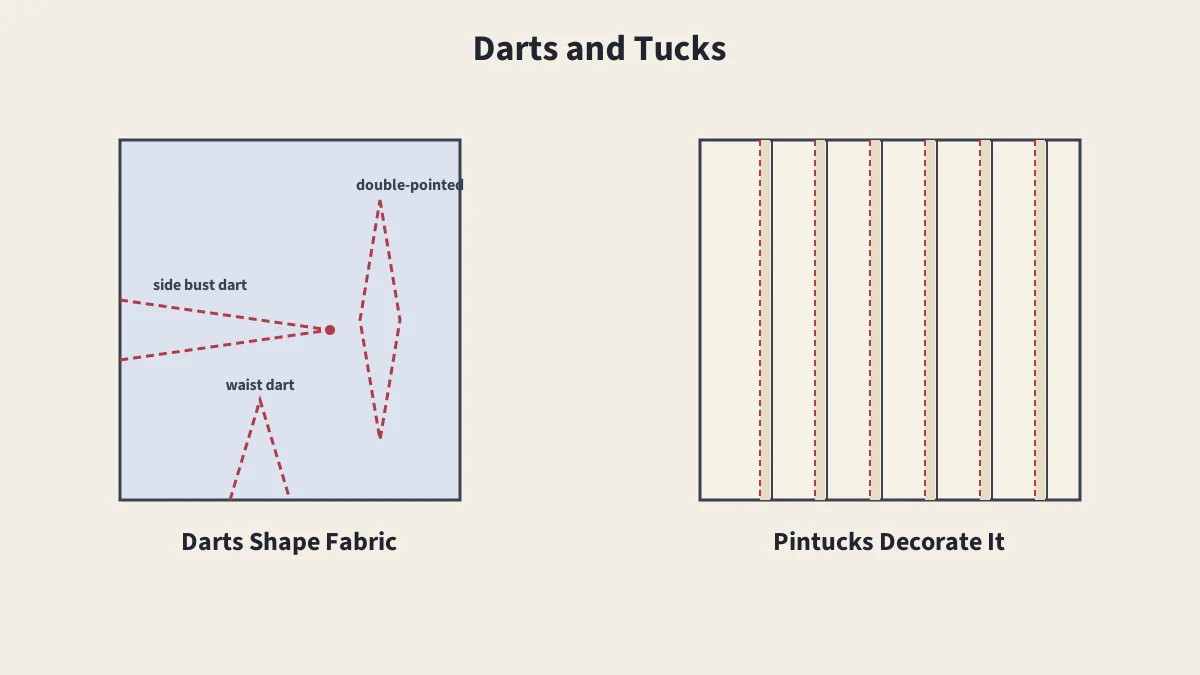
Darts and Tucks
Bust, waist and double-pointed darts, and decorative tucks.