How to Take Body Measurements for Sewing Patterns (2026)
Accurate measurements are the starting point for choosing a pattern size and making clothes that fit. All you need is a flexible tape measure, a mirror and ideally a helper.
In This Article
Measuring in Brief
- Tool: flexible, non-stretch tape measure
- Wear: fitted underwear
- Tape: level and snug, not tight
- Essentials: bust, waist, hip
- Repeat: every few months
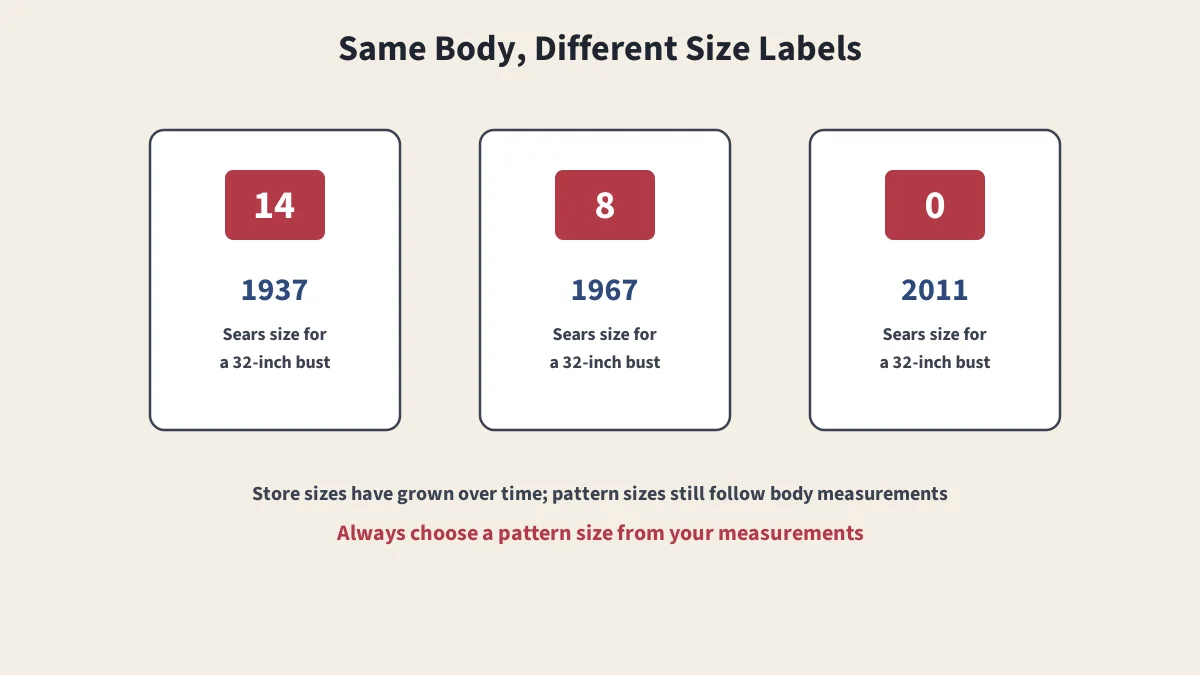
Pattern sizes are based on body measurements, not store sizes; see pattern sizes vs. store sizes. Taking your own measurements accurately, and recording them, makes choosing a size and adjusting patterns far easier.
Before You Measure
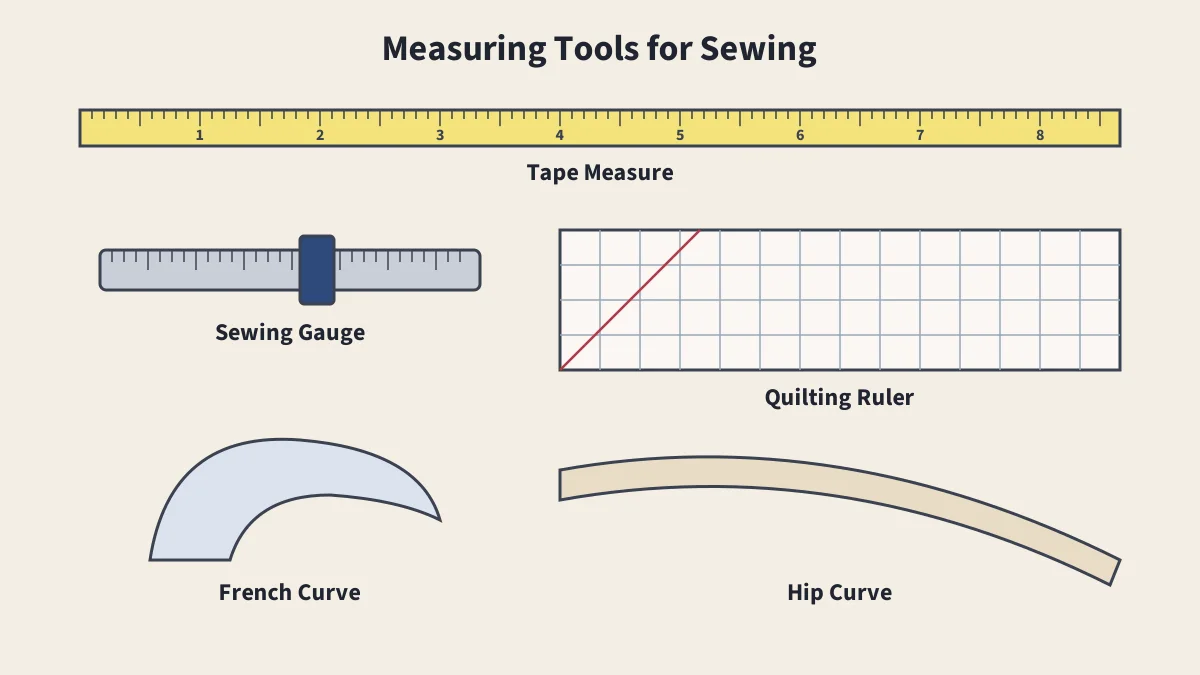
- Use a flexible tape measure that doesn't stretch; fiberglass tapes resist stretching better than cloth. See measuring tools.
- Wear fitted underwear or the undergarments you'll wear with the garment.
- Stand naturally, breathe normally and look straight ahead.
- Tie a piece of narrow elastic around your natural waist as a reference line.
- Ask a helper for back measurements, or use a mirror.
The Key Measurements
| Measurement | How to Take It |
|---|---|
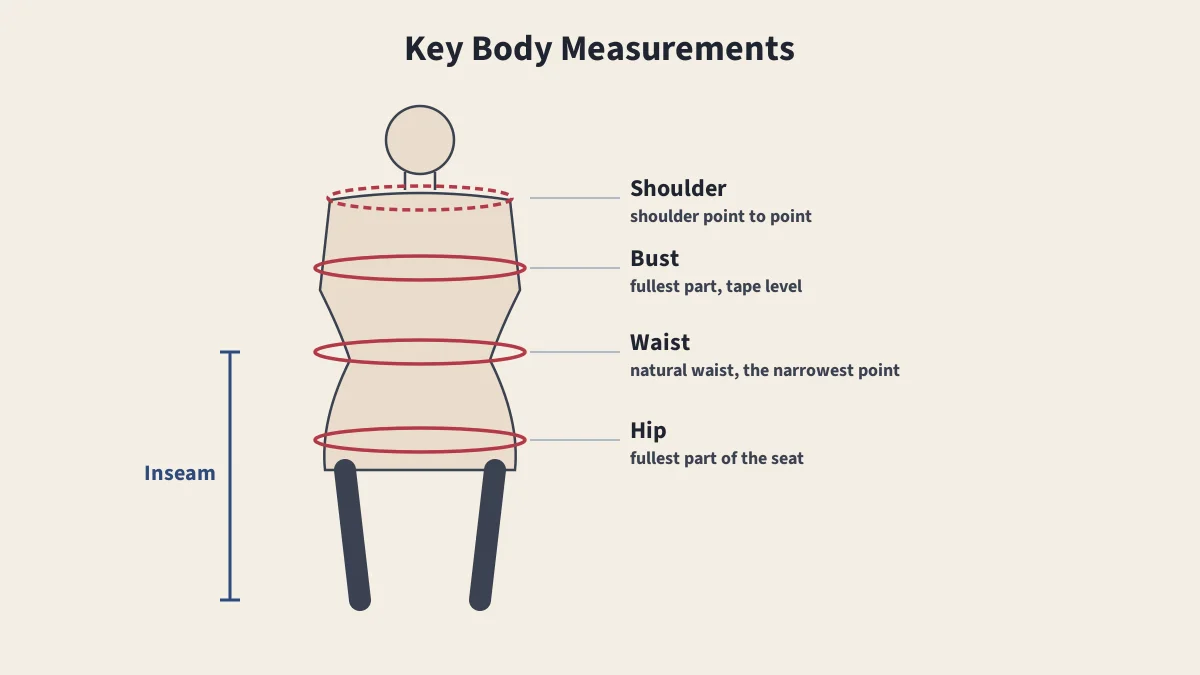
| Bust (chest) | Around the fullest part of the bust, keeping the tape level across the back |
| High bust | Under the arms, above the bust and across the widest part of the back |
| Underbust | Directly under the bust |
| Waist | Around the natural waist, the narrowest part of the torso |
| Hip | Around the fullest part of the seat, often about 18–23 cm (7–9 in) below the waist |
| Back waist length | From the prominent bone at the base of the neck down to the waist |
| Shoulder width | From the tip of one shoulder to the other, across the back |
| Arm length | From the shoulder tip, over a slightly bent elbow, to the wrist bone |
| Inseam | From the crotch to the desired trouser length, along the inside leg |
| Height | Standing barefoot against a wall |
Measuring Tips
- Keep the tape parallel to the floor for all circumference measurements.
- Hold the tape snug but not tight; you should be able to slip a finger underneath.
- Measure twice and record the larger result if they differ slightly.
- Write measurements down with the date; bodies change over time.
- Compare with a garment that fits you well; measure it flat as a cross-check.
From Measurements to a Pattern
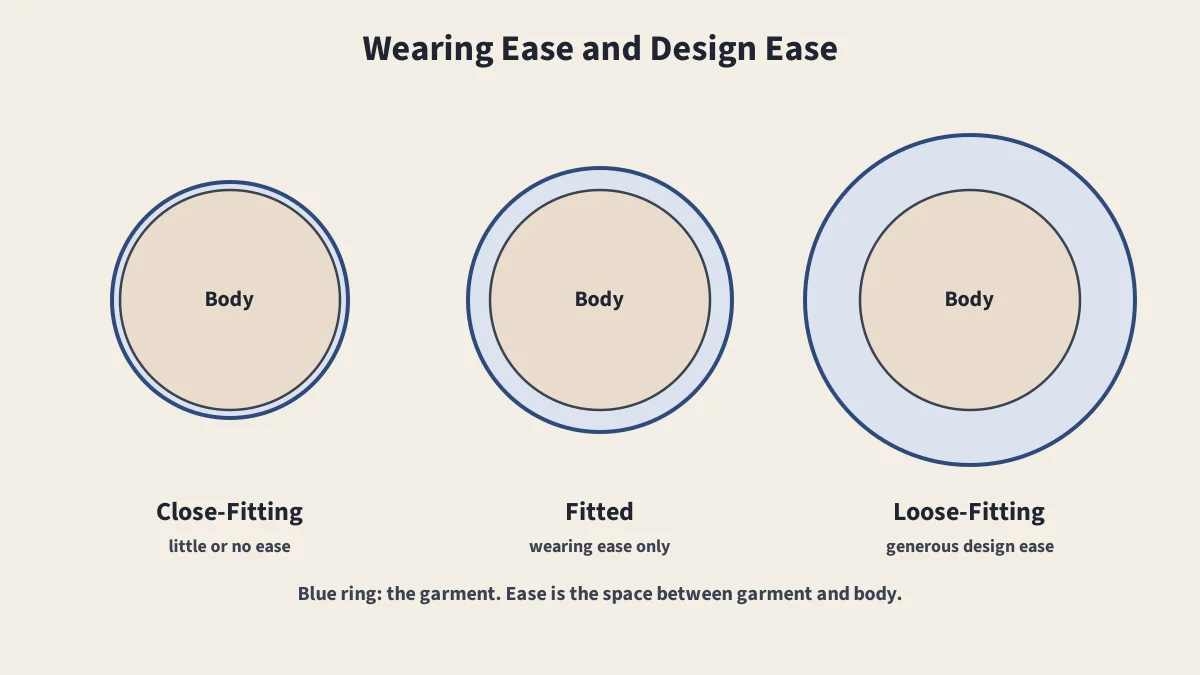
Compare your measurements with the envelope size chart, then with the finished garment measurements, which include ease; see wearing ease vs. design ease. A dress form padded to your measurements can help with fitting.
Sources
- Tape measure, Wikipedia
- Dress form, Wikipedia
Frequently Asked Questions
What measurements do I need for sewing patterns?
At minimum: bust, waist and hips. Many patterns also use high bust, back waist length, shoulder width, arm length, inseam and height.
Where is the natural waist?
The narrowest part of the torso, usually a little above the belly button. Bending to the side shows where the body creases; that is the natural waist.
Should I measure over clothes?
Measure over close-fitting underwear or the undergarments you will wear with the garment, not over bulky clothing.
How tight should the tape measure be?
Snug but not tight: it should lie flat against the body without pressing in, and you should be able to slide a finger underneath.
Keep Reading
Measuring Tools
Tape measures, gauges, quilting rulers and curves explained.
Pattern Sizes vs. Store Sizes
Vanity sizing and how to choose a pattern size.
Wearing Ease vs. Design Ease
How patterns add room for movement and style.
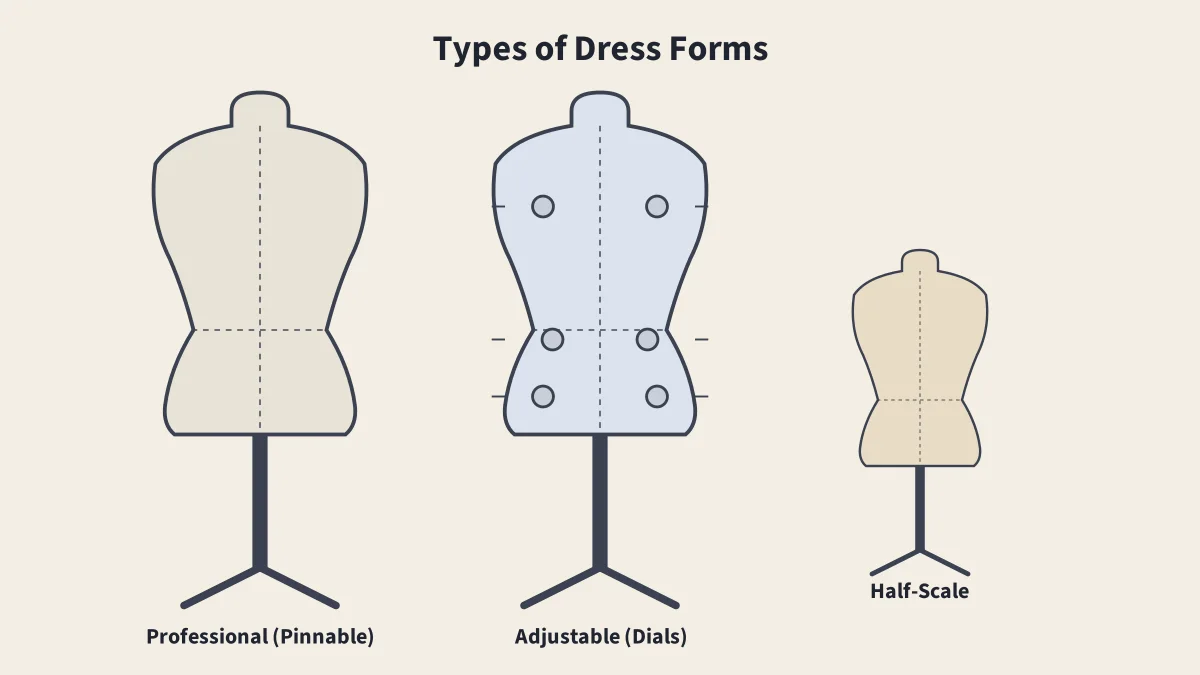
Dress Forms
Professional, adjustable, half-scale and custom-padded forms compared.