Sewing Measuring Tools: Tapes, Gauges, Rulers and Curves (2026)
Measure twice, cut once is old advice for a reason. Sewing uses a small family of measuring tools, from the flexible tape around your neck to curved rulers for drafting patterns. Here is what each one does.
In This Article
Measuring Tools in Brief
- Tape measure: body measurements and curves
- Sewing gauge: hems, seam allowances and spacing
- Quilting ruler: straight cuts with a rotary cutter
- Yardstick or meter stick: long straight lines and hems
- French and hip curves: drawing curved pattern lines
Accurate measurements decide whether a garment fits and whether quilt blocks line up. Each measuring tool is shaped for a specific job: flexible tapes for bodies, short gauges for small repeated measurements, and rigid rulers and curves for drawing lines on fabric and paper.
The Tape Measure
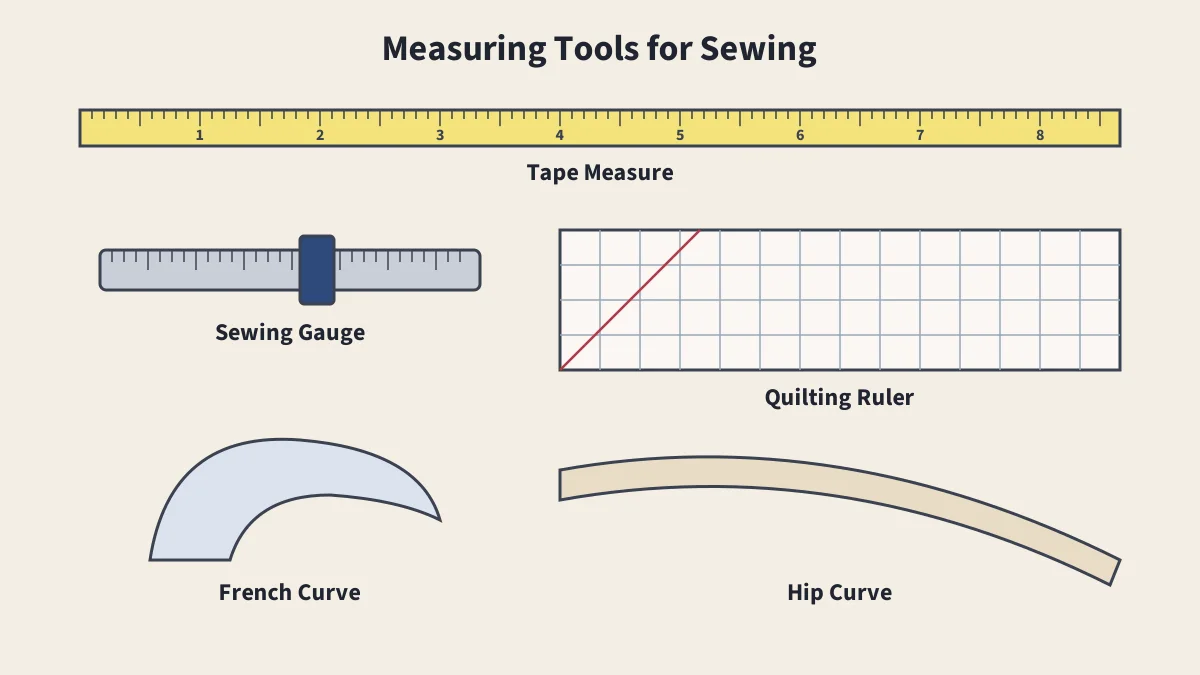
The sewist's tape measure is flexible, so it can wrap around a waist, bust or hip. Before standardized tapes existed, tailors used unmarked cloth tapes, notching them by hand. Today, sewing tapes are usually fiberglass, which is preferred because it does not stretch the way cloth can. Most are printed in inches on one side and centimeters on the other.
The Main Measuring Tools
| Tool | What It Is | Used For |
|---|---|---|
| Tape measure | Flexible tape, usually fiberglass | Body measurements, curves, fabric lengths |
| Sewing gauge | Short ruler with a sliding marker | Hems, seam allowances, buttonhole spacing, pleats |
| Quilting ruler | Thick clear acrylic with a printed grid | Rotary cutting strips, squares and angles |
| Yardstick or meter stick | Long rigid ruler | Long straight lines; marking hem lengths |
| L-square | Right-angled ruler | Squaring fabric and drafting patterns |
| French curve | Template with curves of changing radius | Necklines, armholes and crotch curves |
| Hip curve | Long, gently curved ruler | Hip lines, side seams and hems |
The Sewing Gauge
A sewing gauge is one of the most useful small tools. Set the slider to the measurement you need, say a 3 cm hem, and check it again and again as you press up the hem. It keeps repeated measurements consistent and is faster than reading a tape each time; see types of hems and seam allowance.
Rulers for Quilting and Cutting
Quilting rulers are made of thick clear plastic so you can see the fabric below and run a rotary cutter along the edge. Printed grid and angle lines let you cut strips, squares and triangles precisely; see rotary cutters and cutting mats.
Curves for Pattern Work
Bodies are not made of straight lines, so pattern makers use curved rulers. A French curve is a template made up of curves of varying radius, used to draw smooth curves through several points, such as a neckline or armhole. A hip curve is longer and gentler, shaped for hip lines and hems.
Tips for Accurate Measuring
- Measure over light clothing or directly on the body for body measurements.
- Keep the tape level and snug, not tight.
- Replace stretched tapes. An old cloth tape can give false readings.
- Use one system throughout a project; mixing inches and centimeters invites errors.
- Write measurements down immediately.
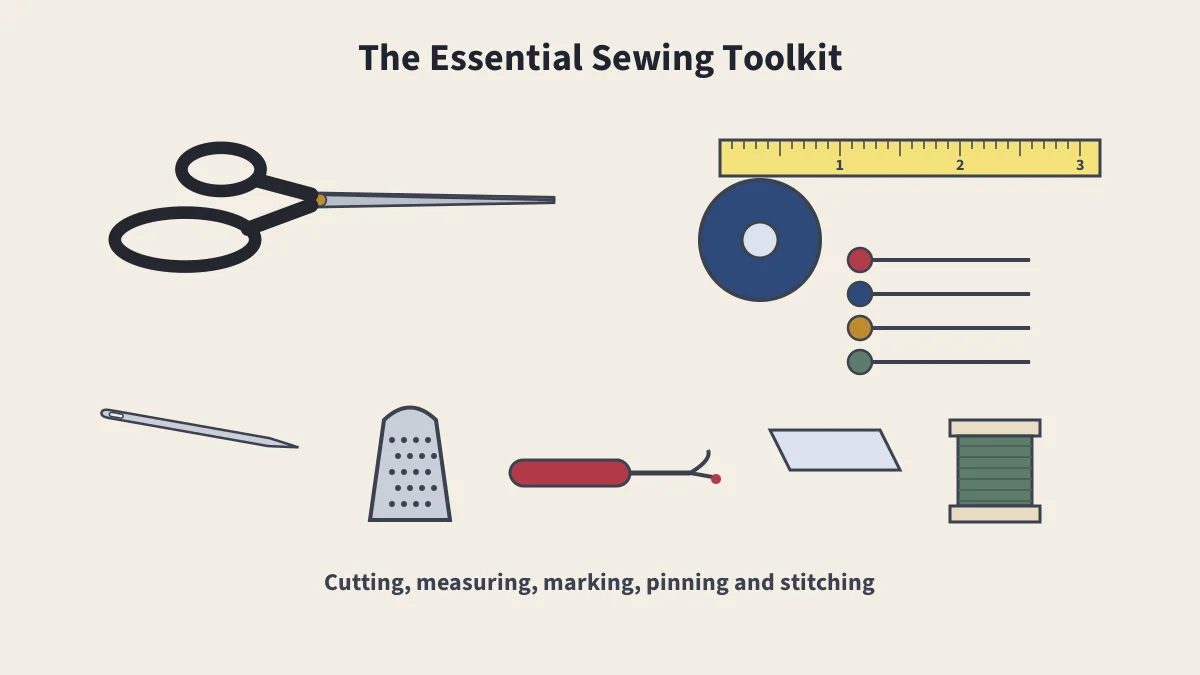
Measuring is the first step toward good fit. For the rest of the basic kit, return to essential sewing tools.
For what to measure and how, see how to take body measurements.
Sources
- Tape measure, Wikipedia
- French curve, Wikipedia
Frequently Asked Questions
What kind of tape measure is used for sewing?
A flexible tape measure, usually made of fiberglass or plastic-coated fabric, that bends around the body. It is used for body measurements, especially the waist, and for measuring curves.
What is a sewing gauge?
A short ruler, often about 15 cm (6 in) long, with a sliding marker. You set the marker to a measurement and use it to check hems, seam allowances, buttonhole spacing and pleats quickly and consistently.
What is a French curve used for in sewing?
A French curve is a template with curves of changing radius. In sewing it is used to draw and adjust curved pattern lines such as necklines, armholes and crotch curves.
Should I use metric or imperial measurements?
Use whatever your pattern uses. Many tape measures show both, with inches on one side and centimeters on the other, which helps when working from patterns in either system.
Keep Reading
Rotary Cutters and Mats
The 1979 invention, blade sizes, mats, rulers and safe cutting.
Seam Allowance Explained
Standard seam allowances, why they differ, and how to sew them accurately.
Types of Hems
Double-fold, blind, rolled, faced, bound and knit hems compared.
Sewing Tools and Notions
The core sewing toolkit, from needles and pins to cutters and rulers.