How to Sew Knit Fabrics: Needles, Stitches and Stretchy Hems (2026)
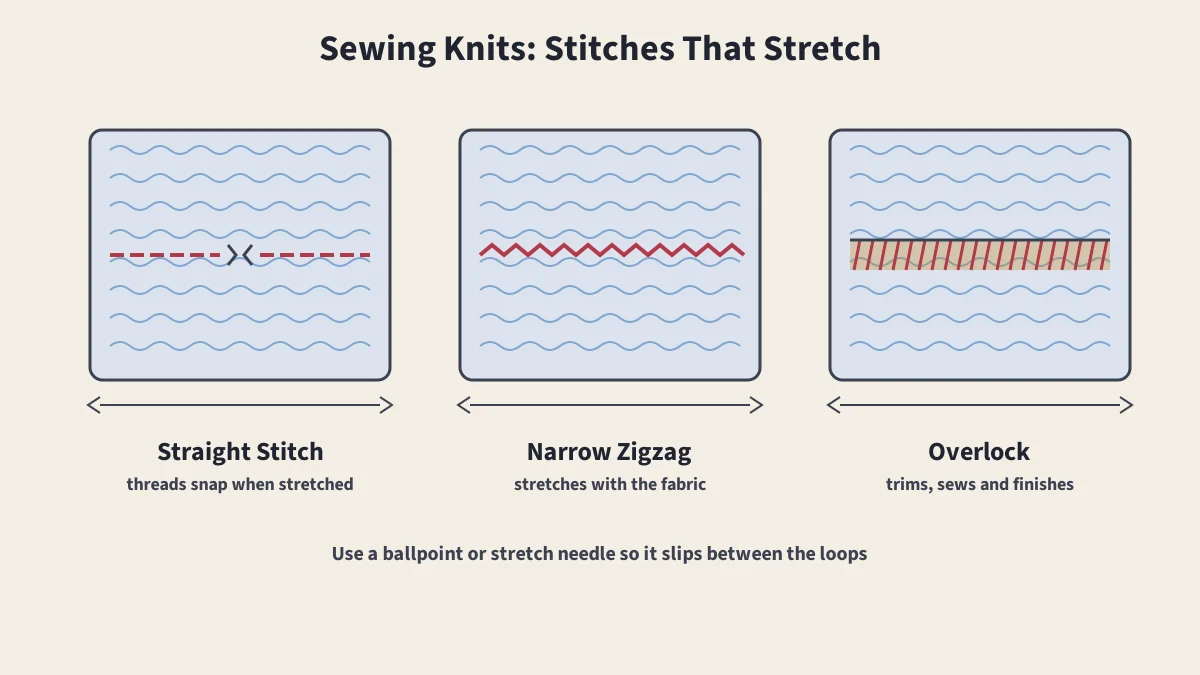
Knits stretch, curl and don't fray, so they need slightly different handling from woven fabric. With the right needle and a stitch that stretches, a regular sewing machine handles most of them well.
In This Article
Sewing Knits in Brief
- Needle: ballpoint (jersey) or stretch
- Stitch: narrow zigzag, stretch stitch or overlock
- Feed: let the machine feed; don't pull
- Stabilize: shoulders and necklines with tape
- Hems: twin needle or coverstitch
A knit fabric is made from loops of yarn rather than crossing threads, which is why it stretches and why its cut edges usually don't fray; see woven vs. knit vs. nonwoven. Those same qualities mean a seam must stretch with the fabric, or the thread will snap when the garment is pulled on.
Choose the Right Needle
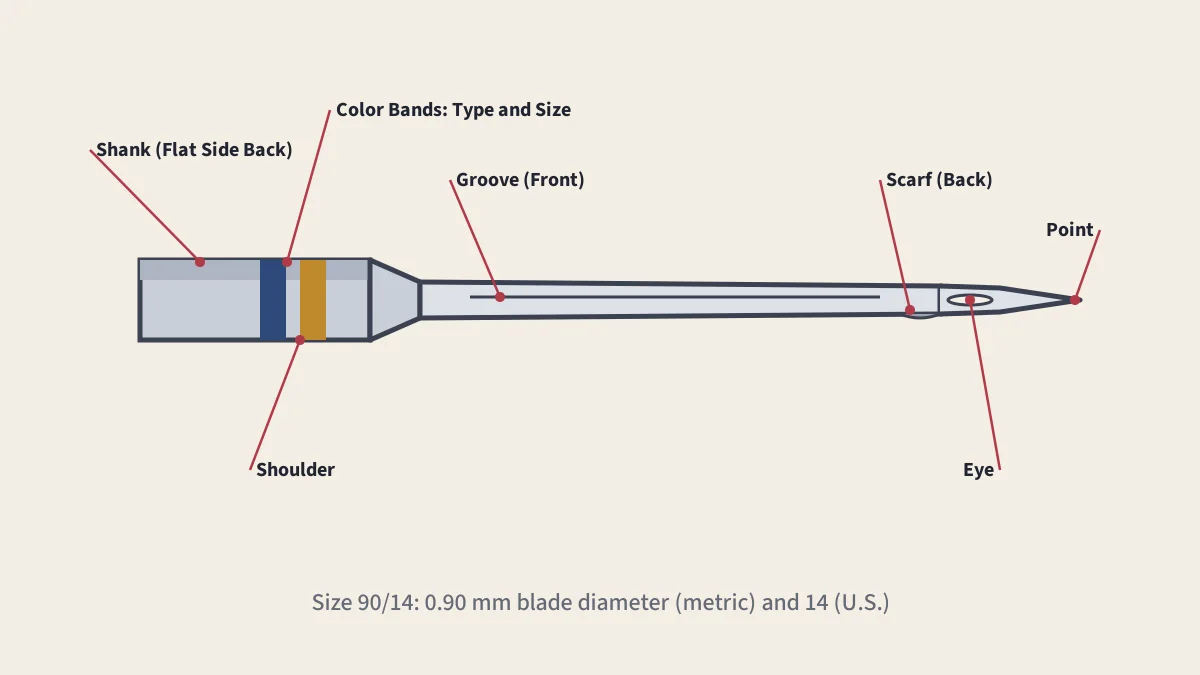
A ballpoint or jersey needle has a rounded tip that pushes between the knit loops instead of piercing and breaking them. A stretch needle is designed for very elastic knits containing spandex, where it helps prevent skipped stitches. See sewing machine needles.
Choose a Stitch That Stretches
| Stitch | Machine | Good For |
|---|---|---|
| Narrow zigzag | Any zigzag machine | Seams in most knits |
| Stretch or "lightning" stitch | Many modern machines | Seams that need to stretch and look straight |
| Triple stretch stitch | Many modern machines | Strong seams in activewear |
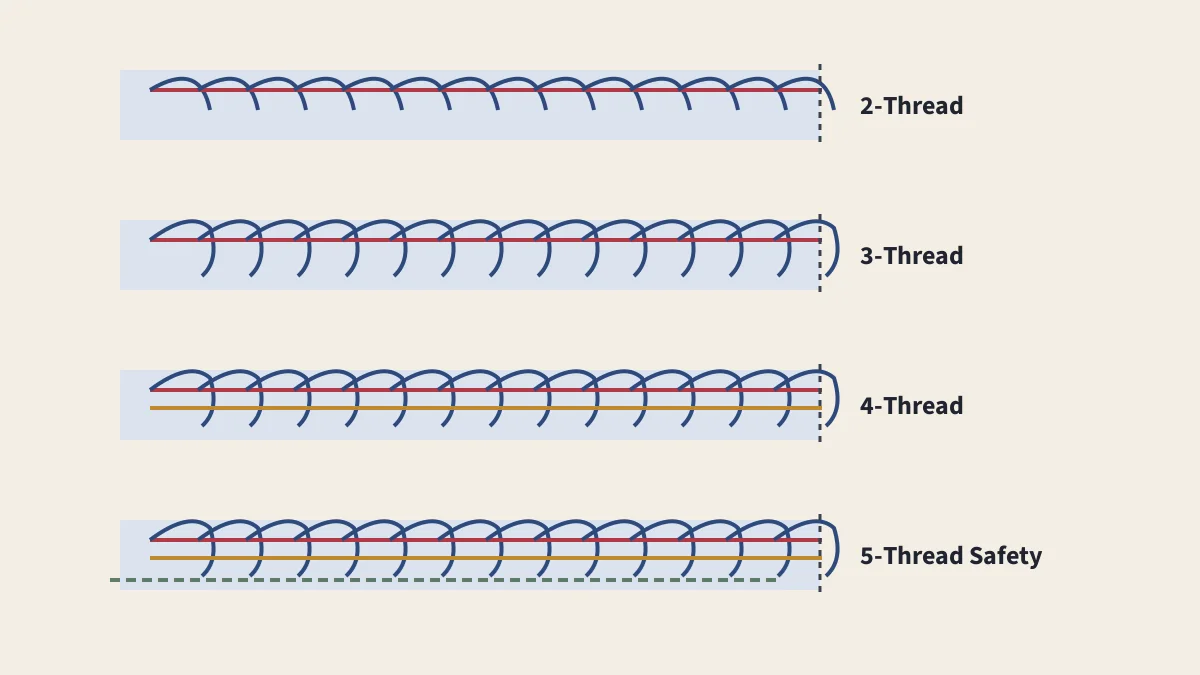
| 3- or 4-thread overlock | Serger | Sewing, trimming and finishing in one pass |
| Twin-needle or coverstitch | Regular machine or coverstitch | Hems and topstitching |
For how sergers form their stitches, see how a serger works; for hems, see coverstitch machines.
Cutting and Handling Knits
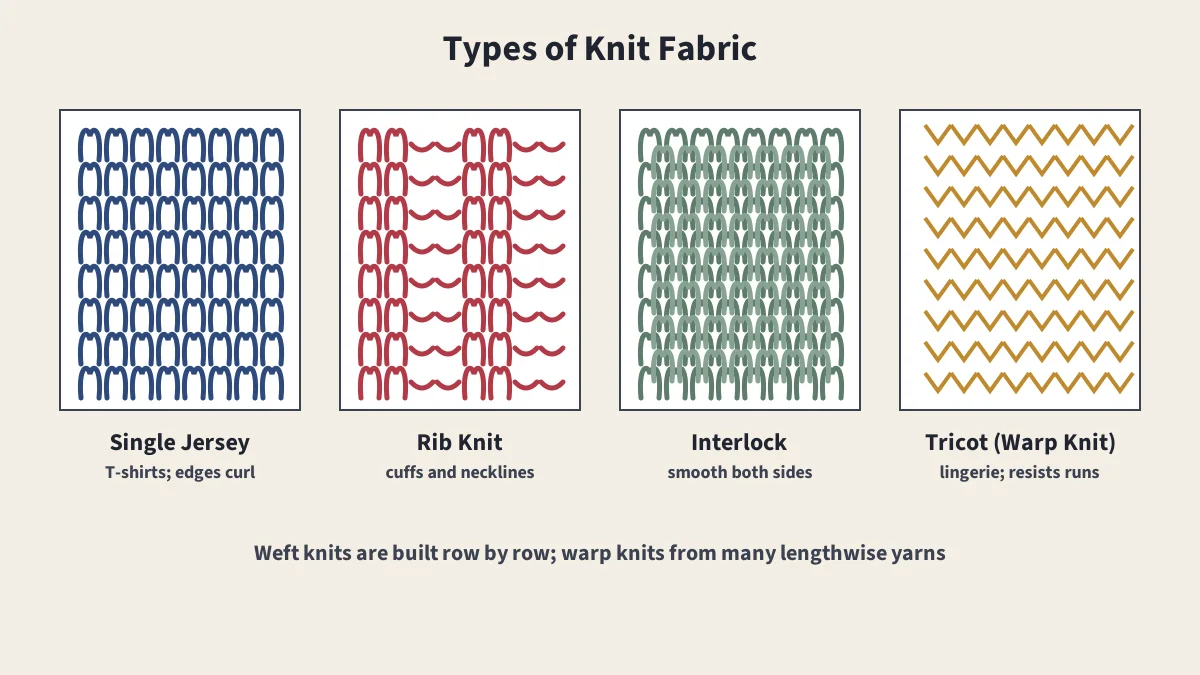
- Find the stretch direction. Most knits stretch most across the width; patterns usually place the greatest stretch around the body. See types of knit fabric.
- Lay the fabric flat on the table without letting it hang, which stretches it out of shape.
- Use a rotary cutter and weights instead of pins and shears where possible; see rotary cutters.
- Pre-wash knits as you will wash the finished garment; see fabric shrinkage.
Sewing Seams
- Test first on two layers of scrap, stretching the seam afterward to check that no stitches snap.
- Let the feed dogs work. Guide the fabric without pushing or pulling it.
- Reduce pressure on the presser foot if your machine allows it, or use a walking foot; see the presser feet guide.
- Stabilize shoulder seams with clear elastic or a strip of stay tape so they don't stretch with wear.
- Finish if needed. Knits rarely fray, so many seams can be left unfinished or trimmed.
Hems and Necklines
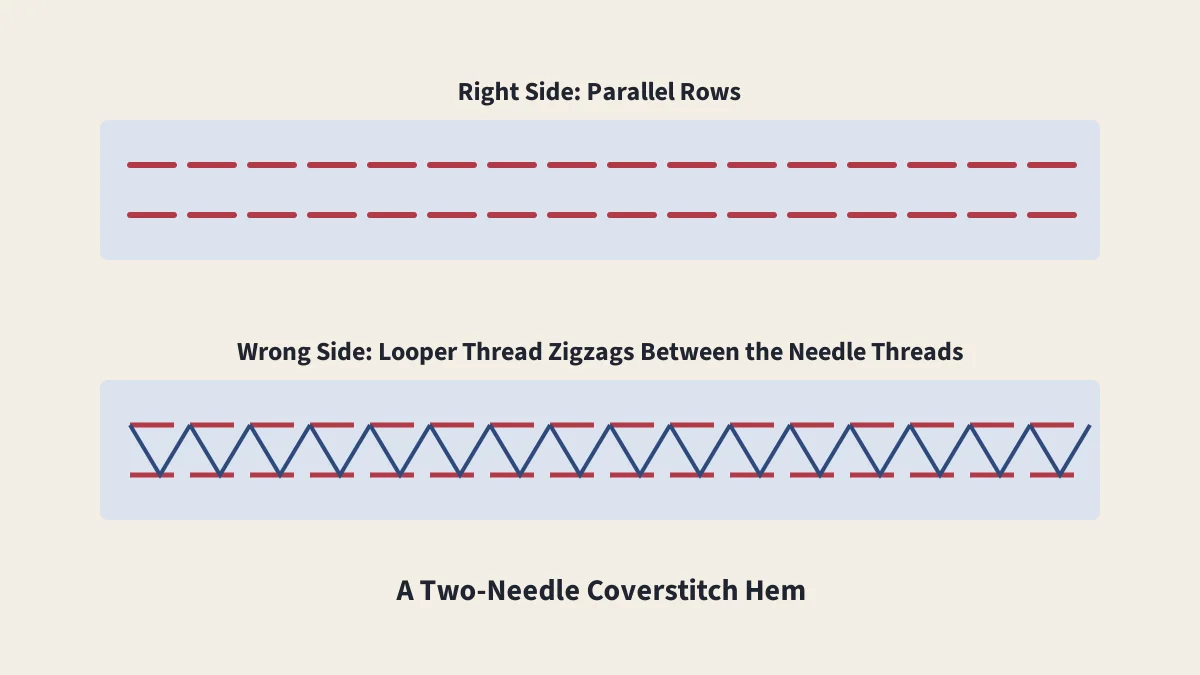
- Twin-needle hems give two parallel rows of stitching on top with a zigzag underneath that stretches.
- Coverstitch hems look like a ready-to-wear T-shirt hem.
- Neckbands are usually cut shorter than the neckline and stretched evenly as they are sewn, so they lie flat.
- Fusible hem tape stabilizes a hem edge before stitching.
Sources
- Overlock, Wikipedia
- Knitted fabric, Wikipedia
Frequently Asked Questions
Can I sew knits on a regular sewing machine?
Yes. Use a ballpoint or stretch needle and a stitch that stretches, such as a narrow zigzag or the machine's stretch stitch. A serger is faster but not essential.
What needle should I use for knit fabric?
A ballpoint (jersey) needle has a rounded tip that slides between the knit loops instead of piercing them. Stretch needles are designed for very elastic knits with spandex, where they help prevent skipped stitches.
Why are my knit seams wavy?
The fabric was probably stretched as it fed through the machine. Let the feed dogs move the fabric without pulling, reduce presser-foot pressure if possible, or use a walking foot or a serger's differential feed.
How do I hem a knit T-shirt?
A twin needle on a regular machine gives two parallel rows of topstitching on the right side and a zigzag underneath that stretches. A coverstitch machine sews a similar hem.
Keep Reading
Types of Knit Fabric
Jersey, rib, interlock, ponte, fleece and tricot explained.
How a Serger Works
Loopers, knives, differential feed and every thread combination.
Coverstitch Machines
How coverstitch hems work and how they compare with sergers.
Sewing Machine Needle Sizes and Types
Needle sizes, types, color codes and when to change them.