How to Sew a Set-In Sleeve: Easing the Cap Smoothly (2026)
A set-in sleeve has a cap that is slightly larger than the armhole it fits into. That extra fabric, called ease, lets the arm move, and learning to distribute it evenly is the key to a smooth shoulder.
In This Article
Set-In Sleeves in Brief
- Armscye: the garment's armhole
- Sleeve cap: the rounded top of the sleeve
- Ease: extra cap length shrunk in for movement
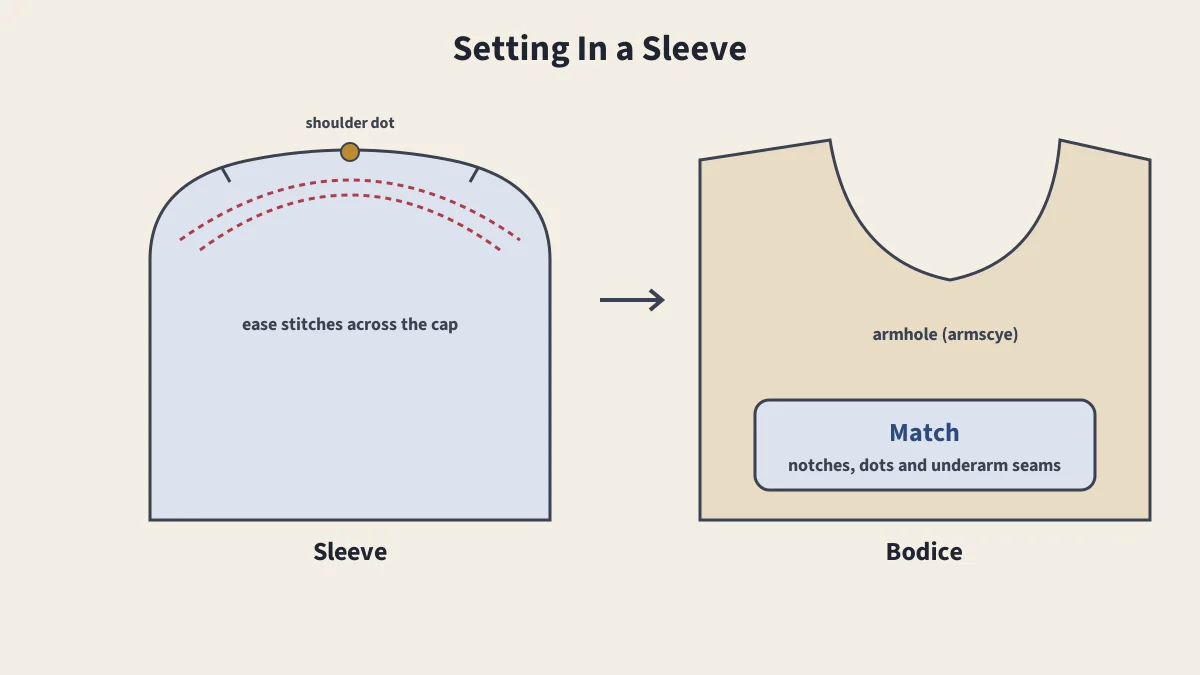
- Match: notches, shoulder dot and underarm seams
- Methods: in the round or flat
A set-in sleeve is sewn into the garment's armhole, called the armscye. The rounded sleeve cap was a 14th-century innovation that allowed more closely fitted sleeves to be inserted; before that, fullness for movement often came from triangular gussets under the arm. Other constructions work differently: a raglan sleeve extends up to the neckline, and a kimono sleeve is cut in one piece with the bodice; see types of sleeves.
Understand the Markings
- Single notch: usually marks the sleeve front.
- Double notch: usually marks the sleeve back.
- Dot at the top of the cap: matches the shoulder seam.
- Underarm seam: matches the bodice side seam.
Transfer every marking before removing the pattern; see marking tools.
Easing the Cap
- Sew two rows of long machine stitches across the cap between the notches, just inside and just outside the seamline, leaving long thread tails.
- Pin the sleeve into the armhole, matching all markings.
- Pull the bobbin threads gently to draw in the cap until it fits, sliding the fullness so it is spread evenly with no folds.
- Steam the cap over a tailor's ham or sleeve board to shrink the ease in; natural fibers such as wool respond best. See pressing tools.
Sewing Into a Closed Armhole
- Sew the garment's shoulder and side seams and the sleeve's underarm seam.
- Turn the sleeve right side out and the garment inside out, and place the sleeve inside the armhole, right sides together.
- Pin at the underarm, shoulder and notches, then distribute the ease.
- Stitch with the sleeve on top, so you can see and smooth the ease, starting at the underarm.
- Stitch a second row in the seam allowance under the arm for strength, then trim there only.
Sewing Flat Into an Open Armhole
- Sew only the shoulder seams.
- Pin the sleeve cap to the open armhole, matching markings and easing.
- Stitch the sleeve in.
- Sew the side seam and the sleeve's underarm seam in one continuous line.
The flat method is quicker and is often used for shirts and knits, which usually have less cap ease.
Pressing the Sleeve Seam
Armhole seams are usually not pressed open. Press the seam allowance lightly toward the sleeve at the cap, so it supports the curve, and leave the underarm allowances together. In tailoring, a sleeve head strip is often added inside the cap to support it.
Sources
- Sleeve, Wikipedia
Frequently Asked Questions
What is sleeve cap ease?
The difference between the length of the sleeve cap's seamline and the armhole's seamline. The extra length is gently shrunk in so the sleeve has room for the arm without visible gathers.
Should I set in a sleeve flat or in the round?
Sewing in the round, after the side and underarm seams are sewn, is traditional for fitted garments and tailoring. Sewing flat, before the side seams are closed, is quicker and common for shirts and casual knits.
Why does my sleeve cap pucker?
Usually too much ease is concentrated in one place, or the cap has more ease than the fabric can absorb. Spread the ease evenly between the notches, keep it off the top of the shoulder if the pattern says so, and steam the cap to shrink it in.
What is the armscye?
The armhole of a garment, into which a set-in sleeve is sewn.
Keep Reading
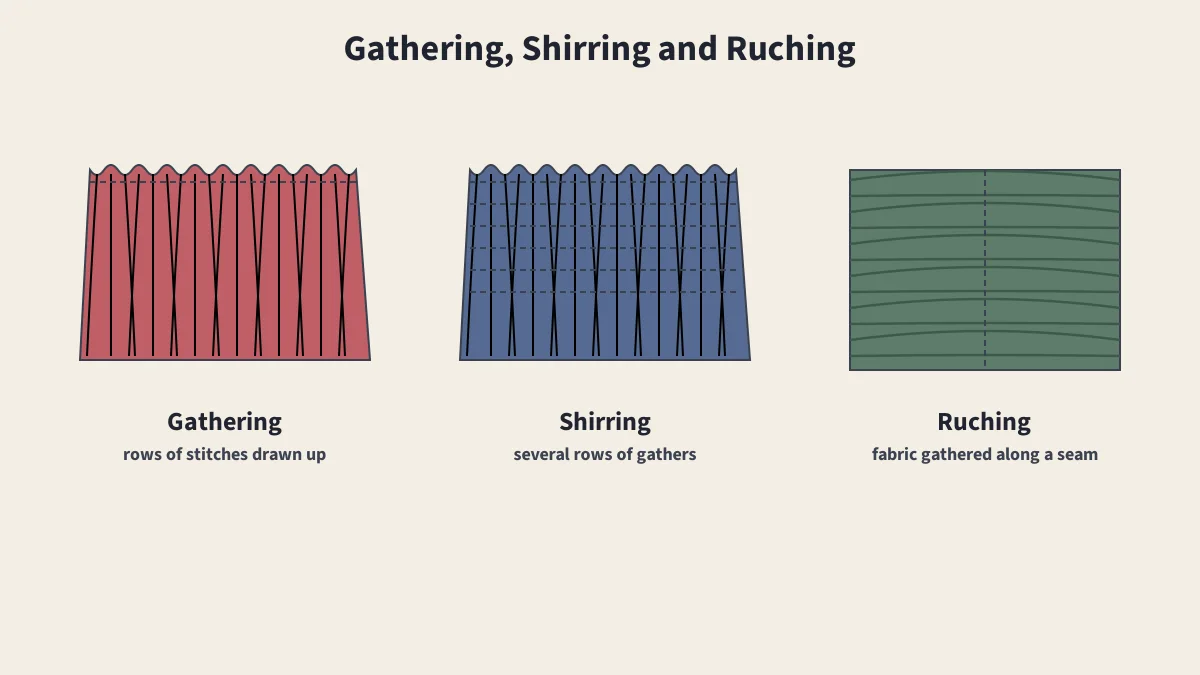
Gathering, Ruching and Shirring
Gathers, shirring, ruching and smocking explained.
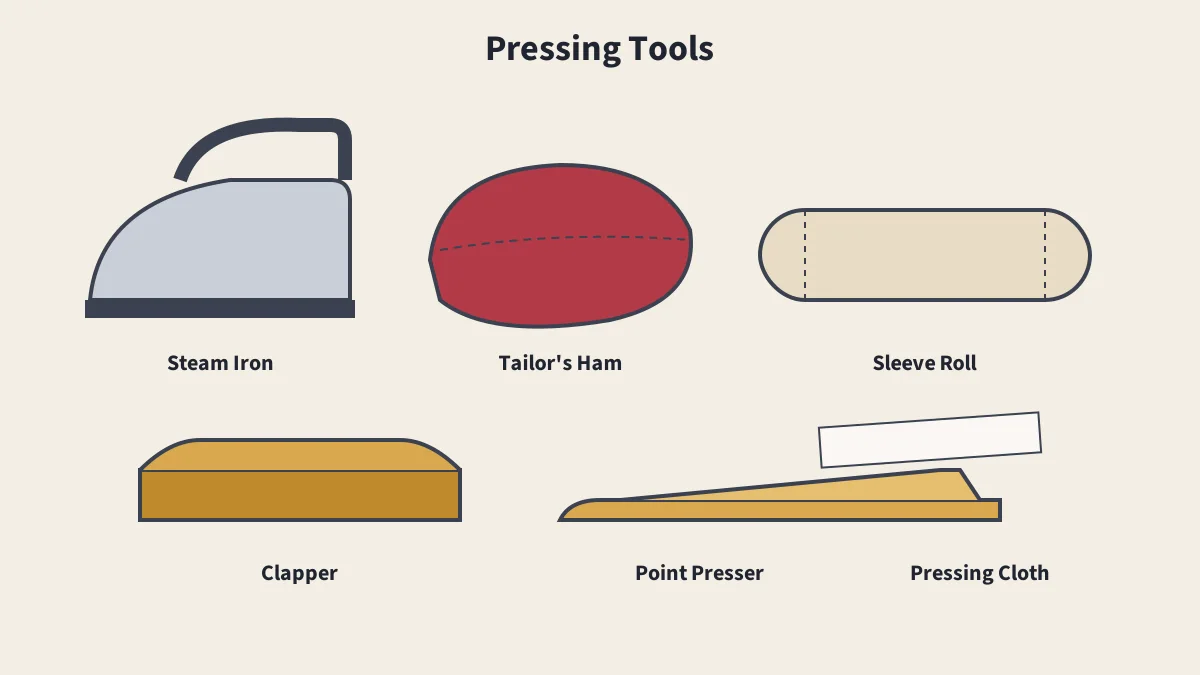
Pressing Tools
The iron, tailor's ham, sleeve roll, clapper and pressing cloth.
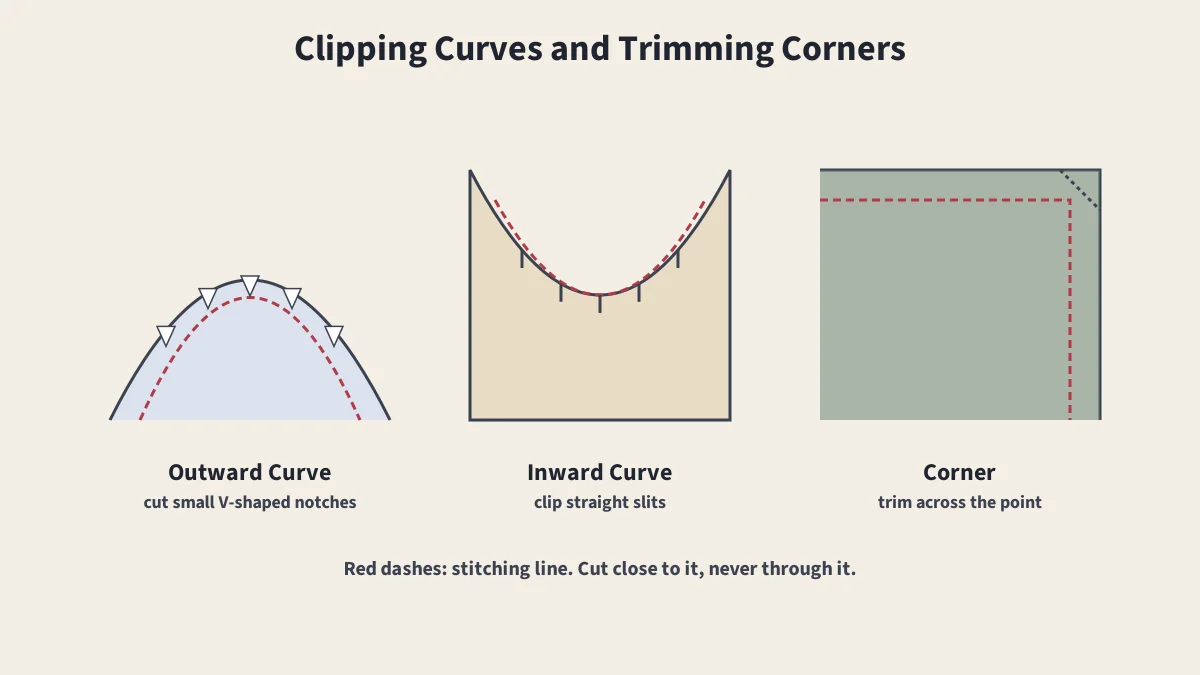
Sewing Curves and Corners
Pivoting, clipping, notching and grading for crisp results.
Seam Allowance Explained
Standard seam allowances, why they differ, and how to sew them accurately.