Types of Embroidery: Surface, Counted Thread, Canvas Work and More (2026)
Embroidery styles can be sorted by how stitches relate to the fabric's weave, by the threads used, or by region. Here are the main families and the named styles within them.
In This Article
Embroidery Types in Brief
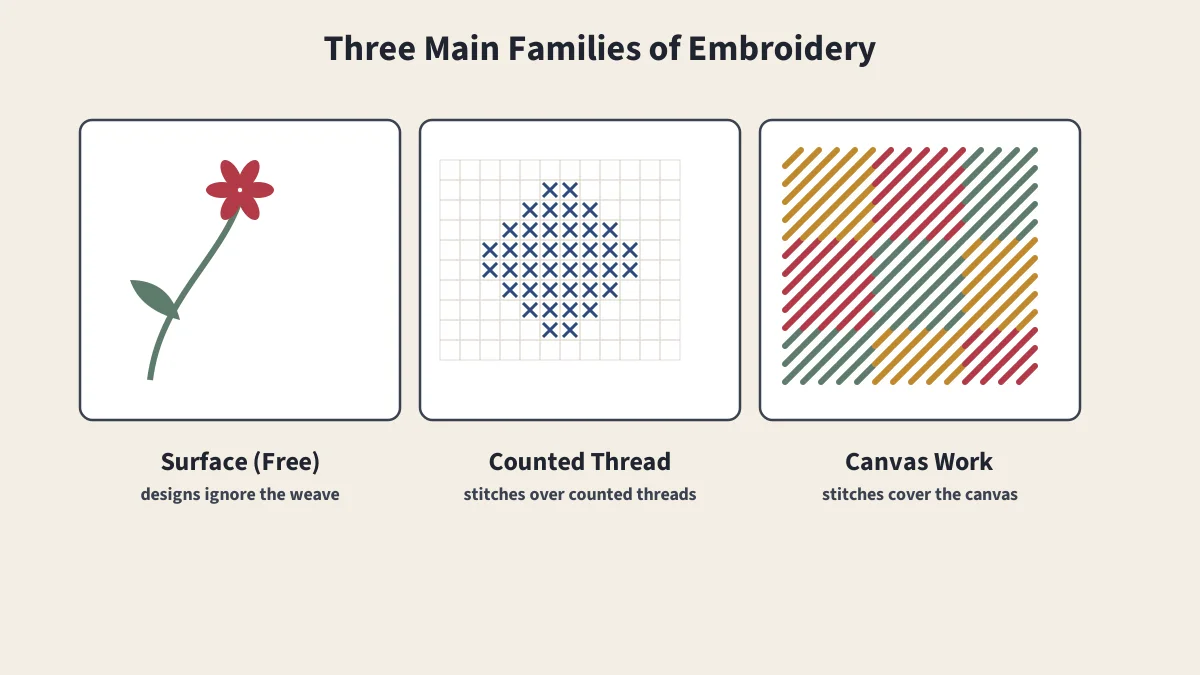
- Surface (free): designs ignore the weave
- Counted thread: stitches over set threads
- Canvas work: stitches cover the canvas
- Openwork: drawn thread and cutwork
- By thread: crewel, goldwork, whitework, blackwork
Embroidery is usually classified by how the stitches relate to the weave of the foundation fabric. Within those families, many named styles are defined by their threads, colors, techniques or regions. For individual stitches, see embroidery stitches.
The Three Main Families
| Family | How It Works | Examples |
|---|---|---|
| Free or surface embroidery | Designs are stitched without regard to the weave | Crewel, traditional Chinese and Japanese embroidery |
| Counted-thread embroidery | Stitches are made over a set number of fabric threads, usually on evenweave | Cross stitch, blackwork, Hardanger |
| Canvas work (needlepoint) | Threads are stitched through an open canvas, covering it densely | Bargello, Berlin wool work |
Styles Defined by Thread or Color
- Crewel: surface embroidery worked in wool.
- Goldwork: metal threads couched onto the surface.
- Blackwork: black thread on white linen, often counted.
- Whitework: white thread on white fabric.
Styles Defined by Technique
- Stumpwork: raised, three-dimensional embroidery.
- Drawn thread work and cutwork: threads are removed or fabric is cut away to create openwork.
- Smocking: embroidery over gathers; see gathering and smocking.
- Appliqué: fabric shapes stitched onto a background.
- Bead embroidery: beads, sequins and pearls stitched to the surface.
Regional Traditions
Many traditions are tied to a place: sashiko in Japan, kantha in Bengal, Hardanger in Norway, Ayrshire work in Scotland and Mountmellick in Ireland, among many others. See also Indian handloom textiles.
Machine Embroidery
Today's computerized embroidery machines stitch digitized designs automatically, usually with rayon or polyester thread and a stabilizer; see how embroidery machines work and embroidery stabilizers.
Sources
- Embroidery, Wikipedia
- Whitework embroidery, Wikipedia
Frequently Asked Questions
What are the main types of embroidery?
Embroidery is usually divided into free or surface embroidery, counted-thread embroidery and canvas work (needlepoint). Styles such as whitework, goldwork, crewel and blackwork are defined by their threads or colors.
What is the difference between surface and counted embroidery?
In surface embroidery, the design ignores the weave of the fabric. In counted-thread embroidery, each stitch is made over a set number of fabric threads.
Is cross stitch a type of embroidery?
Yes. Cross stitch is a form of counted-thread embroidery.
What is canvas work?
Embroidery in which stitches completely cover an open canvas foundation, also called needlepoint. Examples include bargello and Berlin wool work.
Keep Reading
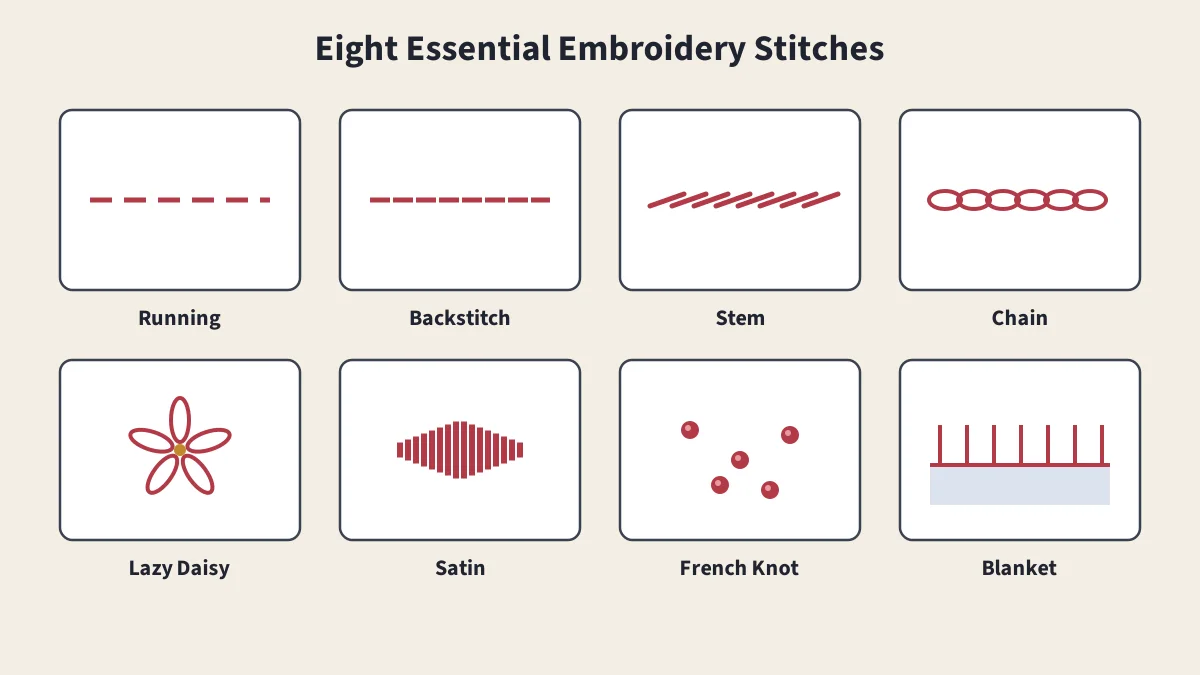
Embroidery Stitches
Flat, looped, knotted and couched stitches.
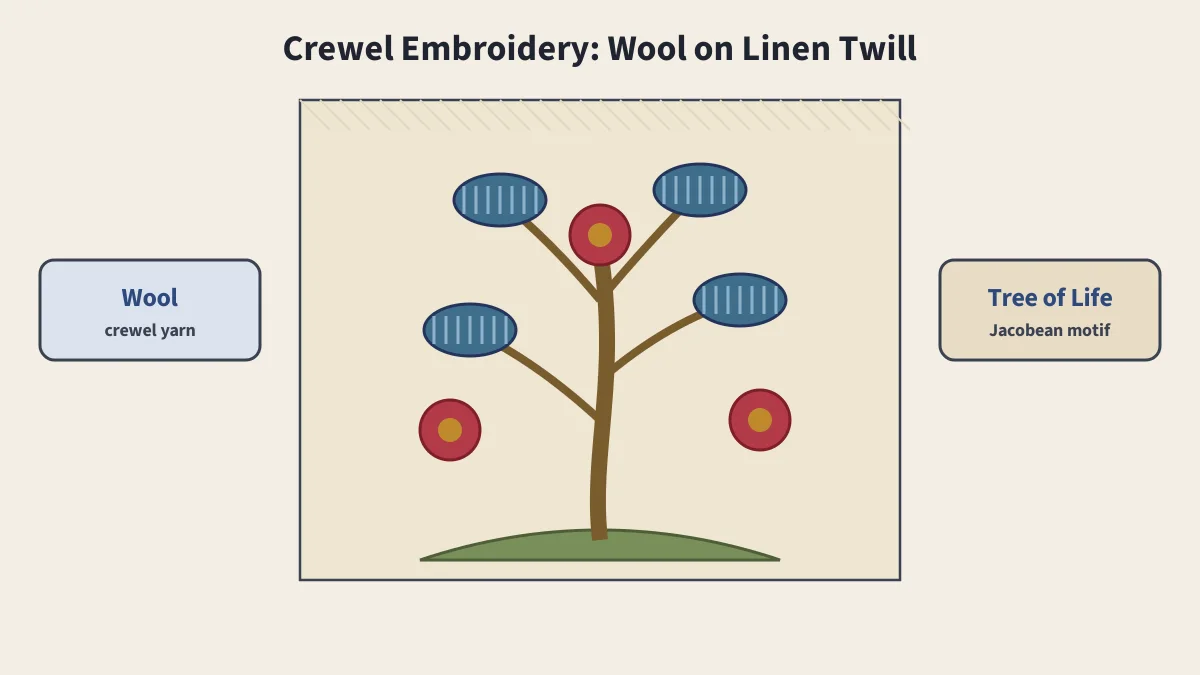
Crewel Embroidery
Wool embroidery, Jacobean designs and history.
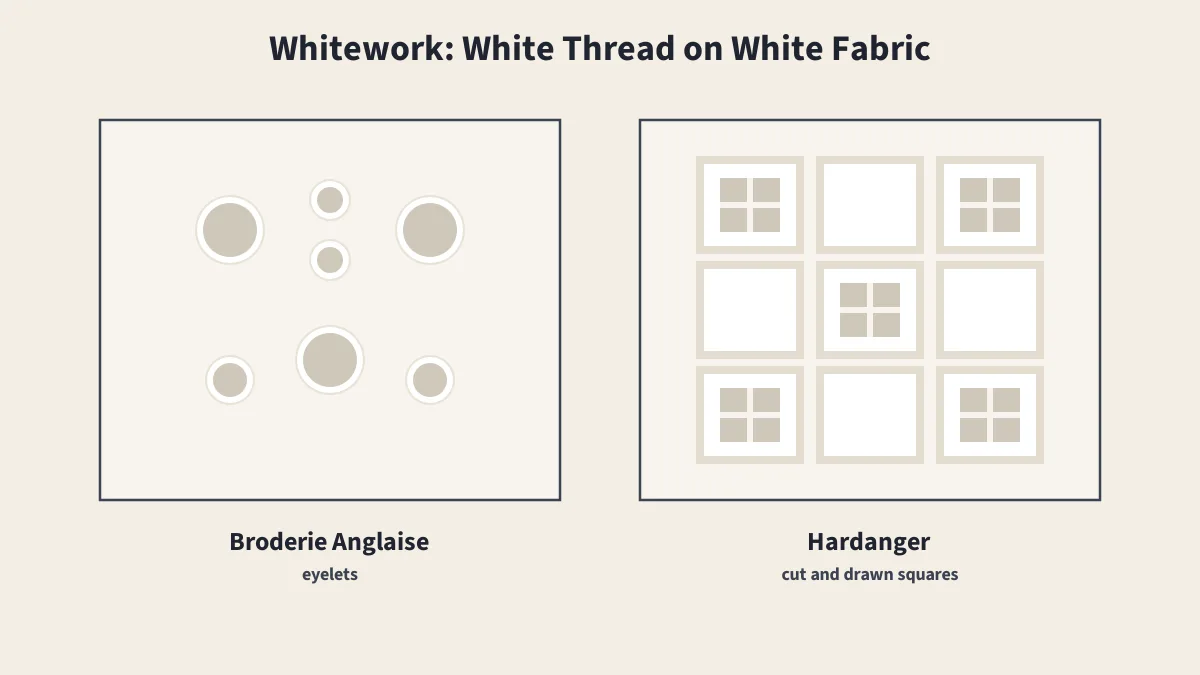
Whitework
Broderie anglaise, Hardanger and other white-on-white styles.
How Embroidery Machines Work
Hoops, digitizing, stabilizers and embroidery file formats explained.