Chikankari: The Delicate White Embroidery of Lucknow (2026)
Chikankari began as white thread on fine white muslin, and its subtle beauty comes from texture, shadow and openwork rather than color. It has been associated with Lucknow for centuries.
In This Article
Chikankari in Brief
- Home: Lucknow, Uttar Pradesh
- Classic look: white thread on fine white fabric
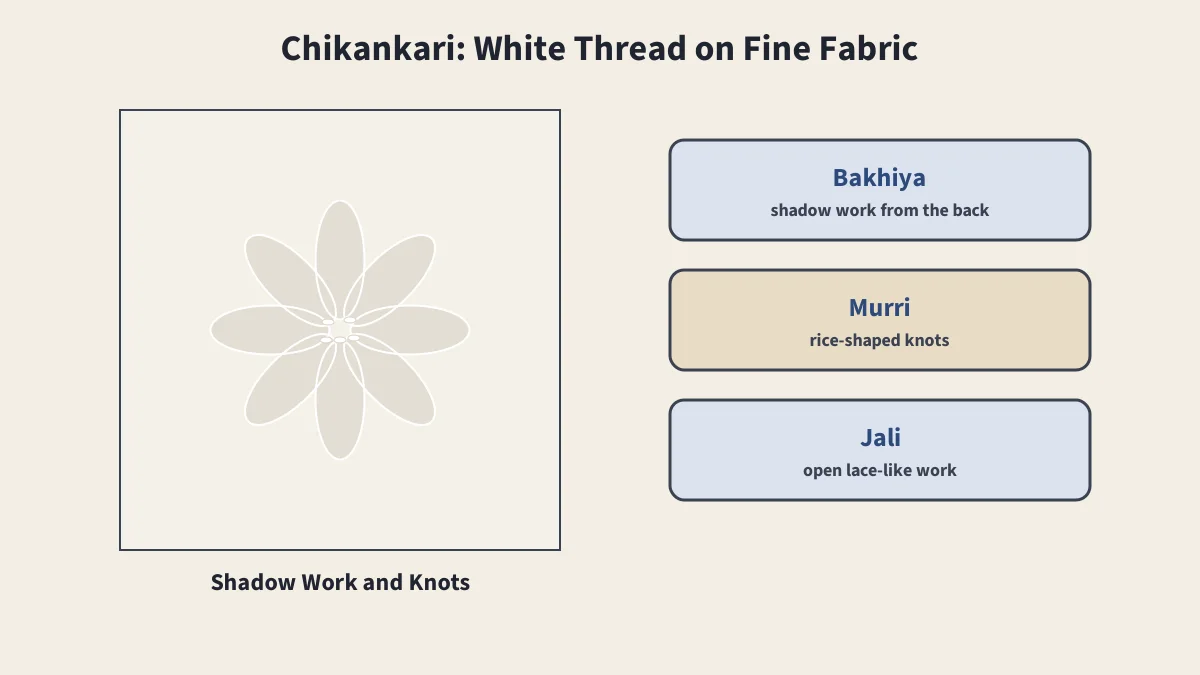
- Key stitches: bakhiya, murri, jali, phanda
- Fabrics: muslin, cotton, chanderi, georgette
- GI status: December 2008
Chikankari is a traditional embroidery style from Lucknow, India, whose main market is the Chowk area of the city. It began as white-on-white embroidery, a form of whitework, and white thread on light muslin and cotton remains its classic look, though colored and silk threads are now also used.
Origins
The exact origin of chikankari is uncertain. The most popular story credits Noor Jahan, the Mughal empress and wife of Jahangir, with introducing it to India. Designer and writer Laila Tyabji links it to white-on-white embroidery from Shiraz, brought to India by Persian nobles at the Mughal court. The Greek writer Megasthenes mentioned flowered muslins in India in the 3rd century BC, but those embroideries lacked chikan's characteristic features.
Fabrics
Chikankari needs light, fine fabric, because thick cloth resists the fine needle: cotton, chanderi, muslin, georgette and organza are typical. On sheer fabric, the stitches worked on the back show through as a soft shadow; see sheer fabrics.
Signature Stitches
| Stitch | Description |
|---|---|
| Bakhiya (shadow work) | Worked on the wrong side so it shows as a shadow on the right side |
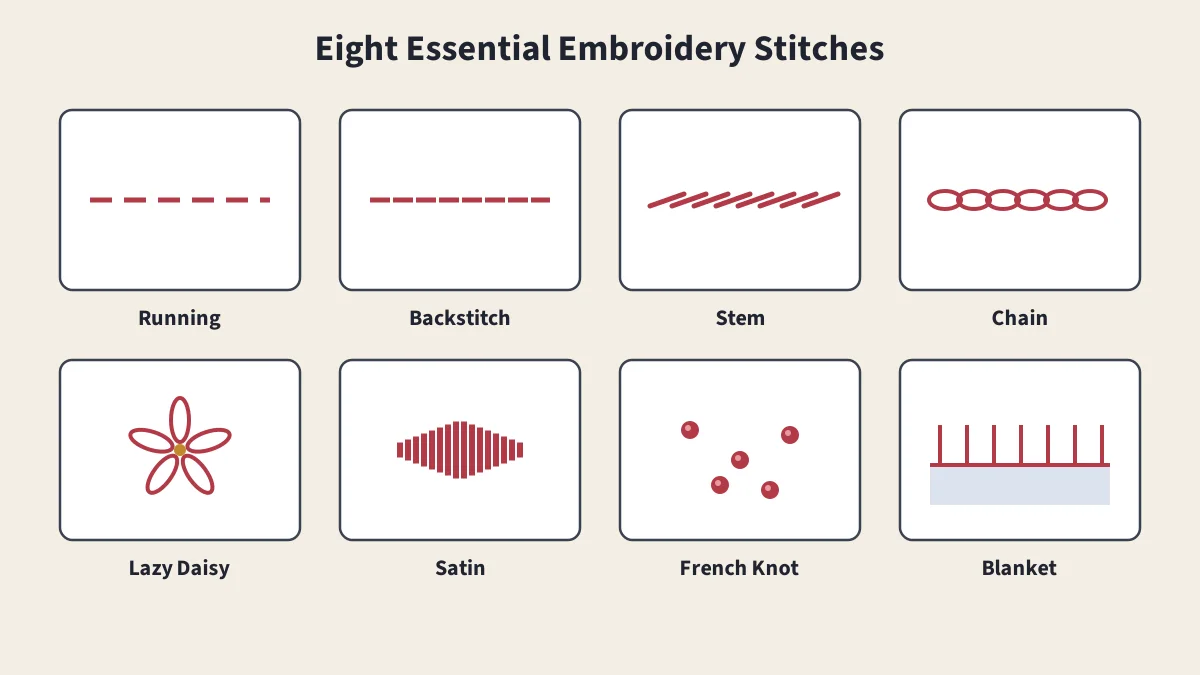
| Murri | Rice-shaped French knots for flower centers; the oldest and most sought-after form, now declining as skilled artisans become fewer |
| Jali | Open lacework in which the thread is never pulled through to the back, so both sides look neat |
| Phanda | Another traditional chikankari stitch |
Modern chikankari may add embellishments such as mukaish, kamdani, badla, sequins, beads and mirrors.
How Chikankari Is Made
- Design: the pattern is drawn.
- Engraving: the design is prepared for printing.
- Block printing: the outline is printed on the fabric.
- Embroidery: artisans stitch over the printed lines.
- Washing and finishing: the piece is washed and finished.
Sources
- Chikankari, Wikipedia
- Embroidery of India, Wikipedia
Frequently Asked Questions
What is chikankari?
A traditional embroidery style from Lucknow, India, originally white thread on fine white fabric such as muslin. Colored and silk threads are also used today.
Who introduced chikankari?
The most popular story credits Noor Jahan, the Mughal empress and wife of Jahangir. Others link it to white-on-white embroidery from Shiraz brought by Persian nobles at the Mughal court. Its exact origin is uncertain.
What is bakhiya?
Shadow work: stitching worked on the wrong side of sheer fabric so that it shows through as a shadow on the right side.
Does chikankari have GI status?
Yes. In December 2008, chikankari received Geographical Indication status, recognizing Lucknow as its home.
Keep Reading
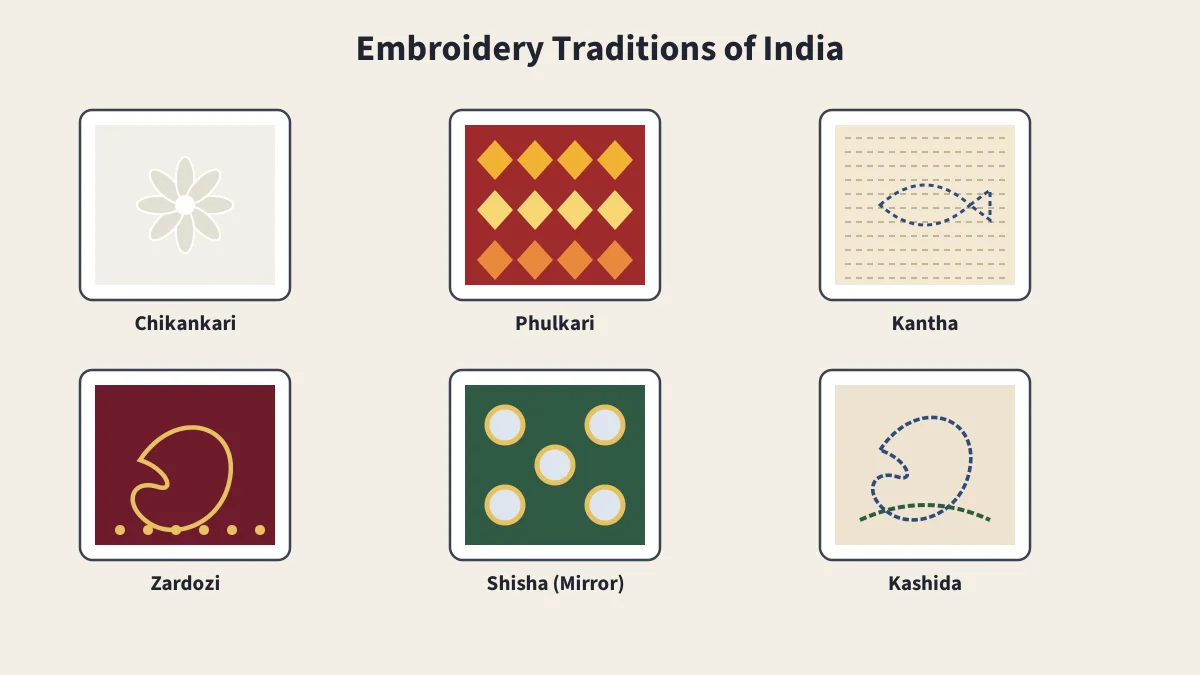
Indian Embroidery Styles
Chikankari, phulkari, kantha, zardozi and more.
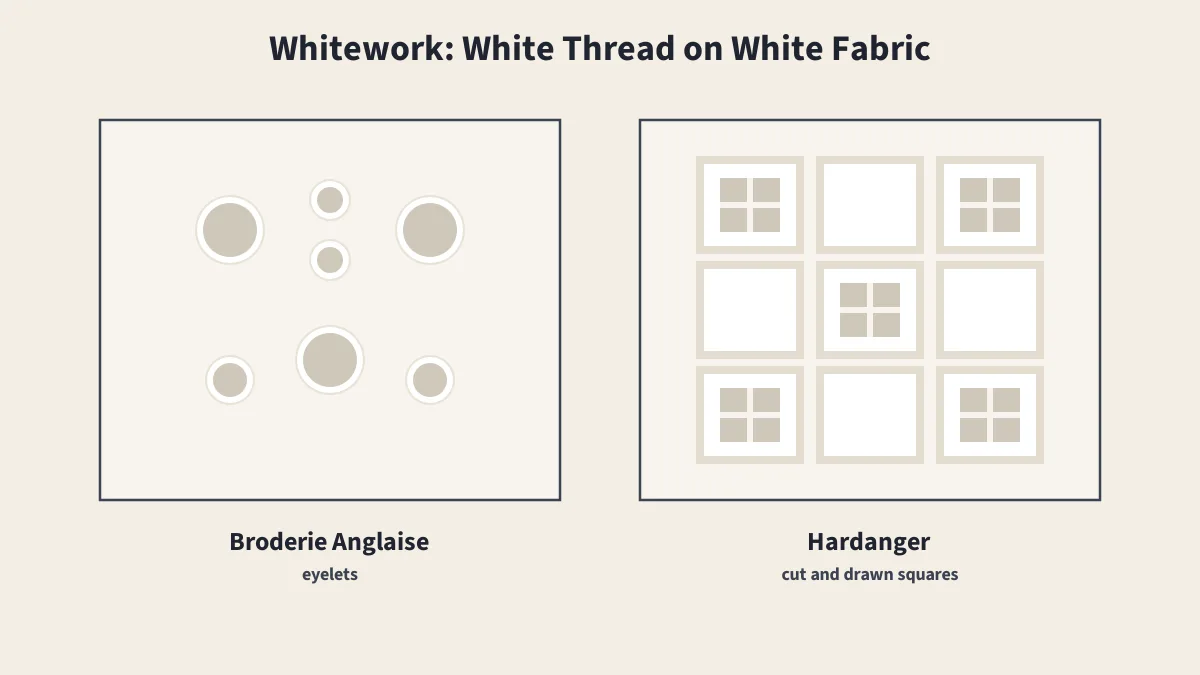
Whitework
Broderie anglaise, Hardanger and other white-on-white styles.
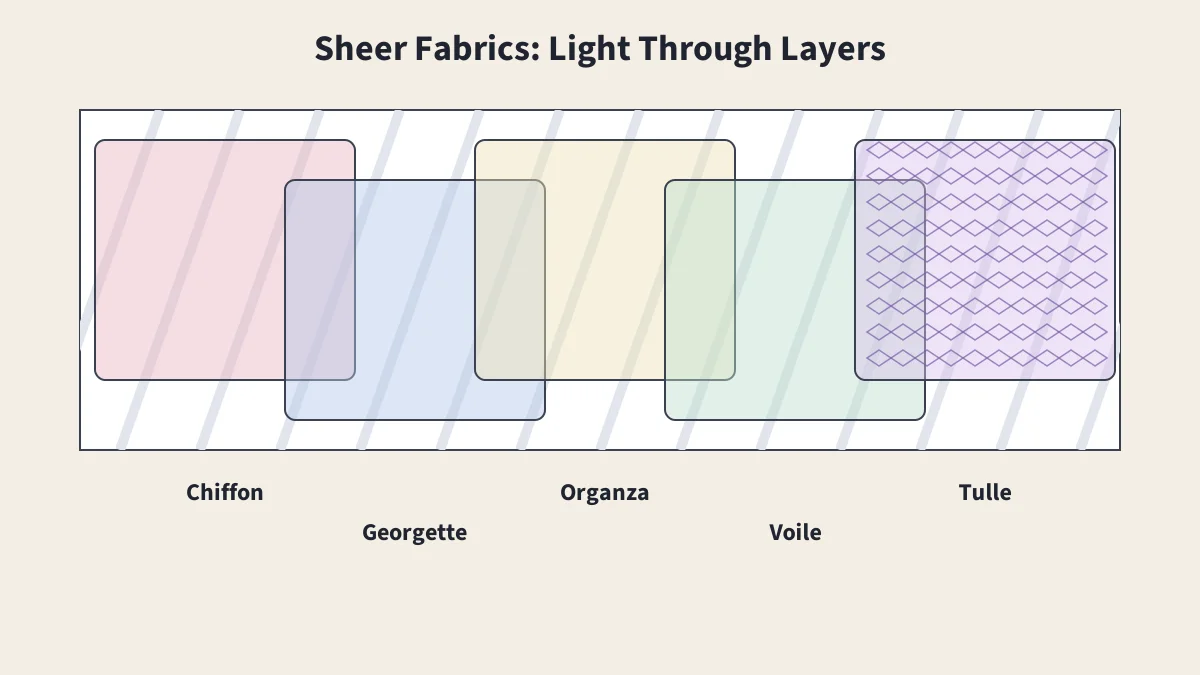
Sheer Fabrics
Chiffon, georgette, organza, voile and tulle compared.
Embroidery Stitches
Flat, looped, knotted and couched stitches.