Kantha: The Running-Stitch Embroidery of Bengal (2026)
Kantha turns worn saris and dhotis into something new. Layers of soft old cloth are stitched together with rows of running stitch, creating light quilts, wraps and richly embroidered pictures.
In This Article
Kantha in Brief
- Region: Bangladesh; West Bengal, Tripura, Odisha
- Material: layered old saris and dhotis
- Stitch: running stitch
- Nakshi kantha: embroidered quilts
- Texture: gently rippled
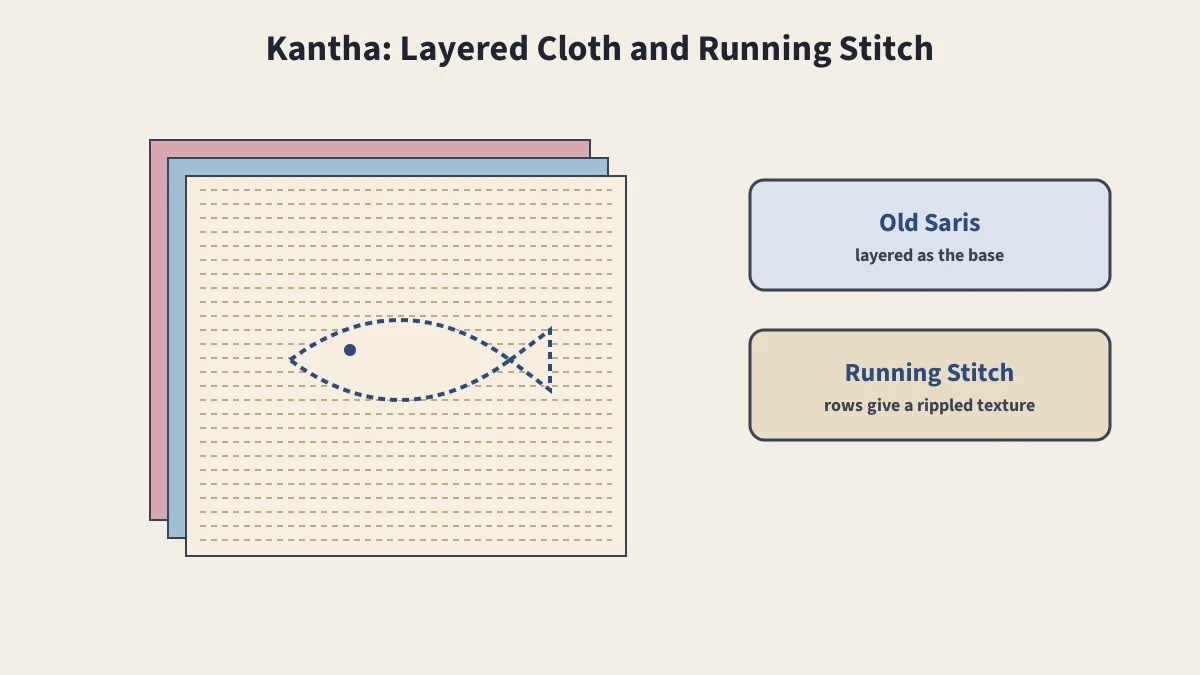
Kantha is an embroidery craft from Bangladesh and eastern India, mainly West Bengal, Tripura and Odisha. It is also spelled kanta or qanta. At its simplest, soft old dhotis and saris are layered and joined with running stitch; at its most elaborate, the whole surface is covered with stitched pictures.
How Kantha Is Made
- Layering: old saris and cloth are stacked, often several layers deep.
- Running stitch: rows of simple running stitch join the layers, giving the cloth a slightly wrinkled, wavy texture.
- Motifs: flowers, animals, birds, geometric shapes and scenes from everyday life.
- Names by use: depending on their purpose, pieces are called lepkantha or sujni kantha.
The running stitch is the same basic stitch used in sashiko; see embroidery stitches.
Nakshi Kantha
Nakshi kantha are quilts made by layering old saris and cloth and covering them with decorative kantha stitching. They are used as light blankets, throws or bedspreads, especially for children. Embroidered kantha cloths also serve as shawls, mirror covers, box covers and pillows. See types of quilts.
Kantha Today
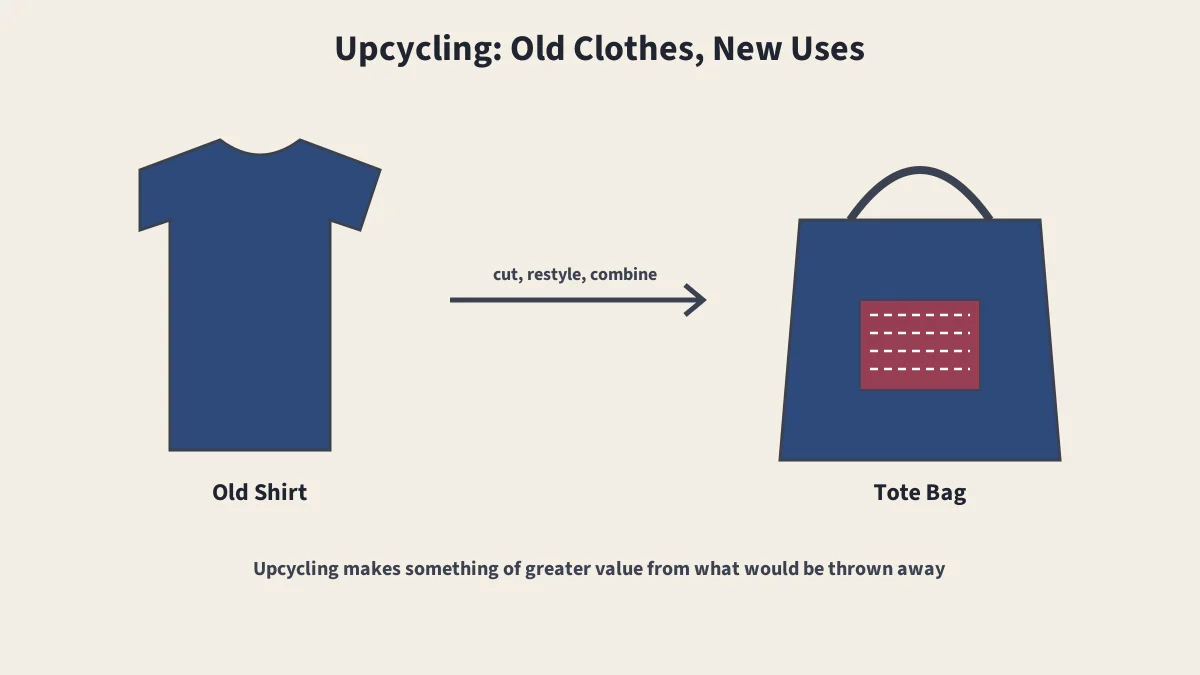
Kantha stitching now decorates saris, dupattas, kurtas, shirts, bedding and furnishings, mostly in cotton and silk, and is popular with visitors to Bengal. Its origins in reusing worn cloth also make it a natural model for upcycling.
Sources
Frequently Asked Questions
What is kantha embroidery?
An embroidery craft from Bangladesh and eastern India in which layers of old cloth, especially saris and dhotis, are joined and decorated with running stitch.
What is a nakshi kantha?
A kantha quilt made by layering old saris and cloth and covering them with decorative kantha stitching, used as a light blanket, throw or bedspread.
Where does the word kantha come from?
Its origin is uncertain. It may come from kheta, Bengali for 'field', or, as scholar Niaz Zaman suggests, from the Sanskrit kontha, meaning rags.
Why is kantha cloth wrinkled?
The many rows of running stitch through layered cloth give it a slightly wrinkled, wavy texture.
Keep Reading
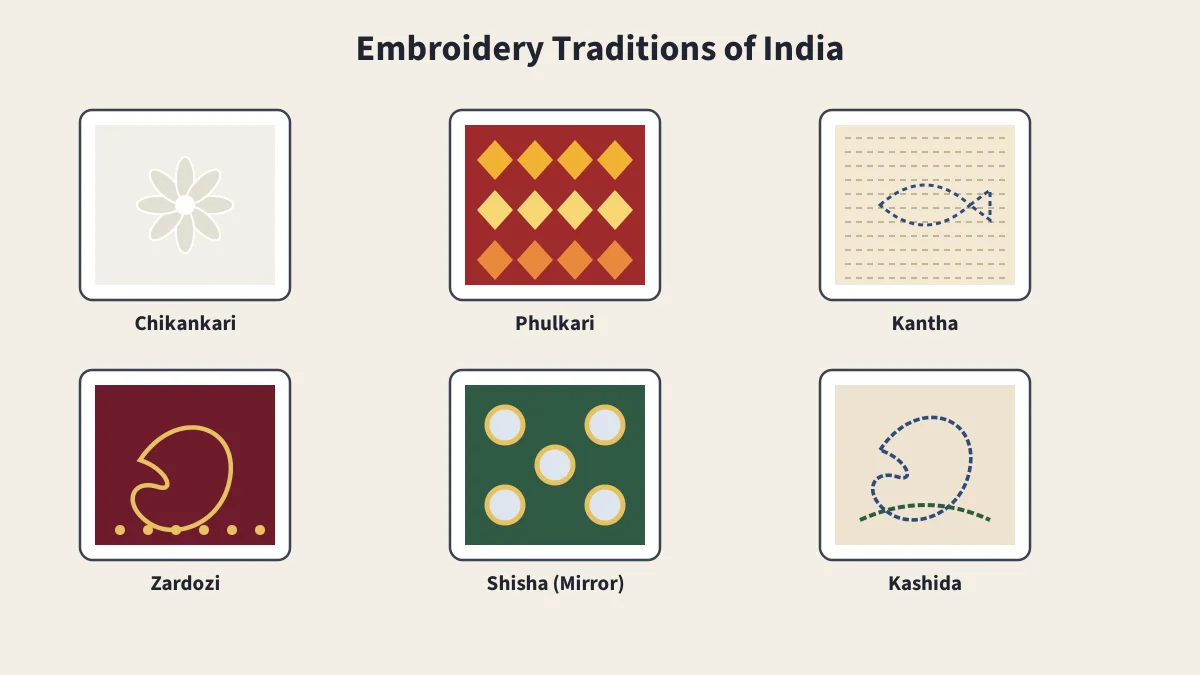
Indian Embroidery Styles
Chikankari, phulkari, kantha, zardozi and more.
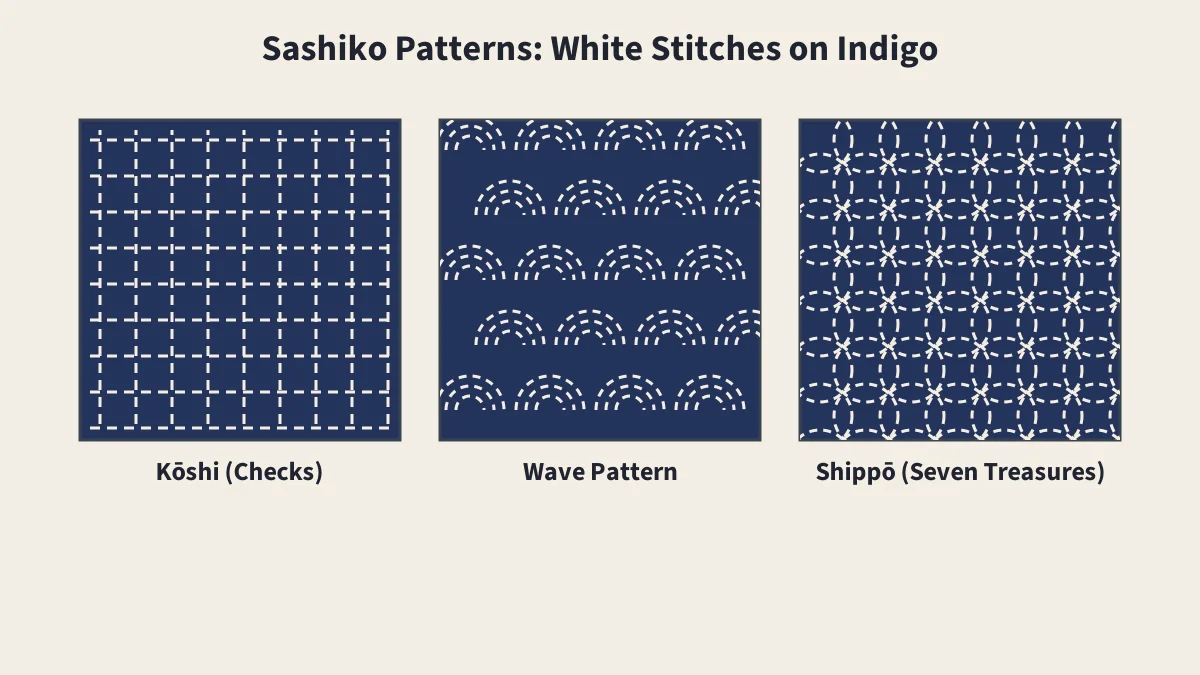
Sashiko and Boro
Sashiko patterns, regional styles and boro history.
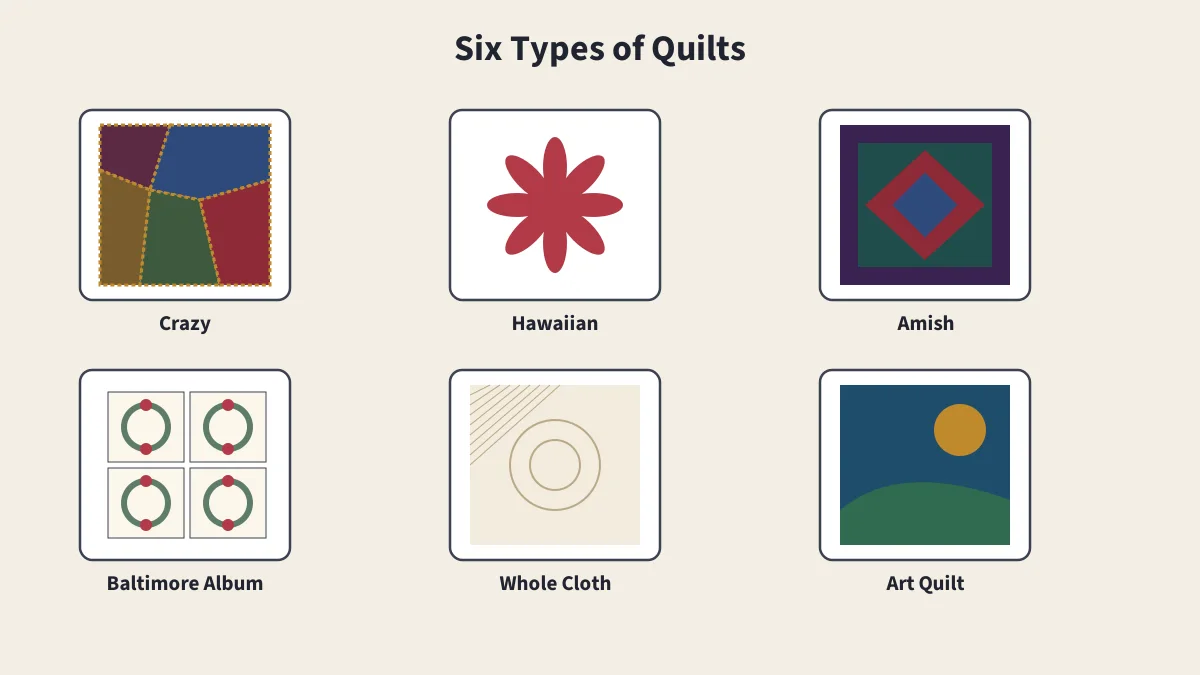
Types of Quilts
Crazy, Hawaiian, Amish, Baltimore Album and more.
Upcycling Clothes
Restyling, combining and reusing old clothes and fabric.