Smocking: The Embroidery That Makes Fabric Stretch (2026)
Smocking gathers fabric into tiny pleats and holds them with embroidery, so the fabric can stretch. Long before elastic, it shaped the cuffs, bodices and necklines of working smocks and children's clothes.
In This Article
Smocking in Brief
- What: embroidery that holds gathers
- Origin: England, since the Middle Ages
- Peak: 18th and 19th centuries
- Fabric use: about three times finished width
- Stitches: cable, stem, honeycomb
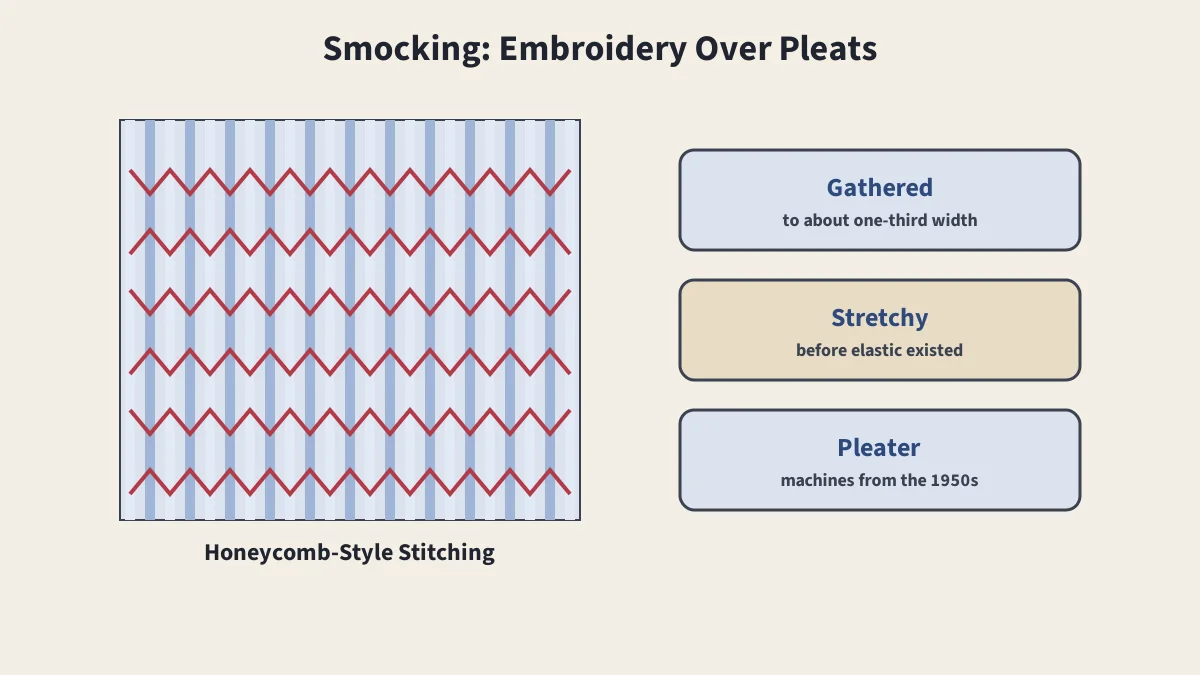
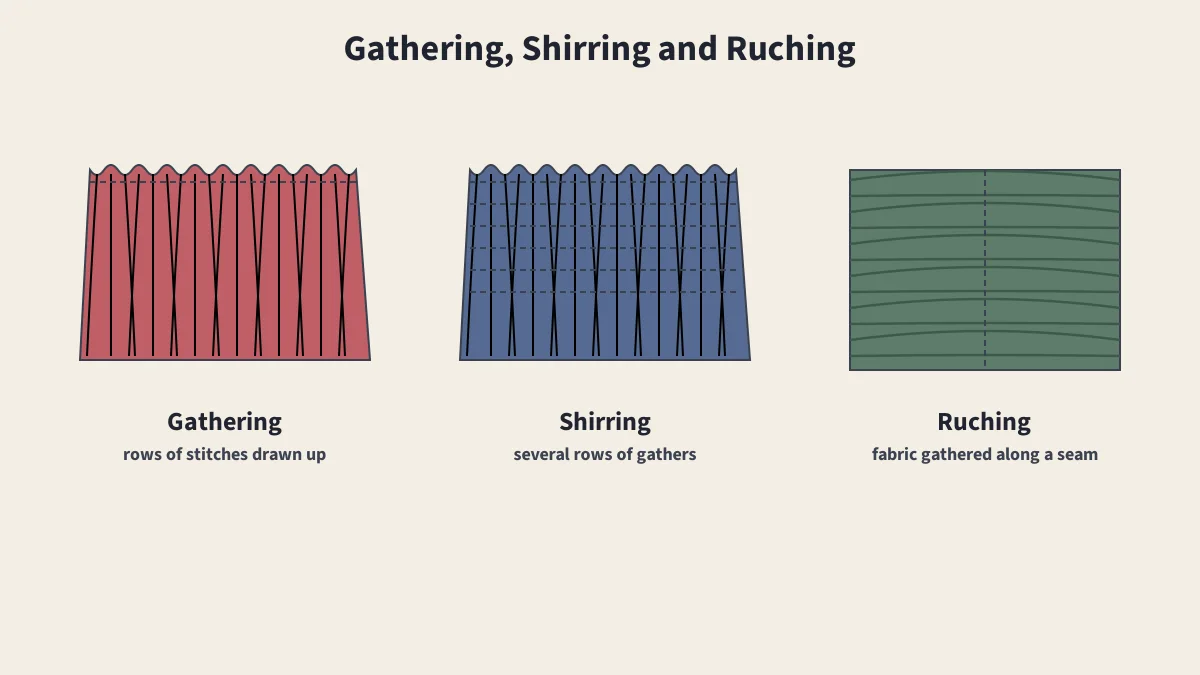
Smocking is an embroidery technique that gathers fabric so it can stretch. Before elastic, it was used for cuffs, bodices and necklines where buttons were undesirable. Its name comes from the smock, an agricultural laborer's work shirt, and unlike most embroidery it was worn by laborers rather than used mainly as a status symbol. For simpler gathers and elastic shirring, see gathering, ruching and shirring.
History
- Smocking developed in England and has been practiced since the Middle Ages.
- It was used most extensively in the 18th and 19th centuries, notably on laborers' smock frocks.
- By 1880, iron-on transfer dots for marking smocking were advertised in magazines such as Weldon's.
- Pleating machines for home smockers have been available since the early 1950s.
Materials
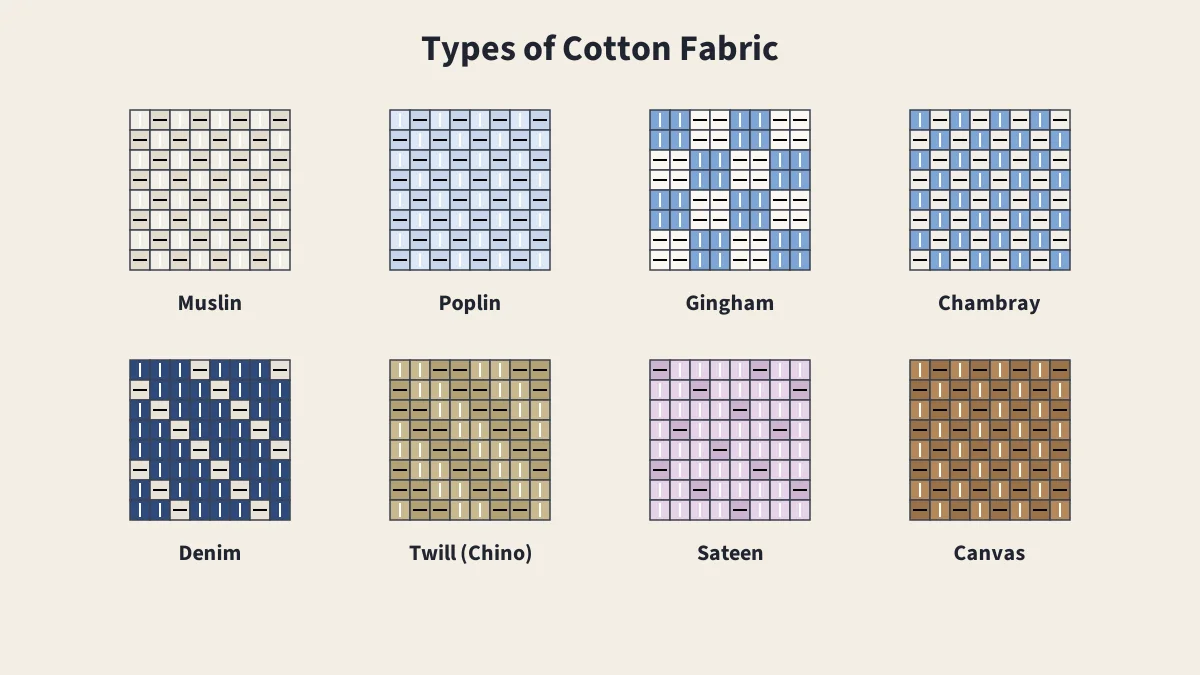
- Fabric: lightweight with a stable weave; typically cotton or silk, often lawn or voile. Historically, piqué, crepe de Chine and cashmere were also used. See types of cotton fabric.
- Thread: cotton or silk embroidery thread.
- Needle: a crewel embroidery needle.
- Width: smocking usually reduces fabric to about one-third of its original width.
How Smocking Is Done
- Mark a grid of dots on the wrong side, or use transfer dots.
- Gather the fabric with rows of running stitches through the dots, or feed it through a pleater.
- Pull up the gathering threads to form even pleats.
- Embroider across the pleats on the right side, picking up the top of each pleat.
- Remove the gathering threads, leaving the smocking to hold the pleats with stretch.
Smocking Stitches
| Stitch | Use |
|---|---|
| Cable | Firm rows, often at the top and bottom |
| Stem (outline) | Simple lines across the pleats |
| Honeycomb and variations | Stretchy diamond patterns; sometimes combined into "flowerettes" |
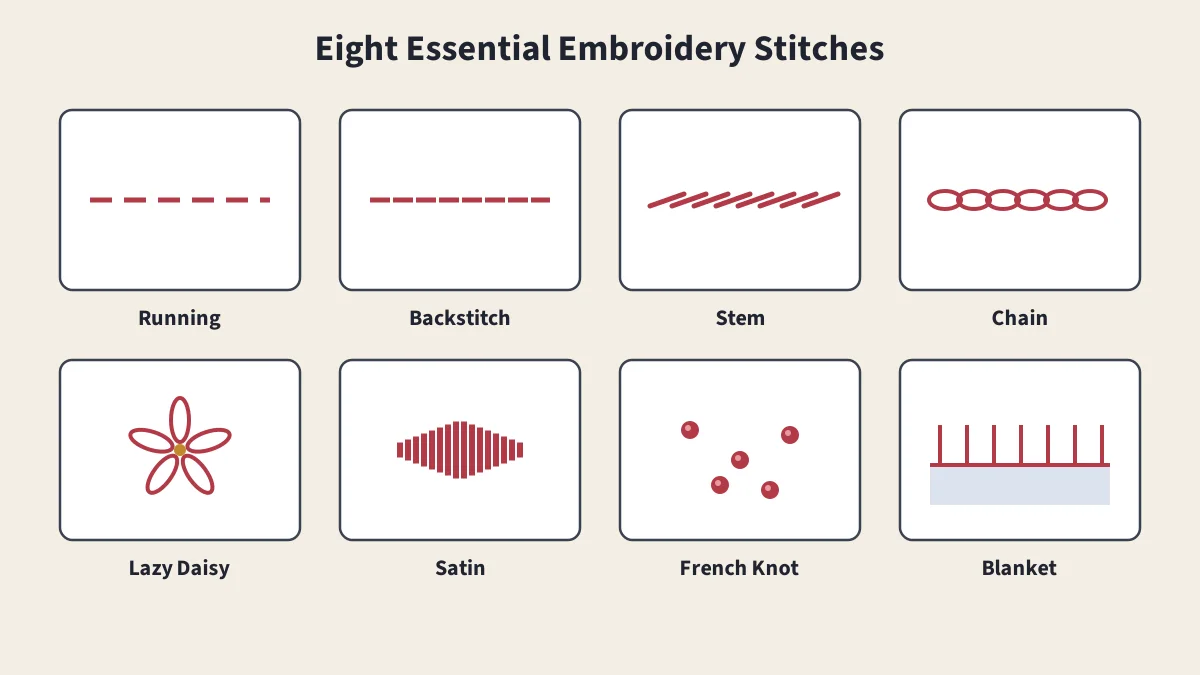
| Feather stitch | Decorative surface work on smocks; see embroidery stitches |
Rows are usually finished with a smocker's knot.
Sources
- Smocking, Wikipedia
- Embroidery stitch, Wikipedia
Frequently Asked Questions
What is smocking?
An embroidery technique that gathers fabric so it can stretch. Rows of stitches hold small pleats together in decorative patterns.
How much fabric does smocking need?
Smocking usually reduces fabric to about one-third of its original width, so you need about three times the finished width.
What fabric is best for smocking?
Lightweight fabric with a stable weave, typically cotton or silk such as lawn or voile.
What is a smocking pleater?
A machine with gears and specialty needles that gathers fabric into even pleats ready for smocking. Pleaters for home use have been available since the early 1950s, in 16-, 24- and 32-row widths.
Keep Reading
Gathering, Ruching and Shirring
Gathers, shirring, ruching and smocking explained.
Embroidery Stitches
Flat, looped, knotted and couched stitches.
Types of Cotton Fabric
Muslin, poplin, gingham, chambray, denim, corduroy and more.
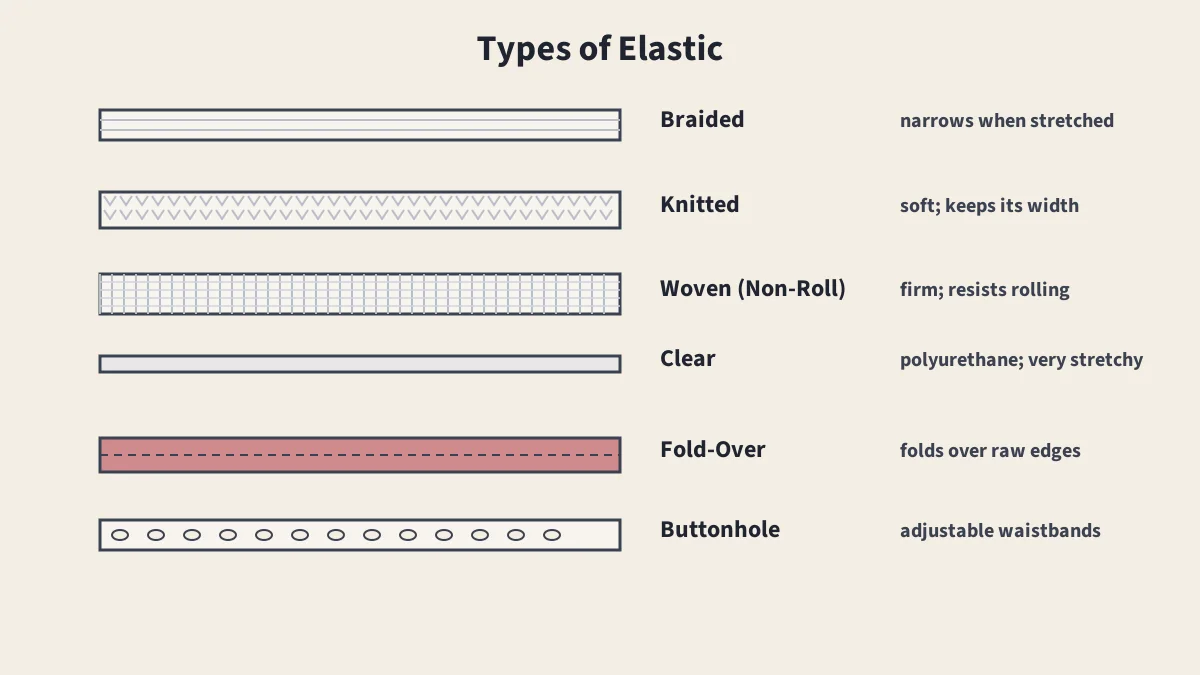
Types of Elastic
Braided, knit, woven, clear and fold-over elastic compared.