Types of Appliqué: Hand, Machine, Reverse and World Traditions (2026)
Appliqué means 'applied': shapes of fabric are stitched onto a background to make a picture or pattern. It began as patching and became an art form found from Egypt to Hawaii.
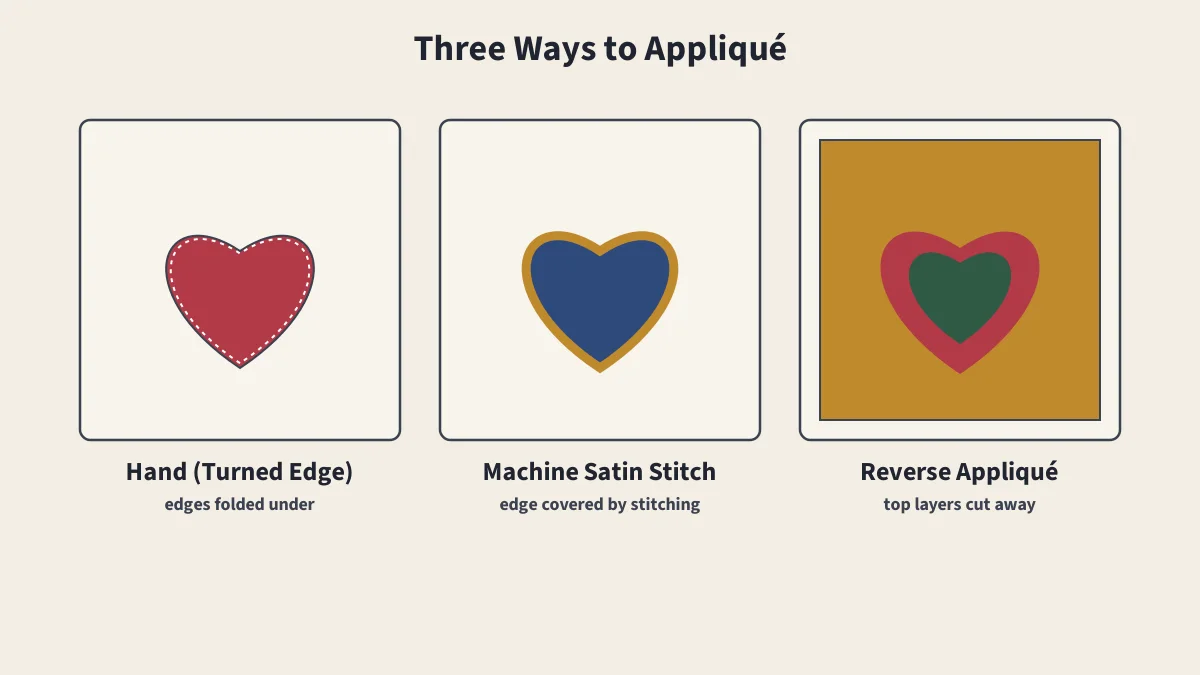
Appliqué in Brief
- Word: from French appliquer, to attach
- Hand: edges turned under and stitched
- Machine: satin stitch covers the edge
- Reverse: layers cut away to reveal colors below
- Oldest: appliquéd leather from Egypt, 980 BCE
Appliqué is ornamental needlework in which pieces of fabric of various shapes are sewn or stuck onto a larger piece to form a picture or pattern. The word comes from the Latin applicō, "I apply," through the French appliquer, "to attach." It began as a way to strengthen worn areas and patch holes, then became an art in its own right; see patching and visible mending.
Techniques
| Technique | How It Works |
|---|---|
| Hand (turned edge) | The edges of the shape are folded under and stitched with small, nearly invisible stitches |
| Straight-stitched | The shape is held with a line of straight stitching just inside the edge |
| Satin stitch | A dense satin or zigzag stitch covers and overlaps the raw edge |
| Reverse appliqué | Layers are sewn together and the top layers cut away to reveal the fabric below, with the cut edges stitched down |
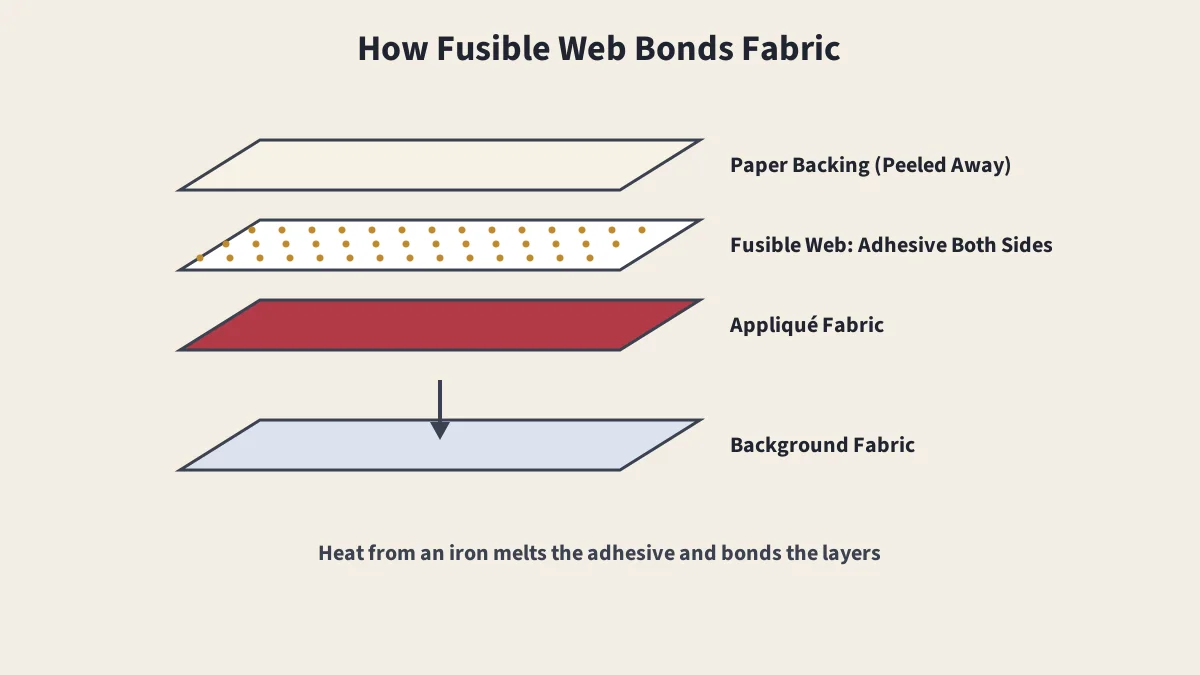
| Glued or fused | The patch is held in position with glue or fusible web before stitching; see fusible web |
| Machine embroidery | The machine stitches a placement line, pauses for trimming, then sews the satin edge |
Durable fabrics that don't fray easily, such as felt and leather, are well suited to appliqué.
History
- Appliquéd leather found in Egypt has been dated to 980 BCE.
- Leather and felt appliqué decorated carpets, wall hangings and saddle covers in 4th-century BCE tombs in Siberia and Mongolia.
- Appliquéd cloth has been an important art form around Abomey, Benin, in the kingdom of Danhomè, since the 18th century.
Traditions
| Tradition | Where |
|---|---|
| Molas (reverse appliqué) | South America |
| Hawaiian quilts | Hawaii; see types of quilts |
| Baltimore Album quilts and broderie perse | United States |
| Khayamiya | Egypt |
| Tivaevae | Cook Islands |
| Ralli quilts, khatwa, godadi, Pipli | Pakistan and India; see Indian embroidery |
| Abomey appliqué | Benin |
Sources
- Appliqué, Wikipedia
Frequently Asked Questions
What is appliqué?
Ornamental needlework in which pieces of fabric are sewn or stuck onto a larger piece to form a picture or pattern. The word comes from the French appliquer, to attach.
What is reverse appliqué?
Layers of fabric are sewn together, then the top layers are cut away to reveal the colors beneath, and the cut edges are stitched down. It is used in mola textiles.
How do you appliqué by machine?
Usually by stitching the shape in place, trimming, then covering the raw edge with a close zigzag or satin stitch. Embroidery machines can do this automatically.
What fabrics are best for appliqué?
Firm fabrics that don't fray easily, such as felt, leather and quilting cotton. Fraying fabrics need their edges turned under or covered with stitching.
Keep Reading
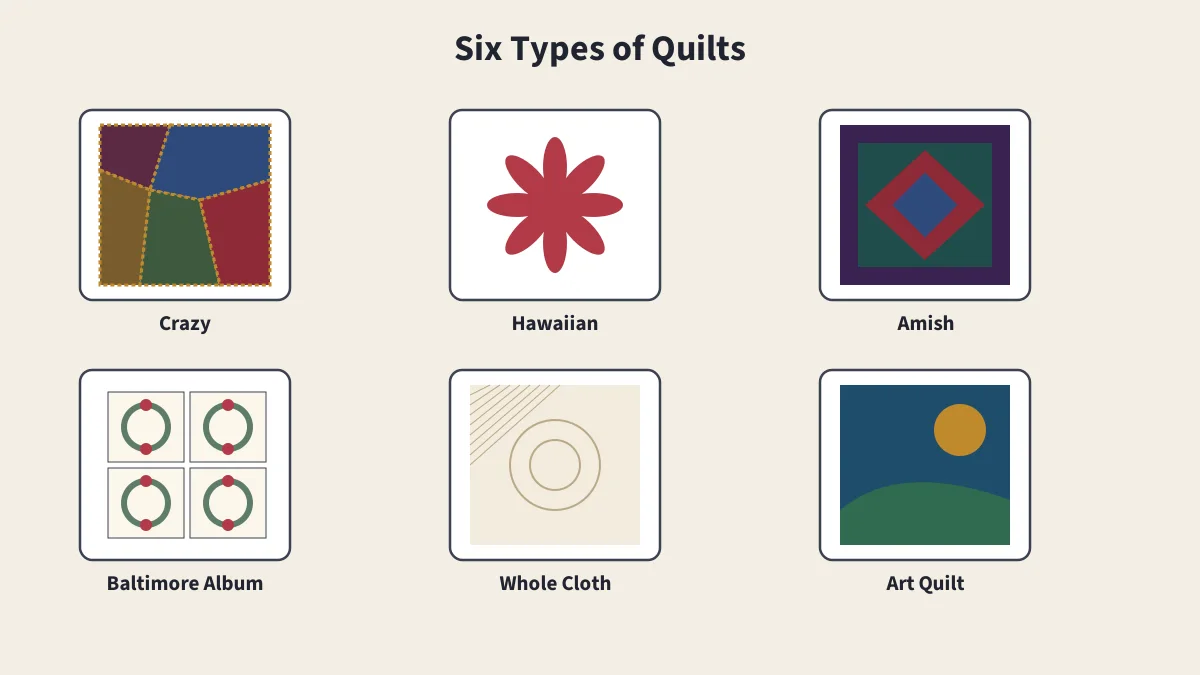
Types of Quilts
Crazy, Hawaiian, Amish, Baltimore Album and more.
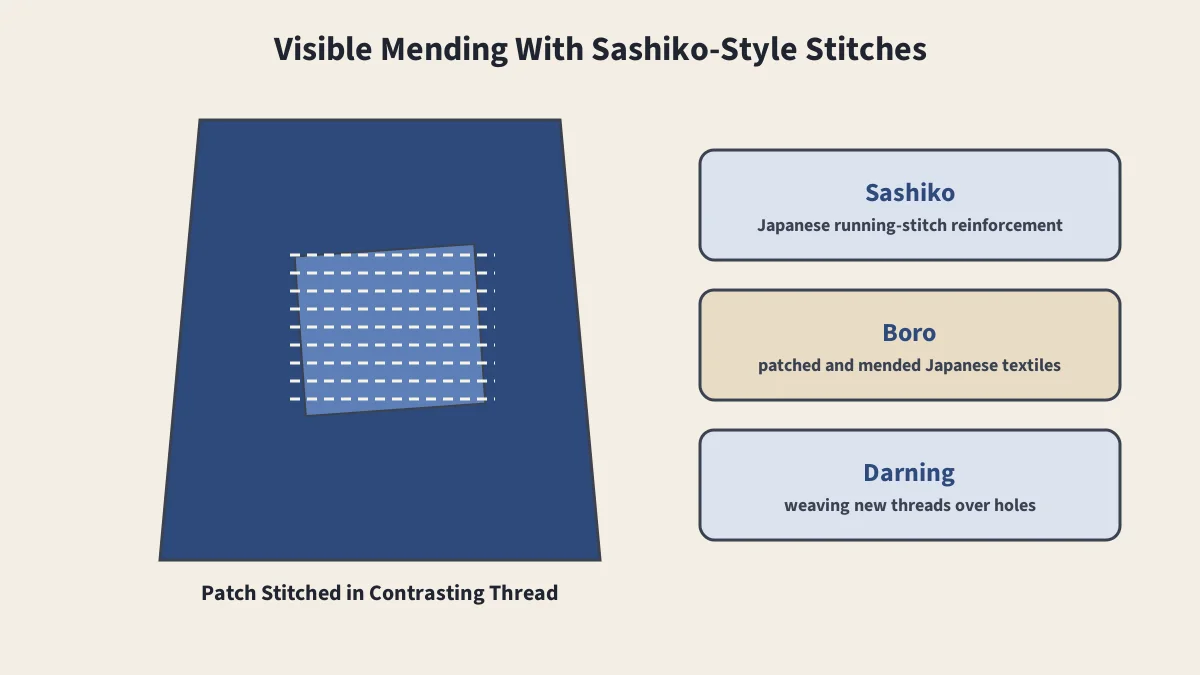
Patching and Visible Mending
Patching methods, sashiko, boro and visible mending.
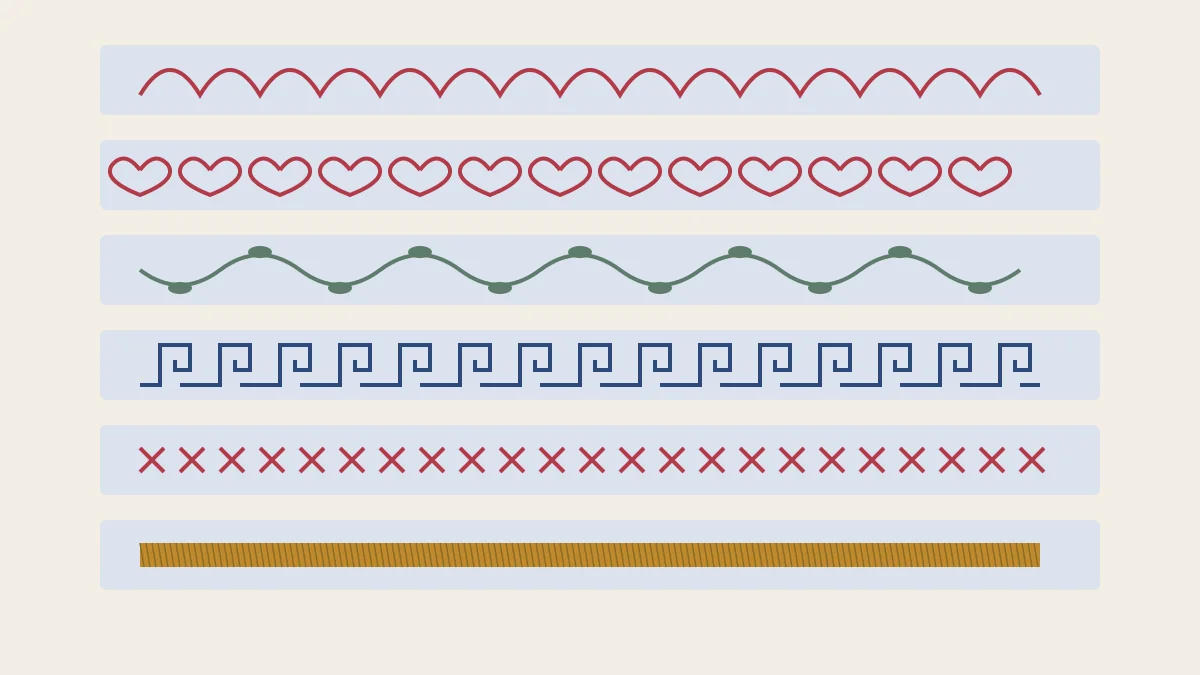
Decorative Stitches
Machine and hand decorative stitches, and how to use them well.
Fusible Web and Adhesives
Fusible web, fusible tape, fabric glue and basting spray compared.