Stumpwork: The Art of Raised, Three-Dimensional Embroidery (2026)
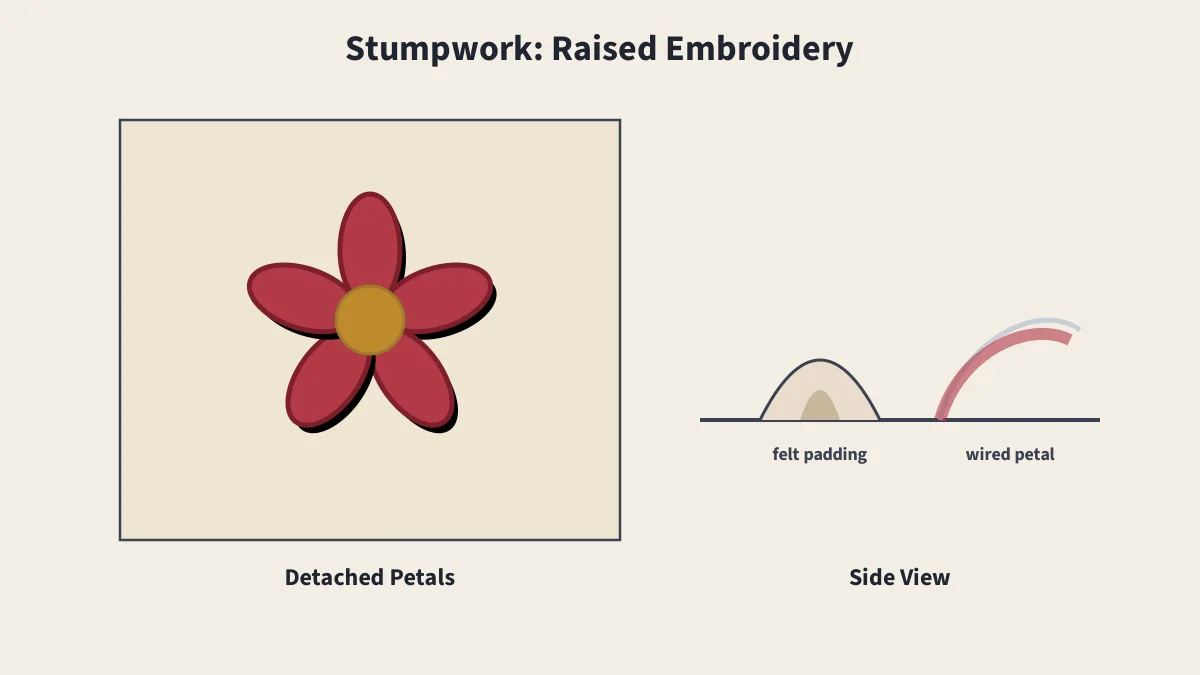
Stumpwork, or raised work, makes embroidered figures stand up from the fabric. Wired petals, padded shapes and detached stitches turn a flat picture into a miniature sculpture.
In This Article
Stumpwork in Brief
- Also called: raised or embossed work
- Peak: England, about 1650–1700
- Techniques: padding, wired shapes, detached stitches
- Name: from the late 1800s
- Modern cousin: machine puff embroidery
Stumpwork, or raised work, is embroidery in which stitched figures rise from the fabric to create a three-dimensional effect. It was popular in England from about 1650 to 1700; before that, raised techniques were mostly used on ecclesiastical garments. In the 17th century it was called raised or embossed work, and the name "stumpwork" came into use only around the late 1800s.
Techniques
- Padding: layers of felt are stitched down in decreasing sizes, then covered with embroidery to make raised shapes.
- Wired elements: stitches are worked around wire to form leaves, wings and petals, which are attached by piercing the background fabric and can be bent into shape.
- Detached stitches: needle-lace and buttonhole fillings worked free of the background.
- Raised stitches: knots, bullion and raised stem bands add texture; see embroidery stitches.
Materials
Seventeenth-century makers used metallic threads, silk and wool, and added pearls, beads, shells, ivory, feathers and other materials. Metal threads link stumpwork closely to goldwork.
Subjects and Caskets
Stumpwork scenes often showed castles, stags, birds, flowers and royalty, as well as biblical and mythical stories. The most demanding projects were embroidered caskets: decorative boxes whose embroidered panels were sent to a carpenter for assembly. A notable example is held by the Victoria and Albert Museum.
Stumpwork Today
Hand stumpwork is still practiced as an advanced embroidery technique. Its machine-made relative, puff embroidery, stitches over foam rubber and is mostly seen on caps, sweatshirts and jackets, often for logos; see how embroidery machines work.
Sources
- Stumpwork, Wikipedia
Frequently Asked Questions
What is stumpwork?
Embroidery in which stitched figures rise from the fabric to create a three-dimensional effect, using padding, wire and detached stitches. It is also called raised work.
When was stumpwork popular?
In England from about 1650 to 1700. Earlier raised techniques were mostly used on church vestments.
Why is it called stumpwork?
In the 1600s it was called raised or embossed work. The term stumpwork only came into use around the late 1800s.
What is puff embroidery?
A machine-made version of raised embroidery that stitches over foam, mostly seen on caps, sweatshirts and jackets.
Keep Reading
Goldwork
Metal threads, couching and centuries of history.
Embroidery Stitches
Flat, looped, knotted and couched stitches.
Types of Embroidery
The main families and named styles of embroidery.
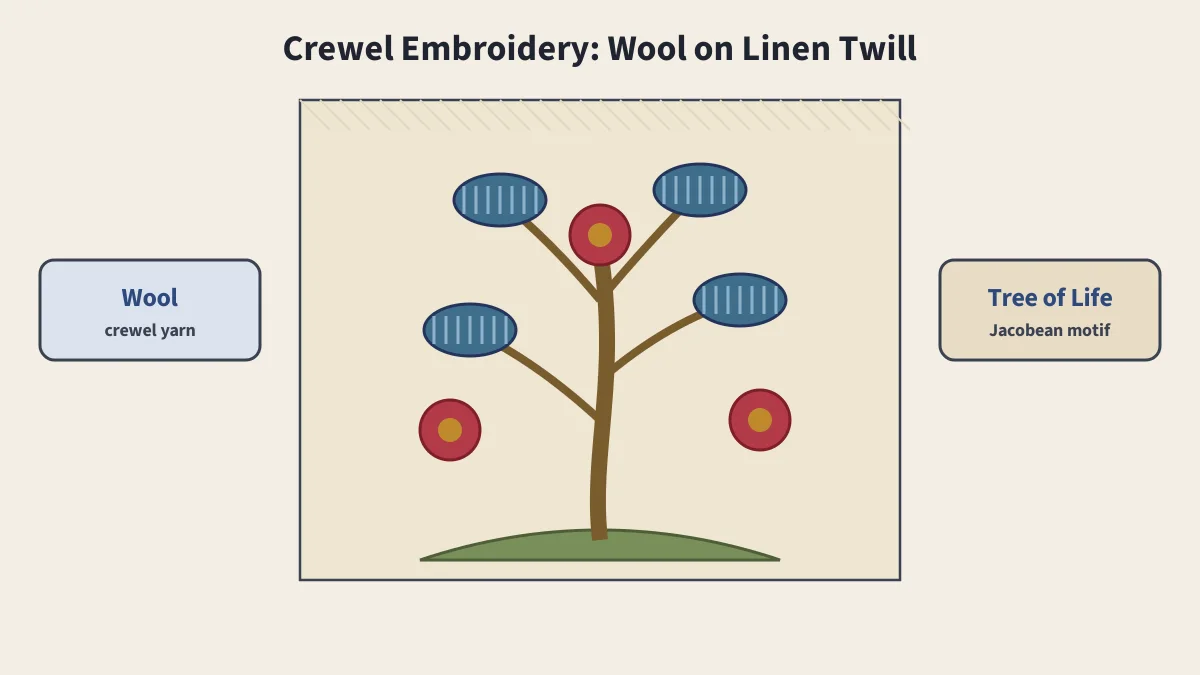
Crewel Embroidery
Wool embroidery, Jacobean designs and history.