Crewel Embroidery: Wool Thread, Linen Twill and Jacobean Designs (2026)
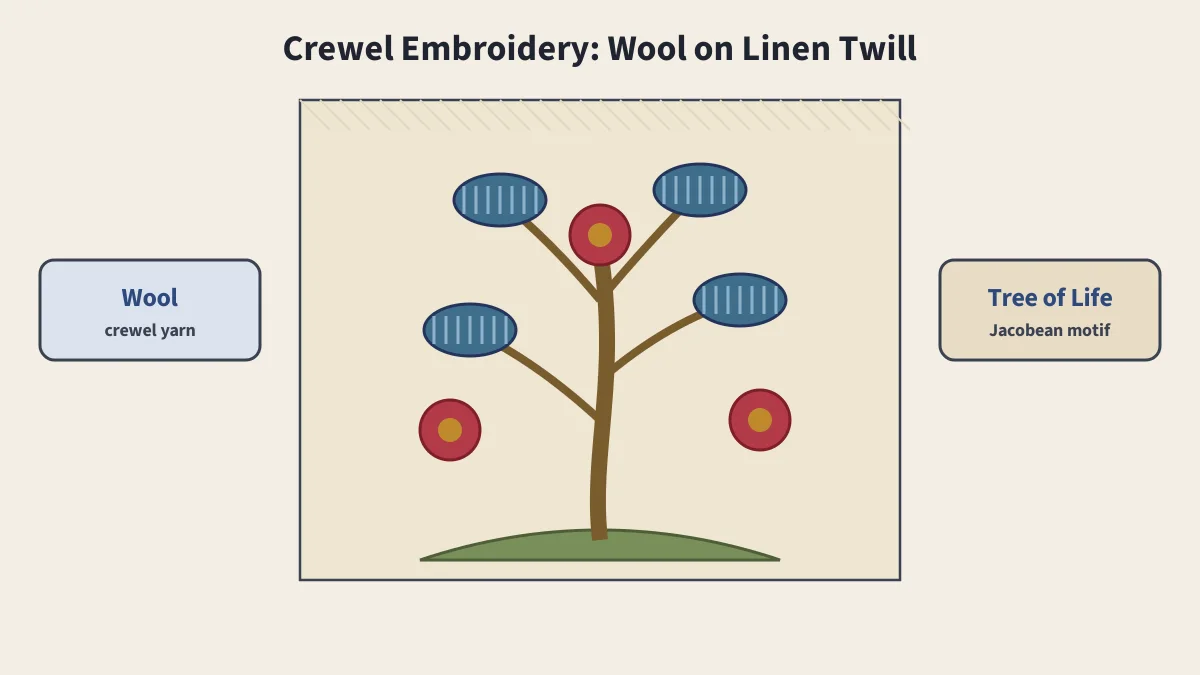
Crewel embroidery is defined by one thing: wool. Worked in fine twisted crewel yarn on sturdy linen, it has a raised, textured look, and its most famous designs are the branching trees of 17th-century England.
In This Article
Crewel in Brief
- Thread: fine, strongly twisted crewel wool
- Fabric: linen twill
- Peak: popular from the 17th century
- Motif: the Jacobean tree of life
- America: simpler designs, often blue
Crewel embroidery is surface embroidery worked in wool, using many different stitches to follow a design drawn on the fabric. It is identified by its thread, not by any particular style of design. Because crewel wool is thicker than silk or cotton thread, the finished work has a raised, dimensional feel. For the fiber, see wool.
Materials
- Crewel wool: a fine, strongly twisted long-staple yarn.
- Linen twill: the traditional ground, tightly woven to support the stitching; silk, velvet and jute have also been used.
- Crewel needles: sharp, with long eyes for wool; see hand sewing needles.
- Frame or hoop: keeps the linen taut under the heavier thread.
History
| Period | Development |
|---|---|
| Around the 11th century | The Bayeux Tapestry, worked in wool on linen, is often called the earliest surviving crewelwork |
| Early 17th century | Jacobean crewel in England, with its tree-of-life motif |
| Colonial America | Emigrants bring crewel to New England, where it becomes especially popular |
| 1896–1926 | The Deerfield Society of Blue and White Needlework revives the craft |
See types of embroidery for how crewel fits among other styles.
Jacobean Crewel
Early 17th-century English crewel designs are known for the tree of life: a branching, stylized tree rising from a mound, often with exotic flowers, leaves and animals.
Common Crewel Stitches
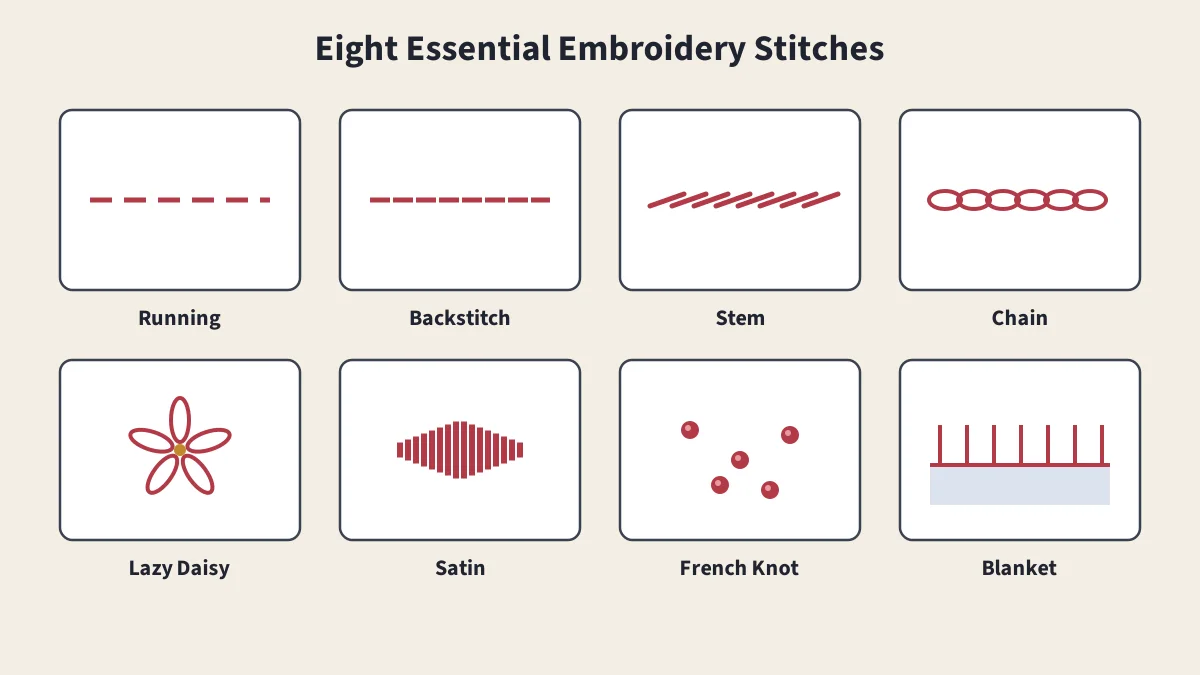
- Stem and split stitch for stems and outlines.
- Long and short stitch for shaded leaves and petals.
- Satin stitch for small solid areas.
- Laid work and couching for large fills, often with a trellis on top.
- French knots for texture and flower centers.
See embroidery stitches.
For the most famous wool-on-linen embroidery of all, see the Bayeux Tapestry.
Sources
- Crewel embroidery, Wikipedia
Frequently Asked Questions
What is crewel embroidery?
Surface embroidery worked in wool yarn, using a variety of stitches to follow a design outline on the fabric. It is defined by the wool thread, not by any particular style of design.
What fabric is used for crewel embroidery?
Traditionally a tightly woven linen twill, which is firm enough to support the wool stitching. Silk, velvet and jute have also been used.
What is Jacobean embroidery?
Crewel embroidery from early 17th-century England, known for its tree-of-life motif: a branching, stylized tree on a mound, with flowers, leaves and animals.
Is the Bayeux Tapestry crewelwork?
It is often described as the earliest surviving crewelwork, since it is worked in wool on linen, despite being called a tapestry.
Keep Reading
Wool
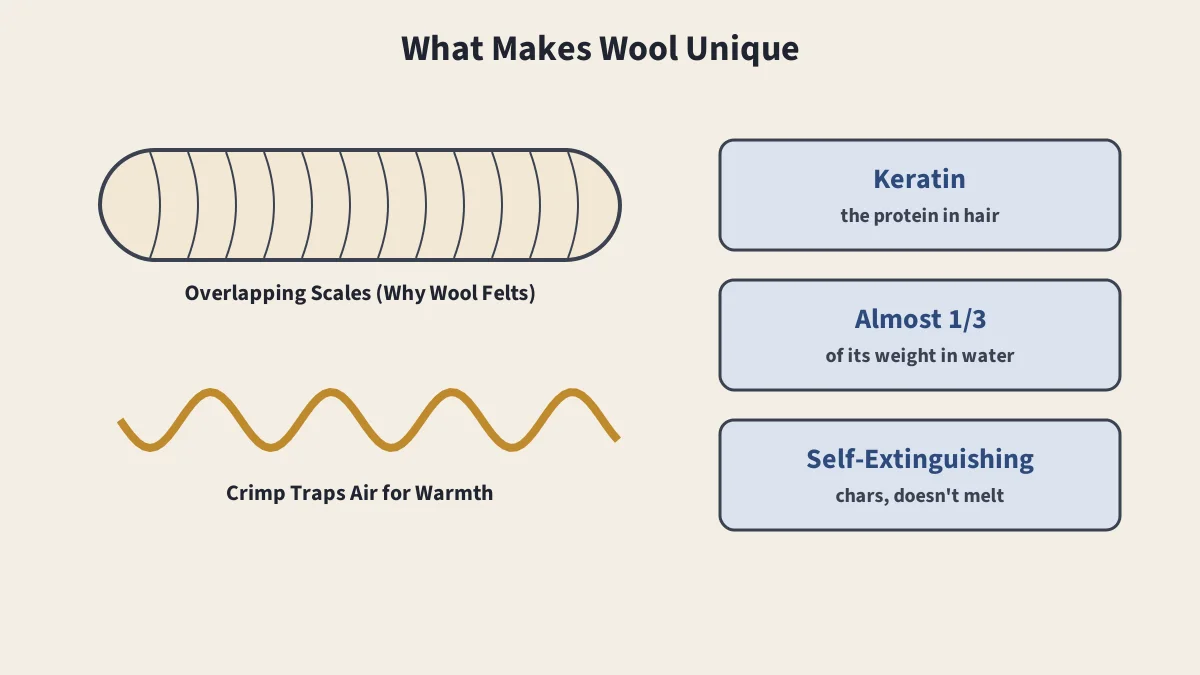
What wool is, why it is warm and felts, and how to sew it.
Embroidery Stitches
Flat, looped, knotted and couched stitches.
Types of Embroidery
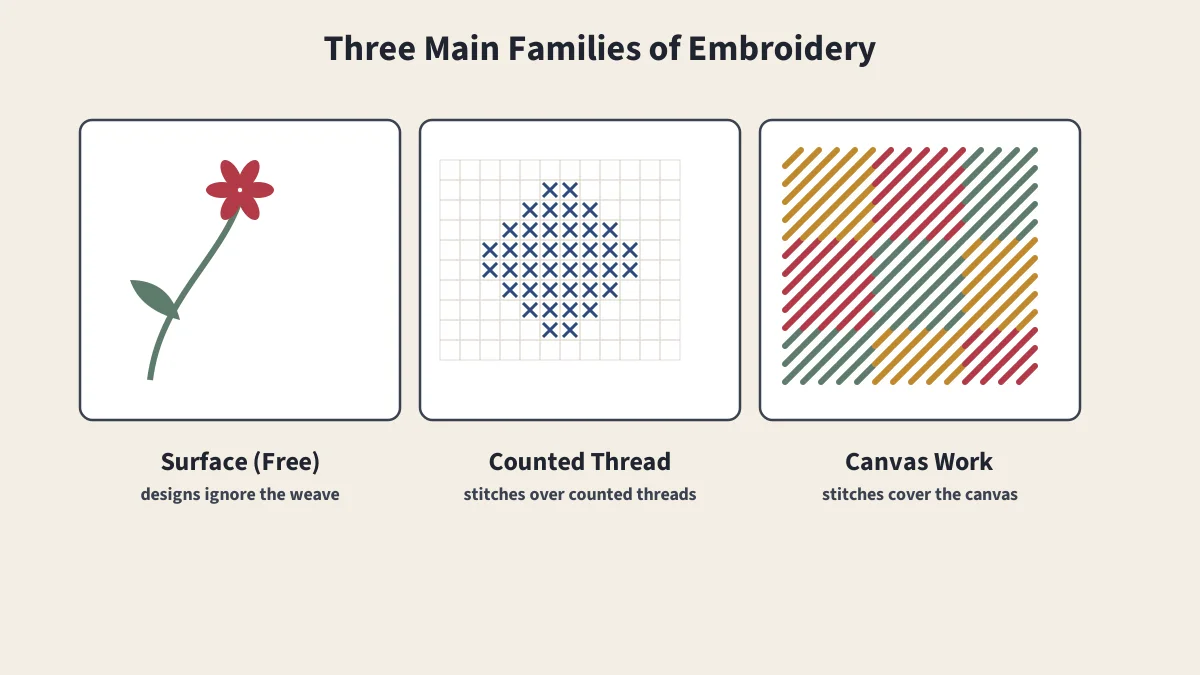
The main families and named styles of embroidery.
Blackwork
Black-on-white counted embroidery from Tudor England.