Goldwork Embroidery: Metal Threads, Couching and History (2026)
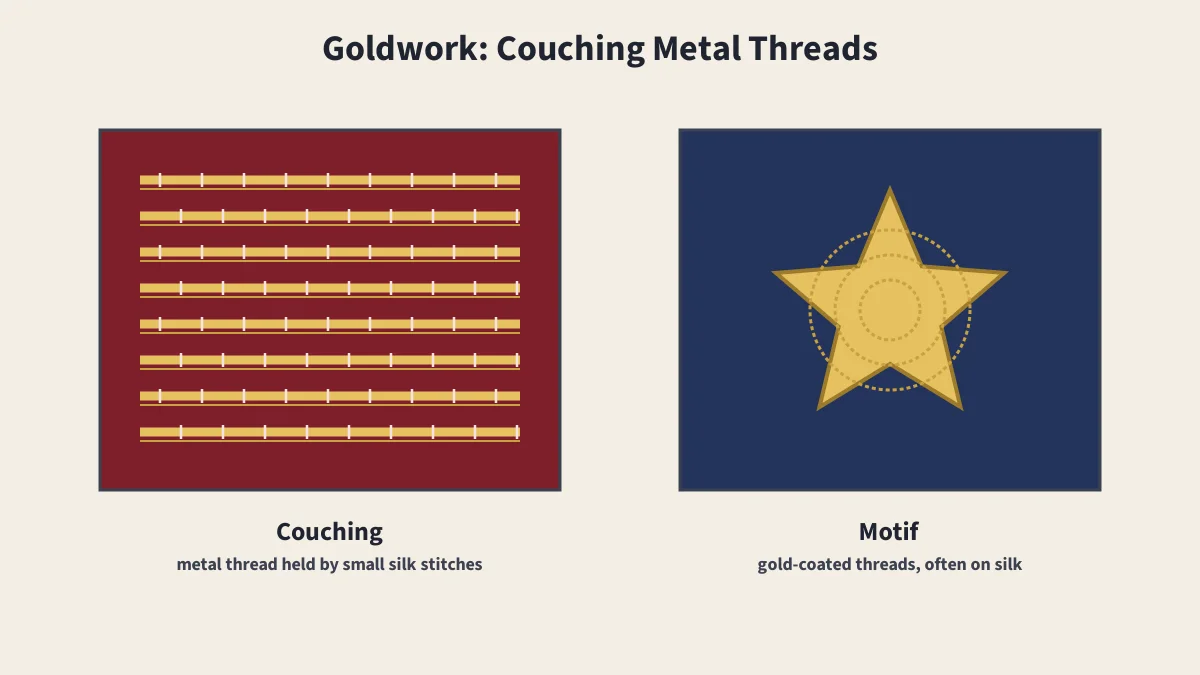
Goldwork is embroidery with metal threads, prized for the way it catches the light. Because metal threads are stiff and costly, they are usually laid on the surface and stitched down rather than pulled through the fabric.
In This Article
Goldwork in Brief
- Threads: metal, usually gold-coated silver or cheaper metals
- Main technique: couching
- Special techniques: or nué, purl and bullion
- Origins: Asia; China by the Eastern Han dynasty
- Uses: church vestments, regalia, art embroidery
Goldwork is embroidery using metal threads. The name applies even when the threads are imitation gold, silver or copper. It is prized for the way light plays on the metal, and has been used for royal, religious and military textiles for centuries.
Goldwork Threads
| Thread | Description |
|---|---|
| Passing | A thin metal strip wound around a cotton or silk core; the most basic goldwork thread |
| Bullion and purl | A hollow, spring-like coil, stretched and couched or cut into short lengths and sewn on like beads |
| Pearl purl and check purl | Shaped purls with a beaded or faceted look |
| Spangles (paillettes) | Small metal discs, often with pearls and gems as accents |
Techniques
- Couching: the metal thread is laid on the surface and held down by small stitches of a second thread, usually fine silk. This is the most common method; see couched stitches.
- Or nué ("shaded gold"): invented in the 15th century. Parallel gold threads are couched with colored silk, and the spacing of the stitches creates shaded pictures, often of saints' robes.
- Cut work: short lengths of purl are sewn on like beads, often over padding.
- Padding: felt or string underneath raises the gold for extra shine.
History
| Period | Development |
|---|---|
| By the Eastern Han dynasty (25–220 AD) | Goldwork used in China; it originated in Asia |
| Ancient Rome | Gold-embroidered "Attalic" cloth made in Pergamum |
| Middle Ages | English Opus Anglicanum used extensively for church vestments and hangings |
| 15th century | Or nué developed; zari, a South Asian gold and silver embroidery, in use |
| Later centuries | Royal and noble clothing and furnishings; military and other regalia |
Goldwork Today
Goldwork is now mostly used for high-quality church vestments, regalia and art embroidery. It is often combined with raised work and silk shading, and stitched on rich grounds such as silk and velvet; see types of silk fabric.
For the South Asian metal-thread tradition, see zardozi.
Sources
- Goldwork (embroidery), Wikipedia
Frequently Asked Questions
What is goldwork embroidery?
Embroidery using metal threads, real or imitation gold, silver or copper. It is valued for the way light plays on the threads.
Is goldwork made with real gold?
Usually very little. Threads are typically gold-coated silver or cheaper metals, often as metal wound around a silk or cotton core.
What is or nué?
A 15th-century goldwork technique, meaning 'shaded gold', in which parallel gold threads are couched down with colored silk stitches spaced to create shaded pictures.
Why isn't goldwork used on everyday clothes?
The threads are expensive, the work is slow, and metal threads do not stand up to frequent washing, so goldwork is reserved for special items.
Keep Reading
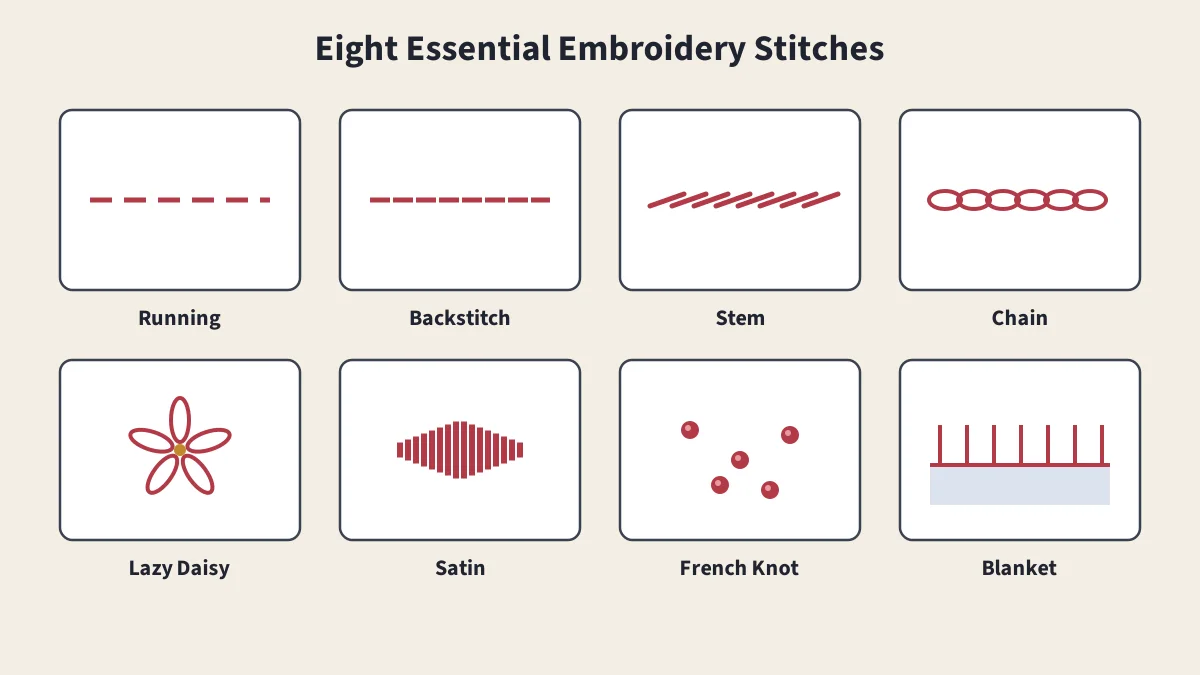
Embroidery Stitches
Flat, looped, knotted and couched stitches.
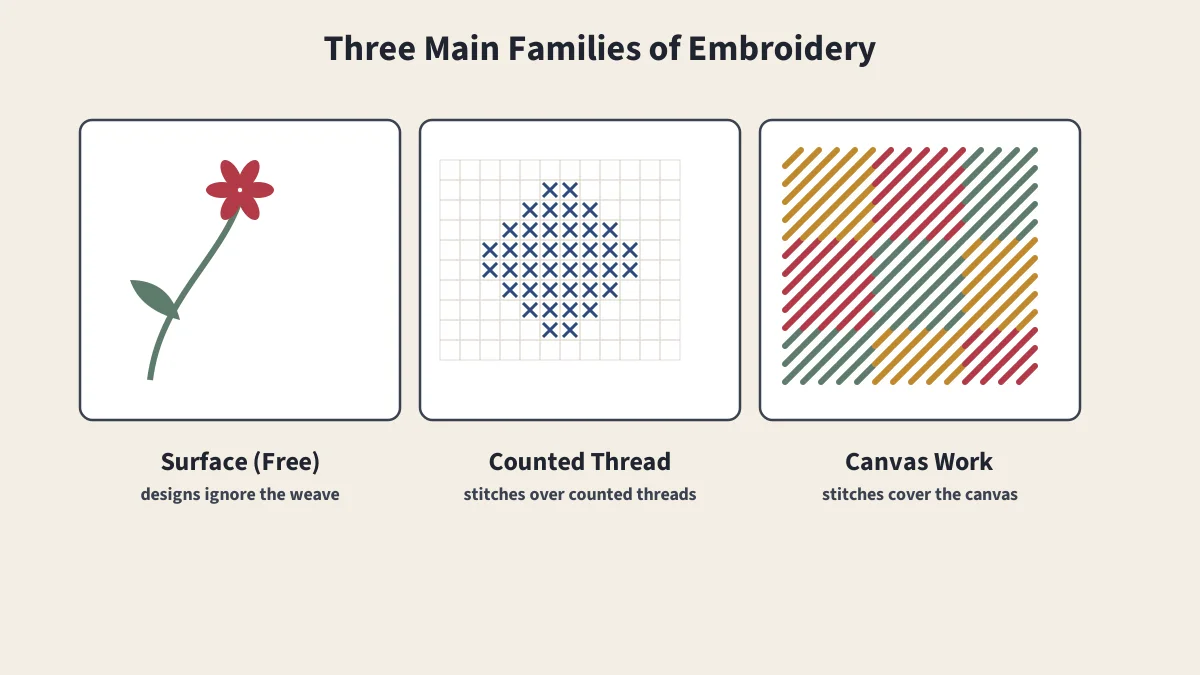
Types of Embroidery
The main families and named styles of embroidery.
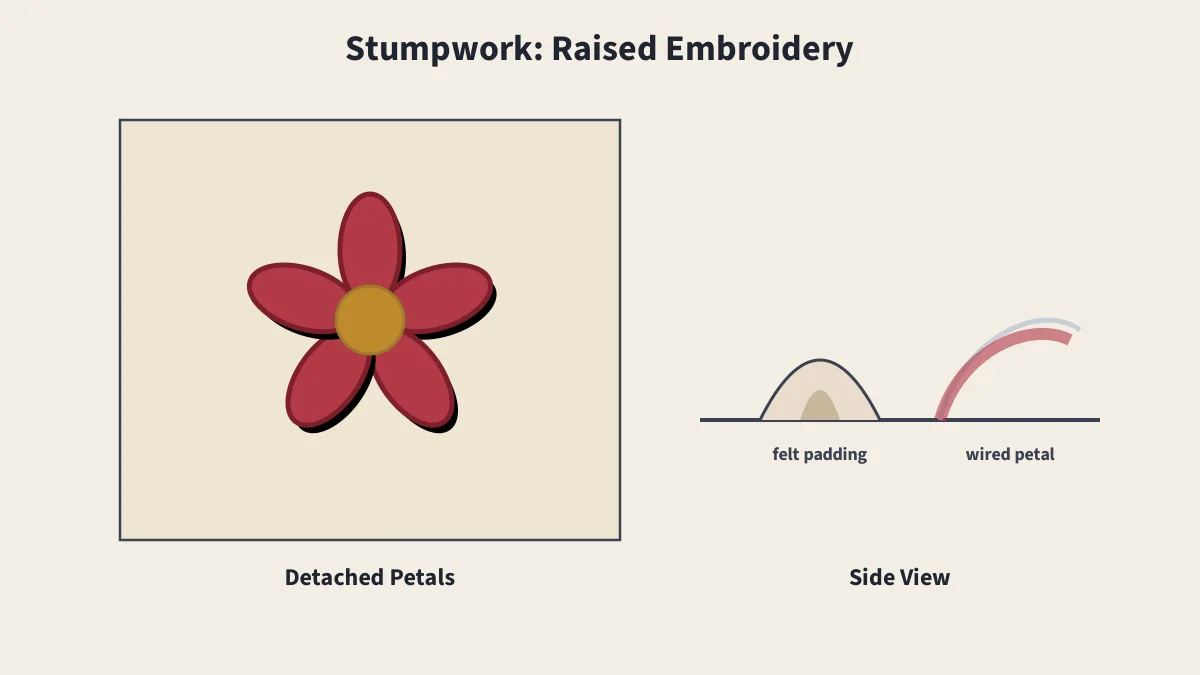
Stumpwork
Raised embroidery with wire and padding.
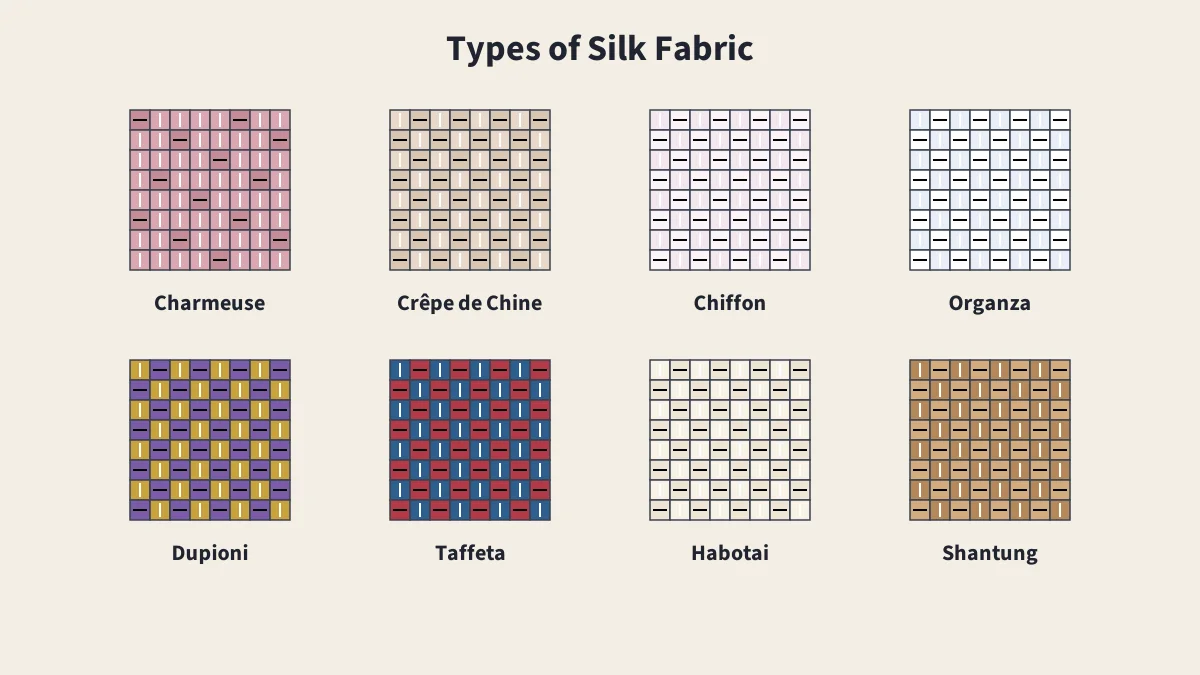
Types of Silk Fabric
Charmeuse, crêpe de chine, organza, dupioni, taffeta and more.