Indian Embroidery Styles: A Guide by Region (2026)
India has one of the world's richest embroidery traditions, with styles tied to particular regions, communities and materials. Here are the best-known, from Lucknow's white chikankari to Punjab's phulkari.
In This Article
Indian Embroidery in Brief
- North: chikankari, phulkari, kashida, Chamba rumal
- East: kantha, Pipli appliqué
- West: Kutch and shisha mirror work, gota
- South: kasuti, Toda
- Metal thread: zardozi
Embroidery in India varies by region, community and material, and many styles have been passed down for centuries. Some are now protected by Geographical Indication status, which restricts their names to registered producers from their home regions. For India's woven textiles, see Indian handloom textiles.
Styles by Region
| Style | Region | Description |
|---|---|---|
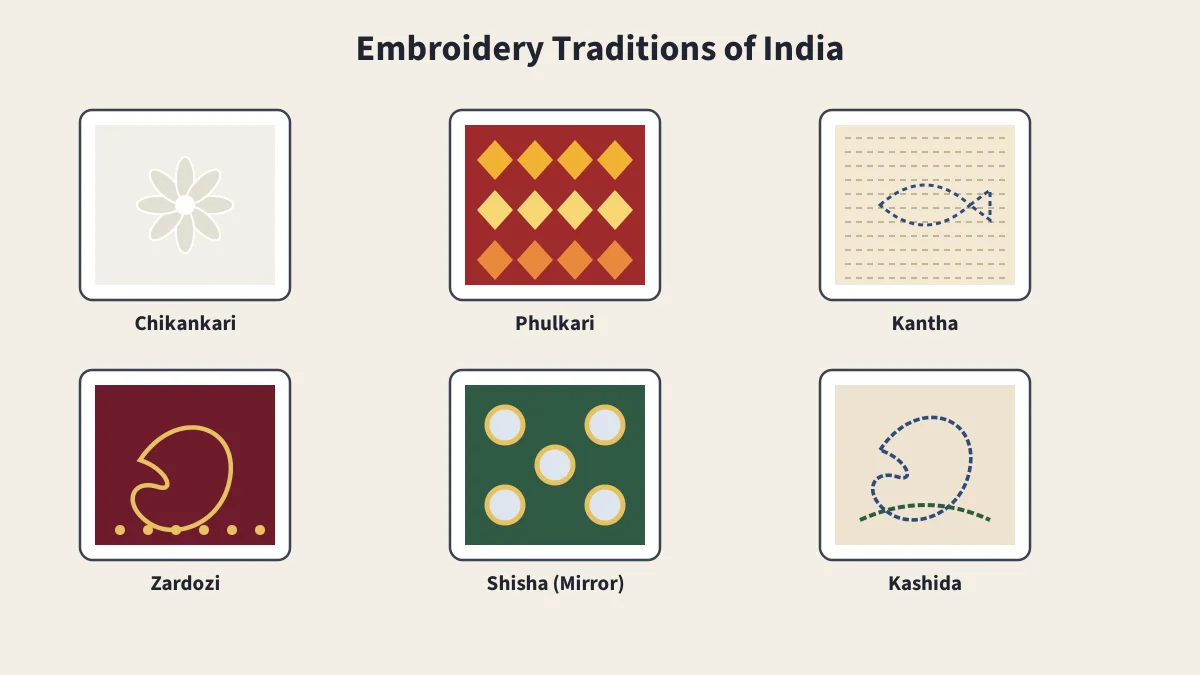
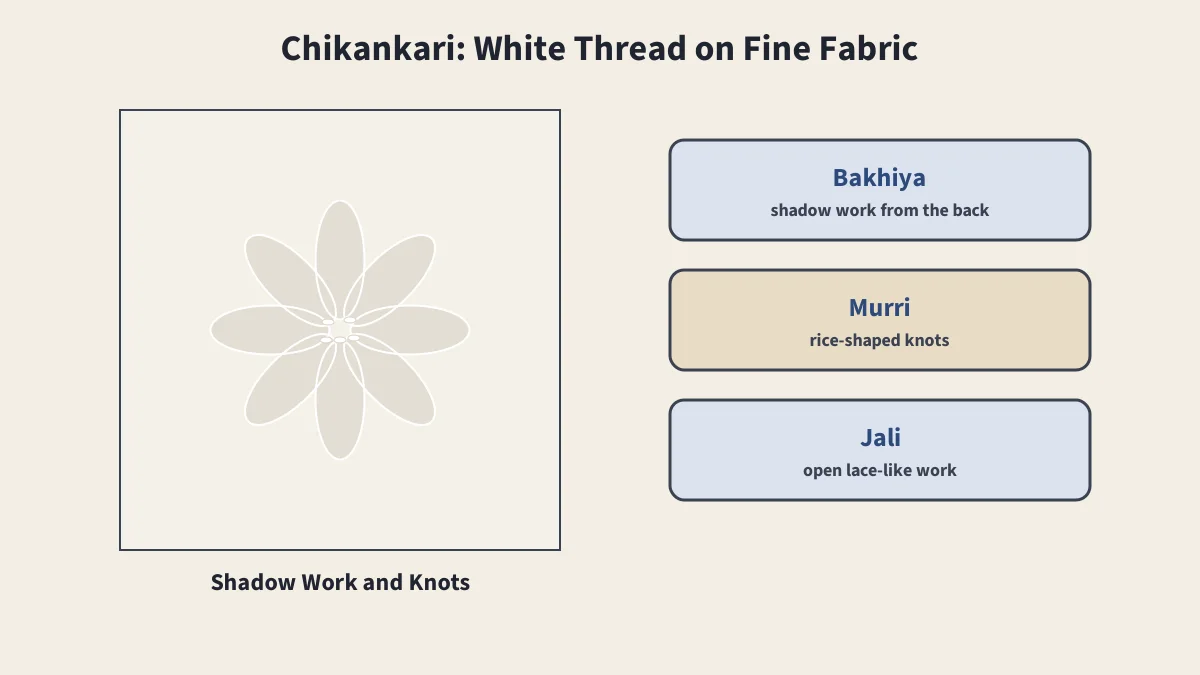
| Chikankari | Lucknow, Uttar Pradesh | White thread on fine white fabric, with shadow work and knots |
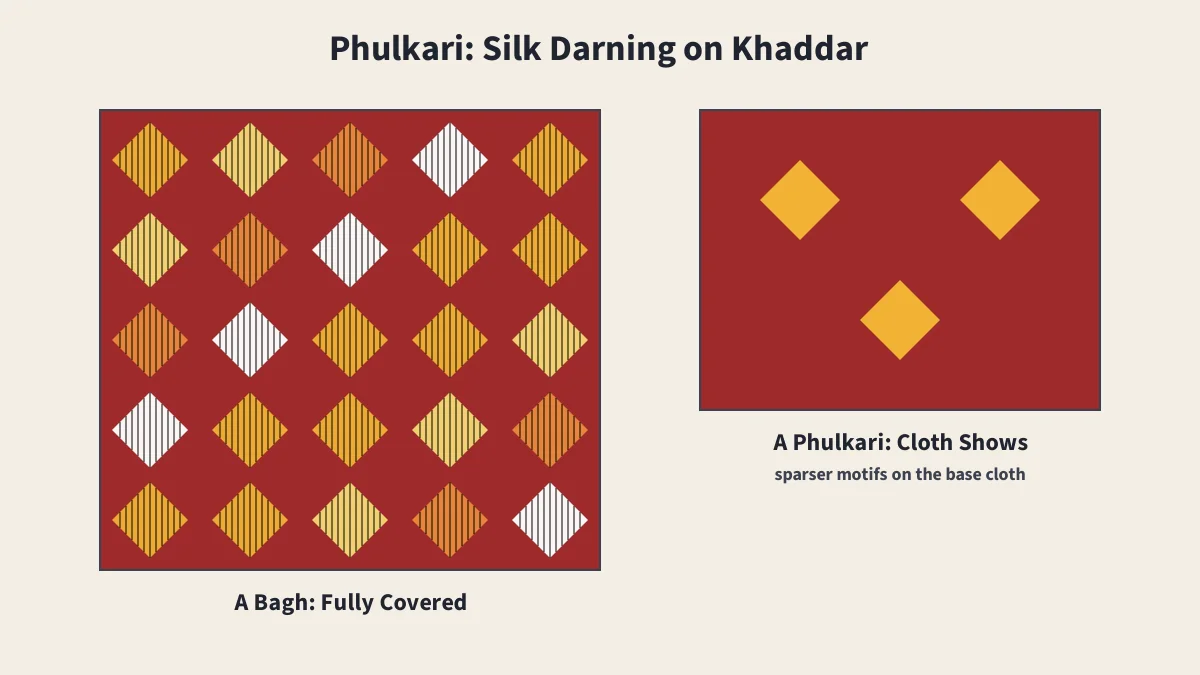
| Phulkari | Punjab | Darn stitch in silk floss on coarse cotton |
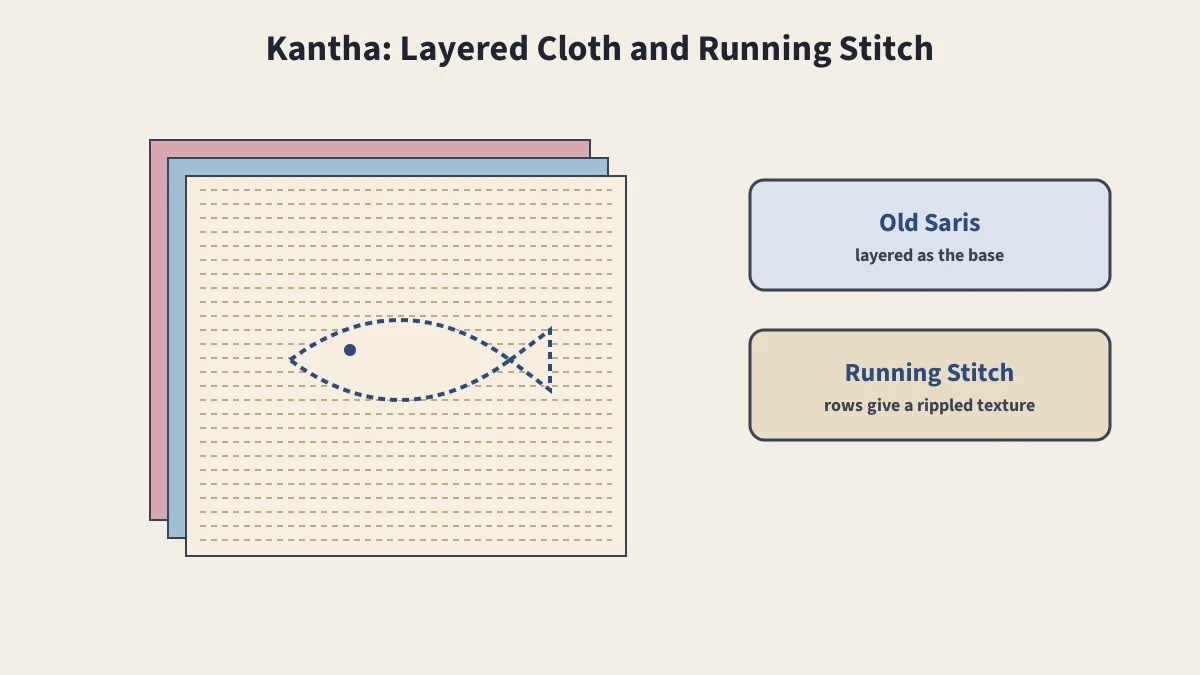
| Kantha | Bengal, Odisha, Tripura | Running stitch through layered old cloth |
| Zardozi | Lucknow, Agra, Bhopal and elsewhere | Heavy metallic-thread embroidery |
| Kasuti | Karnataka | Single-thread counted work with no knots, so both sides look alike |
| Kashida | Kashmir | Mostly chain stitch on wool, cotton or silk, with nature motifs |
| Sozni | Kashmir | A satin-stitch style |
| Aari | Kashmir; Kutch | Chain stitch made with a hooked needle, fed from below a frame |
| Kutch and shisha | Kutch, Gujarat | Geometric embroidery; shisha adds small mirrors |
| Banjara | Andhra Pradesh; Madhya Pradesh | Appliqué with mirrors and beads, or geometric cross-stitch |
| Chamba rumal | Chamba, Himachal Pradesh | Small squares in untwisted silk, often depicting gods and goddesses, from the 17th century |
| Pipli appliqué | Pipli, Odisha | Colorful appliqué, traditionally for the Puri Rath Yatra chariots |
| Toda | Nilgiri Hills, Tamil Nadu | Shawl embroidery between red and black bands, often with buffalo motifs |
| Gota-kinari | Jaipur, Rajasthan | Cut-out shapes of birds, animals and figures sewn onto fabric |
Shared Techniques
- Chain stitch, by needle or hook (aari), appears across many regions; see embroidery stitches.
- Mirror work adds sparkle in Gujarat, Rajasthan and Banjara embroidery.
- Metal thread work, zari and zardozi, decorates bridal and ceremonial textiles; compare goldwork.
- Appliqué traditions include Pipli and ralli quilts; see types of appliqué.
Sources
- Embroidery of India, Wikipedia
- Chikankari, Wikipedia
- Phulkari, Wikipedia
Frequently Asked Questions
What are the main types of Indian embroidery?
Well-known styles include chikankari (Lucknow), phulkari (Punjab), kantha (Bengal), zardozi (metal-thread work), kasuti (Karnataka), kashida (Kashmir), aari (hooked chain stitch) and shisha mirror work (Gujarat).
What is shisha embroidery?
Mirror work: small reflective pieces of mirror or metal are attached to fabric with embroidery stitches. It is closely associated with Kutch in Gujarat.
What is aari work?
Chain-stitch embroidery made with a hooked needle, with the thread fed from below fabric stretched on a frame. It is practiced in Kashmir and Kutch.
Do Indian embroidery styles have protected status?
Several do. Chikankari received Geographical Indication status in 2008, phulkari in 2011 and Lucknow zardozi in 2013.
Keep Reading
Chikankari
Lucknow's white-on-white embroidery and its stitches.
Phulkari
Punjab's silk-floss flower embroidery.
Kantha
Layered saris, running stitch and nakshi kantha.
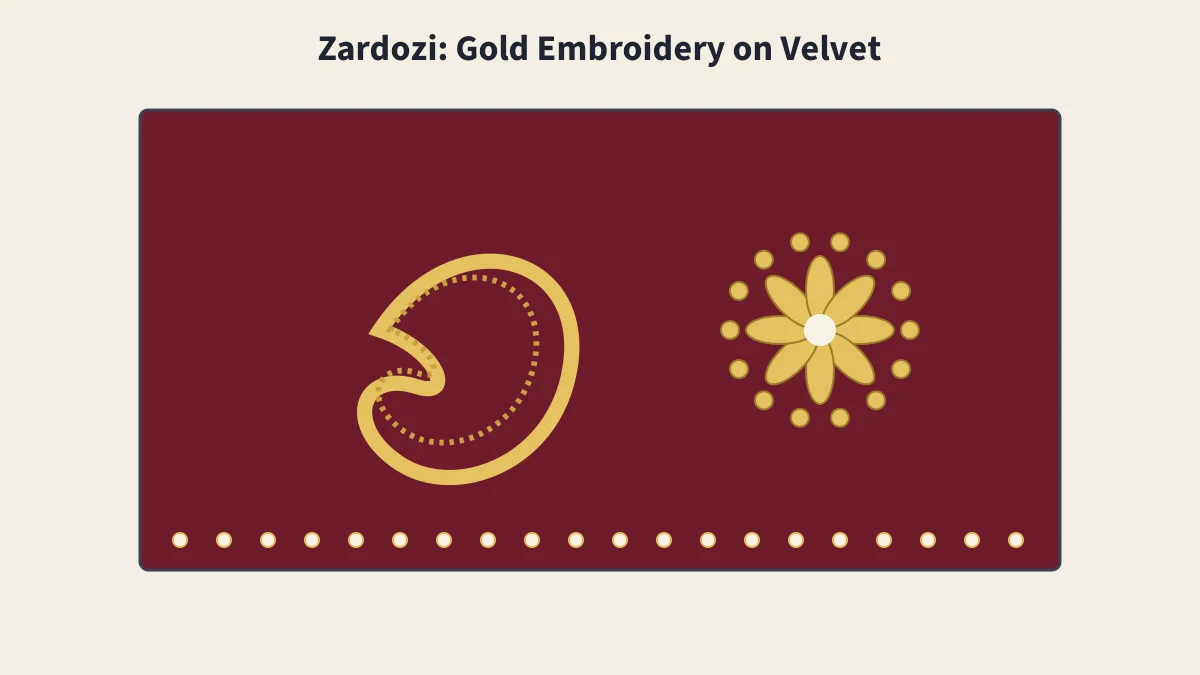
Zardozi
Metal-thread embroidery from the Mughal court to today.