The History of Embroidery Samplers: From Pattern Records to Schoolwork (2026)
A sampler was once a needlewoman's personal pattern book, then a schoolgirl's proof of skill. Their alphabets, verses and names make them a rare record of girls' and women's lives.
In This Article
Samplers in Brief
- Earliest known: Nazca, Peru, c. 200 BCE–300 CE
- Earliest dated English: Jane Bostocke, 1598
- Purpose: pattern record, then school exercise
- Contents: alphabets, verses, motifs, names
- Decline: as needlework left schooling
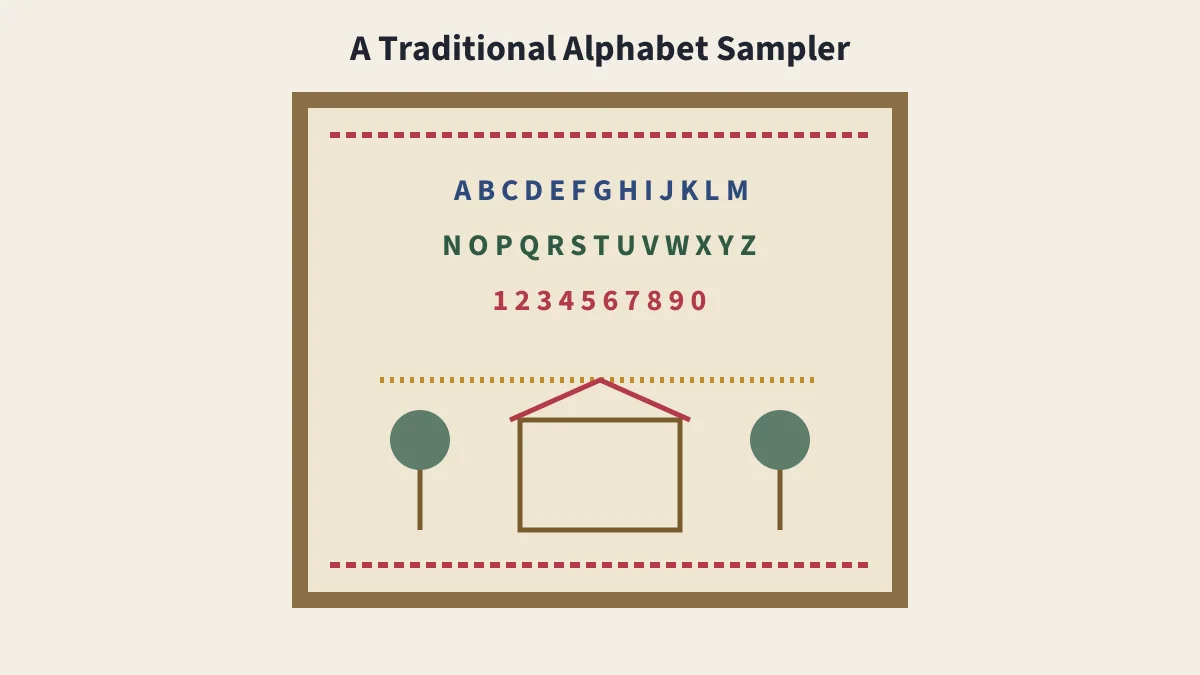
A sampler is a piece of embroidery or cross-stitch made as a "specimen of achievement," a demonstration and test of needlework skill. Samplers often include the alphabet, figures, motifs, decorative borders and sometimes the maker's name and the date.
Early Samplers
- The earliest known sampler is a Nazca spot sampler from Peru, dated roughly 200 BCE to 300 CE, worked in pattern darning on woven cotton.
- Coptic fragments from Egyptian burial grounds, dated 400–500 CE, show silk on linen in double running stitch and pattern darning.
- Queen Joanna of Castile's inventory of 1509 listed fifty samplers, all since lost.
- Jane Bostocke's sampler, dated 1598, is the earliest dated English sampler to survive; it is now in the Victoria and Albert Museum, London.
Samplers as Pattern Books
Before printed patterns were common, a sampler served as a stitched reference. The first pattern book was printed in Augsburg in 1523, but such books were hard to obtain, so a sampler was often a woman's most important pattern record. Band samplers, about 6–9 inches (150–230 mm) wide, were covered entirely in rows of patterns because fabric was expensive. They were valued highly enough to be mentioned in wills and passed down through generations.
Schoolgirl Samplers
From the late 17th and early 18th centuries, sampler making moved into schools. Alphabets, verses, maps, multiplication tables, perpetual calendars and acrostic puzzles appeared alongside decorative motifs. In the 18th and 19th centuries, samplers were mainly school exercises and mourning samplers, and needlework was seen as a sign of virtue, achievement and industry. Girls in America made samplers too; surviving examples include work from Salem, Massachusetts (1791) and by 12-year-old Patty Coggeshall of Rhode Island (1792).
Berlin Work and Decline
Berlin wool work, with its naturalistic shading and perspective, was influential worldwide between the 1830s and 1870s and shaped later sampler designs; see cross-stitch vs. needlepoint. The Art Needlework movement and the removal of samplers from girls' education led to the decline of traditional sampler making.
Sources
- Sampler (needlework), Wikipedia
Frequently Asked Questions
What is an embroidery sampler?
A piece of embroidery or cross-stitch made as a specimen of skill, often including an alphabet, figures, motifs, borders and the maker's name and date.
What is the oldest surviving sampler?
The earliest known is a Nazca spot sampler from Peru, dated roughly 200 BCE to 300 CE. The earliest dated English sampler is Jane Bostocke's of 1598, in the Victoria and Albert Museum.
Why were samplers made?
Originally as stitched records of patterns, since printed patterns were scarce. From the late 17th century they became school exercises showing a girl's skill and education.
What is a band sampler?
A long, narrow sampler, about 6 to 9 inches wide, covered in rows of patterns. Fabric was expensive, so the whole surface was used.
Keep Reading
Cross-Stitch vs. Needlepoint
Fabrics, stitches and tools compared.
Darning
The woven darn, darning tools, machine darning and history.
Embroidery Stitches
Flat, looped, knotted and couched stitches.
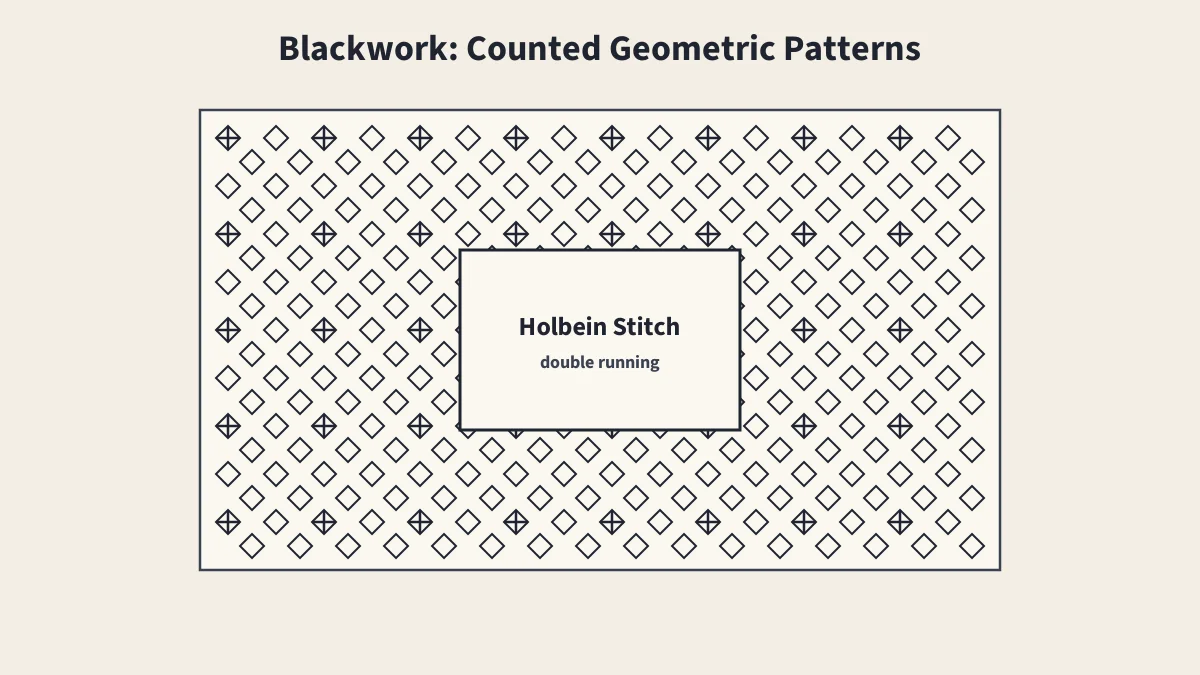
Blackwork
Black-on-white counted embroidery from Tudor England.