Zardozi: The Gold Embroidery of India, Iran and Central Asia (2026)
Zardozi is heavy, elaborate metal-thread embroidery, worked in gold and silver wire with sequins, pearls and stones. It flourished at the Mughal court and remains a favorite for bridal wear.
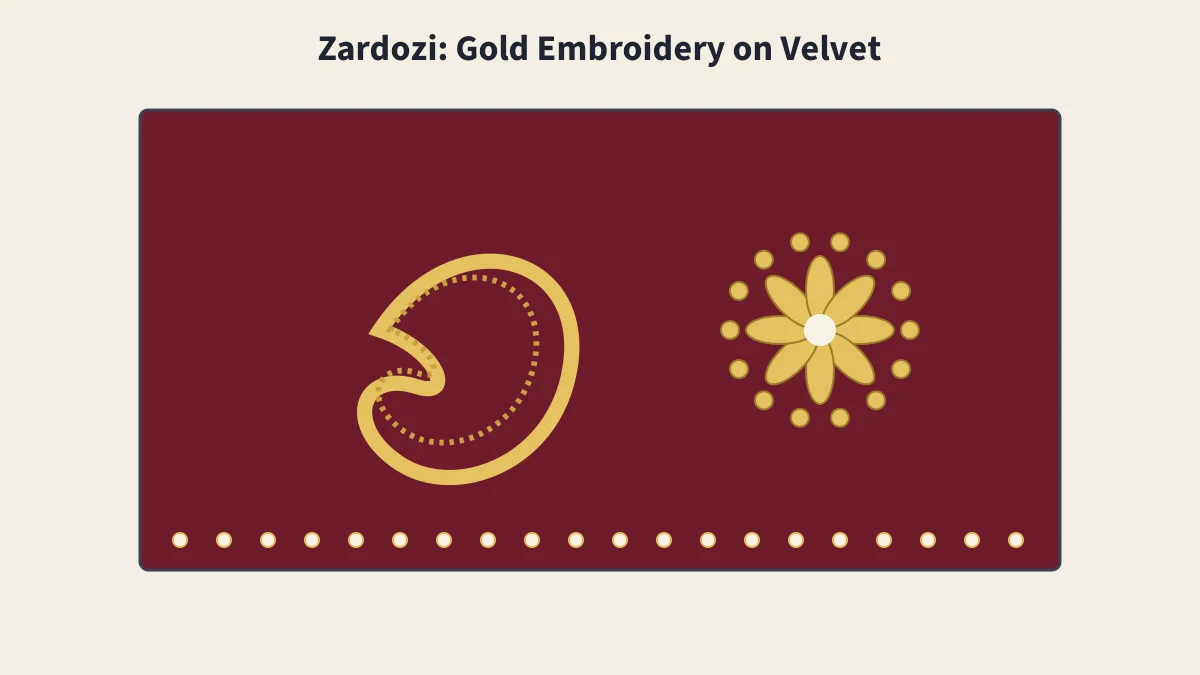
Zardozi in Brief
- Meaning: gold sewing (Persian)
- Where: India, Pakistan, Iran, Central Asia
- Peak: Mughal Empire, 17th century
- Ground: silk, satin, velvet
- GI status: Lucknow, 2013
Zardozi, from the Persian zar (gold) and dozi (sewing), is heavy, elaborate metal embroidery on silk, satin or velvet, found in Iran, the Indian subcontinent and Central Asia. It is related to the European goldwork tradition, and to zari, a South Asian gold and silver embroidery.
Materials
- Flattened, coiled and zig-zag gold or silver wire.
- Metallic thread and gold-wrapped cotton thread.
- Sequins, often with pearls, beads and precious stones; see bead embroidery.
- Rich grounds: silk, satin and velvet; see types of silk fabric.
History
| Period | Development |
|---|---|
| 14th or late 16th century | Introduced; sources disagree on the date |
| 17th century | Flourishes under the Mughal Empire |
| Later | Declines after losing royal patronage, and with industrialization |
| After 1947 | Revives after Indian independence |
| 2013 | Lucknow zardozi receives Geographical Indication registration |
Centers Today
Lucknow is the best-known center. Others in India include Agra, Bhopal, Delhi, Kolkata and Mumbai. In Iran, zardozi is most popular in Hormozgan Province, especially Bandar Lengeh, Bandar Abbas and Minab.
Sources
- Zardozi, Wikipedia
- Embroidery of India, Wikipedia
Frequently Asked Questions
What does zardozi mean?
It comes from the Persian zar (gold) and dozi (sewing), so it means roughly 'gold embroidery'.
What is zardozi made with?
Flattened, coiled and zig-zag gold or silver wire, metallic thread, gold-wrapped cotton thread and sequins, often with pearls, beads and precious stones, on silk, satin or velvet.
When did zardozi begin?
Accounts differ. One source says it was first used in the 14th century, a claim marked as needing a citation; another says it was introduced in the late 16th century. It flourished under the Mughal Empire in the 17th century.
How is zardozi different from goldwork?
Both use metal threads. Zardozi is the South and Central Asian tradition, often heavier and combined with sequins, pearls and stones; goldwork is the broader term, also used for European traditions.
Keep Reading
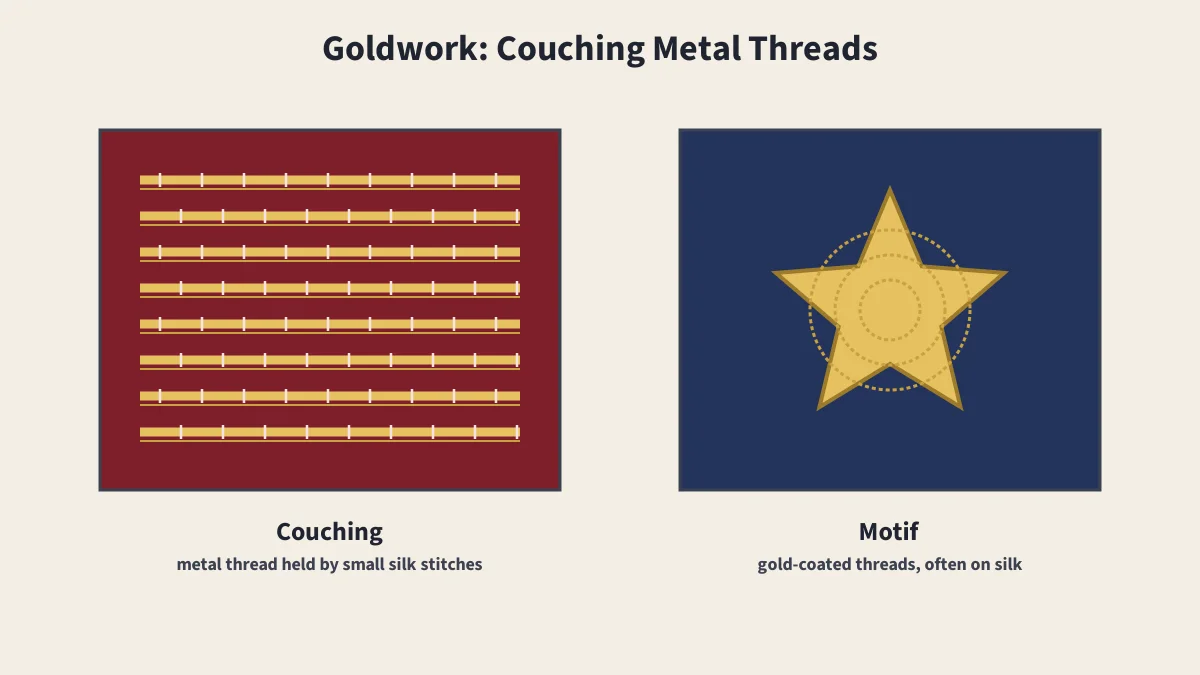
Goldwork
Metal threads, couching and centuries of history.
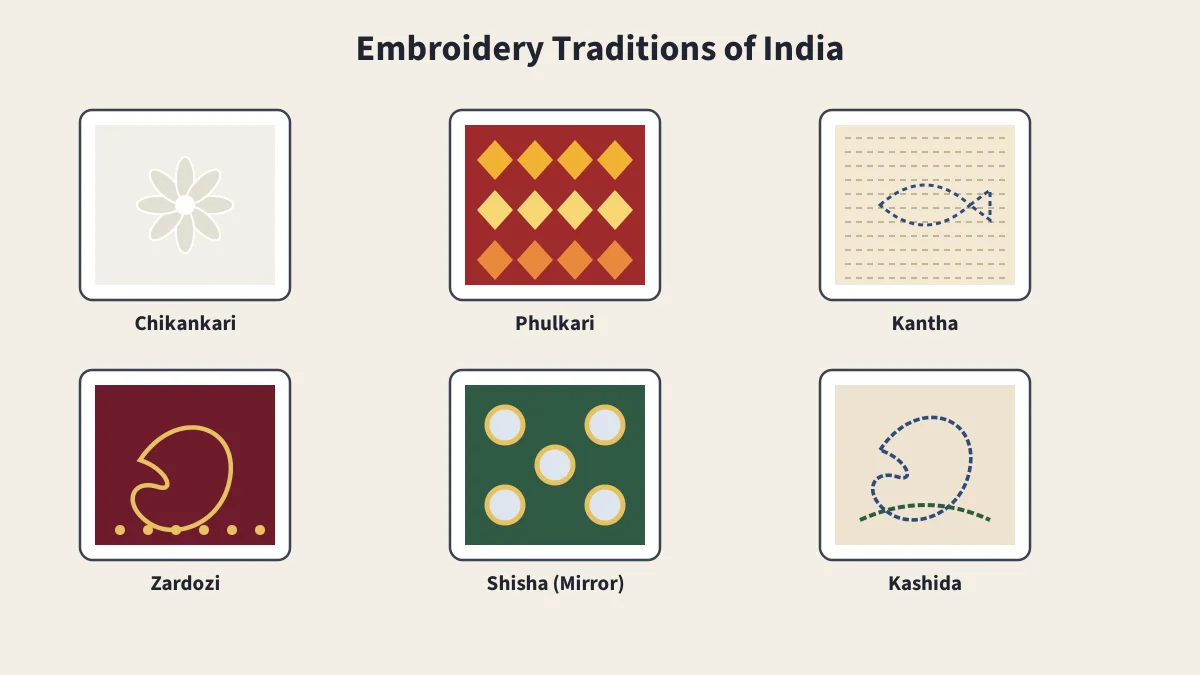
Indian Embroidery Styles
Chikankari, phulkari, kantha, zardozi and more.
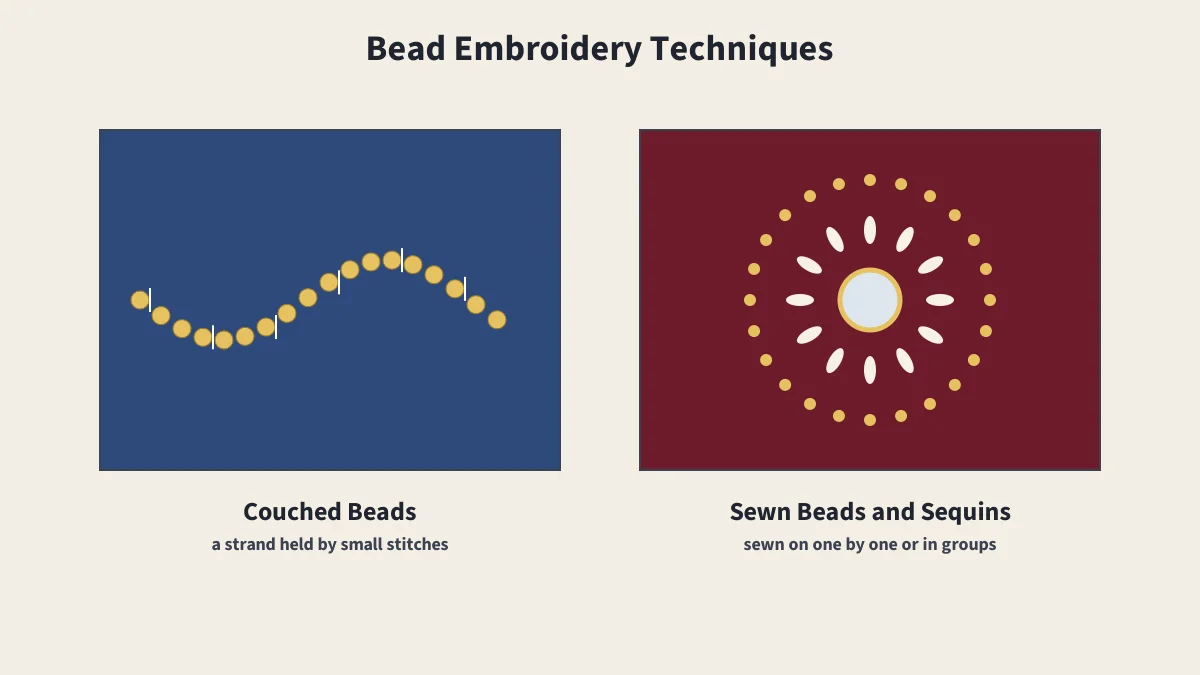
Bead Embroidery
Beading techniques and traditions.
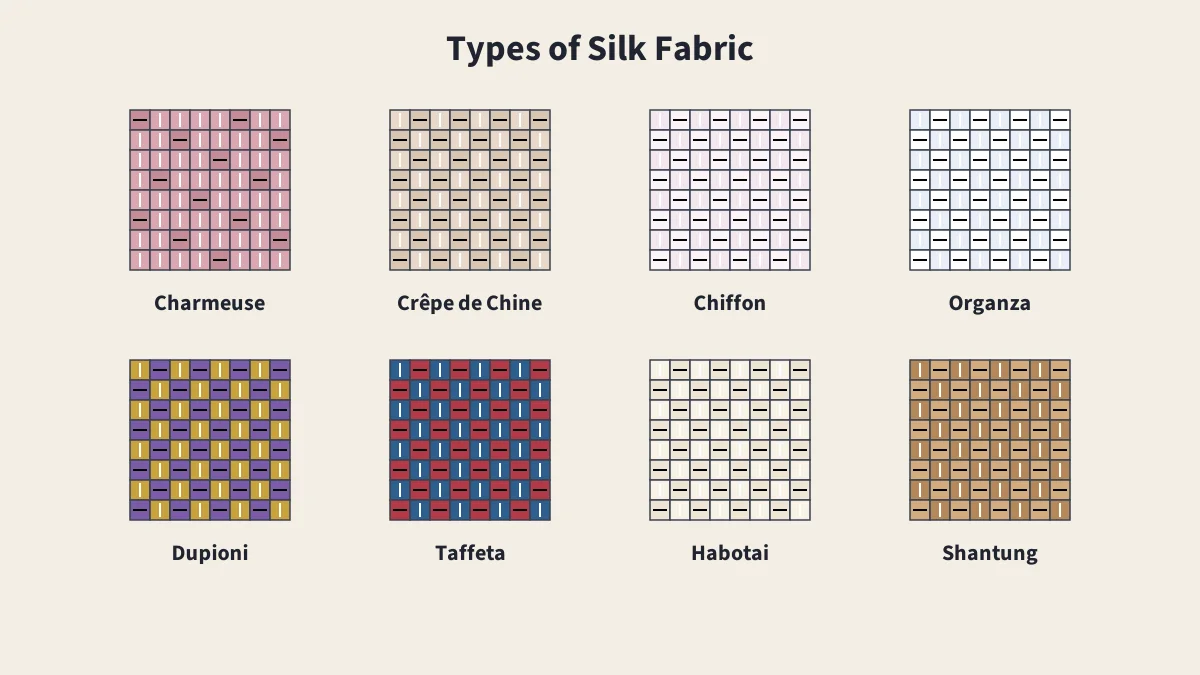
Types of Silk Fabric
Charmeuse, crêpe de chine, organza, dupioni, taffeta and more.