Blackwork Embroidery: Black Thread, Holbein Stitch and Tudor Style (2026)
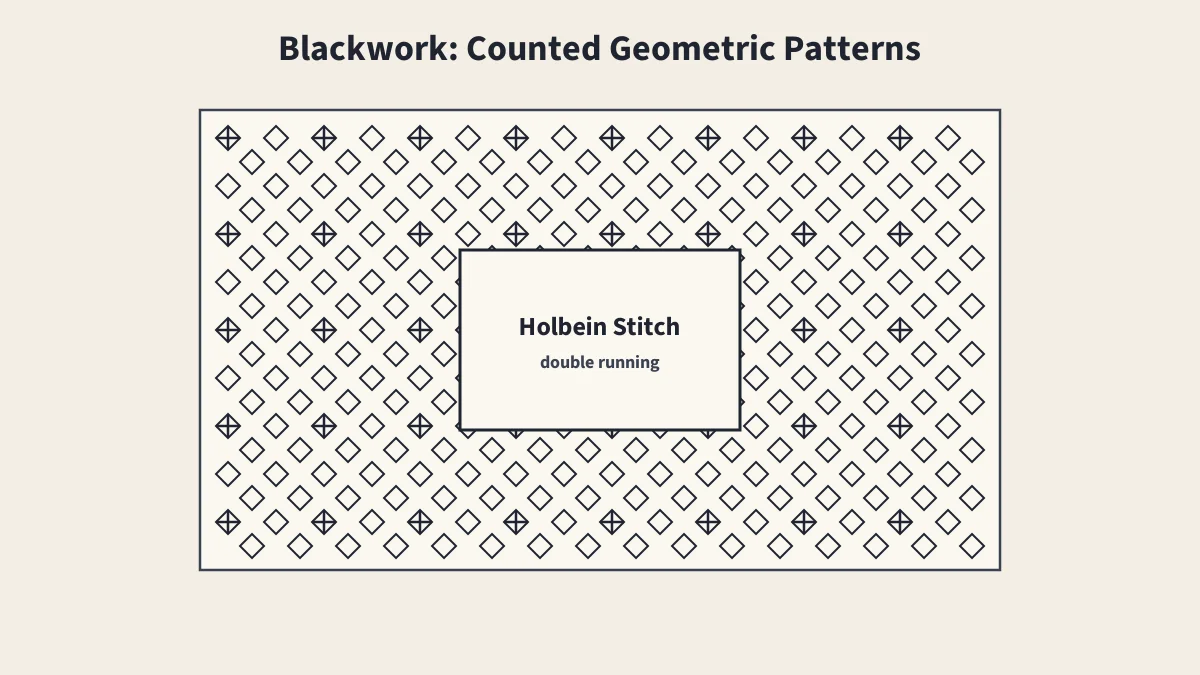
Blackwork is embroidery in black thread on white linen, made famous by the shirts and smocks of Tudor England. Its crisp geometric patterns are usually worked by counting the threads of the fabric.
In This Article
Blackwork in Brief
- Colors: black on white; scarletwork in red
- Stitches: Holbein (double running), backstitch
- Method: usually counted thread
- Peak: Tudor and Elizabethan England
- Also called: Spanish work
Blackwork is embroidery usually worked in black thread on white or off-white linen or cotton; red versions are known as scarletwork. Its patterns range from simple outlines to dense geometric fills, and it is most strongly associated with Tudor England.
Technique
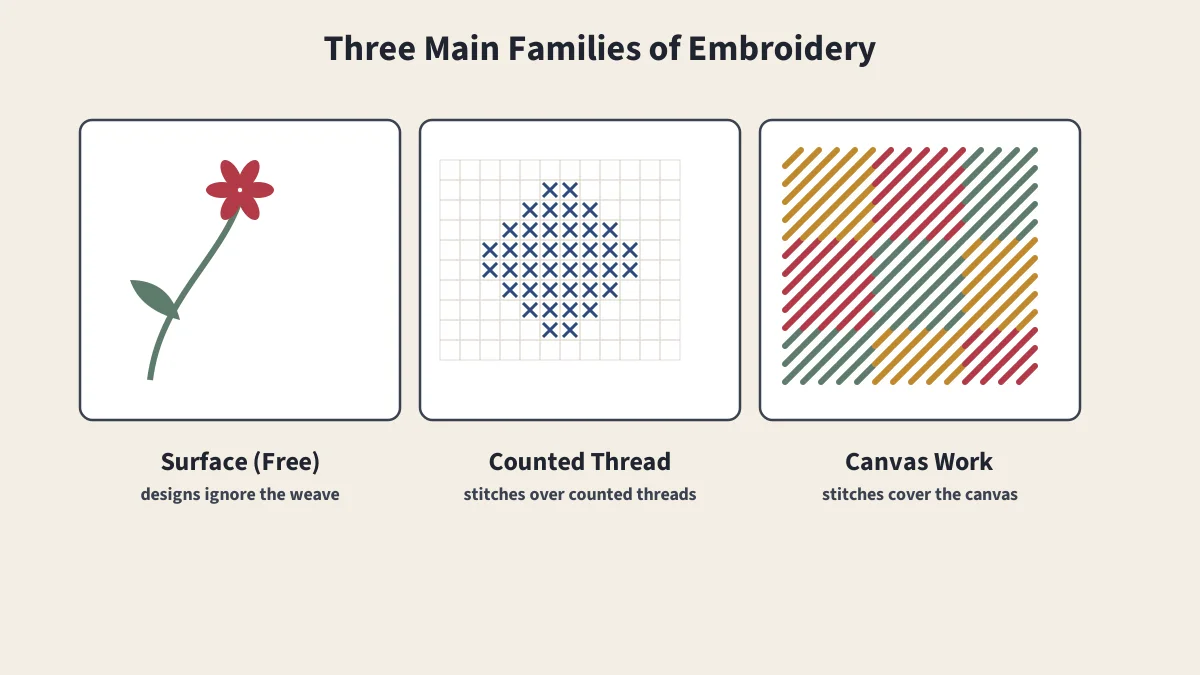
- Counted thread: stitches are made by counting the fabric's threads, giving uniform stitches and precise patterns on evenweave fabric. Free-stitch blackwork also exists.
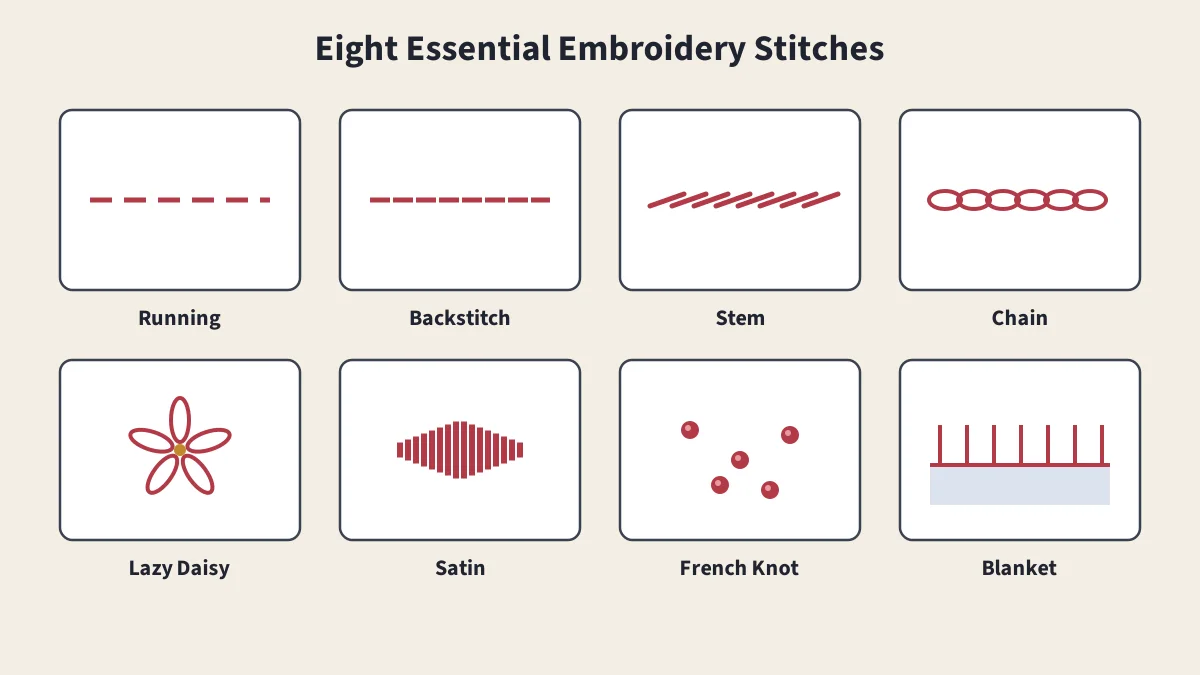
- Holbein stitch (double running): one of the main stitches, with backstitch and sometimes stem stitch; see embroidery stitches.
- Reversible: double running looks the same on both sides, ideal for cuffs and collars where the back may show.
- Shading: denser or lighter fill patterns create the effect of shading.
History
- Black embroidery appears on Spanish chemises from the 1470s.
- It was also known in England before 1500: Chaucer's Canterbury Tales mentions it.
- Blackwork decorated chemises, shirts and smocks from the time of Henry VIII.
- Under Elizabeth I, it was the most common domestic embroidery technique in England.
- It declined by the 17th century.
The Catherine of Aragon Story
Blackwork was once called "Spanish work," from the belief that Catherine of Aragon brought many blackwork garments with her from Spain when she married into the English royal family. In the 1930s, scholar A. J. B. Wace challenged this Spanish origin. The early Spanish examples could support it, but English references before 1500 show that black embroidery was already known in England.
Blackwork Today
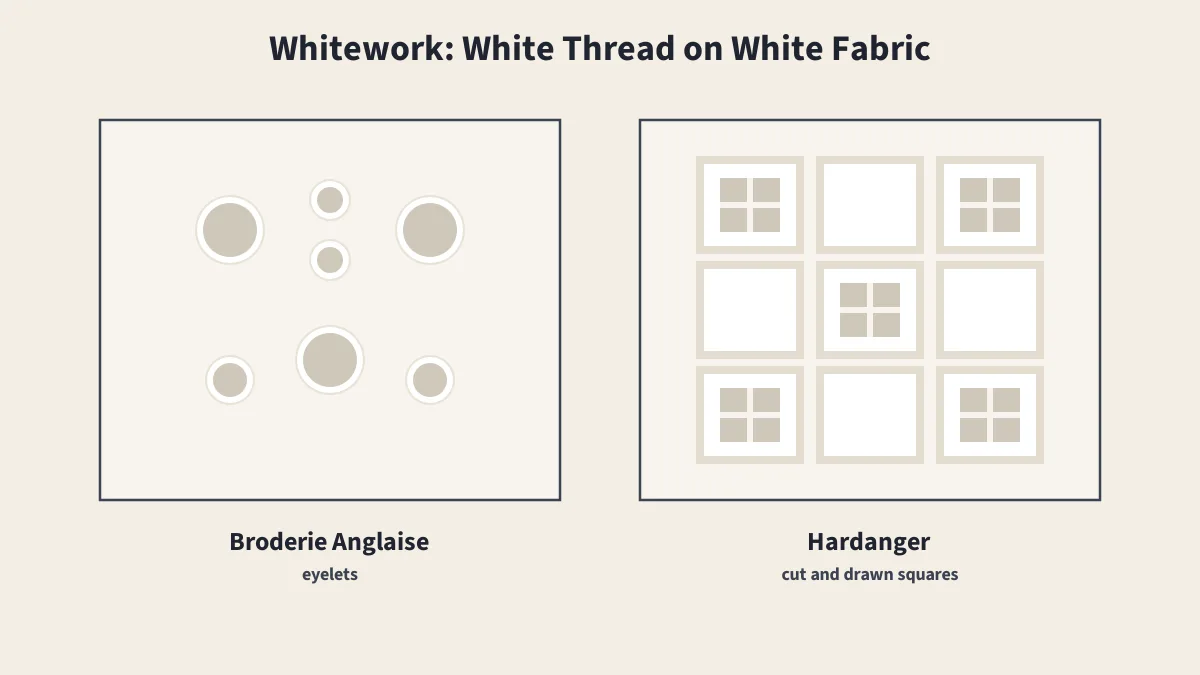
Modern blackwork is often stitched on evenweave fabric with a single strand of floss, using geometric fill patterns to build pictures. It is closely related to other counted styles; see types of embroidery and whitework.
Sources
- Blackwork, Wikipedia
Frequently Asked Questions
What is blackwork embroidery?
Embroidery usually worked in black thread on white or off-white linen or cotton. Red versions are called scarletwork.
What is the Holbein stitch?
A double running stitch: a line of running stitches with the gaps filled on a return pass, giving a line that looks the same on both sides. It is one of the main blackwork stitches.
Did Catherine of Aragon bring blackwork to England?
That is the traditional story, and blackwork was once called Spanish work. In the 1930s, scholar A. J. B. Wace challenged it, noting that black embroidery was known in England before 1500.
Is blackwork counted thread embroidery?
Usually, yes: stitches are made by counting the fabric's threads for precise geometric patterns. Free-stitch blackwork also exists.
Keep Reading
Embroidery Stitches
Flat, looped, knotted and couched stitches.
Whitework
Broderie anglaise, Hardanger and other white-on-white styles.
Types of Embroidery
The main families and named styles of embroidery.
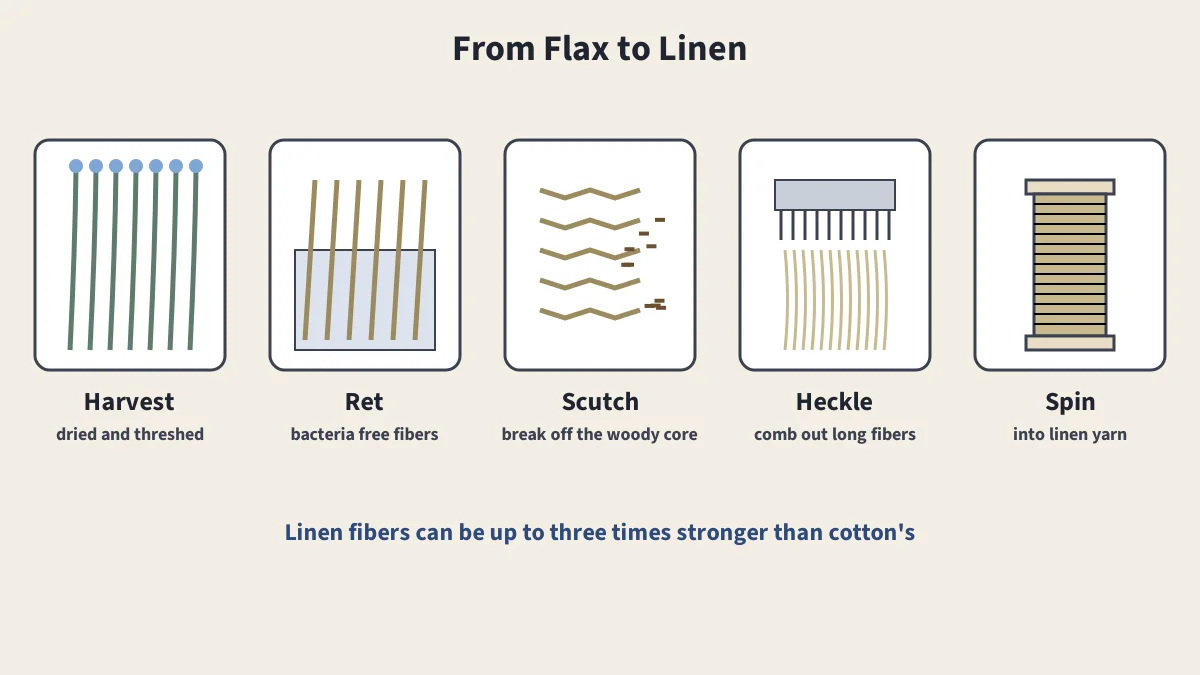
Linen
How flax becomes linen, its long history and how it behaves.