Whitework Embroidery: Broderie Anglaise, Hardanger and More (2026)
Whitework is embroidery in which the thread and fabric are the same color, traditionally white on white. Its beauty comes from texture, light and openwork, with holes, eyelets and cut spaces that look almost like lace.
In This Article
Whitework in Brief
- Definition: thread and fabric the same color
- Openwork: drawn thread and cutwork
- Styles: broderie anglaise, Hardanger, Ayrshire, Mountmellick
- Peak: 18th and 19th centuries
- Industry: western Scotland, 19th century
Whitework is embroidery in which the stitches and foundation fabric are the same color, traditionally white linen. The term covers freestyle, counted-thread and canvas-work techniques. Dress historian Amy de la Haye has described it as simultaneously decorative and plain.
Whitework Techniques
- Drawn thread work: threads are removed from the background fabric and the remaining threads stitched together, creating an open, lacy effect.
- Pulled thread work: stitches pull the fabric threads together to form holes without removing any.
- Cutwork: areas of fabric are cut away inside stitched outlines.
- Eyelets: small holes finished with close stitching.
- Padded satin stitch: raised motifs that catch the light.
Whitework Styles
| Style | Origin | Features |
|---|---|---|
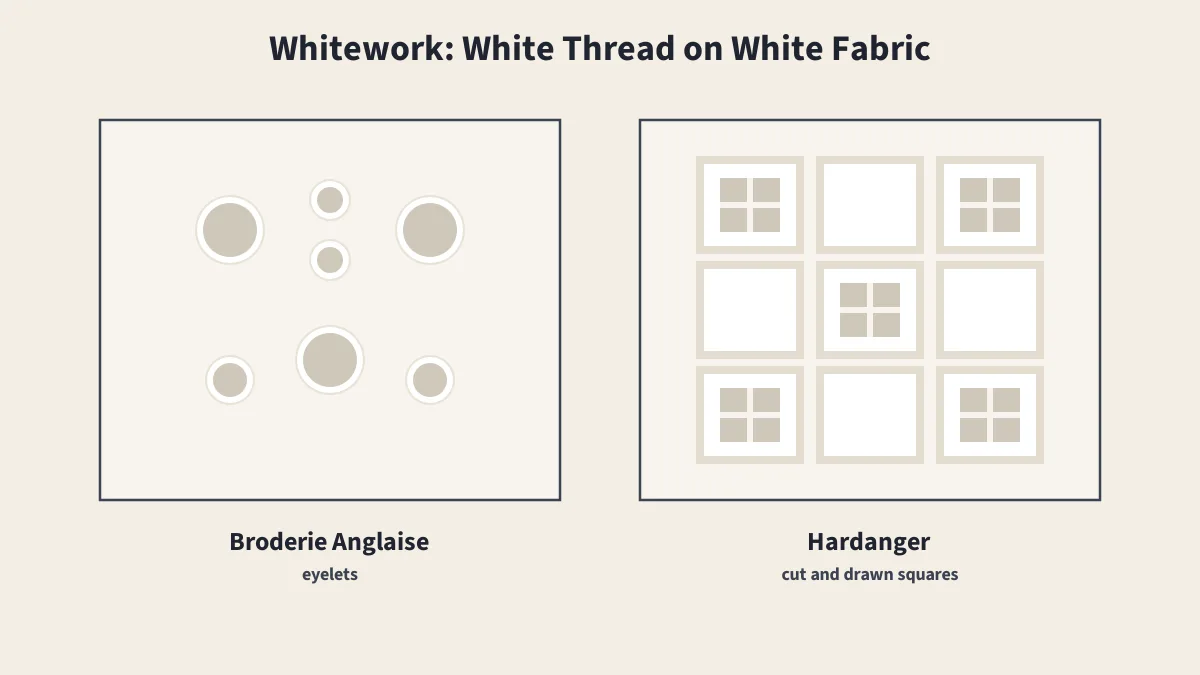
| Broderie anglaise | England | Eyelets; especially popular in the late 1800s |
| Hardanger | Hardanger, Norway | Counted satin-stitch blocks with cut and drawn squares |
| Ayrshire work | Ayrshire, Scotland | Associated with 19th-century production |
| Mountmellick | Mountmellick, Ireland | A regional whitework style |
| Hedebo | Zealand, Denmark | A regional whitework style |
| Dresden work | Dresden, Germany | Pulled thread work, popular as a lace substitute in the early 1700s |
| Madeira | Madeira | A drawn thread style |
| Reticella and Lefkara | Italy and Cyprus | Regional whitework styles |
History
- Pulled thread work examples date to the 1200s; before the 1500s, embroidered textiles were largely limited to the church and royalty.
- Cutwork spread across Europe, with the most skilled work from Italy. In England, it was so popular that law restricted it to the nobility.
- In the 18th century, whitework decorated the gowns, petticoats and aprons of the elite and middle classes.
- In the 19th century it cost less than lace and was produced on an industrial scale; western Scotland became a major center, with thousands of women working as outworkers.
- It returned to fashion on "lingerie dresses" in the 1910s and inspired some of Mary Quant's 1960s collections.
Sources
- Whitework embroidery, Wikipedia
Frequently Asked Questions
What is whitework embroidery?
Embroidery in which the stitches and foundation fabric are the same color, traditionally white thread on white linen.
What is broderie anglaise?
A whitework style featuring eyelets, small holes cut or pierced in the fabric and finished with stitching. It was especially popular in the late 1800s.
What is Hardanger embroidery?
A counted whitework technique from the Hardanger region of Norway, in which blocks of satin stitches frame squares from which threads are cut and drawn out.
Why was whitework so popular?
In the 19th century it was cheaper than lace, so it became widely accessible and was produced on an industrial scale, especially in western Scotland.
Keep Reading
Blackwork
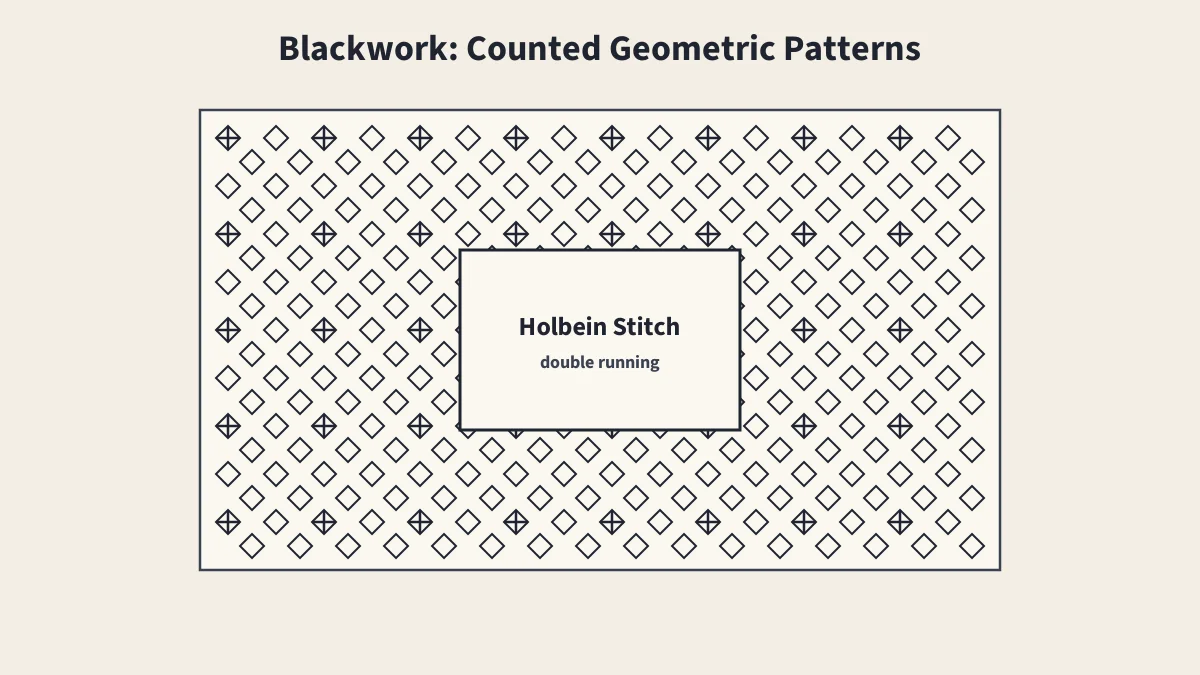
Black-on-white counted embroidery from Tudor England.
Types of Embroidery
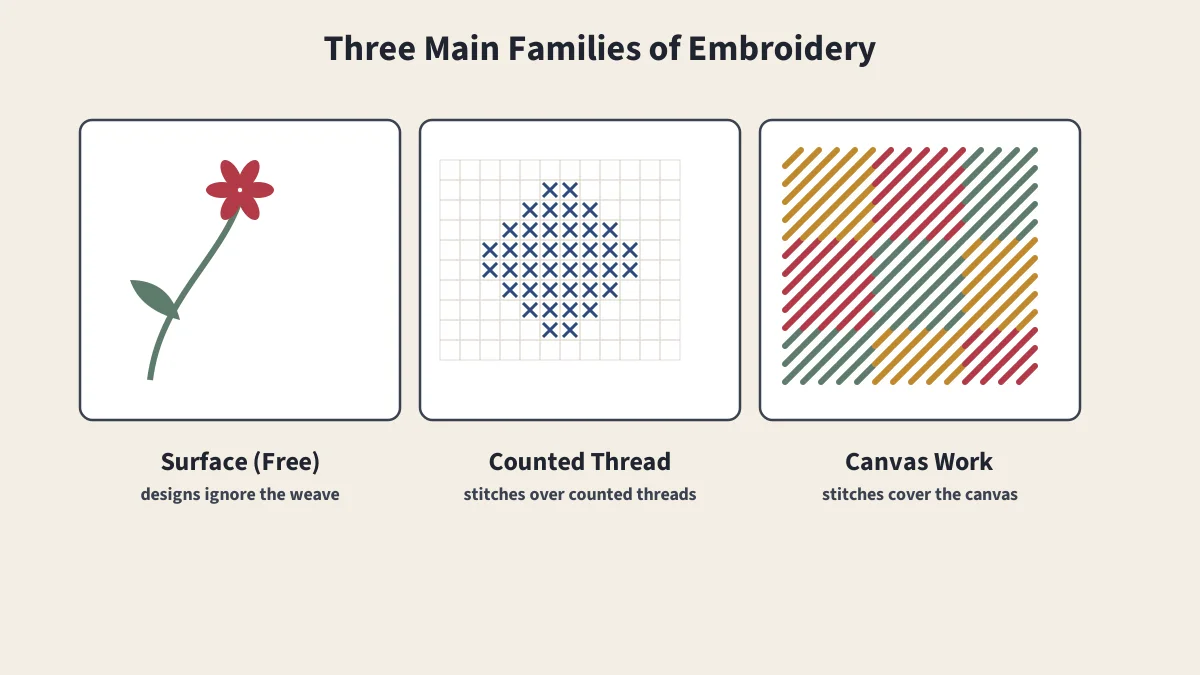
The main families and named styles of embroidery.
Types of Lace
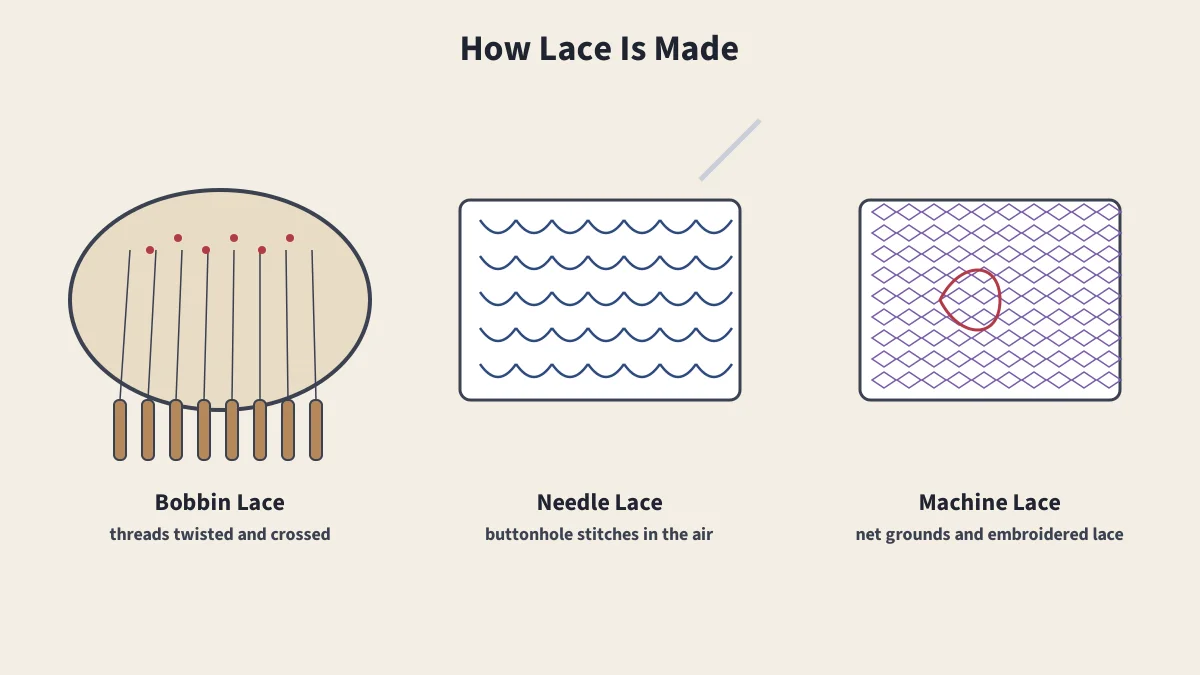
Bobbin lace, needle lace, tatting and machine lace explained.
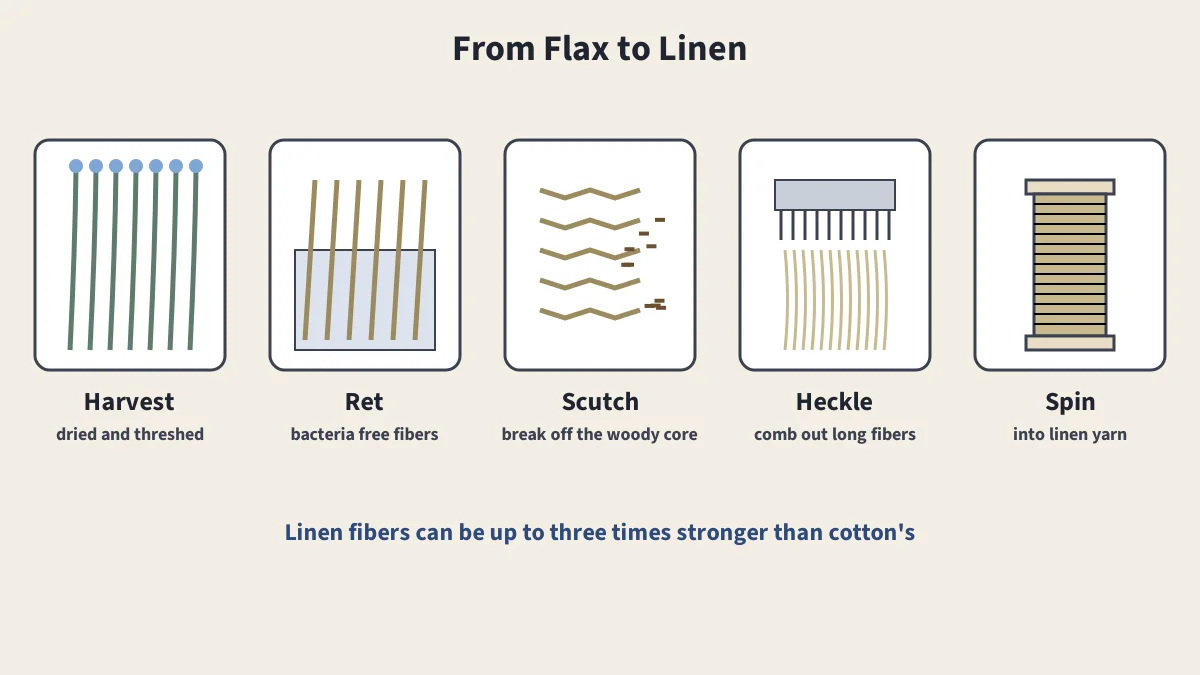
Linen
How flax becomes linen, its long history and how it behaves.