Sashiko and Boro: Japanese Stitching and Patched Textiles (2026)
Sashiko is a Japanese running-stitch embroidery that began as a way to strengthen and warm working clothes. Boro are the patched and mended textiles it often held together. Both are now admired as art.
In This Article
Sashiko and Boro in Brief
- Sashiko: running-stitch embroidery, from the Edo period
- Styles: moyōzashi and hitomezashi
- Regional: kogin-zashi from Aomori
- Boro: patched and mended cloth
- Collection: over 20,000 boro pieces kept by Chuzaburo Tanaka
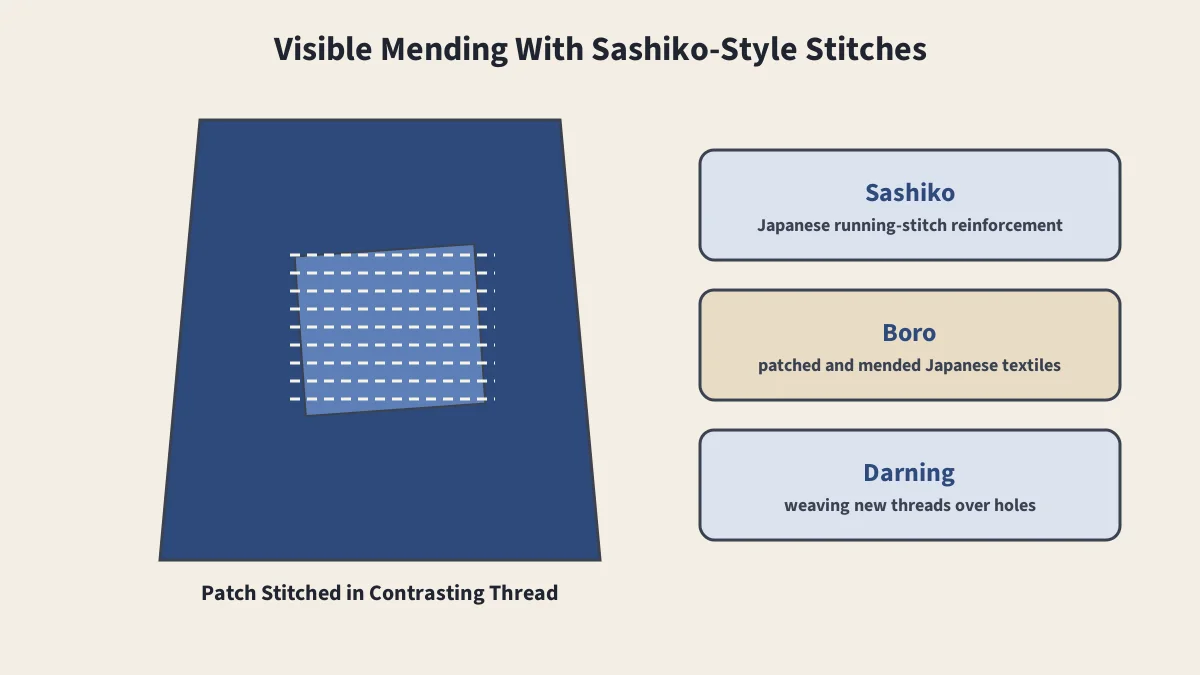
Sashiko is a Japanese form of running-stitch embroidery. It first appeared in the Edo period (1603–1867), when it was used to strengthen homespun clothes and layer thin fabrics for warmth. Boro are Japanese textiles that have been patched and mended, often over generations. For using these techniques in repairs today, see patching and visible mending.
Sashiko Styles
- Moyōzashi: patterns made with long lines of running stitches.
- Hitomezashi: patterns that emerge from single stitches made on a grid.
- Kogin-zashi: diamond-shaped patterns in horizontal rows, developed in Aomori Prefecture.
Named Sashiko Patterns
| Pattern | Meaning |
|---|---|
| Tate-jima / yoko-jima | Vertical / horizontal stripes |
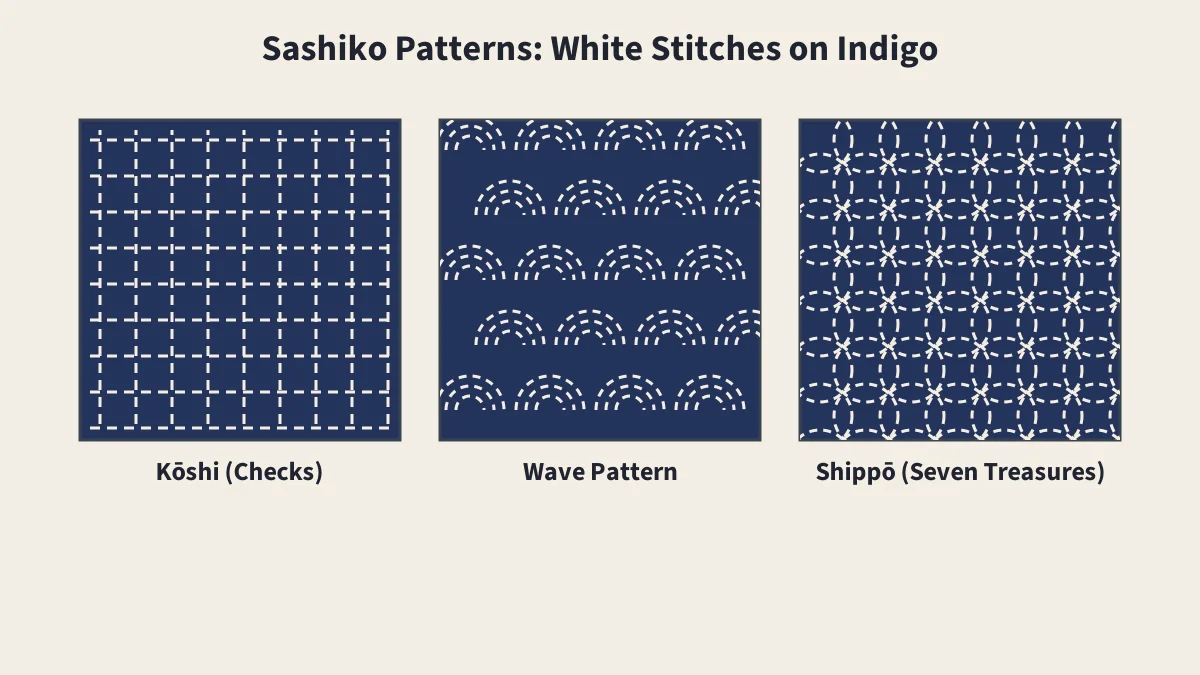
| Kōshi | Checks |
| Hishi-moyō | Diamonds |
| Yarai | Bamboo fence |
| Kagome | Woven bamboo |
| Uroko | Fish scales |
| Tate-waku | Rising stream |
| Fundō | Counterweights |
| Shippō | Seven treasures of the Buddha |
| Amime | Fishing nets |
| Toridasuki | Interlaced circles of two birds |
Other common motifs include waves, mountains, bamboo, arrow feathers and pampas grass. Katsushika Hokusai's 1824 design book New Forms for Design inspired many sashiko patterns.
Sashiko Through Time
- Edo period: strengthening and layering working clothes.
- Meiji period (1868–1912): winter work in northern farming communities.
- Firefighters' coats: hikeshi banten were densely stitched into a thick, absorbent material and soaked in water before use.
- Today: decorative patterns, quilts and embroidery samplers.
Boro
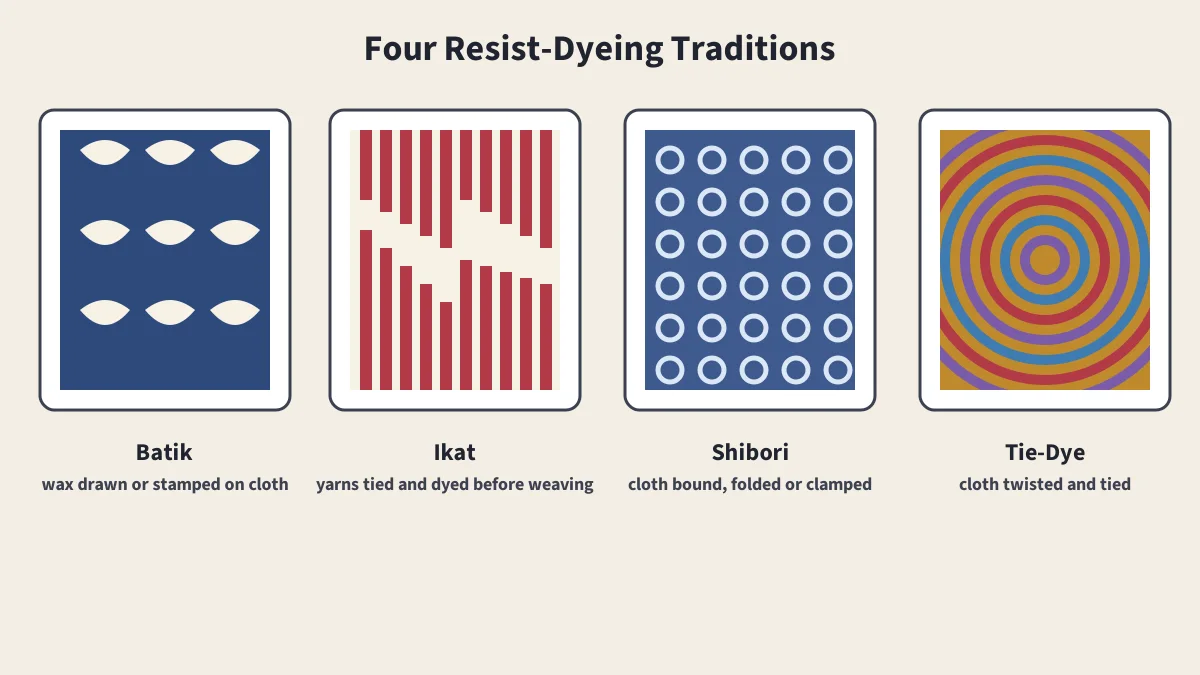
The name boro comes from boroboro, meaning tattered or repaired. Boro were made mostly by peasant farmers and working-class families, who grew, spun, dyed and wove their own cloth, mainly cotton, linen and hemp, and reused it for as long as possible. Indigo was the cheapest and easiest dye; see resist dyeing. After the Meiji period, rising living standards led most boro to be thrown away, and many people saw them as reminders of poverty.
Sources
- Sashiko, Wikipedia
- Boro (textile), Wikipedia
Frequently Asked Questions
What is the difference between sashiko and boro?
Sashiko is a running-stitch technique; boro are patched and mended textiles. Boro pieces are often held together with sashiko-style stitching, but sashiko is also used decoratively on new cloth.
What is hitomezashi?
A sashiko style in which the pattern emerges from single stitches made on a grid. The other main style, moyōzashi, uses long lines of running stitches.
What does the shippō pattern mean?
Shippō, a pattern of overlapping circles, refers to the seven treasures of the Buddha.
Why is sashiko white on blue?
White cotton thread was cheap, and indigo-dyed cloth was abundant in historical Japan. Red thread is sometimes used for decorative pieces.
Keep Reading
Patching and Visible Mending
Patching methods, sashiko, boro and visible mending.
Resist Dyeing
How batik, ikat, shibori and tie-dye block the dye.
Embroidery Stitches
Flat, looped, knotted and couched stitches.
Types of Quilts
Crazy, Hawaiian, Amish, Baltimore Album and more.