Sheer Fabrics: Chiffon, Organza, Voile, Tulle and More (2026)
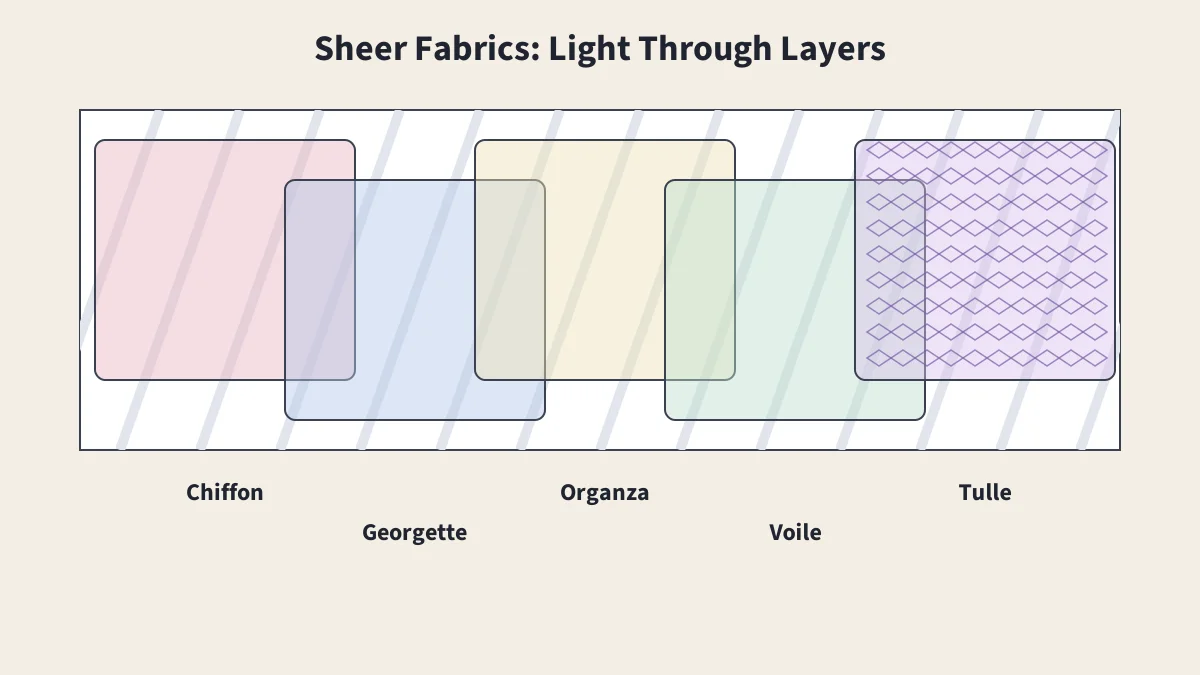
Sheer fabrics let light through, and each does it differently. Chiffon floats, organza stands crisp, voile breezes and tulle puffs. Here is how to tell them apart and how to sew them without frustration.
In This Article
Sheers in Brief
- Floaty: chiffon, georgette
- Crisp: organza, organdy
- Soft cottons: voile, batiste, lawn
- Netting: tulle
- Sewing: French seams, fine needles, patience
A sheer fabric is thin and open enough to see through. Sheers are used for overlays, sleeves, veils, curtains and linings, and many are layered over opaque fabric. They vary in fiber, crispness and drape, which decides how each is used and sewn.
The Main Sheers
| Fabric | Character | Typical Fibers | Uses |
|---|---|---|---|
| Chiffon | Very light, floaty, shimmery | Silk, polyester, nylon, rayon | Overlays, scarves, evening wear |
| Georgette | Heavier, more textured crepe | Silk, polyester | Dresses, blouses |
| Organza | Thin, crisp and stiff for its weight | Silk, polyester, nylon | Bridal wear, structure, underlining |
| Organdy | Crisp, sheer cotton | Cotton | Collars, christening gowns, trims |
| Voile | Soft, lightweight, semi-sheer | Cotton, polyester | Summer tops, curtains |
| Batiste and lawn | Fine, light and smooth | Cotton, linen | Blouses, heirloom sewing, linings |
| Tulle | Fine netting | Polyester, nylon, silk | Veils, tutus, petticoats |
Chiffon
Chiffon takes its name from the French word chiffe, meaning cloth or rag. It is a lightweight, sheer plain weave made from alternating S- and Z-twist crepe yarns, which gives it its drape and shimmer. It was originally pure silk and expensive; nylon and later polyester versions made it widely affordable.
Organza
Organza is a thin, plain-weave sheer fabric traditionally made from silk, now often from polyester or nylon. It is known for its crisp hand and stiffness relative to its weight. Its name may trace back, through the French organsin, to Urgench, a city on the Northern Silk Road. Silk organza is woven along the Yangtze River and in Zhejiang province in China, as well as in India, France and Italy.
Tulle
Tulle is named after Tulle, a small town in south-central France known for lace and silk production in the 18th century. It is used for veils, wedding gowns and ballet tutus, because layers of stiff tulle puff out a skirt and a tulle veil hides the face while letting the wearer see out. Today it is most often polyester.
Sewing Sheer Fabrics
- Cut on tissue paper or a cutting mat to stop slipping; a rotary cutter helps; see rotary cutters.
- Use a fine, sharp needle and fine thread; see sewing machine needles.
- Use French seams so raw edges stay hidden, as everything shows through; see types of seams.
- Finish hems narrowly with a rolled or baby hem; see types of hems.
- Start seams on a scrap to stop the machine swallowing the fabric.
Sources
- Chiffon (fabric), Wikipedia
- Organza, Wikipedia
- Tulle (netting), Wikipedia
Frequently Asked Questions
What is the difference between chiffon and georgette?
Both are sheer crepe fabrics woven from tightly twisted yarns. Georgette is generally heavier, slightly more opaque and more textured than chiffon, which is lighter and floatier.
What is the difference between organza and organdy?
Organza is a thin, sheer, crisp plain weave traditionally made from silk, now often polyester or nylon. Organdy is a similar crisp sheer fabric made from cotton.
Where does tulle get its name?
From Tulle, a town in south-central France known for lace and silk production in the 18th century, where early tulle netting probably originated.
How do you sew chiffon without it fraying?
Chiffon frays easily, so it is usually finished with French seams or bound seams. Cutting on tissue paper and using a fine needle also help.
Keep Reading
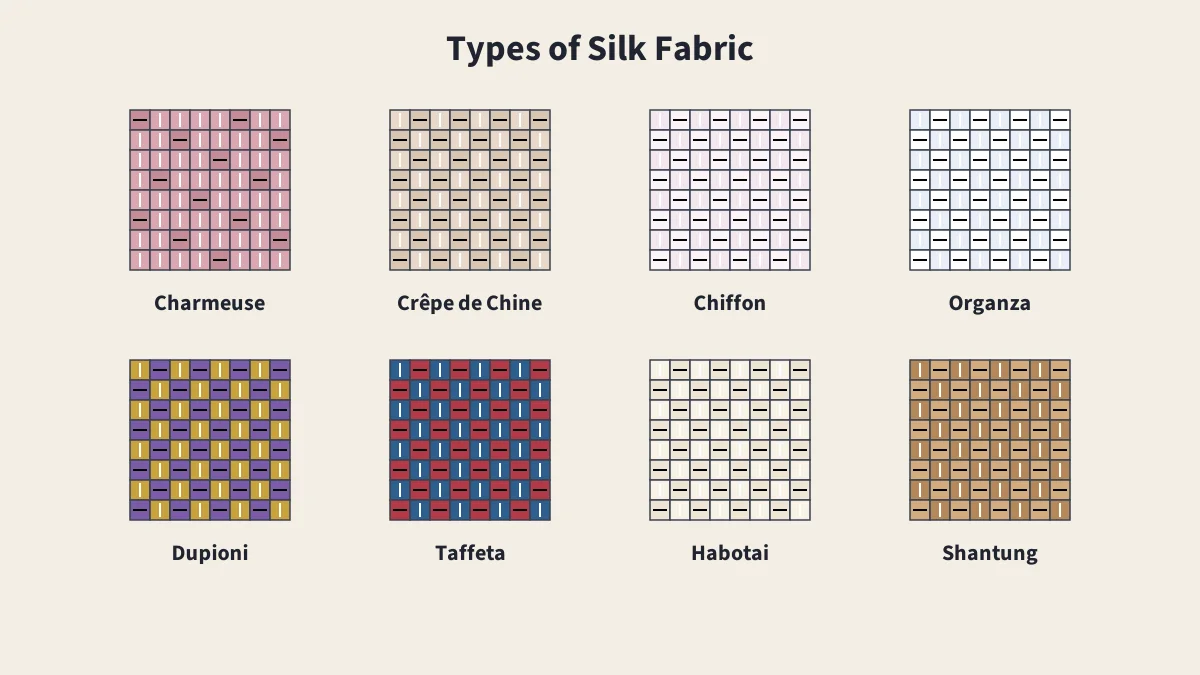
Types of Silk Fabric
Charmeuse, crêpe de chine, organza, dupioni, taffeta and more.
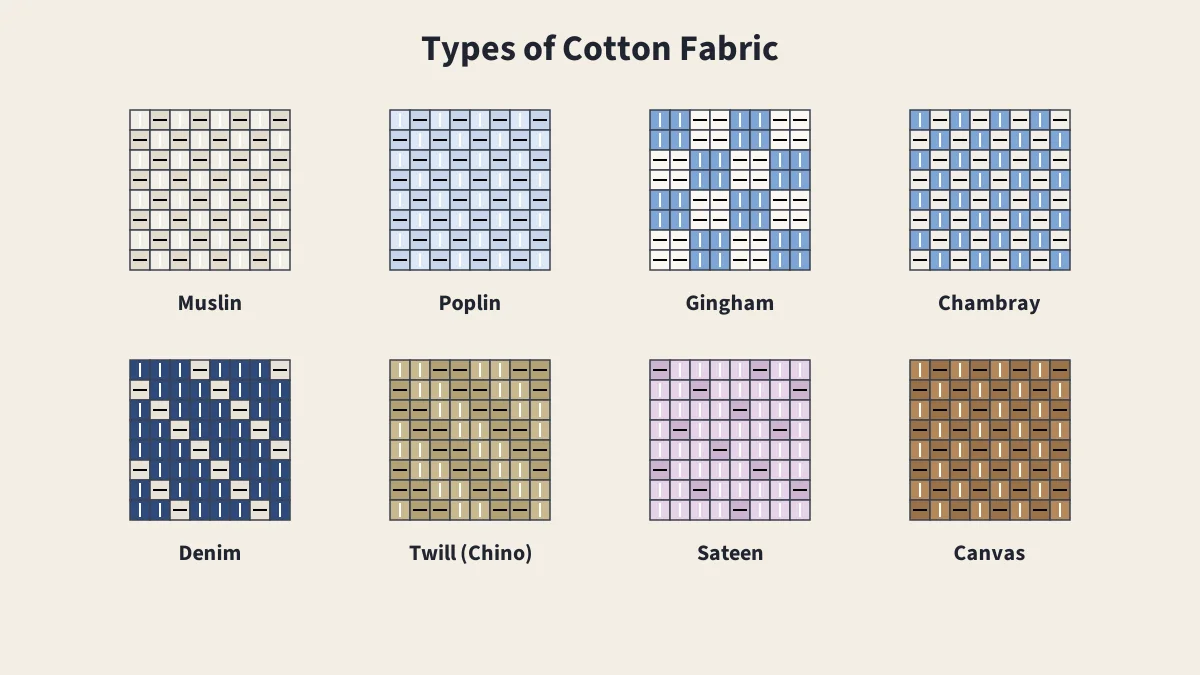
Types of Cotton Fabric
Muslin, poplin, gingham, chambray, denim, corduroy and more.
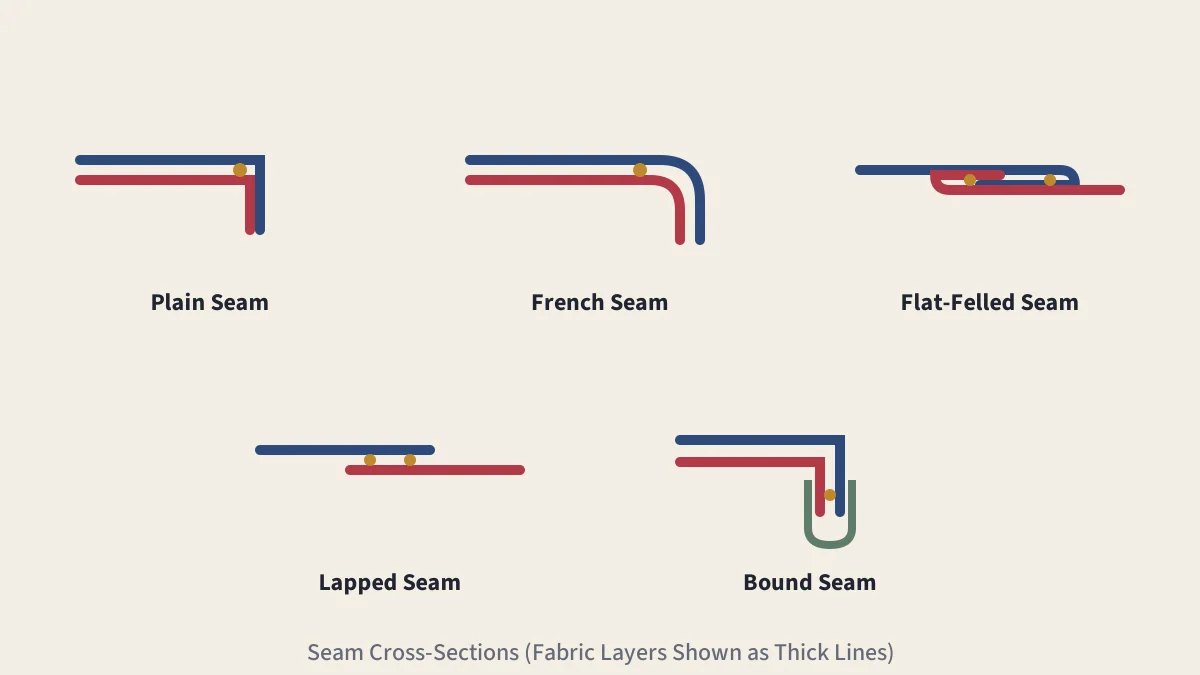
Types of Seams
Plain, French, flat-felled, lapped, bound and other seams compared.
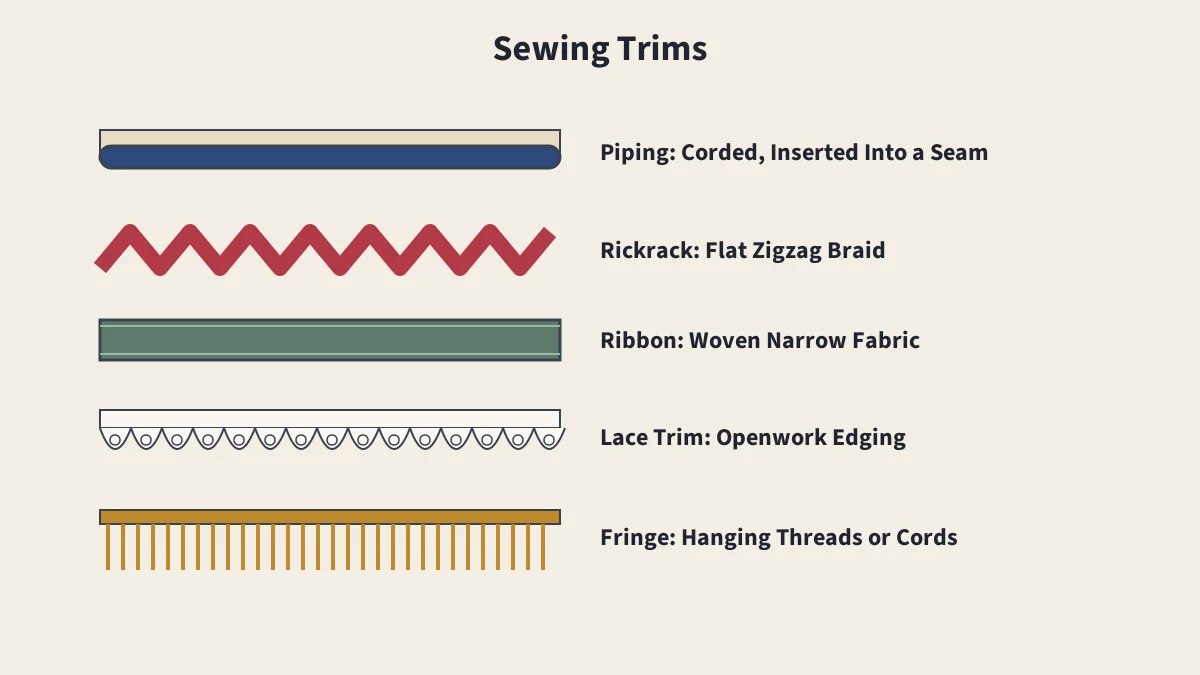
Sewing Trims
Piping, rickrack, ribbon, lace trim and fringe explained.