Types of Silk Fabric: Charmeuse, Dupioni, Taffeta and More (2026)
Silk can be fluid and slinky or crisp enough to hold its own shape. Weave, yarn twist and finish create a remarkable range of silk fabrics. Here is a guide to the main ones.
In This Article
Silk Fabrics in Brief
- Fluid: charmeuse, crêpe de chine, habotai
- Sheer: chiffon, georgette, organza
- Crisp and textured: dupioni, shantung, taffeta
- Luxurious: silk velvet, brocade, damask
- Name caution: many are also made in synthetics
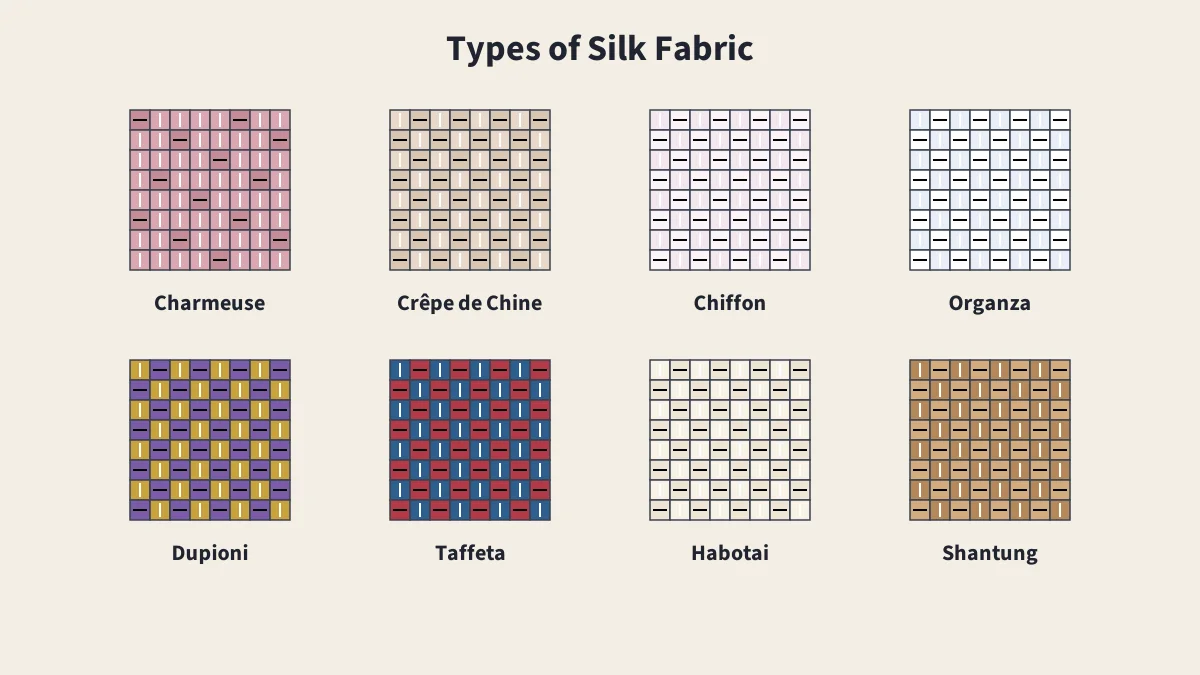
Silk is the same fiber in every one of these fabrics, but weave, yarn and finish change it completely. Smooth filament yarns in a satin weave give charmeuse its gloss; tightly twisted crepe yarns make crêpe de chine and chiffon; slubbed yarns from double cocoons make dupioni. For the fiber, see silk.
Common Silk Fabrics
| Fabric | Character | Typical Uses |
|---|---|---|
| Charmeuse | Satin weave; glossy face, dull back; fluid | Evening wear, lingerie, blouses |
| Crêpe de chine | Lightweight with a soft, pebbly matte surface | Blouses, dresses, scarves |
| Habotai (China silk) | Light, smooth plain weave | Linings, scarves, painting on silk |
| Chiffon | Sheer, plain-woven from crepe yarns | Overlays, scarves, evening wear |
| Georgette | Sheer crepe, heavier than chiffon | Dresses, blouses |
| Organza | Thin, sheer and crisp | Bridal wear, underlining, interfacing |
| Dupioni | Crisp, lustrous, heavily slubbed | Bridal and formal wear, curtains |
| Shantung | Similar to dupioni but finer, with fewer slubs | Dresses, suits |
| Taffeta | Crisp, smooth plain weave | Evening dresses, linings |
| Silk velvet | Cut pile, often blended | Evening wear, wraps |
| Noil (raw silk) | Matte, nubby fabric from short fibers | Casual garments |
Dupioni and Shantung
Dupioni is a plain-weave silk made with fine warp yarn and uneven weft yarn reeled from two or more entangled cocoons. It has a highly lustrous surface and a crisp hand, and differently colored warp and weft threads can give it an iridescent effect. Compared with shantung, it has more slubs and is slightly thicker and heavier. Both are favorites for bridal and formal wear.
Taffeta
Taffeta is a crisp, smooth plain-woven fabric that can be made from silk, nylon, rayon, acetate or polyester. Its name came into English through Old French and Old Italian from the Persian word tāfta, meaning silk or linen cloth. Yarn-dyed silk taffeta is stiffer and often used for evening dresses; piece-dyed taffeta is softer and often used for linings.
Sheer Silks
Chiffon, georgette and organza are among the most famous sheer fabrics and were originally pure silk. See sheer fabrics for how they differ and how to sew them.
Sewing With Silk Fabrics
- Cut on a single layer, ideally on tissue paper, to stop slippery silks shifting.
- Use fine, sharp needles and fine thread.
- Pin only in the seam allowance with silk pins; see types of pins.
- Press on low heat with a silk organza pressing cloth; avoid water spots on some silks.
- Use French seams on light silks; see types of seams.
Sources
Frequently Asked Questions
What is the difference between dupioni and shantung?
Both are plain-weave silks with slubs, irregular thick spots in the yarn. Dupioni is woven with weft yarn reeled from two or more entangled cocoons, so it has more slubs and is slightly thicker and heavier than shantung.
What is charmeuse?
A lightweight silk in a satin weave, with a glossy face and dull back. It drapes fluidly and is used for evening wear, lingerie and blouses.
Where does the word taffeta come from?
Taffeta came into English through Old French and Old Italian, which borrowed the Persian word tāfta, meaning silk or linen cloth.
Are these fabrics always silk?
No. Many silk fabric names describe a weave or finish and are now also made from polyester, nylon, rayon or acetate. Check the fiber content on the label.
Keep Reading
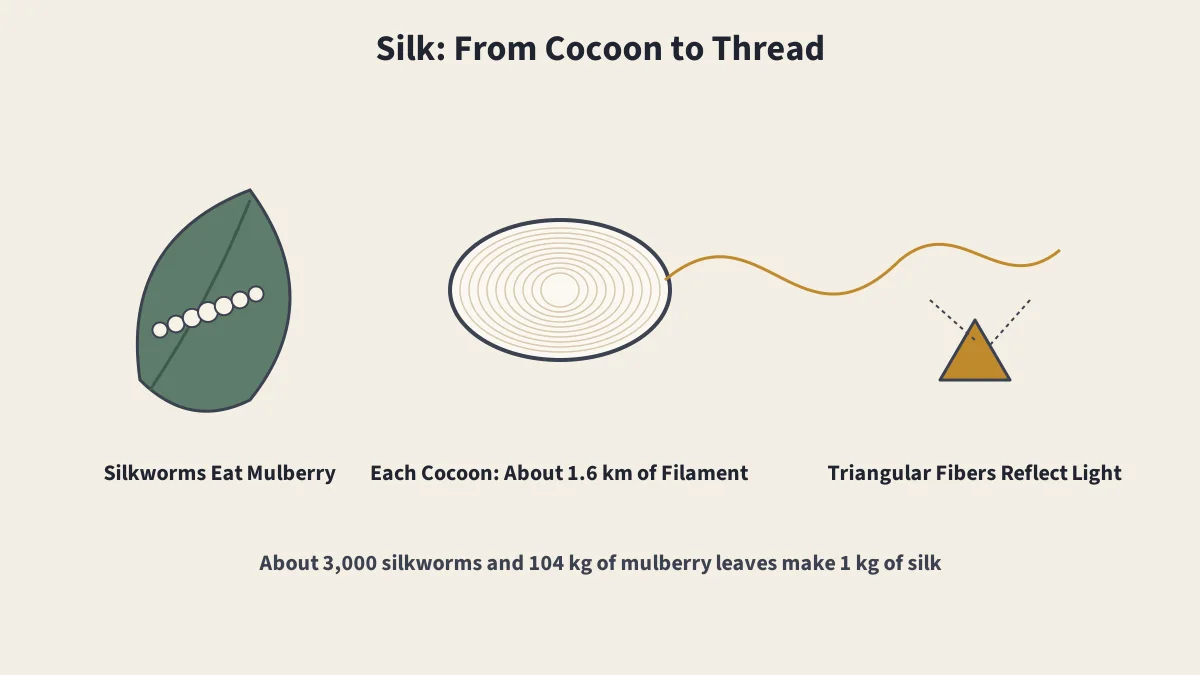
Silk
How silkworms make silk, its history and how it behaves.
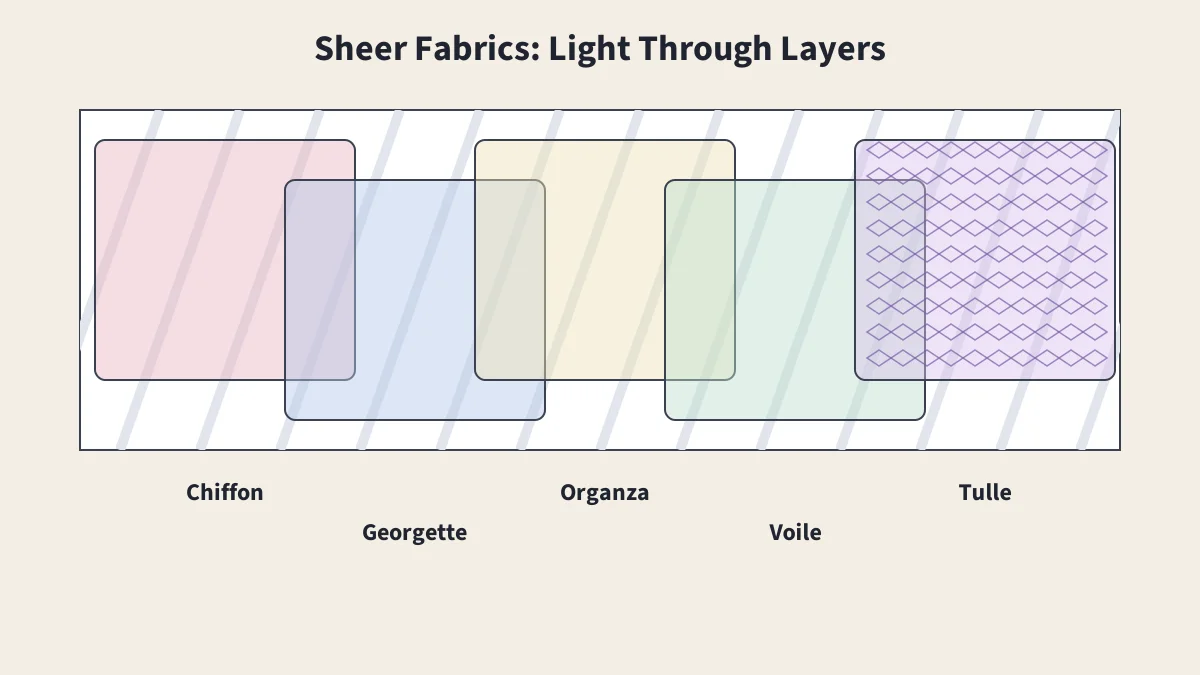
Sheer Fabrics
Chiffon, georgette, organza, voile and tulle compared.
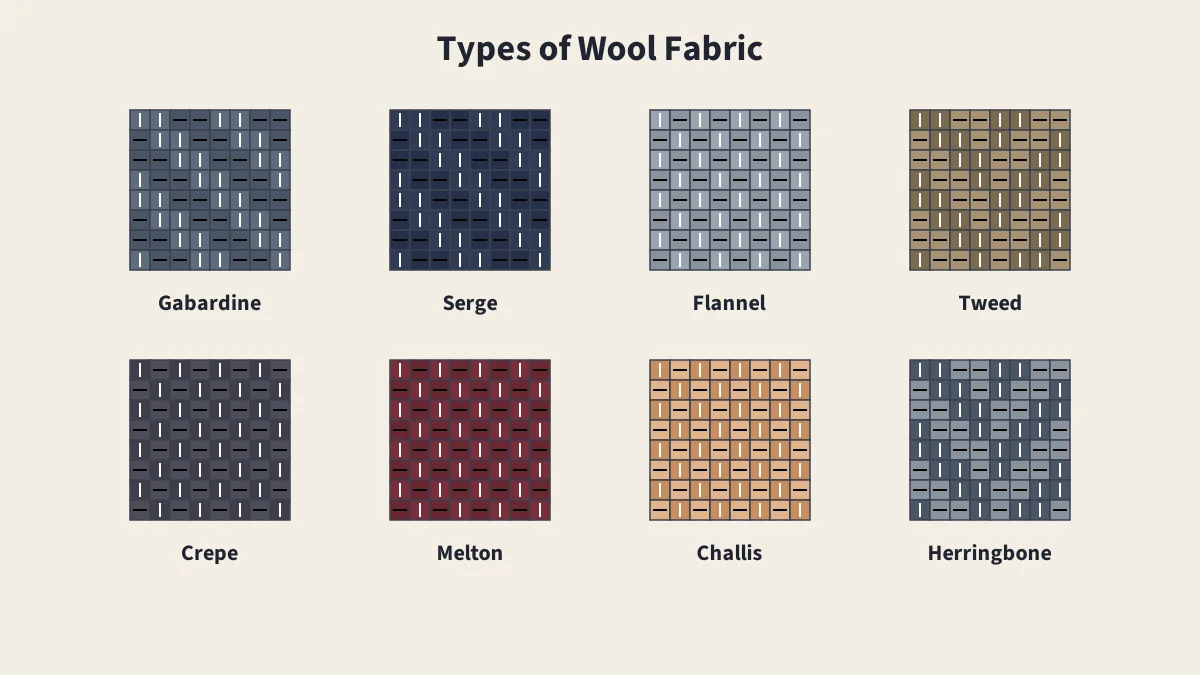
Types of Wool Fabric
Worsted vs. woolen, plus gabardine, tweed, flannel and more.
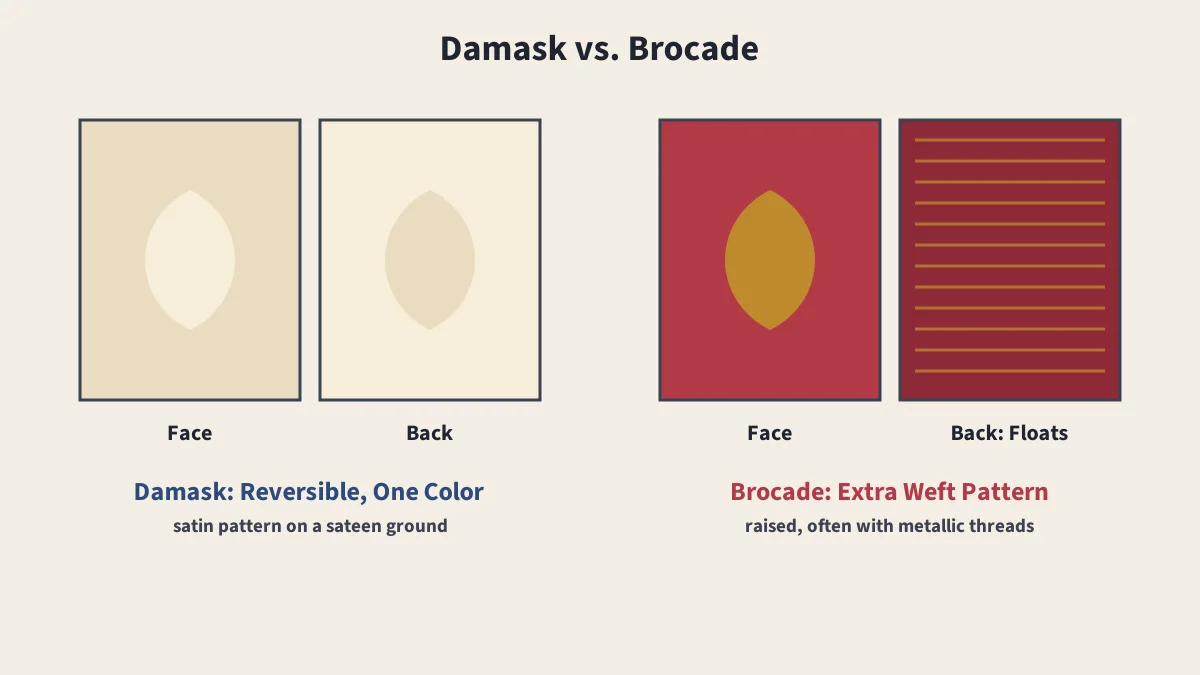
Brocade vs. Damask vs. Jacquard
How the three woven-pattern terms differ, and how to spot each.