Ruffles vs. Flounces: The Difference and How to Sew Them (2026)
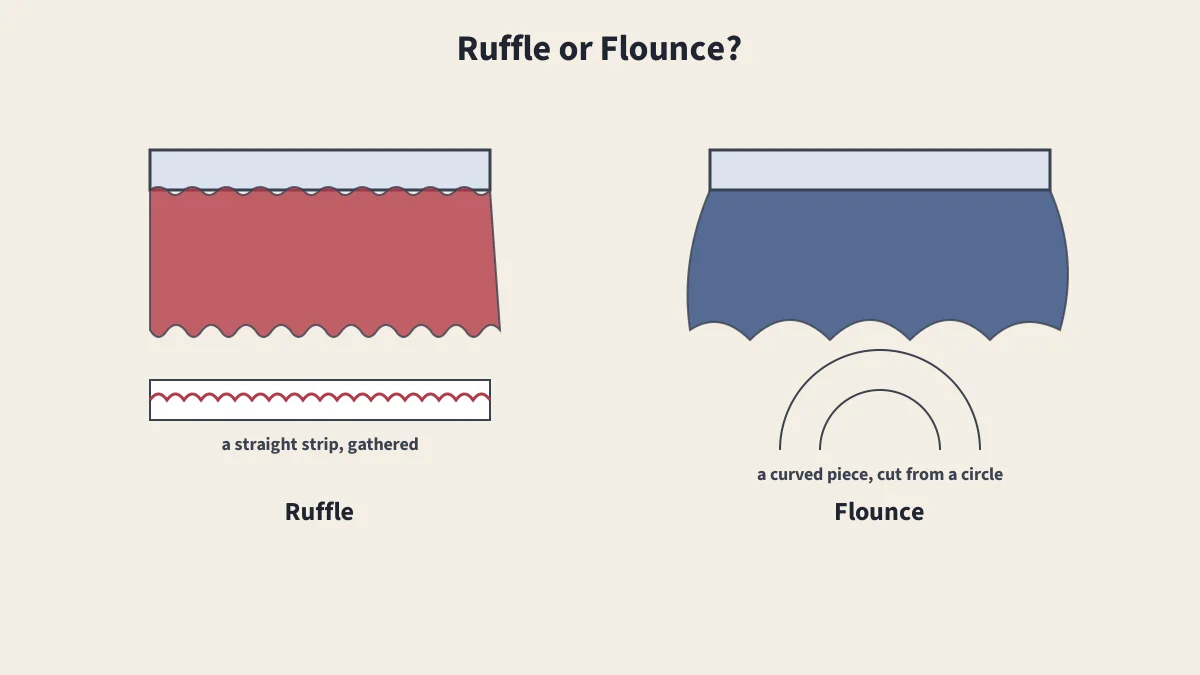
Both add frills to a hem, neckline or sleeve, but they are made differently. A ruffle is a straight strip gathered up; a flounce is a curved piece that ripples without any gathers.
In This Article
Ruffles and Flounces in Brief
- Ruffle: straight strip, gathered or pleated
- Flounce: curved piece, no gathers
- Ruffle fullness: usually 1.5 to 3 times the edge
- Uses: hems, necklines, sleeves, tiers
- Finishes: rolled hem, serged edge, folded double
Ruffles and flounces both create a frilled edge, and the words are often used interchangeably. In sewing, though, a ruffle is a gathered or pleated strip of fabric, while a flounce is cut on a curve so that it falls into soft ripples by itself.
Ruffle or Flounce?
| Ruffle | Flounce | |
|---|---|---|
| Cut | Straight strip | Circle, spiral or curved shape |
| Fullness at the seam | Gathered or pleated | Flat, no gathers |
| Look | Bouncy, full at the top | Smooth at the top, fluid at the edge |
| Fabric use | Moderate | Higher, due to the curve |
| Typical use | Tiered skirts, children's clothes, bedding | Hems, cuffs, necklines, cascades |
How to Make a Ruffle
- Cut strips 1.5 to 3 times the length of the edge, joining strips if needed.
- Hem the lower edge, or fold the strip in half lengthwise for a clean double ruffle.
- Sew two rows of long gathering stitches along the top edge; see gathering.
- Divide both the ruffle and the edge into quarters, match the marks and draw up the gathers.
- Stitch, then finish the seam allowances and press them away from the ruffle.
A ruffler foot can gather or pleat a strip automatically as it is sewn; see the presser feet guide.
How to Make a Flounce
- Draw an inner circle whose circumference matches the edge it will join, and an outer circle the depth of the flounce beyond it.
- Cut along a radius to open the ring; join several rings for a long edge.
- Finish the outer edge with a narrow or rolled hem; see types of hems.
- Staystitch and clip the inner edge so it straightens, then sew it to the garment.
Where You See Them
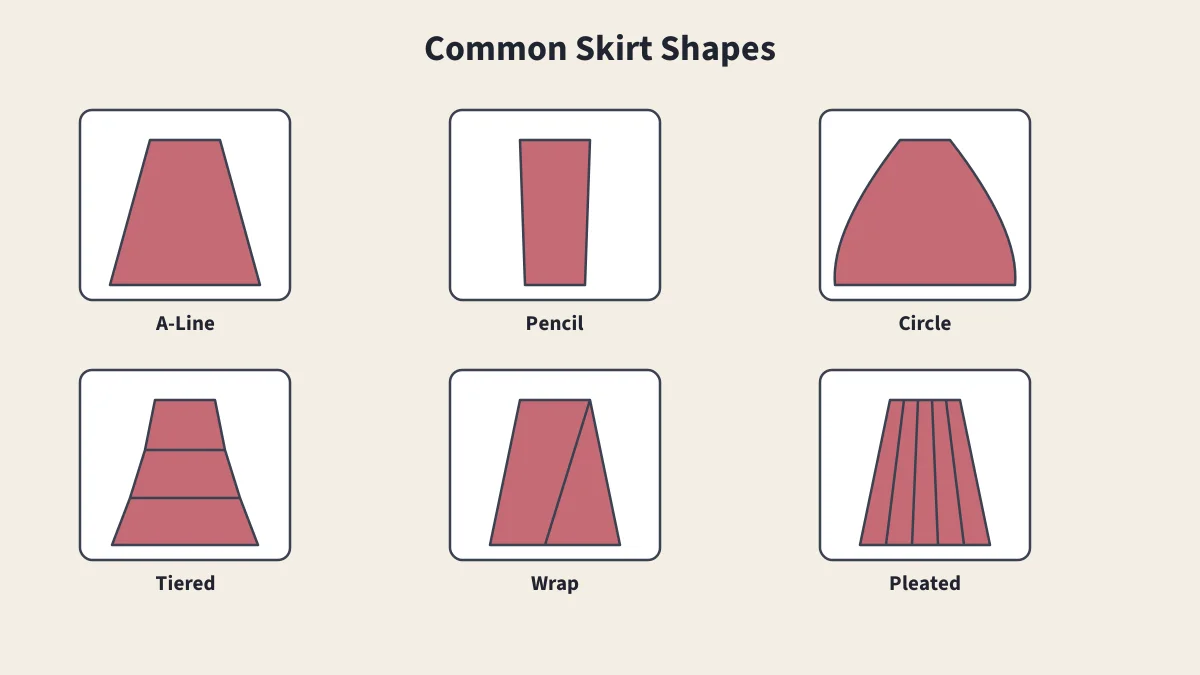
- Tiered and prairie skirts: layers joined with gathers; see types of skirts.
- Jabots: ruffled or cascading decorations at the neck of a shirt or blouse.
- Peplums: a short flounce or flared panel at the waist of a top or jacket.
- Dust ruffles: decorative bedding around the base of a bed.
Sources
Frequently Asked Questions
What is the difference between a ruffle and a flounce?
A ruffle is a straight strip of fabric that is gathered or pleated along one edge. A flounce is cut as a curve or circle, so it lies flat at the seam and ripples at the outer edge without gathers.
How much fabric do I need for a ruffle?
Gathered ruffles typically use 1.5 to 3 times the length of the edge they are sewn to. Fine fabrics can take more fullness than heavy ones.
How do you finish the edge of a ruffle?
With a narrow rolled hem, a serged rolled edge, a lettuce edge on knits, or by cutting the ruffle double and folding it in half lengthwise.
What is a tiered skirt?
A skirt made of horizontal layers, each wider than the one above, usually joined with gathers.
Keep Reading
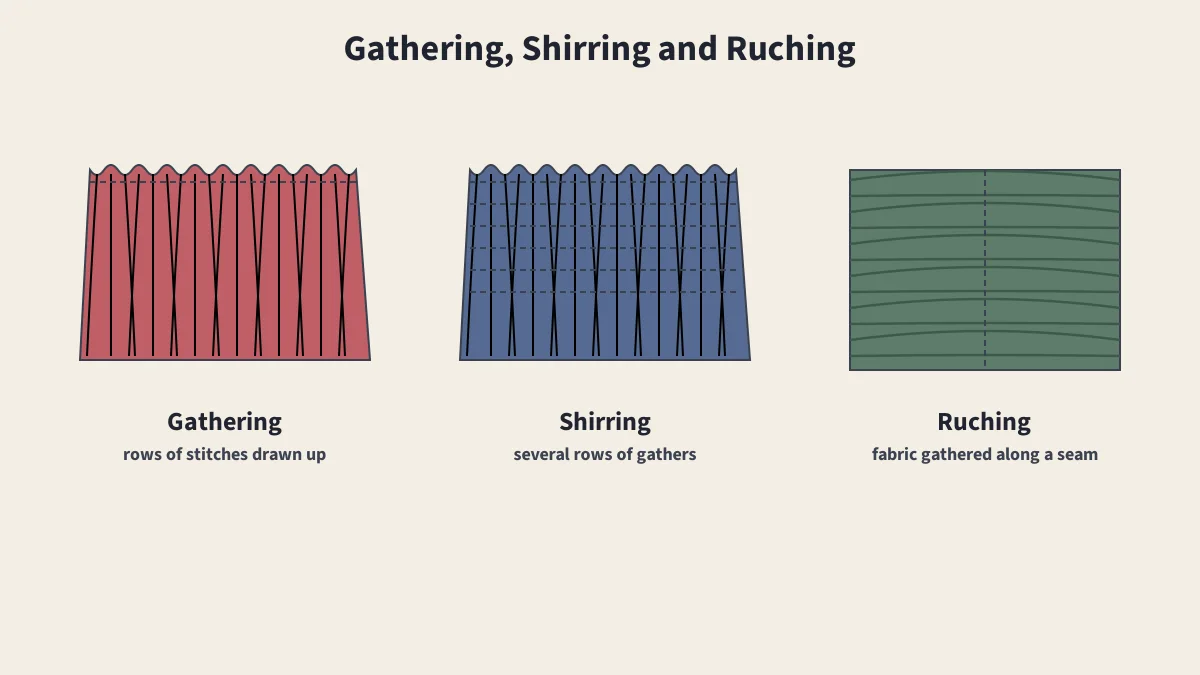
Gathering, Ruching and Shirring
Gathers, shirring, ruching and smocking explained.
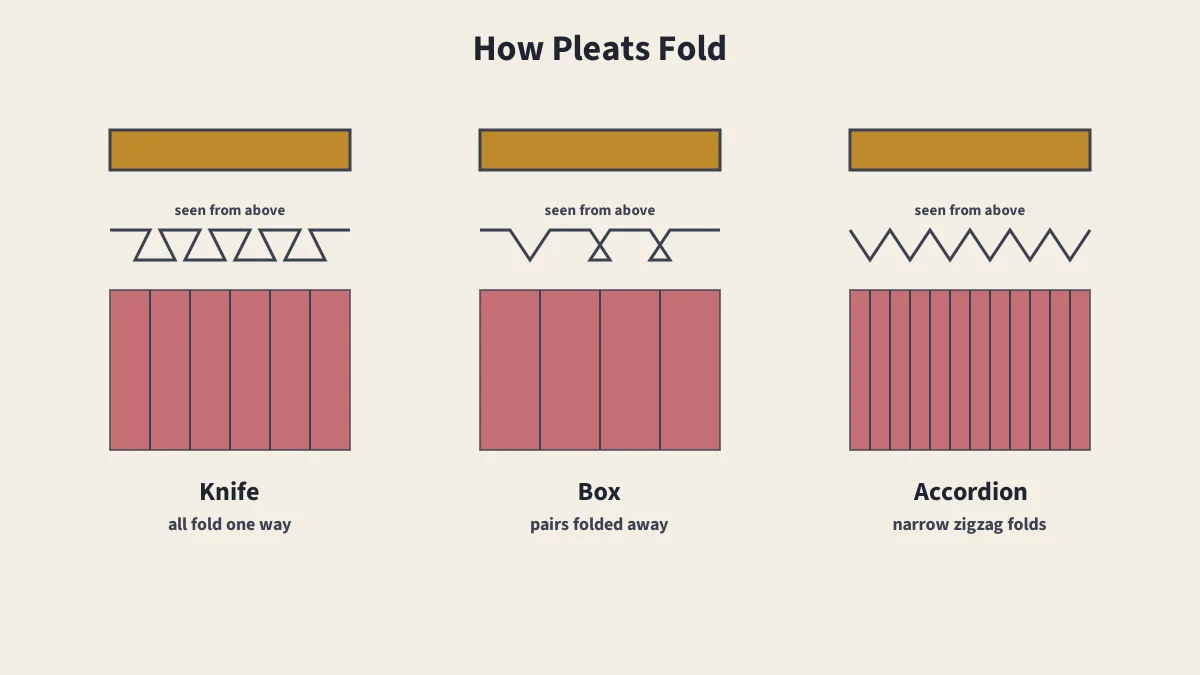
Types of Pleats
Knife, box, accordion, kick and historical pleats.
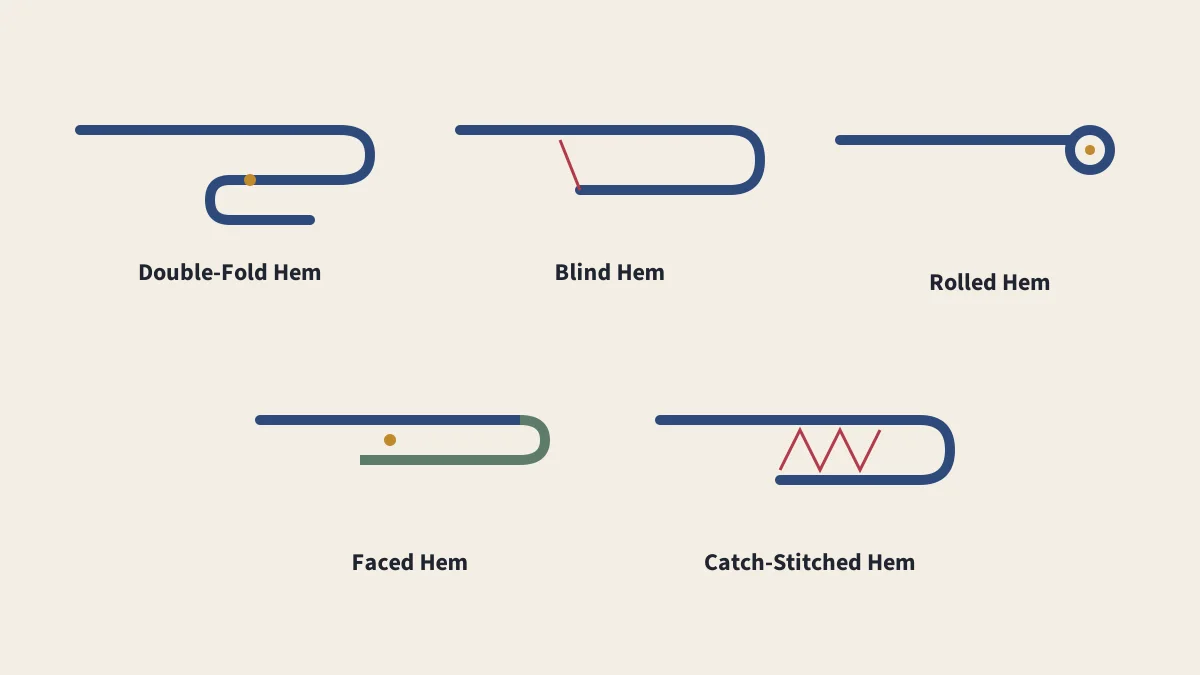
Types of Hems
Double-fold, blind, rolled, faced, bound and knit hems compared.
Types of Skirts
A-line, pencil, circle, gored, tiered, wrap and more.