Types of Pockets: Patch, Welt, Cargo and More (2026)
Pockets have a surprisingly long history, from a pouch on the belt of a 5,000-year-old mummy to the separate tie-on pockets women wore under their skirts for centuries.
In This Article
Pockets in Brief
- Patch: sewn on the outside
- Set-in: welt, jetted and slash pockets
- Side: in-seam and slant pockets
- Utility: cargo, kangaroo, watch pockets
- History: tie-on women's pockets
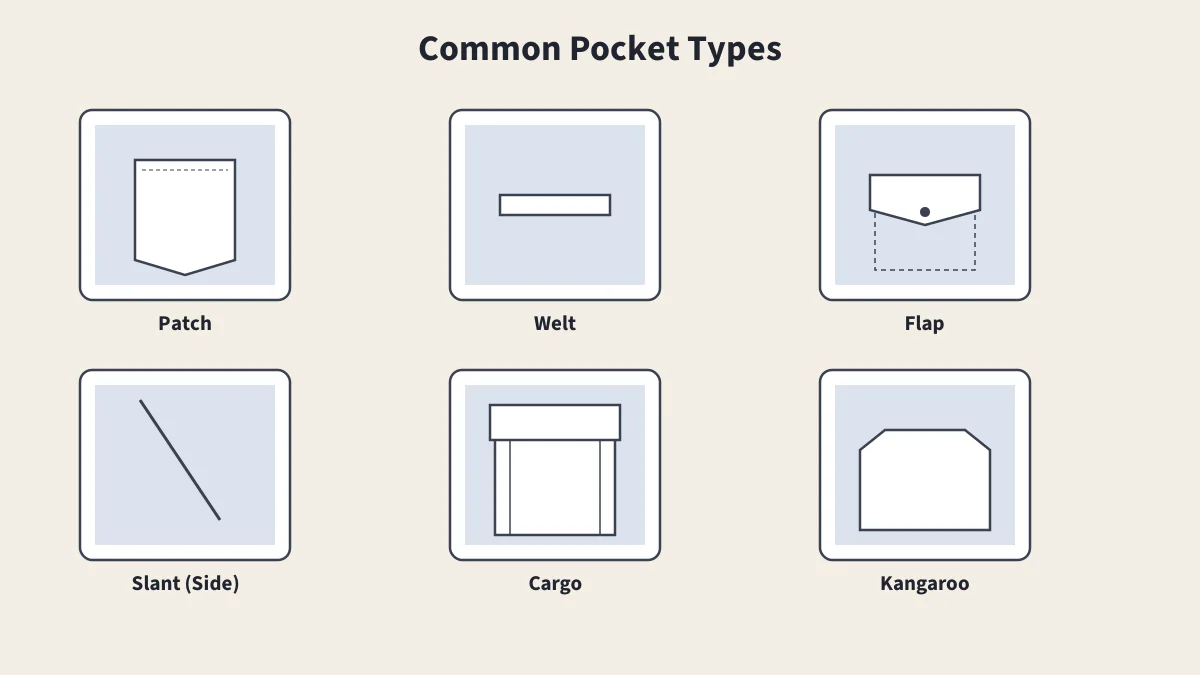
A pocket is a bag- or envelope-shaped piece of fabric attached to or set into a garment to hold small items. How it is attached decides the type, from a simple square sewn on the outside to a tailored welt pocket set into a jacket.
Types of Pockets
| Construction | Typical Use | |
|---|---|---|
| Patch | Sewn on the outside of the garment | Shirts, jeans back pockets, casual jackets |
| Flap | A flap covers the opening, sometimes buttoned | Jackets, shirts, coats |
| Welt | Set in, with the opening finished by a single strip | Jacket breast pockets, waistcoats |
| Jetted (double welt) | Set in, with a narrow strip on each side | Tailored jackets and trousers, dinner jackets |
| Slash (besom) | A reinforced slit set into the garment | Tuxedo jackets, trousers |
| "Smile" | A slit with piping and arrowhead tacks | Western shirts |
| In-seam | Hidden in a side seam | Dresses, skirts, coats |
| Slant / front hip | Angled or curved opening at the front | Jeans, chinos |
| Cargo | Large patch pocket, often with pleats and a flap | Utility and outdoor clothing |
| Kangaroo | One large front pouch open at both sides | Hoodies and sweatshirts |
| Watch (fob) | A small pocket originally for a pocket watch | Jeans, waistcoats |
A History of Pockets
- Ötzi, the Copper Age man who lived around 3,300 BCE, wore a belt with a sewn-on pouch holding tools and tinder fungus.
- In the 13th century, Europeans used fitchets: vertical slits in the outer tunic to reach a purse or keys hanging from the belt beneath.
- Pockets became more visible in the late 15th century and spread in the 16th century, often worn like purses hidden under a coat to deter pickpockets.
- By the 17th century, pockets were sewn into men's clothes, while women's pockets were separate tie-on pouches hidden under their skirts, reached through slits; see plackets.
- Women's tie-on pockets often held scissors, pins, needles and keys.
Women's Pockets Today
Women's clothing still often has smaller pockets than men's, or fake ones. A 2018 analysis by The Pudding found that fewer than half of the women's front jeans pockets it measured could fit a thin wallet. Sewing your own clothes means you can make pockets any size; see history of denim for how jeans pockets evolved.
Sewing Pockets
- Patch pockets are the easiest: press the edges under, then topstitch in place.
- Reinforce the top corners with a small triangle of stitching or a bar tack.
- Welt and jetted pockets are built like bound buttonholes; see types of buttonholes.
- Cut pocket bags from smooth, strong fabric, such as cotton pocketing or lining.
Sources
- Pocket, Wikipedia
Frequently Asked Questions
What are the main types of pockets?
Patch pockets sewn on the outside; set-in pockets such as welt, jetted and slash pockets; in-seam and slant side pockets; flap pockets; and utility styles such as cargo and kangaroo pockets.
What is a welt pocket?
A set-in pocket whose opening is finished with a strip of fabric, called a welt. A double-welt or jetted pocket has a narrow strip on each side of the opening, like a bound buttonhole.
What is the small pocket on jeans for?
It is a watch or fob pocket, originally for a pocket watch. It is still found on traditional jeans, waistcoats and some trousers.
Why didn't women's clothes have pockets?
From the 17th to the 19th century, women wore separate tie-on pockets under their skirts, reached through slits. Sewn-in pockets in women's clothes became common later, and are often still smaller than men's.
Keep Reading
Types of Plackets
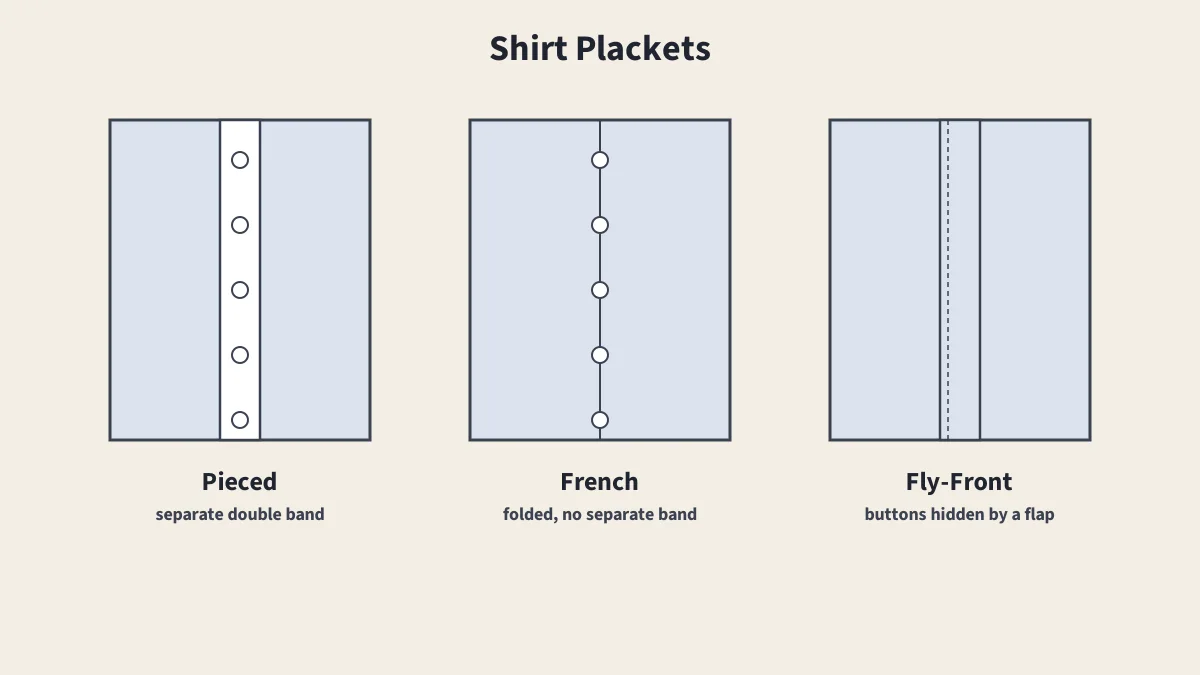
Pieced, French, fly-front and sleeve plackets.
History of Denim
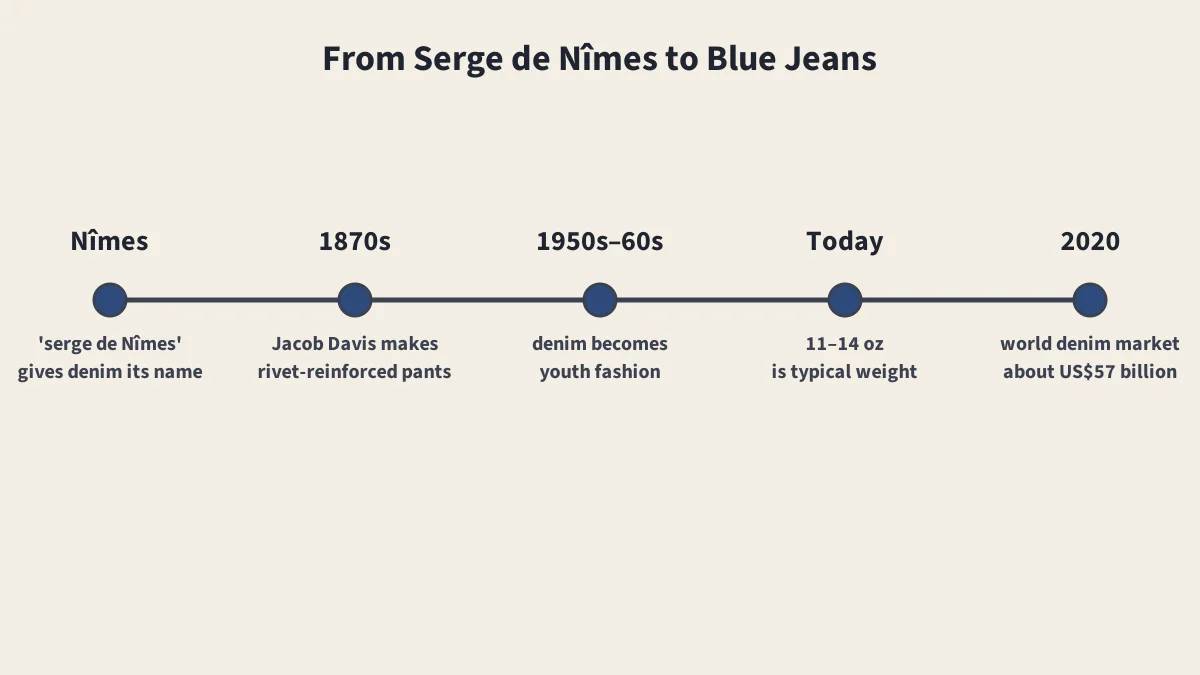
Nîmes, Genoa, the 1873 rivet patent and denim's rise.
Yokes
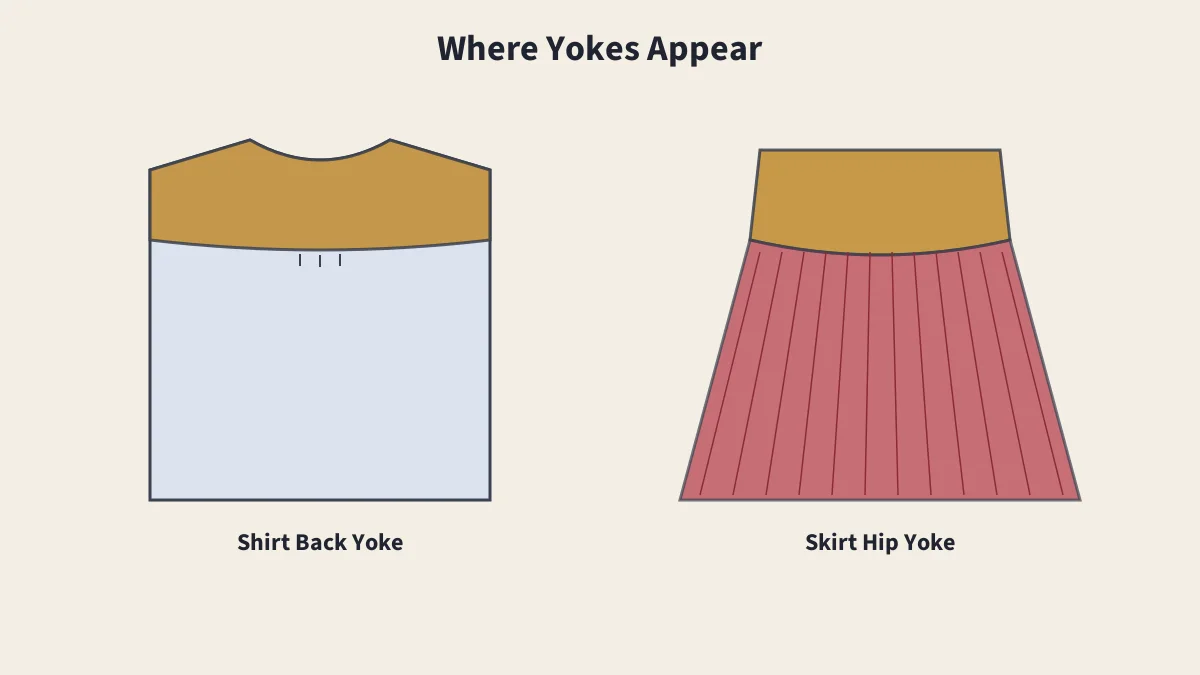
Shirt, bodice, skirt and jeans yokes explained.
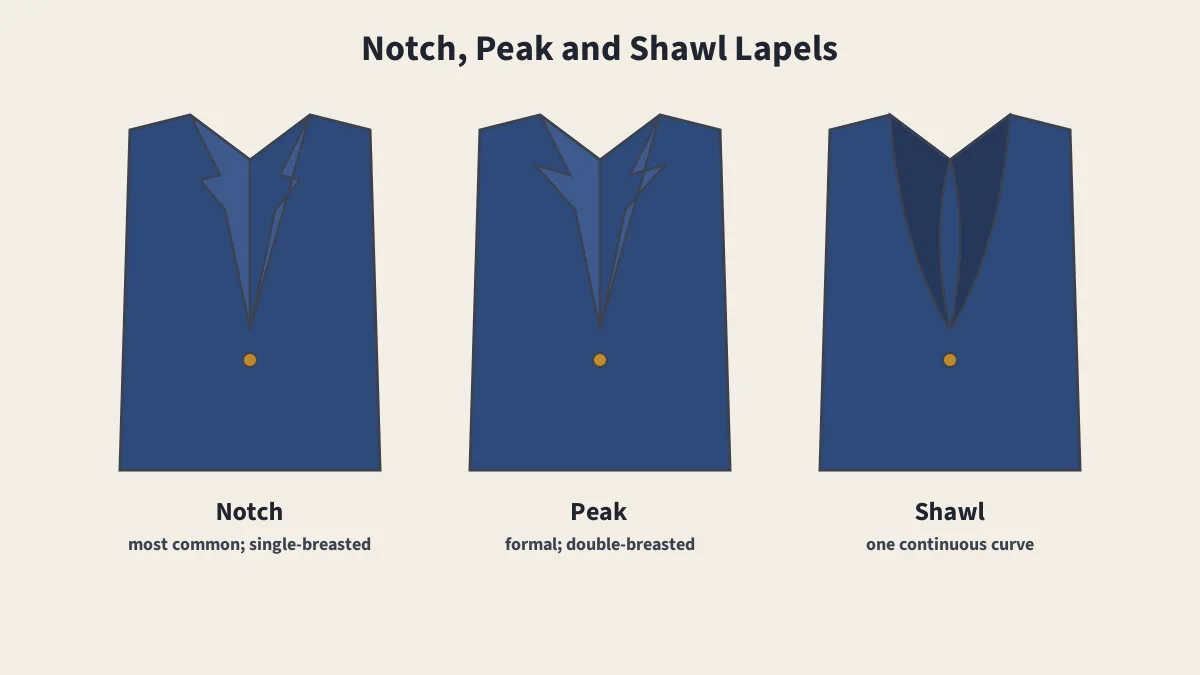
Types of Lapels
Notch, peak and shawl lapels and their history.