Fusible Web and Fabric Adhesives: Sewing With Glue (2026)
Sometimes the fastest way to join fabric is to bond it. Fusible web melts under an iron to glue layers together, and it is the foundation of raw-edge appliqué. Here is how it and other fabric adhesives work.
In This Article
Fabric Adhesives in Brief
- Fusible web: heat-activated adhesive, often paper-backed
- Fusible tape: narrow strips for hems and edges
- Fabric glue: liquid adhesive for small jobs
- Basting spray: temporary hold for quilt layers
- Glue stick: temporary hold for zippers and pockets
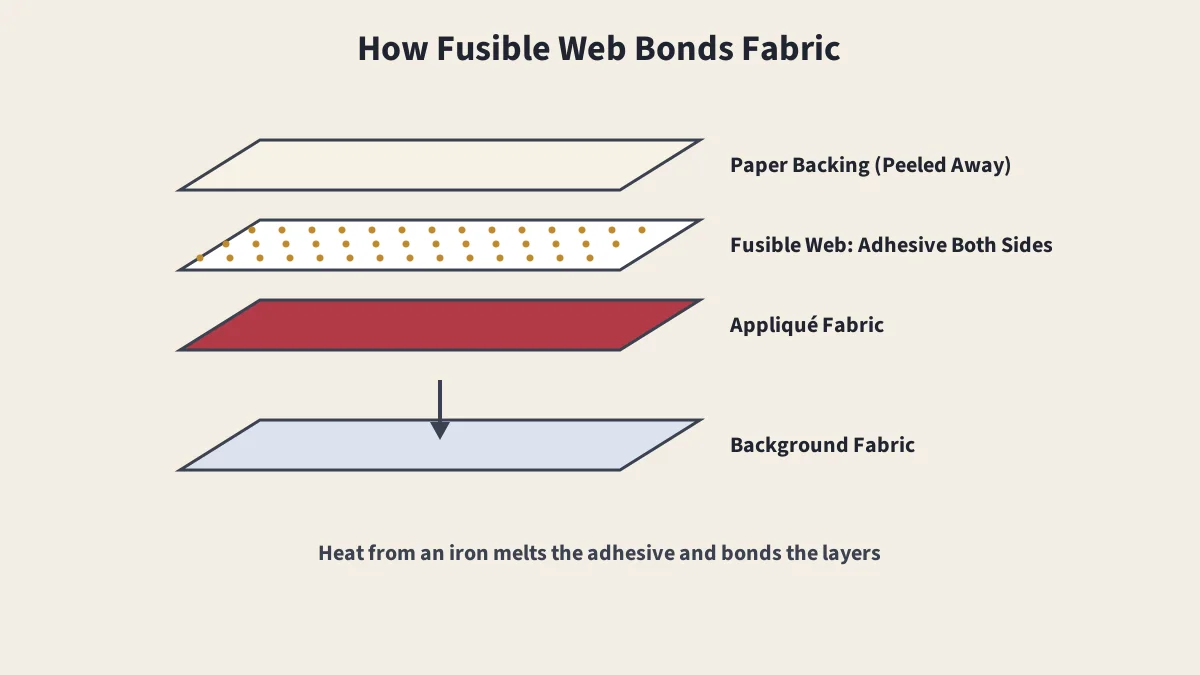
Not every join needs stitches. Fusible web is a thin layer of adhesive that melts under an iron, bonding two fabrics together. It holds appliqué shapes exactly in place, makes no-sew hems, and stiffens or stabilizes fabric. Other fabric adhesives, from glue sticks to sprays, hold layers temporarily while you sew.
Paper-Backed vs. Unbacked Web
| Type | What It Is | Best For |
|---|---|---|
| Paper-backed web | Adhesive on a paper carrier you can draw on | Tracing and cutting precise appliqué shapes |
| Double paper-backed web | Tacky adhesive with paper on both sides | Repositioning shapes before pressing |
| Unbacked web | A loose web of adhesive fibers | Bonding layers, hems and large areas |
| Fusible tape | Narrow rolls of web, with or without paper | Hems, edges and holding binding in place |
Webs also come in different weights. Lighter webs keep the fabric soft and are easy to stitch through; heavier webs give a stronger bond but stiffen the fabric and can gum up needles.
How to Fuse an Appliqué
- Trace the shape onto the paper side, reversed if it has a direction.
- Rough-cut around the shape, leaving a small margin.
- Fuse the web to the wrong side of the appliqué fabric with an iron, following the manufacturer's settings.
- Cut out the shape exactly on the traced line.
- Peel off the paper; a thin shiny layer of adhesive stays on the fabric.
- Position and press the shape onto the background fabric.
- Stitch around the edges if the piece will be washed or handled.
Protecting Your Iron
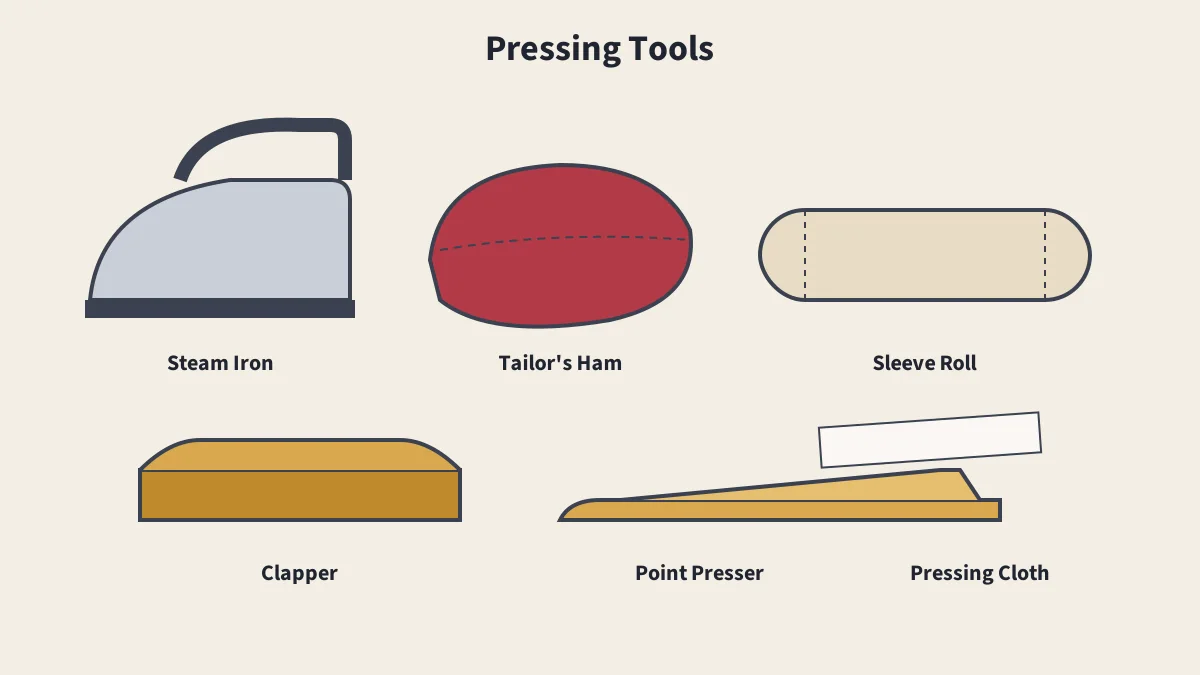
Adhesive that touches the soleplate will stick to it and transfer to the next thing you press. Use a pressing cloth, parchment paper or a non-stick pressing sheet between the iron and any exposed adhesive; see pressing tools.
Other Fabric Adhesives
| Adhesive | Permanent? | Used For |
|---|---|---|
| Fabric glue | Usually permanent | Trims, patches, costumes and crafts |
| Washable glue stick | Temporary | Holding zippers, pockets and binding before stitching |
| Temporary basting spray | Temporary | Holding quilt layers or appliqué before stitching |
| Liquid seam sealant | Permanent | Stopping fraying at cut edges and thread ends |
Web, Interfacing or Stabilizer?
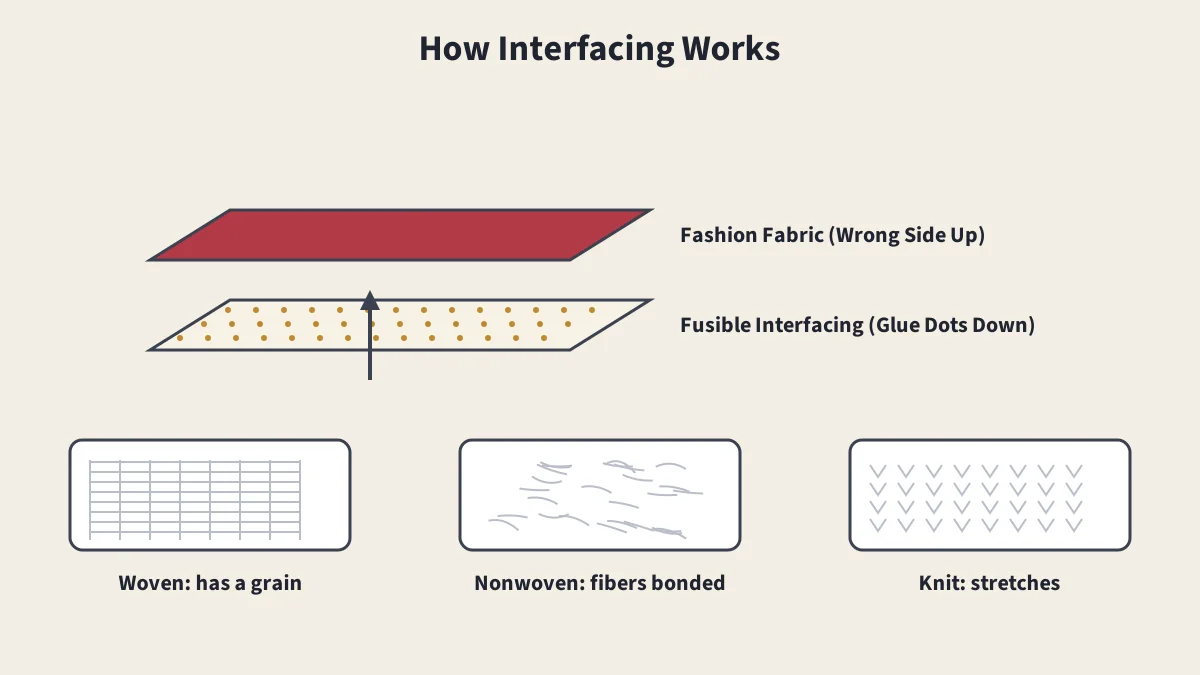
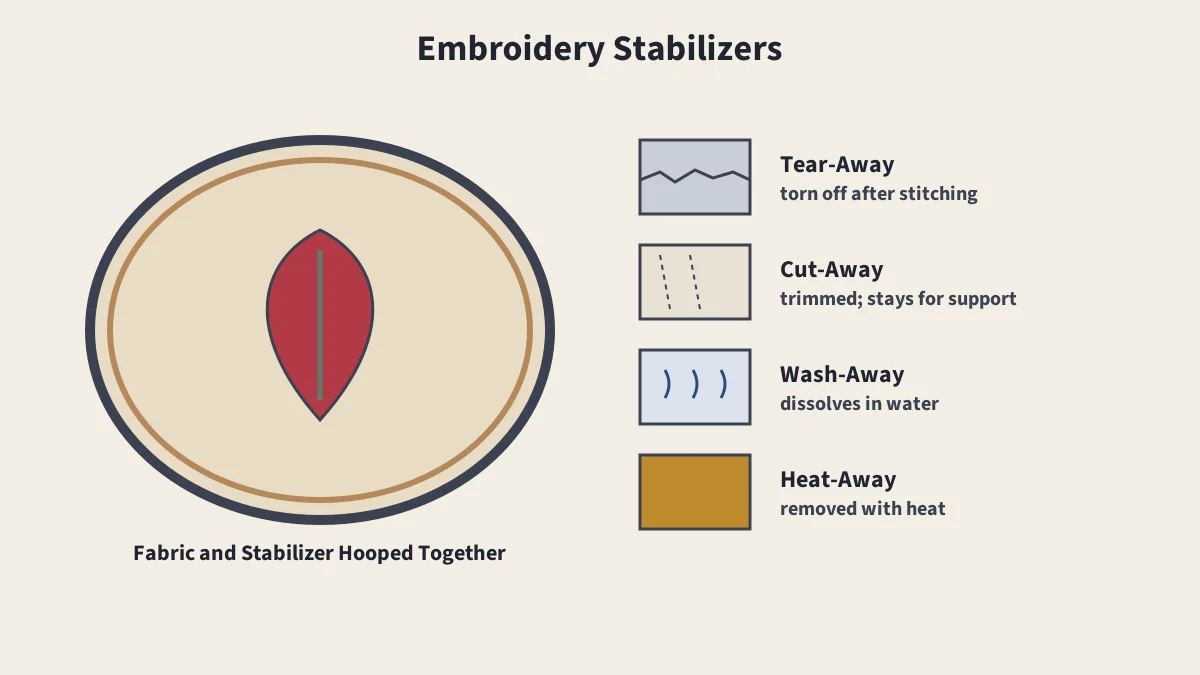
Fusible web is pure adhesive that joins two fabrics. Fusible interfacing is a fabric with adhesive on one side, used to add structure. Embroidery stabilizers support fabric while it is stitched. All three are often sold side by side, so check the label before you buy.
Sources
- Appliqué, Wikipedia
- Interfacing, Wikipedia
Frequently Asked Questions
What is fusible web?
Fusible web is a thin sheet of heat-activated adhesive, often with a paper backing. Placed between two fabrics and pressed with an iron, it melts and bonds them together. It is widely used for raw-edge appliqué.
What is the difference between fusible web and fusible interfacing?
Fusible interfacing is a fabric with adhesive on one side, used to add body and structure. Fusible web is adhesive alone, sticky on both sides, used to glue two fabrics together.
Why did my appliqué come out backward?
Shapes traced on the paper side of fusible web are fused to the wrong side of the fabric, so the finished shape is a mirror image. Trace letters and directional shapes reversed.
Do I still need to stitch fused appliqué?
For items that will be washed or handled often, yes. Fusing holds the shape in place, but stitching around the edges, with a satin, zigzag or blanket stitch, keeps it secure and limits fraying.
Keep Reading
Interfacing Types
Fusible vs. sew-in, woven vs. nonwoven vs. knit, and how to apply it.
Pressing Tools
The iron, tailor's ham, sleeve roll, clapper and pressing cloth.
Embroidery Stabilizers
Tear-away, cut-away, wash-away and heat-away stabilizers explained.
Bias Tape and Binding
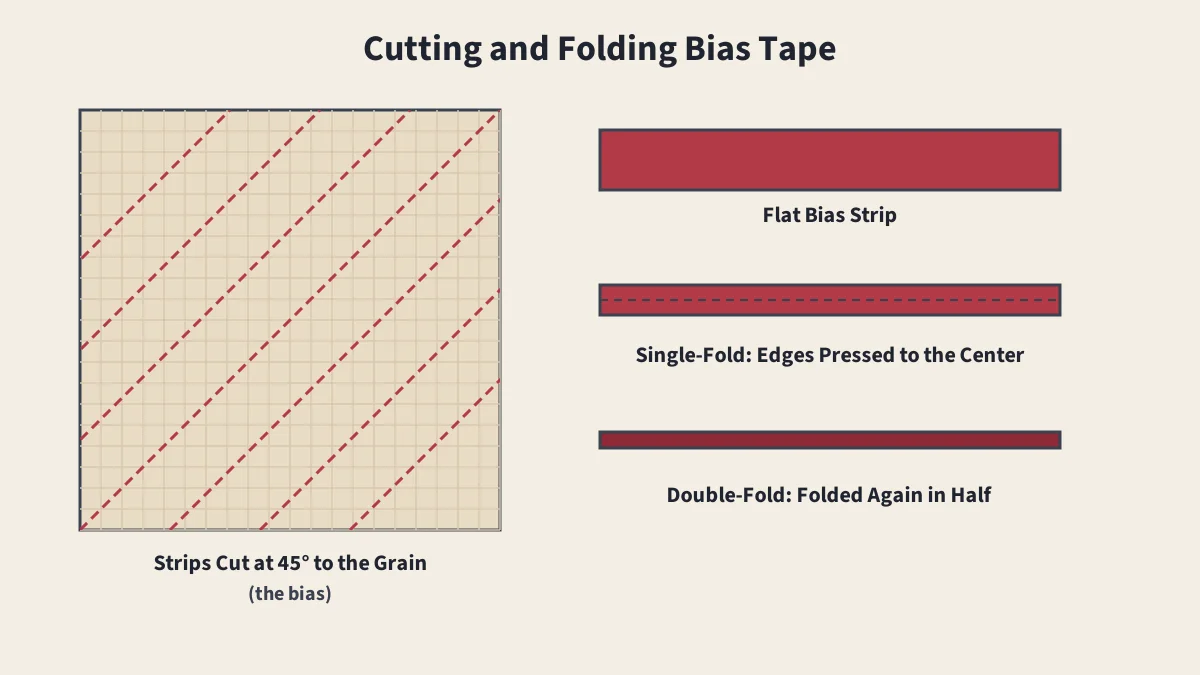
Single-fold vs. double-fold bias tape, and how to use binding.