Types of Zippers: Which Zipper for Which Project (2026)
Jeans, dresses, jackets, cushions and suitcases all use zippers, but not the same kind. The teeth, the tape and the way the ends are finished all change from job to job. Here is how to choose.
In This Article
Zippers in Brief
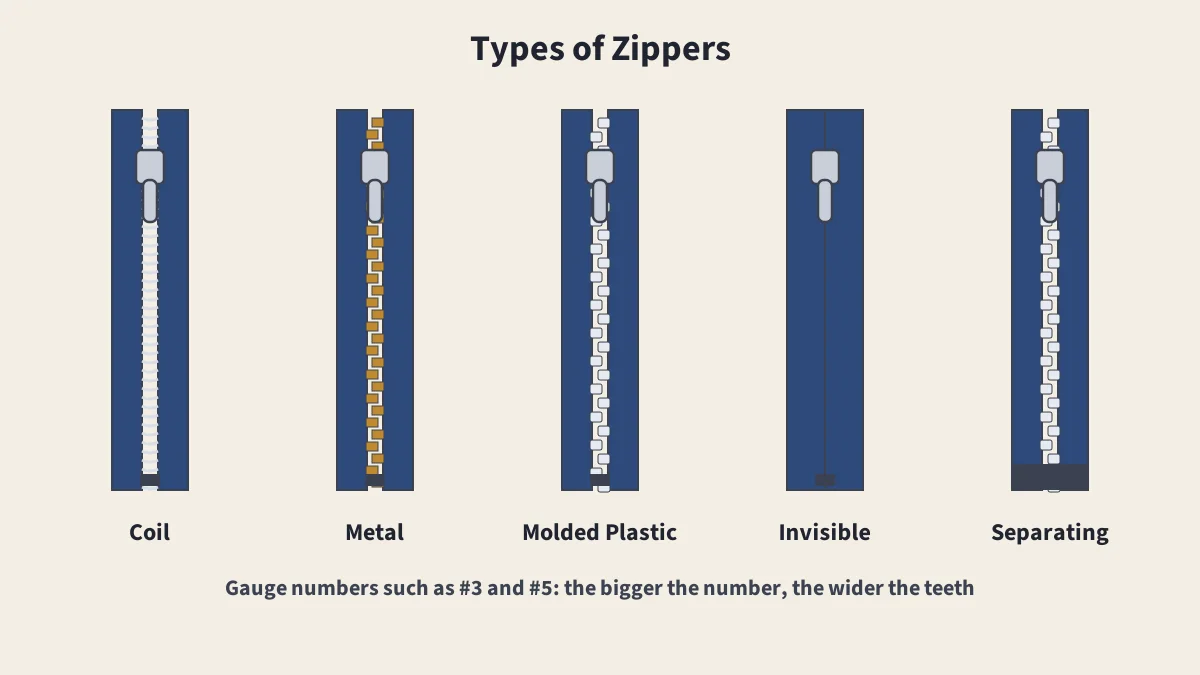
- By teeth: coil, metal or molded plastic
- By style: conventional, invisible, separating, two-way
- Sizes: gauge numbers; bigger = wider teeth
- Most sold: coil zippers
- Market leader: YKK, with 45% of world market share in 2003
The zipper took decades to perfect; see the history of the zipper. Today, it comes in many forms, and choosing the right one depends on the fabric, how much strain the opening will take and whether the zipper should show.
Parts of a Zipper
| Part | What It Does |
|---|---|
| Tape | The fabric on each side, sewn into the garment |
| Teeth (chain or elements) | Interlock to close the zipper |
| Slider | Moves along the chain to open or close it |
| Pull tab | The part you hold to move the slider |
| Top stops | Keep the slider from coming off the top |
| Bottom stop | Keeps the two sides from separating further |
| Insertion pin and retainer box | On separating zippers, join the two halves at the bottom |
Zippers by Teeth
- Coil: teeth formed from windings of polyester coil. Flexible and smooth, they now make up the bulk of zipper sales worldwide.
- Metal: individual brass, aluminum or nickel teeth set on the tape. Strong and classic, they are common on jeans and work wear.
- Molded plastic: plastic teeth, usually of polyacetal resin, molded onto the tape. Strong and light, they are popular on outerwear and sportswear.
Zippers by Style
| Style | How It Works | Common Uses |
|---|---|---|
| Conventional (closed-end) | Joined at the bottom | Skirts, trousers, cushions and bags |
| Invisible | Teeth hidden behind the tape | Dresses and skirts |
| Separating (open-ended) | A box and pin lock the sides at the bottom | Jackets and cardigans |
| Two-way separating | A slider at each end | Long coats, so the bottom can open |
| Two-way closed-end | Closed at both ends, with two sliders | Luggage and bags |
| Waterproof | Coated tape and chain | Outdoor gear |
Zipper Sizes
Zipper chain width is described with gauge numbers. Common sizes are #3, #5, #7, #8 and #10, and the bigger the number, the wider the teeth. Lighter garments typically use smaller gauges, while bags, outerwear and heavy-duty items use larger ones. Zippers are also sold in fixed lengths or as continuous chain cut to size.
Choosing a Zipper
- Match the weight: fine coil for light fabrics, metal or molded plastic for heavy ones.
- Decide if it should show: invisible zippers disappear into a seam; exposed metal zippers become a design feature.
- Check how it must open: separating for jackets, closed-end for most other openings.
- Get the length right; coil zippers can be shortened at the top or bottom.
- Use a zipper foot, or an invisible zipper foot for invisible zippers; see the presser feet guide.
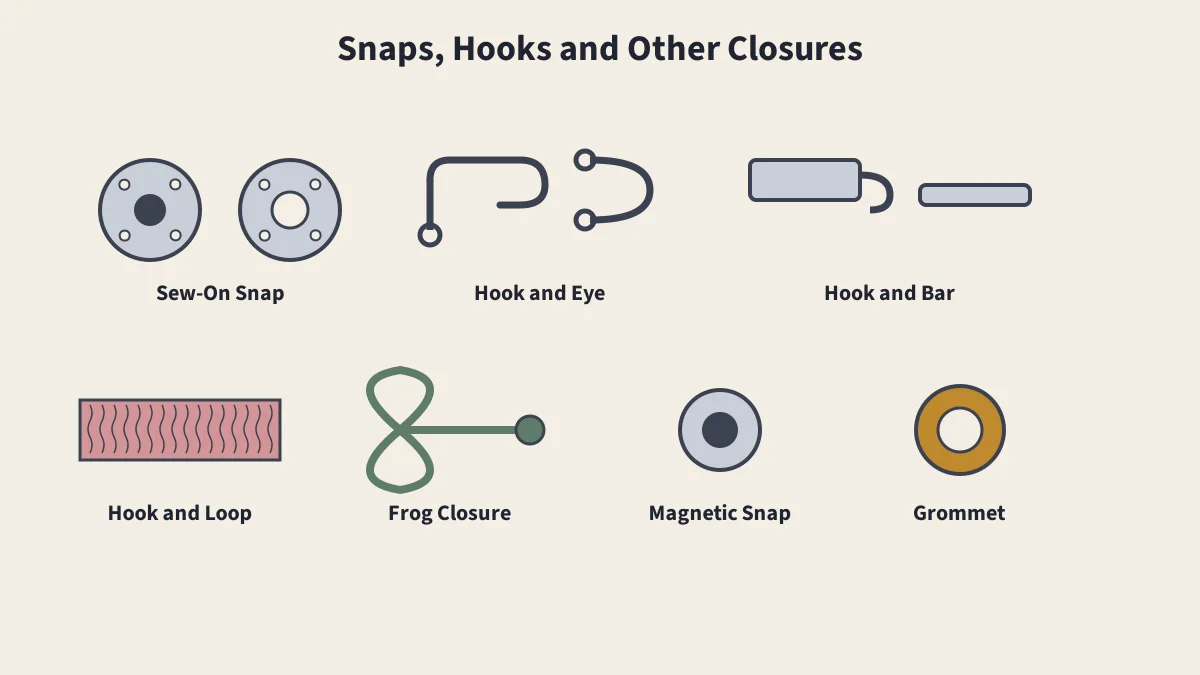
Many garments also use a hook and eye above the zipper to take strain off the top; see snaps, hooks and other closures.
For step-by-step instructions, see how to insert a zipper.
Sources
- Zipper, Wikipedia
Frequently Asked Questions
What are the main types of zippers?
Coil zippers, metal zippers and molded plastic zippers, which differ in their teeth; and invisible, separating (open-ended) and two-way zippers, which differ in how they look and open.
What do zipper sizes like #3 and #5 mean?
They are gauge numbers describing the width of the teeth or chain when closed. The bigger the number, the wider the teeth. Common sizes are #3, #5, #7, #8 and #10.
What is an invisible zipper?
A zipper with its teeth hidden behind the tape, so only the pull shows from the outside. Invisible zippers are common in skirts and dresses and are sewn with a special invisible zipper foot.
What kind of zipper does a jacket need?
A separating, or open-ended, zipper, which uses a box and pin at the bottom so the two sides come completely apart. Long coats often use two-way separating zippers that can also open from the bottom.
Keep Reading
History of the Zipper
A shoe fastener flop, a Swedish engineer and a pair of rubber boots.
Snaps, Hooks and Closures
Snaps, hooks and eyes, hook and bar, frogs, magnets and grommets.
Buttons
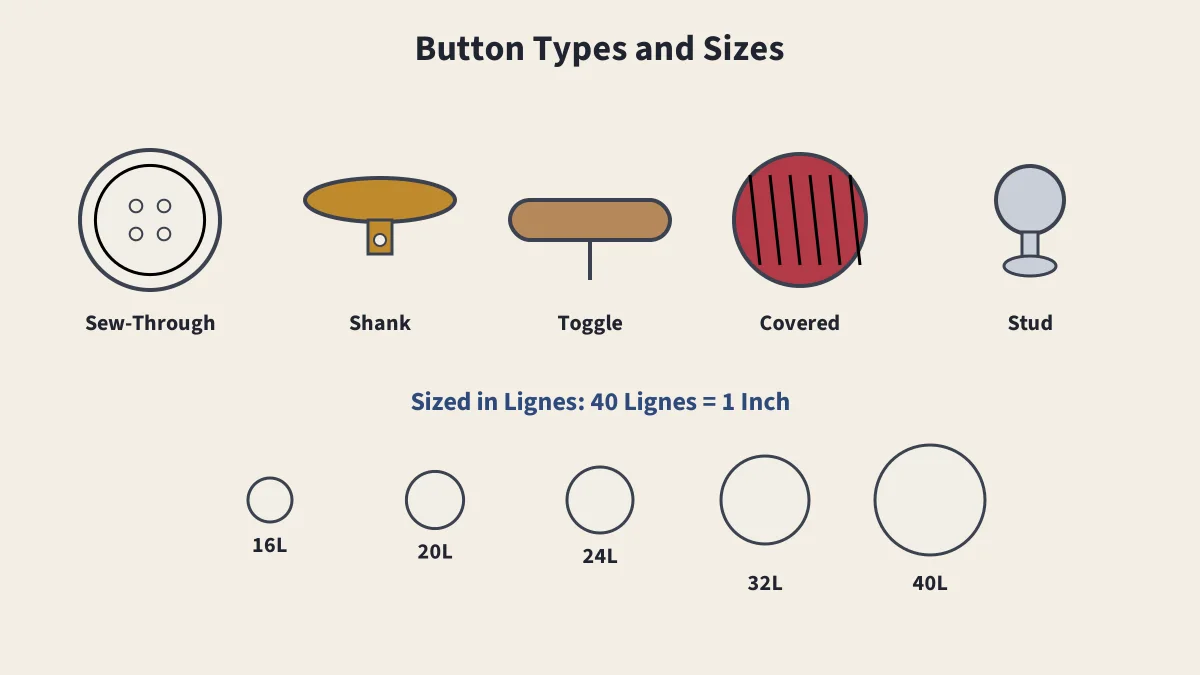
Button types, ligne sizes, materials and history.
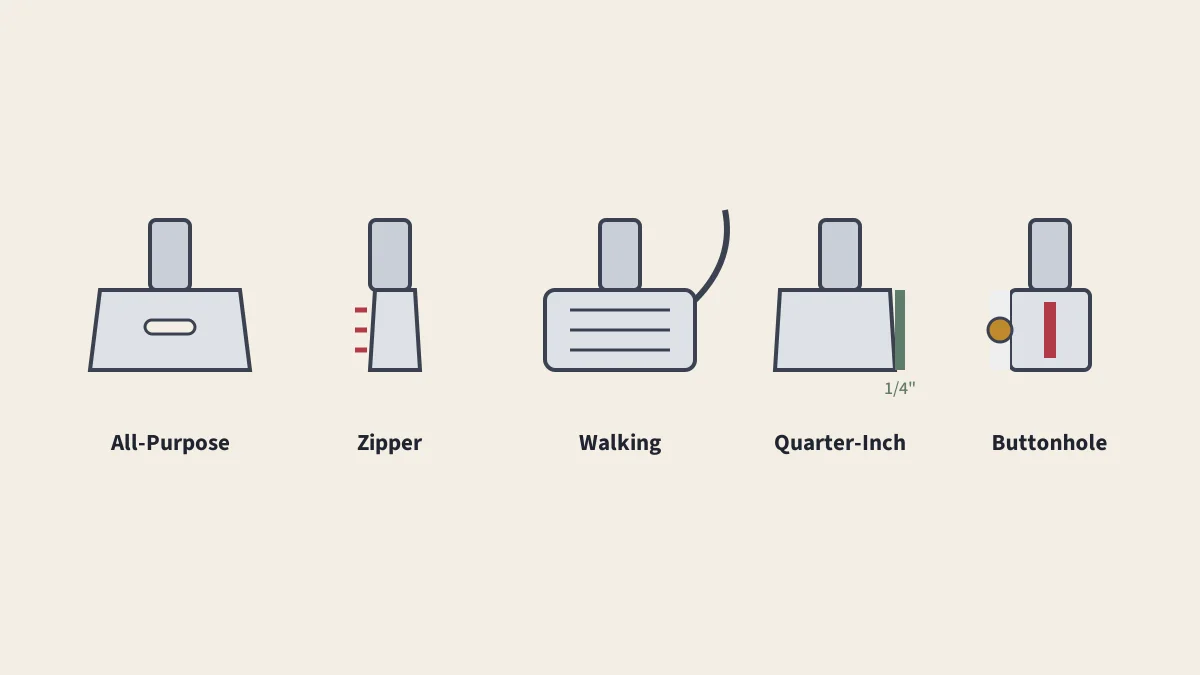
Presser Feet Guide
What each presser foot does and how to check it fits your machine.