Types of Sewing Thread: Fibers, Uses and Size Numbers (2026)
Thread is the one material every seam depends on. The right thread matches the fabric's fiber, weight and job, and the numbers on the spool tell you more than you might think, once you know which system they use.
In This Article
Thread in Brief
- All-purpose: polyester or polyester-core
- Natural fibers: cotton, silk, linen and wool
- Special jobs: heavy-duty, embroidery, metallic, invisible
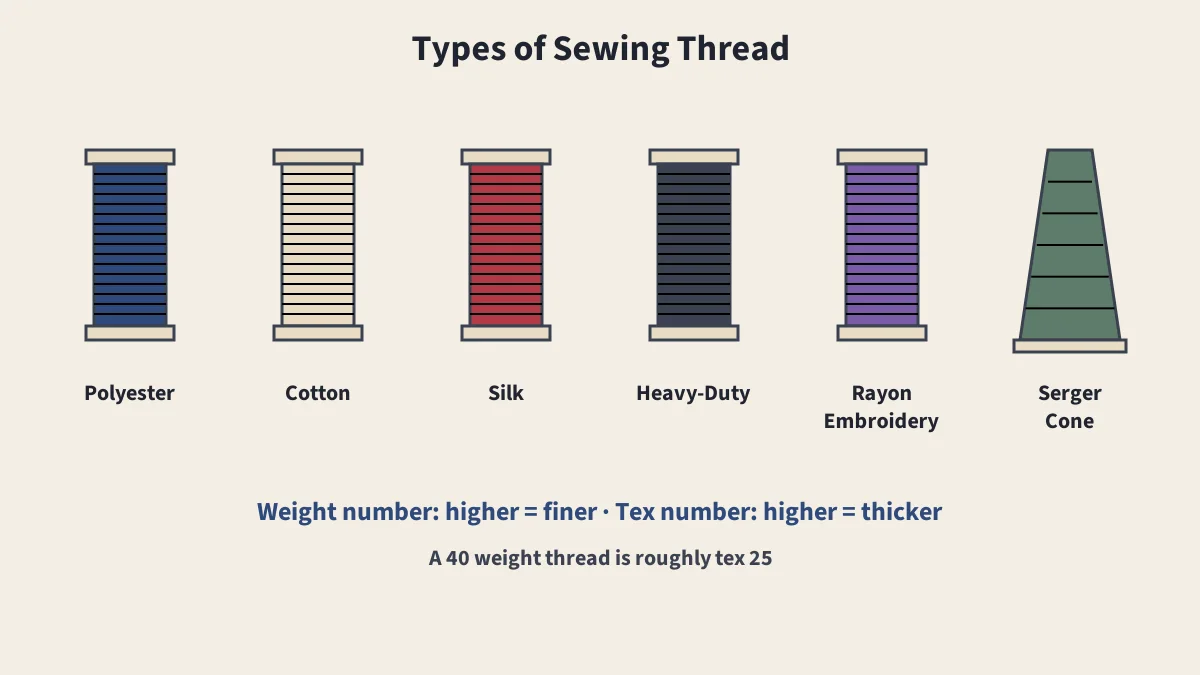
- Weight: higher number = finer
- Tex and denier: higher number = thicker
Sewing thread is a fine, smooth, strong yarn made for stitching. It can be spun from cotton, wool, flax, silk, nylon or polyester, and decorative metallic threads are made from fine wire. Choosing a thread means matching three things: the fabric's fiber, the fabric's weight, and the job the seam has to do.
Thread by Fiber
| Thread | Character | Best For |
|---|---|---|
| Polyester (all-purpose) | Strong, slight stretch, colorfast | Most fabrics, especially synthetics and knits |
| Core-spun polyester | Polyester fibers wrapped around a continuous polyester filament | Strong general sewing and industrial use |
| Cotton | Matte, little stretch | Cotton wovens and quilting |
| Silk | Fine, smooth and strong | Silk and wool, hand basting and tailoring |
| Nylon | Very strong and stretchy | Upholstery, outdoor gear and invisible thread |
| Rayon and polyester embroidery | High sheen | Machine embroidery |
| Heavy-duty (upholstery) | Thick and very strong | Canvas, denim, upholstery, bags |
| Metallic | Decorative, can be fragile | Embroidery and topstitching accents |
What the Numbers Mean
Thread is labeled with several numbering systems, and they do not run in the same direction:
| System | Definition | Bigger Number Means |
|---|---|---|
| Weight (wt) | Kilometers of thread per kilogram | Finer thread |
| Tex | Grams per 1,000 meters | Thicker thread |
| Denier | Grams per 9,000 meters | Thicker thread |
| Cotton count | Number of 840-yard hanks per pound | Finer thread |
As a rough guide, a 40 weight thread is about 225 denier, or tex 25, which is a common general sewing thread. Fine silk thread may also be sold in letter sizes such as A, part of a traditional "aught" system.
Matching Thread, Needle and Fabric
- Match the fabric weight: fine thread for fine fabrics, heavier thread for heavy fabrics.
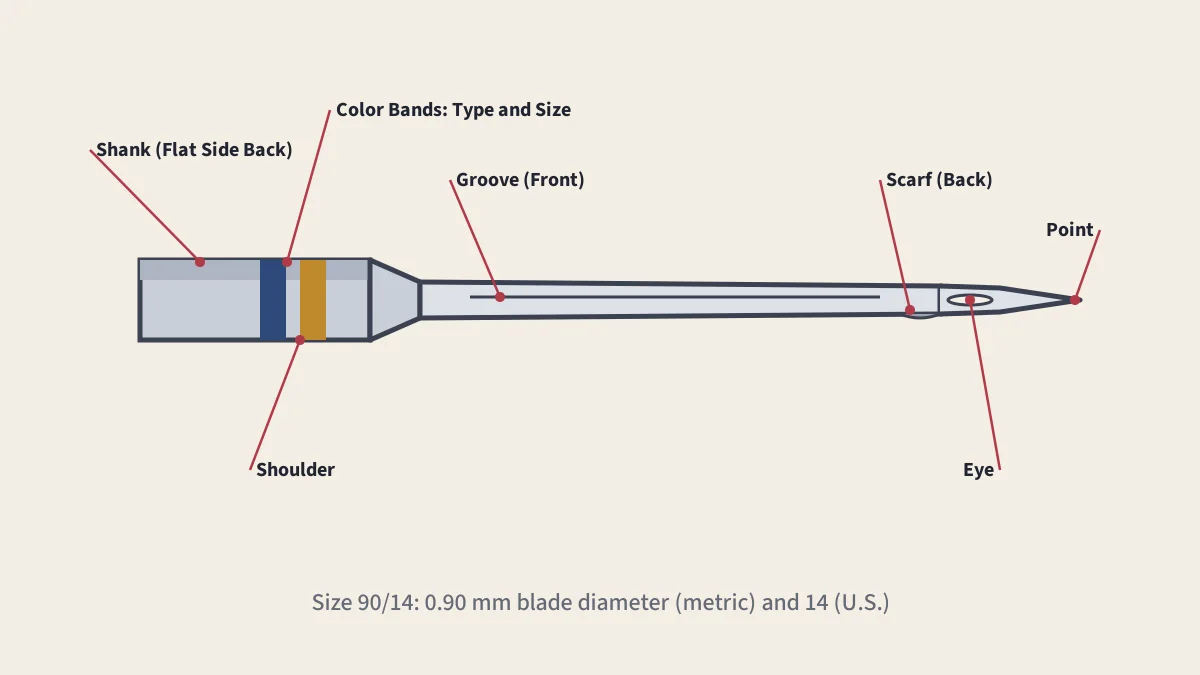
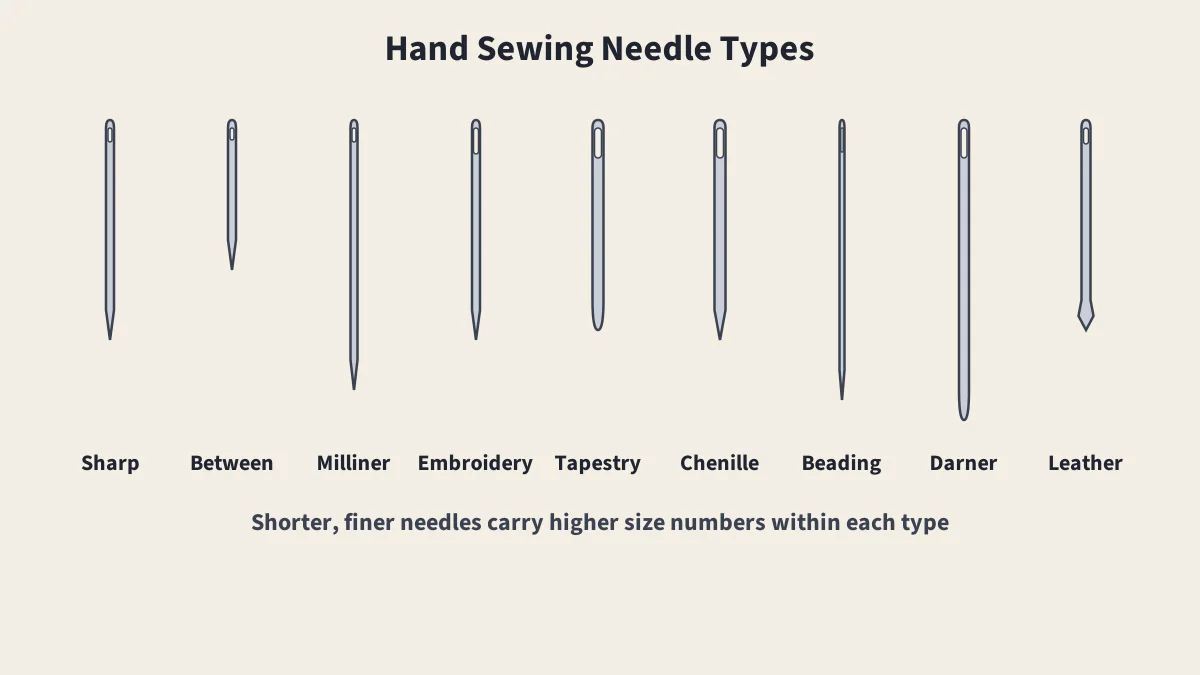
- Match the needle: thicker thread needs a bigger needle eye; see sewing machine needles and hand needles.
- Match the fiber where possible, so thread and fabric shrink and wear alike.
- Match the color one shade darker if you cannot find an exact match; it tends to blend in better.
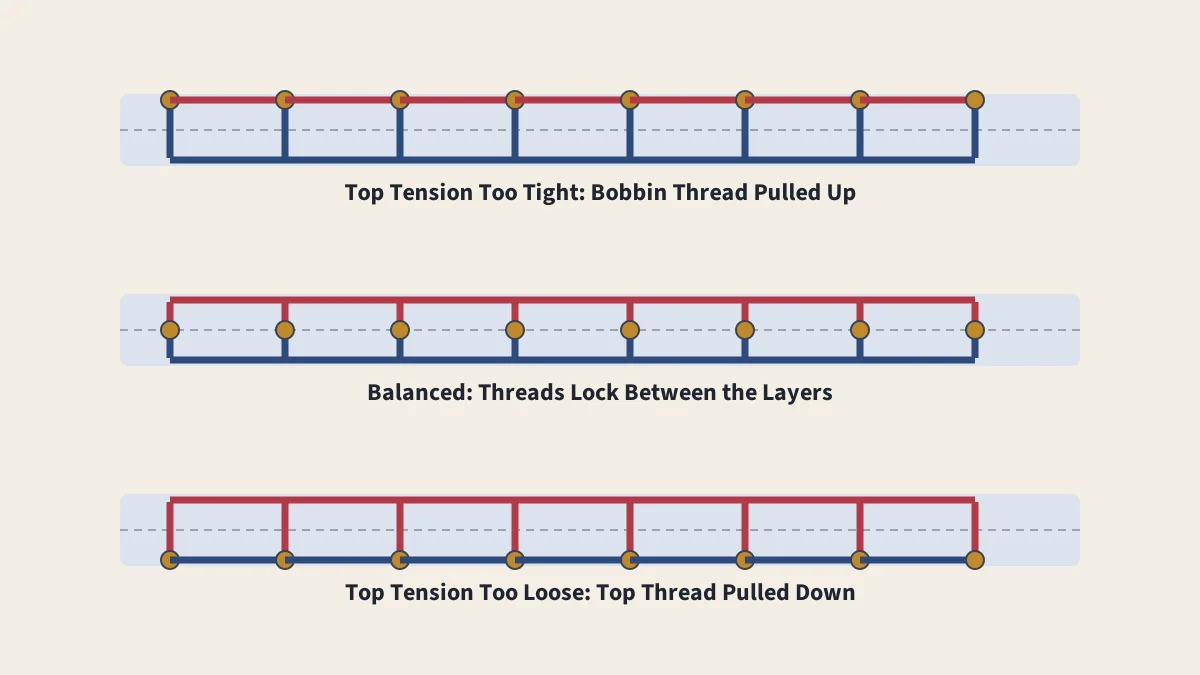
- Use quality thread. Fuzzy, uneven thread sheds lint and causes tension problems; see stitch length and tension.
Spools and Cones
Home sewing thread comes on small spools. Sergers use large cones, because they run three to five threads at once and use a lot of thread; see how a serger works. Embroidery machines use spools of sheeny rayon or polyester thread; see embroidery stabilizers.
For the fibers threads are made from, see natural vs. synthetic fibers.
Sources
- Sewing thread, Wikipedia
- Yarn, Wikipedia
Frequently Asked Questions
What is the best all-purpose sewing thread?
Most sewists use an all-purpose polyester or polyester-core thread for general sewing because it is strong, slightly stretchy and works on most fabrics. Tex 25, or about 40 weight, is a common general sewing thread size.
Is higher thread weight thicker or thinner?
Thinner. Thread weight measures how many kilometers of thread weigh one kilogram, so a 50 weight thread is finer than a 30 weight thread. Tex and denier work the other way: higher numbers mean thicker thread.
Why is sewing thread weaker than fabric?
Garments are usually sewn with thread that is weaker than the fabric, so that under strain the seam gives way before the fabric tears. A broken seam is easy to repair; torn fabric is not.
What is the difference between thread and yarn?
Thread is fine and smooth enough for sewing, embroidery or weaving. Yarn is thicker and softer, made for knitting, crochet and similar crafts.
Keep Reading
Sewing Machine Needle Sizes and Types
Needle sizes, types, color codes and when to change them.
Stitch Length and Tension Explained
What the dials mean, common settings, and how to balance tension.
Hand Sewing Needle Types
Every common hand needle type, what it is for and how sizes work.
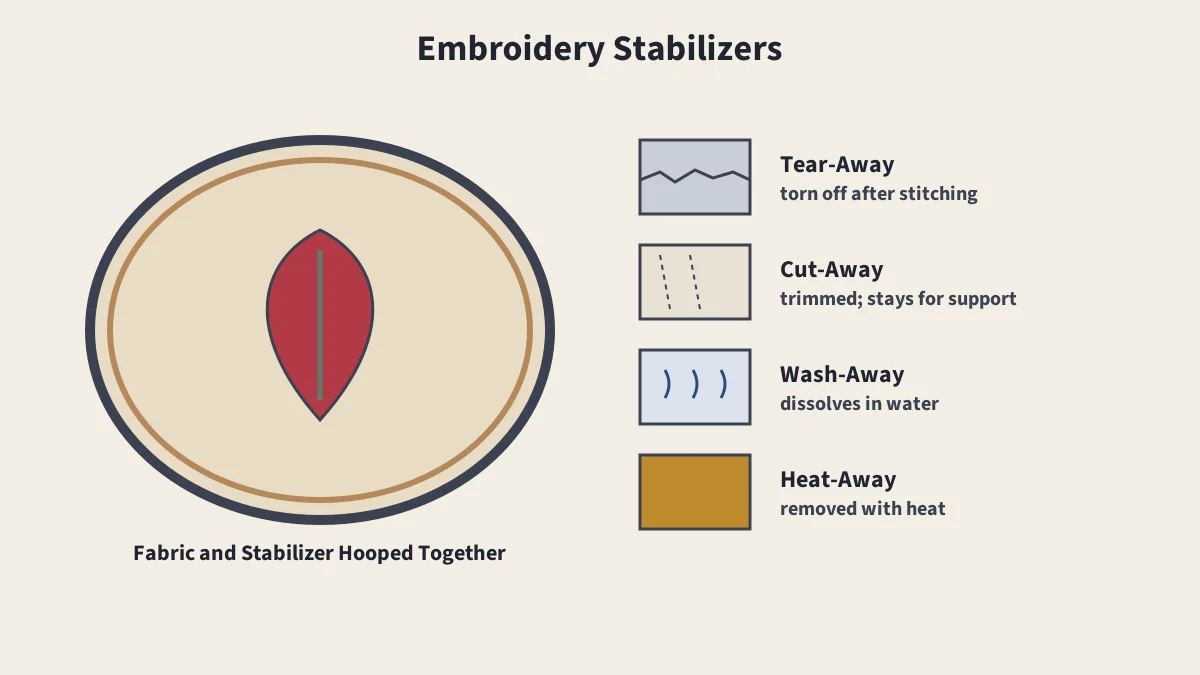
Embroidery Stabilizers
Tear-away, cut-away, wash-away and heat-away stabilizers explained.