Bias Tape and Binding: Why the Diagonal Cut Matters (2026)
Bias tape is a narrow strip of fabric cut at a 45-degree angle, and that angle is the whole trick. It lets the strip curve smoothly around necklines, armholes and quilt corners. Here is how it works and how to use it.
In This Article
Bias Tape in Brief
- Cut: at 45 degrees to the grain
- Why: stretches and curves smoothly
- Single-fold: edges pressed to the center
- Double-fold: folded again to wrap an edge
- Widths: from about 6 mm (1/4 in) to 7.6 cm (3 in) or more
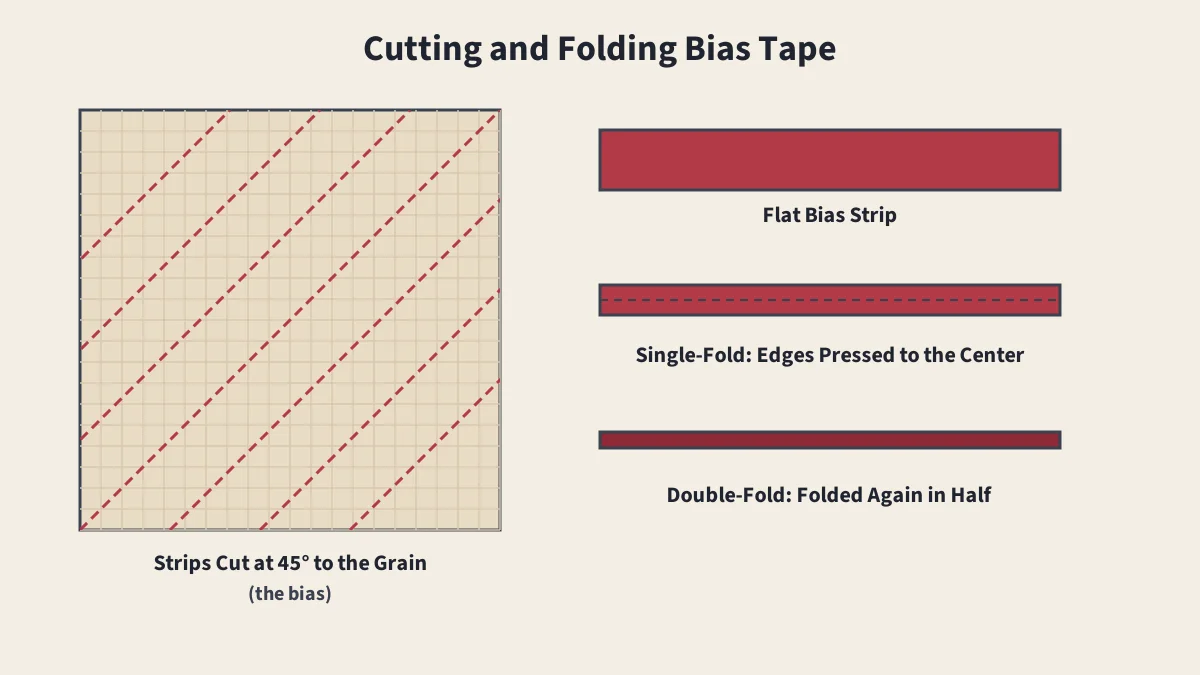
Woven fabric barely stretches along its threads, but it stretches noticeably on the diagonal. Bias tape takes advantage of that. It is a narrow strip of fabric, usually plain weave, cut at 45 degrees to the weave, so it is stretchier than a strip cut on the grain and drapes better around curves. For more on grain, see right side vs. wrong side of fabric.
Single-Fold vs. Double-Fold
| Type | How It Is Folded | Main Uses |
|---|---|---|
| Single-fold | Both raw edges pressed to meet at the center | Facings, hems, casings and appliqué |
| Double-fold | Single-fold tape folded in half again lengthwise | Binding raw edges, such as necklines, armholes and quilts |
Double-fold tape is often slightly offset, with one side a little wider than the other, which helps catch the back when stitching from the front.
What Bias Tape Is Used For
- Binding edges: wrapping and enclosing raw edges at necklines, armholes and quilt edges.
- Facings: finishing armholes and necklines in place of a separate facing piece.
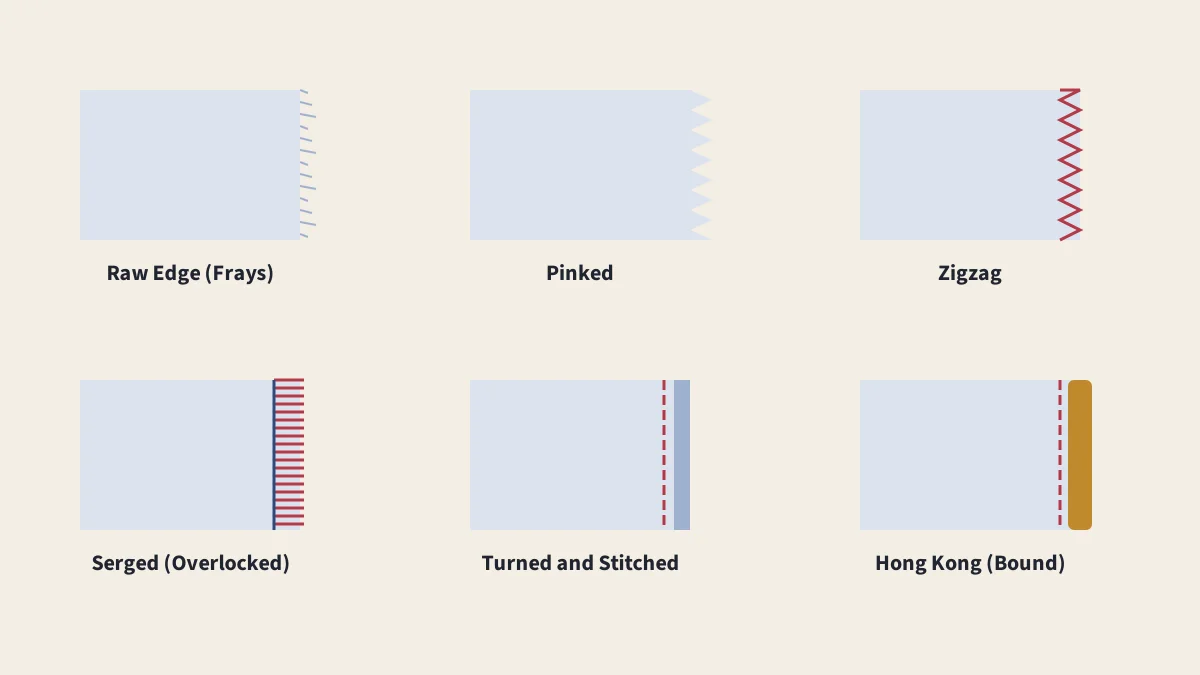
- Seam finishes: wrapping seam allowances in a Hong Kong finish; see seam finishes.
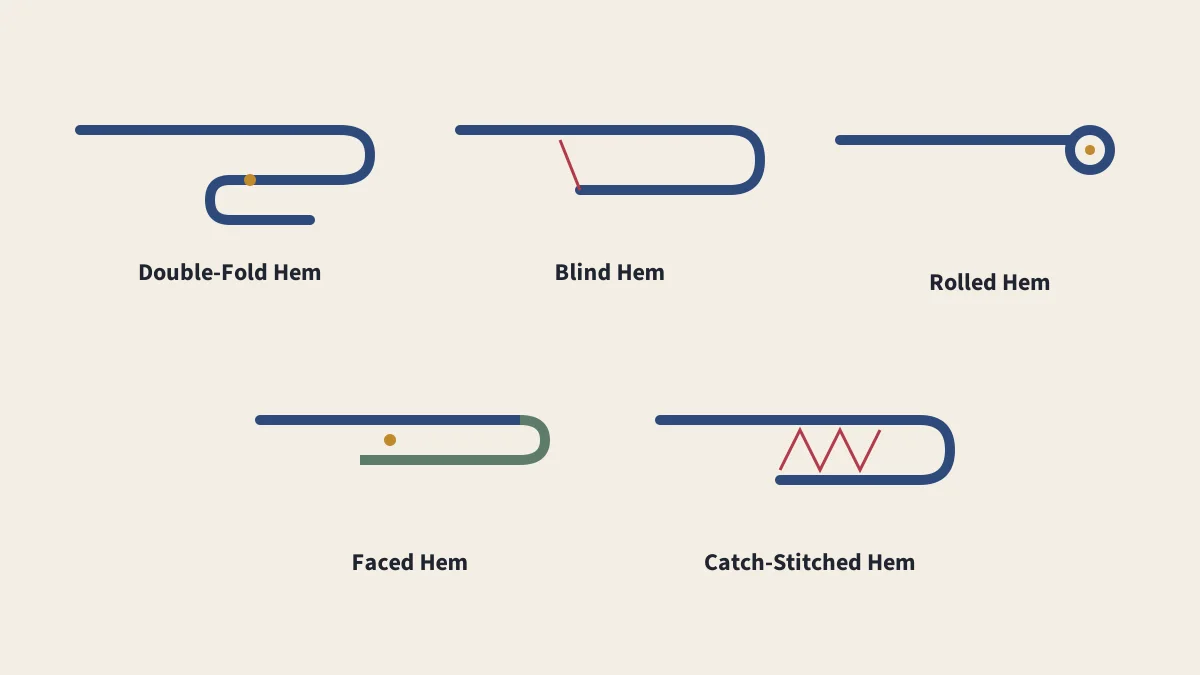
- Hems: making a narrow or curved hem; see types of hems.
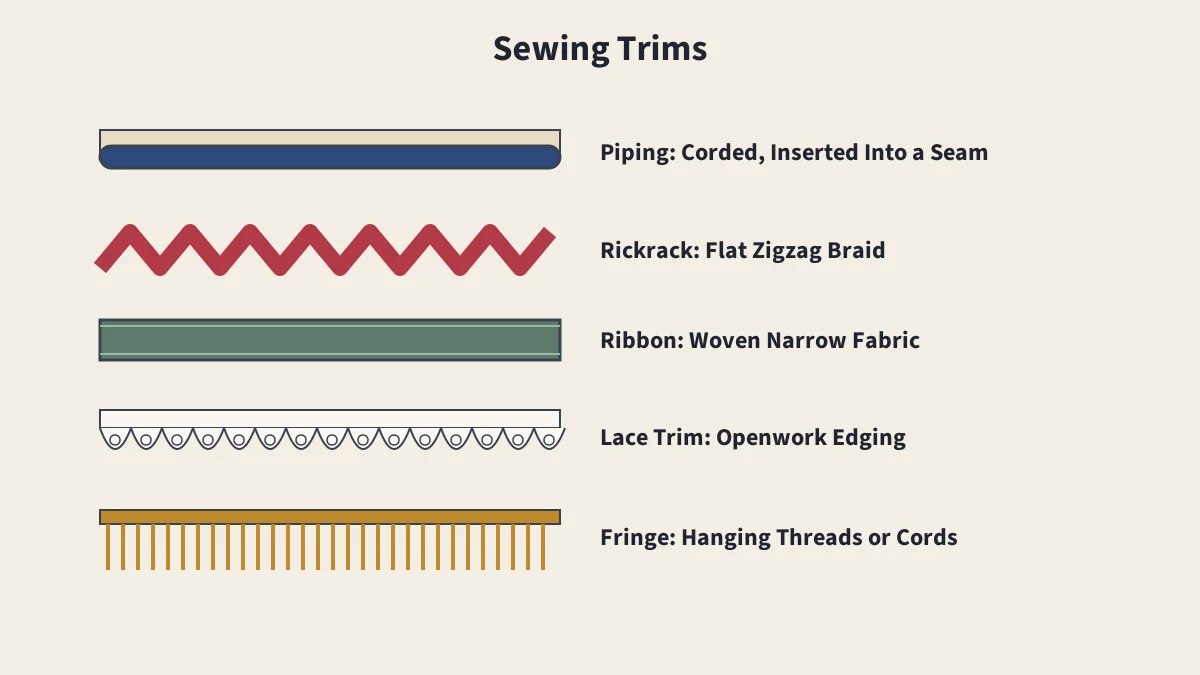
- Piping: wrapping a cord for decorative edges; see sewing trims.
- Straps and ties: on aprons, bags and casual clothing.
Making Your Own
- Find the bias by folding the fabric so a straight-grain edge meets a cross-grain edge; the fold is at 45 degrees.
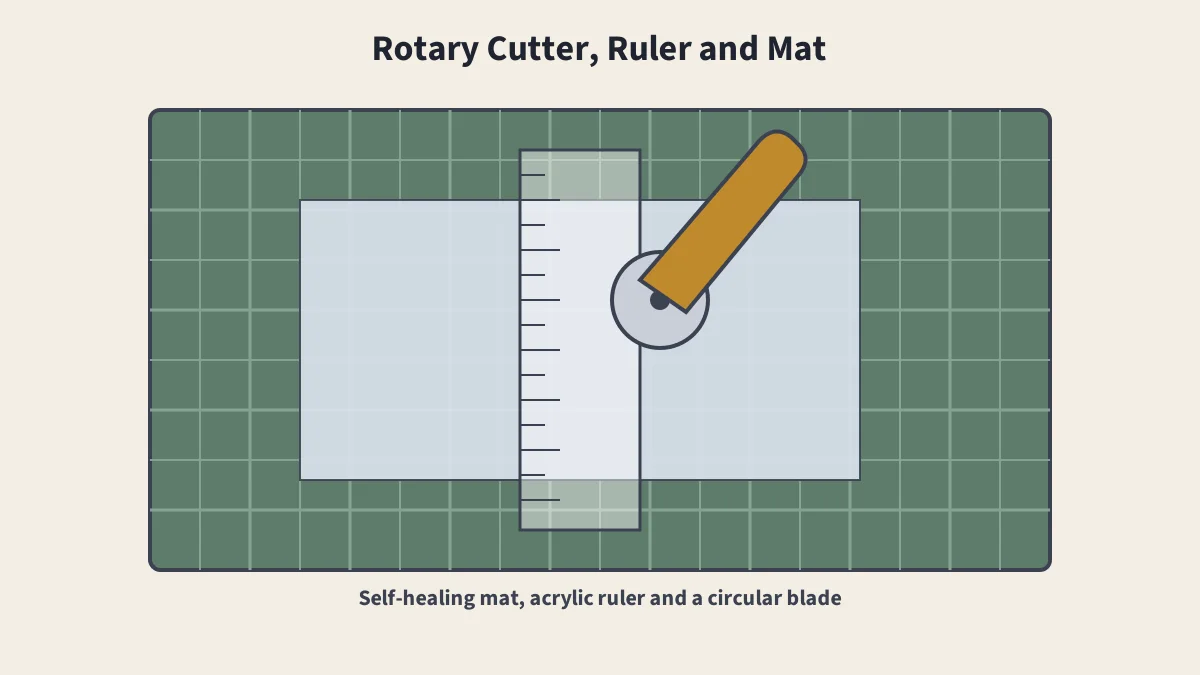
- Cut strips parallel to the fold, about four times the finished width for double-fold tape; a rotary cutter makes this quick.
- Join the strips with diagonal seams to make one long strip, and press the seams open.
- Fold and press the edges to the center, by hand or with a bias tape maker.
- Fold in half again for double-fold tape, and press.
Binding vs. Bias Binding
Not all binding is cut on the bias. Straight-grain binding works well on straight edges, such as most quilt edges, and uses less fabric. Bias binding is needed wherever the edge curves, because only bias-cut strips will lie smoothly around a curve.
Store-Bought Bias Tape
Ready-made bias tape is sold by the meter or on rolls, in widths from very narrow, about 6 mm (1/4 in), to 7.6 cm (3 in) or wider, and in cotton, polyester and satin. Choose a fiber and care requirements that match your fabric.
For more on why the bias stretches, see grain, bias and selvage.
For step-by-step instructions on attaching binding to garments and quilts, see how to apply bias binding.
Sources
- Bias tape, Wikipedia
Frequently Asked Questions
What is bias tape?
Bias tape is a narrow strip of fabric, usually plain weave, cut on the bias, at a 45-degree angle to the weave. Its raw edges are usually pressed under, and it is used to bind edges, finish seams and make piping.
What is the difference between single-fold and double-fold bias tape?
Single-fold bias tape has both raw edges pressed to meet at the center. Double-fold tape is single-fold tape folded in half again lengthwise, so it can wrap over a raw edge and enclose it, as a binding.
Why is bias tape cut on the bias?
Fabric cut at 45 degrees to the grain stretches more than fabric cut along the grain, and it drapes better. That lets bias tape follow curves such as necklines and armholes without puckering.
Can I make my own bias tape?
Yes. Cut strips at 45 degrees to the grain, join them into one long strip, then fold and press the edges, by hand or with a bias tape maker. Folded tape ends up one-quarter the width of the original strip.
Keep Reading
Seam Finishes
Pinked, zigzag, serged, Hong Kong, bound and enclosed finishes.
Sewing Trims
Piping, rickrack, ribbon, lace trim and fringe explained.
Types of Hems
Double-fold, blind, rolled, faced, bound and knit hems compared.
Rotary Cutters and Mats
The 1979 invention, blade sizes, mats, rulers and safe cutting.